Fennel
Foeniculum vulgare
Fennel is non-toxic to cats per the ASPCA. Apiaceae family, same as dill and cilantro (also safe) — but unlike parsley (toxic, furanocoumarins). Culinary trace and live-plant chewing both fine.
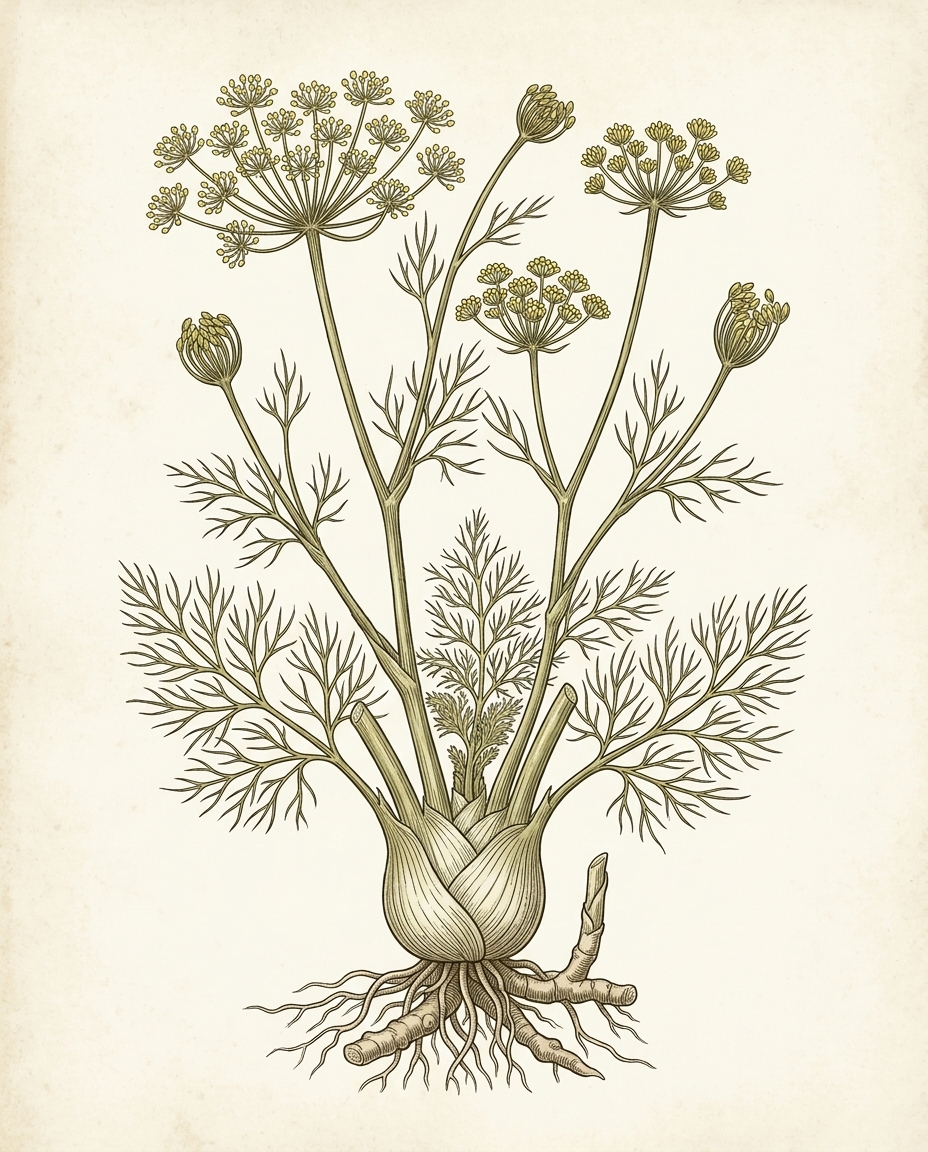
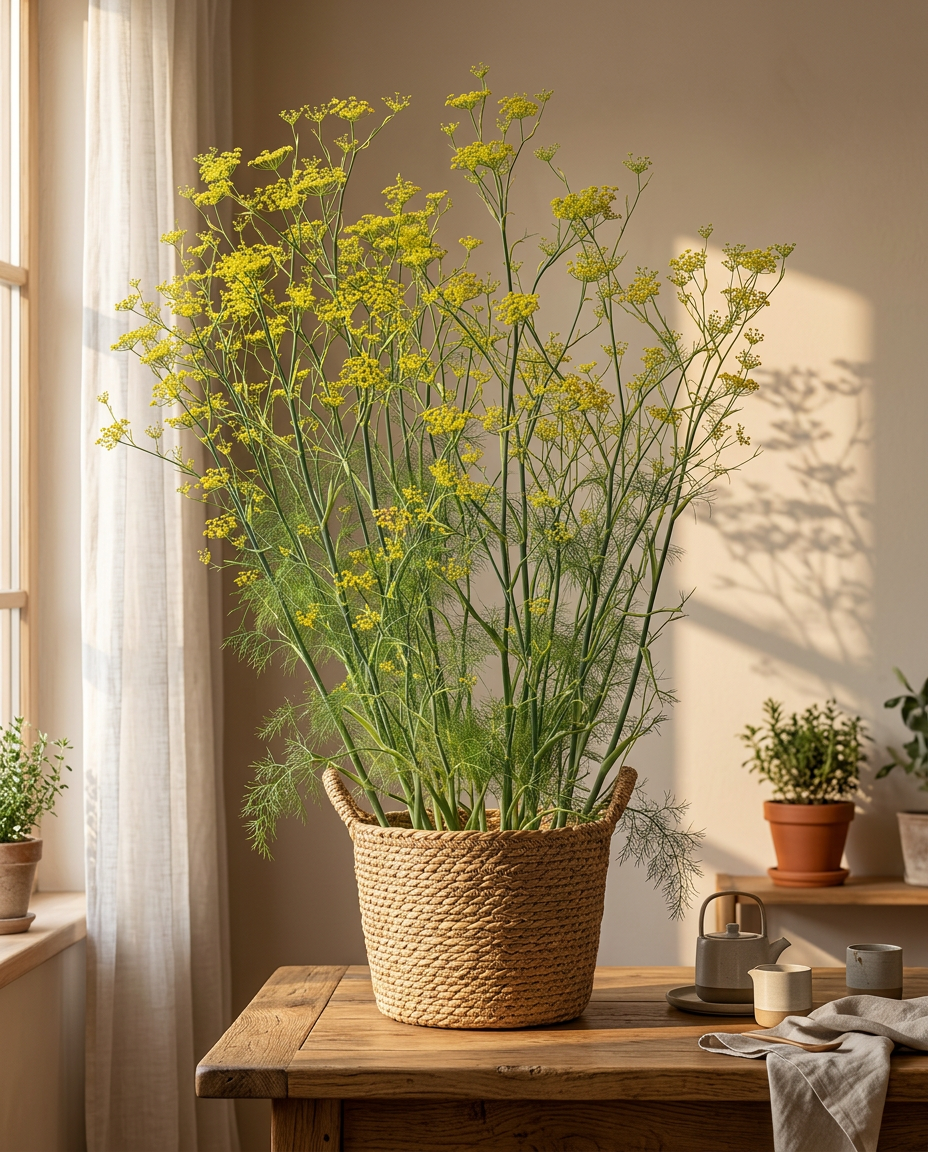
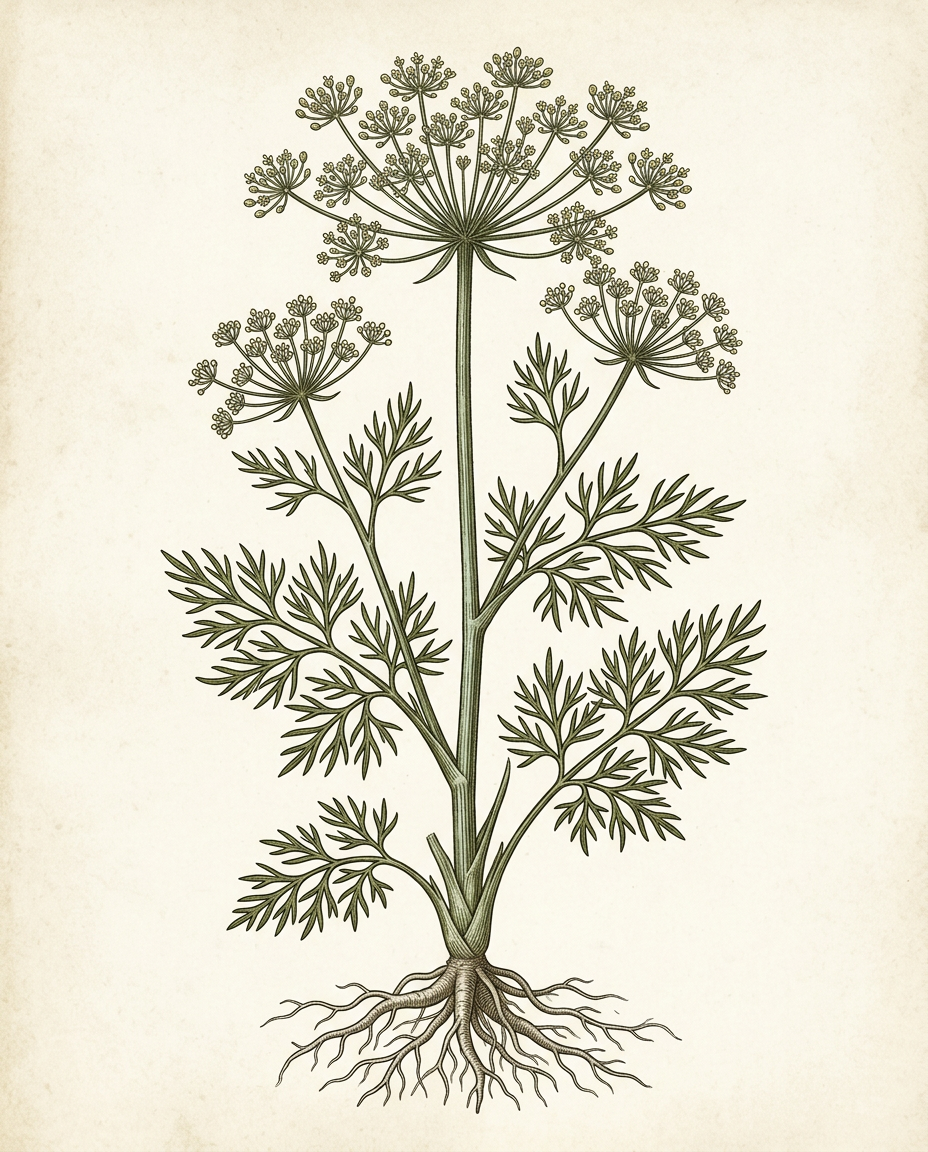
Plate IFoeniculum vulgare — common fennel. Feathery thread-fine bright-green foliage with flat yellow umbel flowers in summer above a swollen pale bulb base (in Florence fennel). ASPCA non-toxic — anise-scented kitchen herb.
How to grow fennel around cats — and where it fits.
Yes — fennel is safe for cats. The ASPCA lists Foeniculum vulgare (fennel, Florence fennel, finocchio) as non-toxic to cats, dogs, and horses. All parts of the plant — foliage, stem, bulb, flowers, and seeds — are safe at typical exposure levels.
The ASPCA verdict, verbatim: Scientific Name: Foeniculum vulgare · Family: Umbelliferae (the older name for Apiaceae) · Additional Common Names: Florence Fennel, Finocchio · Non-Toxicity: Non-Toxic to Dogs, Non-Toxic to Cats, Non-Toxic to Horses.
Completes the Apiaceae herb cluster
Fennel rounds out the kitchen-herb safety mapping for the parsley family. The pattern across the family is genuinely mixed:
- Fennel (this page) — non-toxic. ASPCA verified.
- Dill (Anethum graveolens) — non-toxic. ASPCA verified.
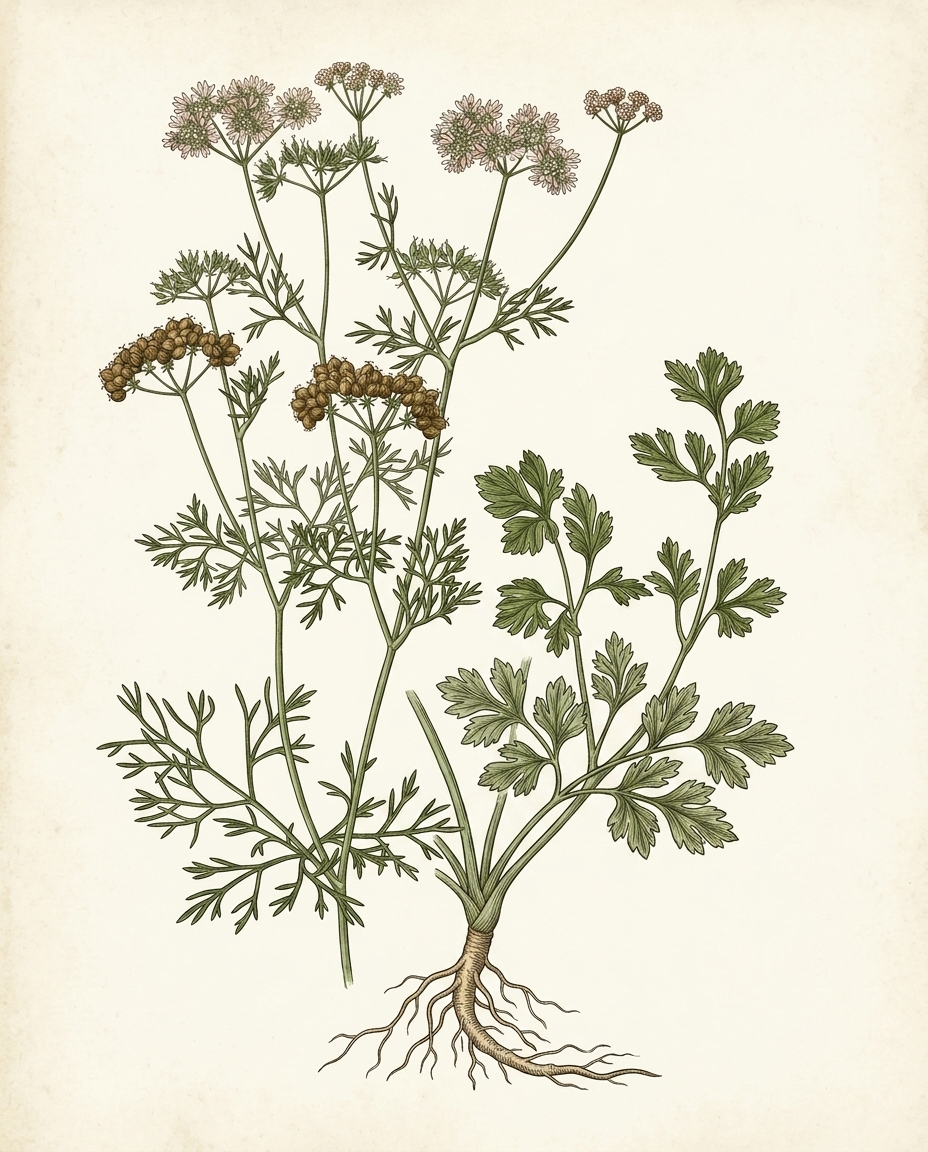
- Cilantro (Coriandrum sativum) — non-toxic. ASPCA verified.
- Celery — non-toxic.
- Carrot — generally safe (root is fine; foliage opinions vary).
- Parsley (Petroselinum crispum) — toxic. Furanocoumarins / photosensitization.
- Poison hemlock (Conium maculatum) — deadly. The lethal end of the family.
Family membership tells you nothing useful about cat toxicity in Apiaceae — the family spans "safe culinary herb" through "kills humans." Always check the species individually. The reason fennel is on the safe list and parsley isn't is that fennel doesn't carry the furanocoumarin load that gives parsley its photosensitization toxicity.
The fennel forms — all safe
If you grow or cook with fennel, you'll meet three forms. All ASPCA non-toxic:
- Herb fennel (Foeniculum vulgare var. dulce) — tall perennial grown for feathery foliage and aromatic seeds. The garden-border version.
- Florence fennel / finocchio (Foeniculum vulgare var. azoricum) — selected for the swollen white bulb-like leaf base, eaten raw or roasted. The supermarket vegetable.
- Bronze fennel (cv. 'Rubrum' or 'Purpureum') — ornamental cultivar with bronze-purple foliage. Same chemistry, same verdict.
A cat investigating any of these — chewing a feathery frond, sniffing a freshly chopped bulb, batting at the seed heads — is not at risk.
The anise-essential-oil caveat
The one cat-safety nuance worth mentioning: concentrated fennel essential oil is NOT in the same category as the live plant or culinary doses. Distilled essential oils of fennel (rich in anethole, estragole, fenchone) sit in the same do-not-diffuse-around-cats category as tea tree, peppermint, eucalyptus, cinnamon, and the citrus oils — because cats lack the UGT1A6 glucuronidation pathway to clear concentrated terpenes, and chronic exposure to diffused essential oils can produce real toxicity over time.
The ASPCA non-toxic verdict covers the live plant and culinary use — not the concentrated essential oil. If you diffuse oils at home around cats, skip fennel oil along with the other terpene-rich plant oils. The whole-plant fennel in your garden bed or kitchen is fine.
What it does to a cat
Almost nothing. A cat chewing fresh fennel foliage gets a mouthful of aromatic leaf and a noseful of anise scent. Some cats find the aroma mildly interesting (anethole has a faint cross-reactivity with the calming-effect receptors in some mammals); most cats are completely indifferent. There's no catnip-like behavioural effect.
The worst likely outcome of a big chew is mild vomiting from plant material — generic and self-limiting, not fennel-specific.
Growing fennel in a cat household
Fennel is a hardy Mediterranean perennial. Practical points:
- Full sun, 6+ hours daily.
- Even moisture — Florence fennel bolts and stays small under drought stress.
- Deep, well-drained loam — wants soil depth for the tap root and bulb development.
- Back of the bed — herb fennel reaches 1.5–2 m and shades smaller plants.
- Allelopathic — fennel can suppress dill and coriander when planted close. Plant them in separate beds rather than mixed.
In a cat household no special precautions are needed. Live plants, fresh leaf, seeds in jars, bulbs from the market — all fine.
Where fennel fits in the safe-herb cluster
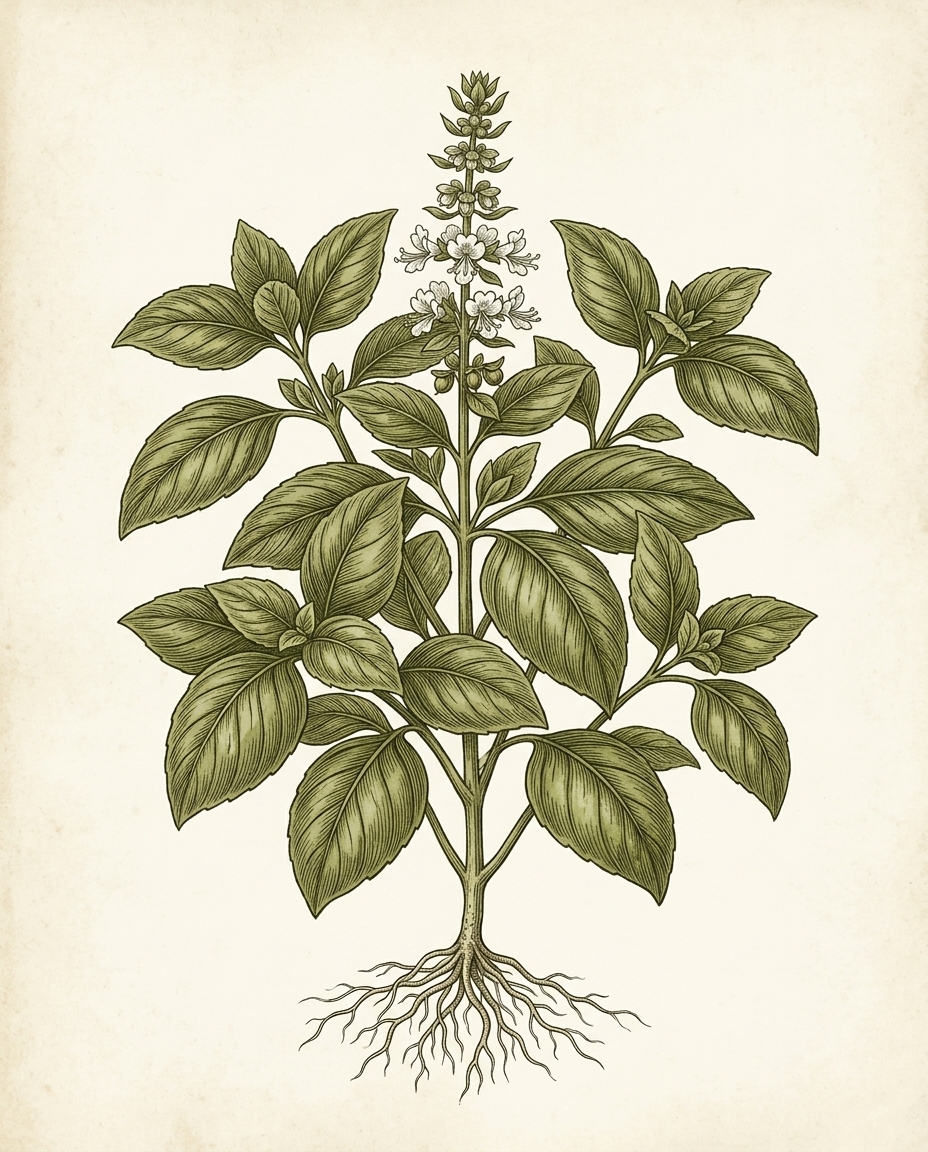
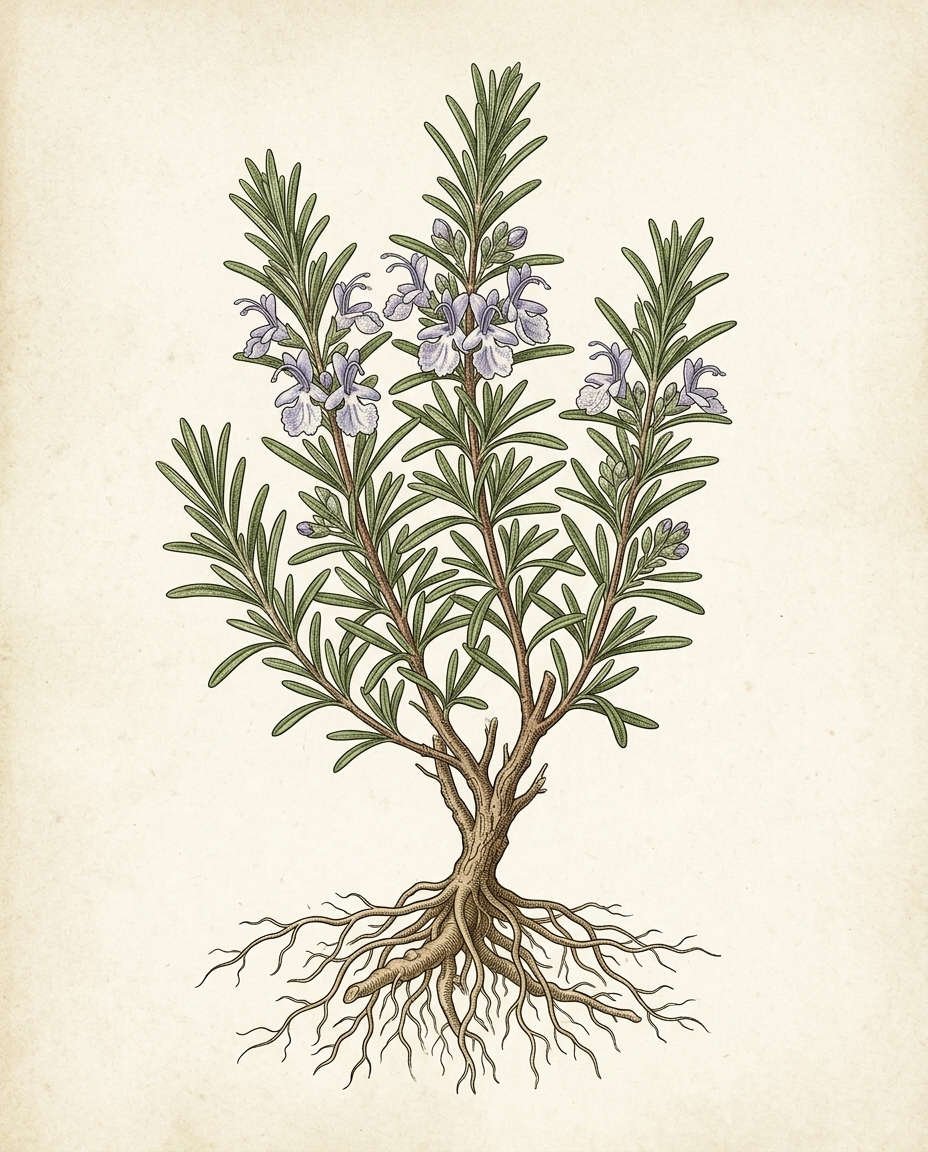
For a kitchen herb garden friendly to cats, fennel pairs naturally with basil, rosemary, thyme, sage, dill, cilantro, and lemon balm — all ASPCA non-toxic. The cat-positive plant for the same garden is catnip (and silver vine). Herbs to skip in the same bed: parsley, oregano, chives (and other Alliums), mint (calibrated), and chamomile. For the full list see safe plants for cats.
What we have actually seen.
Mild attraction
Like other aromatic Apiaceae herbs, fennel's anise-like scent (anethole) can mildly interest some cats. Most are indifferent; a few enjoy a sniff. No behavioural effect like catnip.
Trace culinary doses
Fennel seed in cooking, raw bulb in salads, leaf as a garnish — all sub-clinical at typical kitchen quantities. ASPCA non-toxic across the whole plant.
Mild GI upset on big binges
A cat that strips a lot of foliage may produce a vomit or loose stool, generic plant-material baseline. Not fennel-specific and not a toxicity signal.
Four common varieties.
Florence fennel (finocchio) (bulb fennel)
The vegetable form — grown for the swollen white bulb-like leaf base eaten raw or roasted. Same chemistry, same ASPCA non-toxic status. Annual / biennial in most climates.
Common fennel (herb fennel)
Tall perennial grown for the feathery foliage and seeds. Doesn't form an edible bulb. The version most often seen in herb gardens and as a roadside escape.
Bronze fennel (ornamental)
Bronze-purple foliage form, often used as an ornamental herb. Same flavour, same ASPCA non-toxic status. Attractive in mixed borders.
Keeping the plant alive.
Full sun
Wants six or more hours of direct sun for productive bulbs and strong anise flavour. Light shade is tolerated; deep shade produces leggy plants and weak essential-oil content.
Moderate
Even moisture during establishment and bulb development. Florence fennel bolts (flowers prematurely) under drought stress and the bulb stays small. Mulch helps in dry summers.
Deep, well-drained
Likes a deep loam with plenty of organic matter — needs the soil depth for the long tap root and (in Florence fennel) the bulb development. Slightly alkaline pH.
Back of the bed
Tall — herb fennel reaches 1.5–2 m. Plant at the back of a herb border so it doesn't shade smaller plants. Allelopathic in some studies (suppresses growth of dill and coriander when planted close), so give it space.
- ASPCA Animal Poison Control Center. Toxic and Non-Toxic Plants: Fennel.Accessed June 2026 · aspca.org · Foeniculum vulgare (Florence Fennel, Finocchio) · Non-Toxic to cats, dogs, horses · Family: Umbelliferae (= Apiaceae)
- Royal Horticultural Society. Foeniculum vulgare growing guide.Horticultural reference · cultivation and culinary use
If you liked this, also safe.