Cilantro
Coriandrum sativum
Cilantro (also called coriander, Chinese parsley, dhania) is non-toxic to cats per the ASPCA. Apiaceae family — same as parsley (toxic) and dill / fennel (safe). Check the species, not the family.
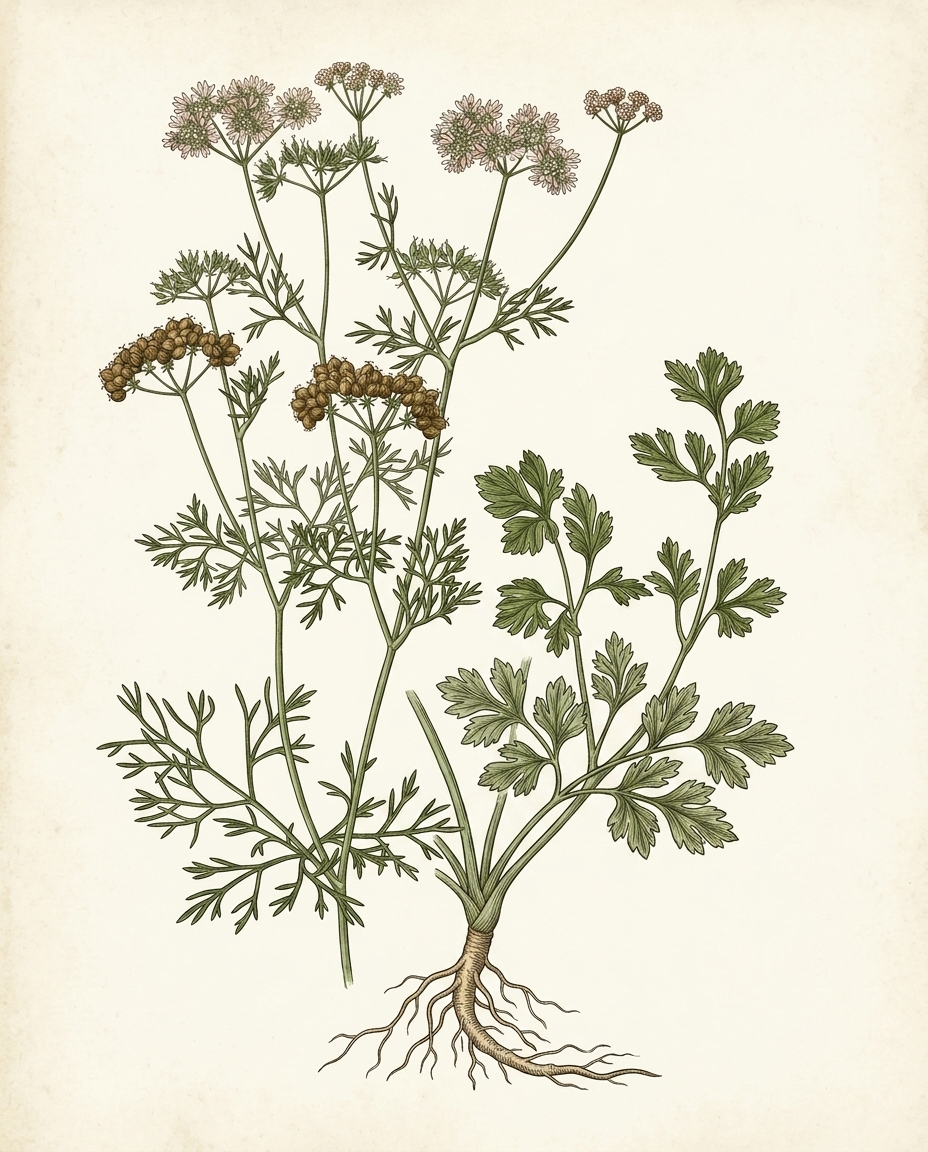
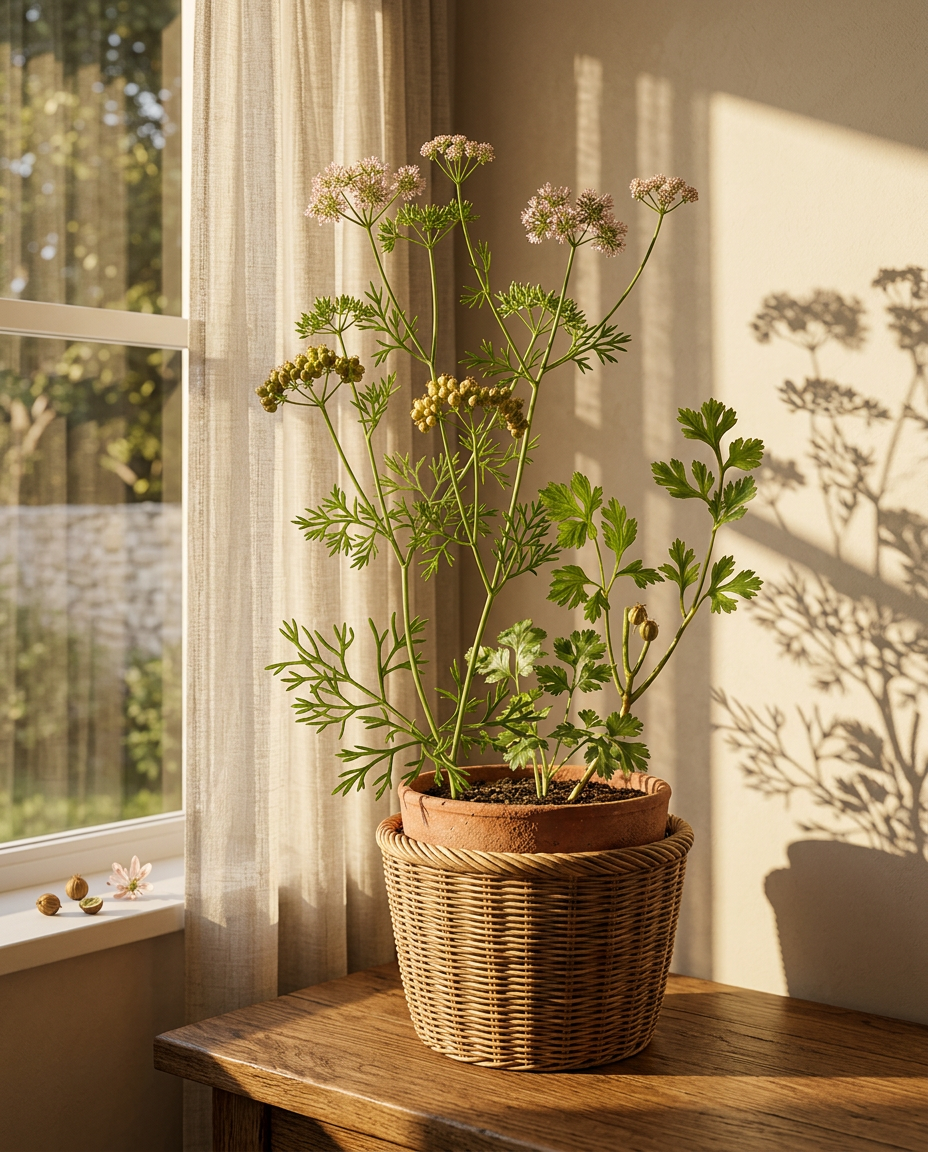
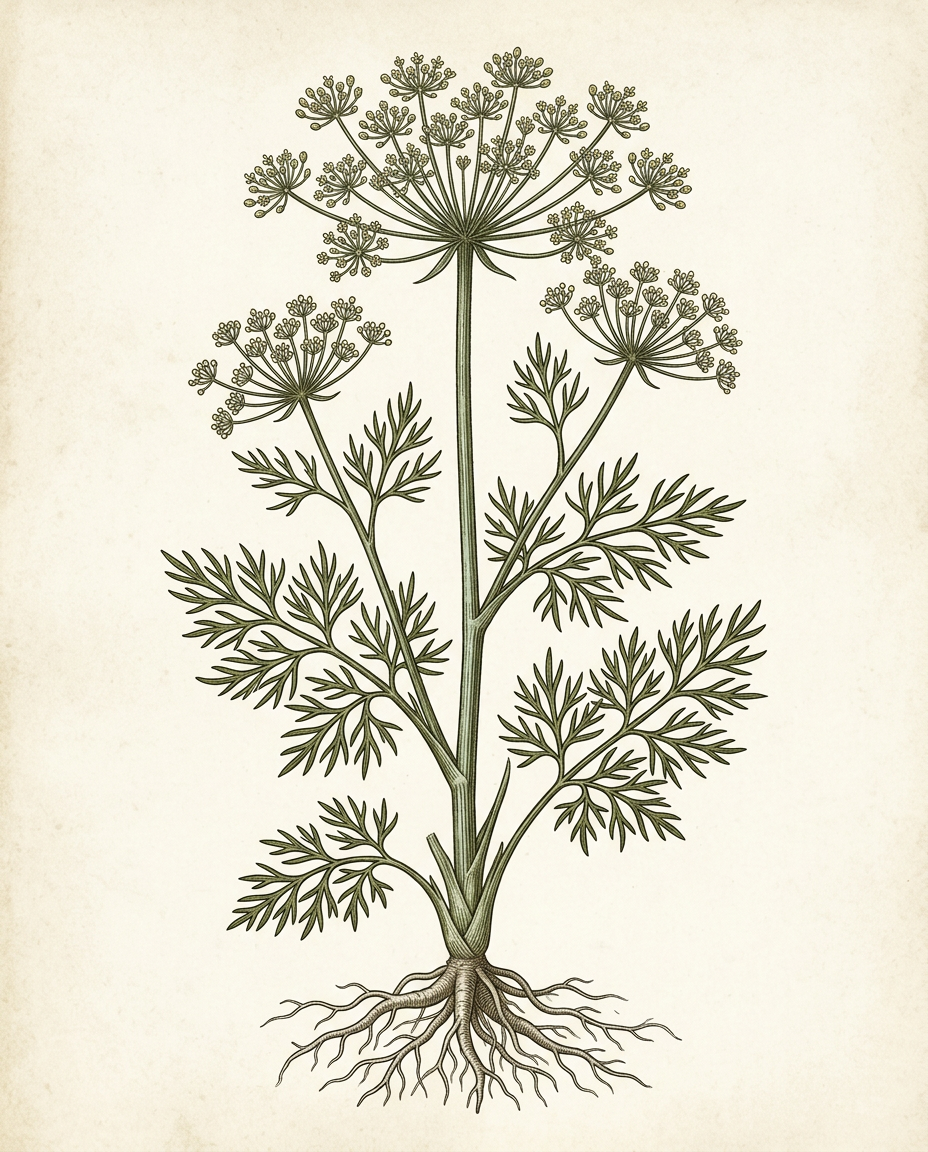
Plate ICoriandrum sativum — cilantro / coriander. Flat tri-lobed bright green leaves on slender stems, giving way to feathery upper foliage and white umbel flowers when the plant bolts. ASPCA non-toxic — Apiaceae herb.
How cilantro fits the cat-safe herb cluster.
Yes — cilantro is safe for cats. The ASPCA lists Coriandrum sativum (cilantro, coriander, Chinese parsley, dhania) as non-toxic to cats, dogs, and horses. All parts of the plant — leaf, stem, and seed — are safe at typical exposure levels.
The ASPCA verdict, verbatim: Scientific Name: Coriandrum sativum · Family: Apiaceae · Additional Common Names: Coriander, Chinese Parsley, Dhania · Non-Toxicity: Non-Toxic to Dogs, Non-Toxic to Cats, Non-Toxic to Horses.
Cilantro and coriander — same plant, different parts
A common naming-confusion worth resolving up front. In US English, "cilantro" refers to the fresh leaf and "coriander" refers to the dried seed. In UK English, "coriander" usually means both. Botanically it's all Coriandrum sativum — one plant, ASPCA non-toxic. Other common names you'll see on labels:
- Chinese parsley — common in US Chinese cuisine context.
- Dhania — Hindi / South Asian markets.
Whichever name your label uses, the cat-safety answer is the same.
Completes the Apiaceae herb-safety map
Cilantro is the last entry in the kitchen-herb cluster mapping for the parsley family. The full picture:
- Cilantro / coriander (this page) — non-toxic. ASPCA verified.
- Dill (Anethum graveolens) — non-toxic. ASPCA verified.
- Fennel (Foeniculum vulgare) — non-toxic. ASPCA verified.
- Celery — non-toxic.
- Carrot — generally safe (root is fine; foliage opinions vary).
- Parsley (Petroselinum crispum) — toxic. Furanocoumarins / photosensitization.
- Poison hemlock (Conium maculatum) — deadly. The lethal end of the family.
Family membership is not predictive of cat-toxicity in Apiaceae. The same Apiaceae family contains "perfectly safe culinary herb" and "kills humans on a single dose." Always check the species individually. Cilantro is on the safe list because it doesn't carry the furanocoumarin chemistry that makes parsley toxic.
Why cilantro looks so much like parsley
Visually, flat-leaf parsley and cilantro are notoriously hard to tell apart in a kitchen — both have similar three-lobed leaves on slender stems at similar size. Cilantro has slightly more delicate, more rounded leaflets and a stronger scent; parsley has slightly more pointed, more deeply lobed leaflets. But at a glance, picking up the wrong bunch in a supermarket is easy.
For cat-safety this means: if you can't tell which one is in your kitchen, don't assume. A cat investigating a fresh-cut bunch on the counter is fine if it's cilantro; a sustained chew on parsley is at least worth watching. Label your herb pots if you grow both.
The soapy-taste polymorphism
A genetics aside that comes up surprisingly often: roughly 10–20% of people perceive cilantro as soapy or unpleasant, while the rest perceive it as fresh and citrusy. The difference traces to a polymorphism in the OR6A2 olfactory receptor gene — people with one variant respond strongly to cilantro's aldehyde compounds (decanal and related), which happen to also be the dominant scent of soap and bedbug pheromones.
There's less published data on cat olfactory preference for cilantro. Cats have a very different scent receptor profile than humans (more receptors, different sensitivities). Some cats find cilantro mildly interesting, some are indifferent, none are at risk. A cat that walks away from a cilantro pot isn't expressing a safety signal — just a preference.
The essential-oil caveat (same as the other safe herbs)
The standard cat-safety nuance for all herbs: concentrated essential oils are different from live plants. Coriander / cilantro essential oil sits in the do-not-diffuse-around-cats category along with tea tree, peppermint, eucalyptus, cinnamon, citrus oils, and the other terpene-rich plant oils — because cats lack the UGT1A6 glucuronidation pathway to clear concentrated terpenes safely.
The ASPCA non-toxic verdict covers the live plant and culinary use. If you diffuse oils at home around cats, skip coriander oil.
Growing cilantro in a cat household
Cilantro is a quick cool-season annual that bolts fast in heat. Practical points:
- Sun to part shade. Tolerates more shade than dill or fennel. Hot afternoon sun triggers bolting.
- Even moisture. Drought stress is the main bolt trigger; mulch and steady watering extend the leaf-harvest window.
- Light loam, not rich soil. Over-fertilised plants bolt faster.
- Succession sow every 2–3 weeks for a continuous leaf supply through spring, autumn, and (in cool climates) summer.
- Bolt-resistant cultivars like 'Slow-bolt', 'Calypso', or 'Santo' add a few extra weeks of leaf phase.
No cat-specific precautions needed. Pots can sit at cat level; fresh-cut bunches on the counter are fine.
Where cilantro fits in the safe-herb cluster
For a cat-friendly kitchen herb garden, cilantro pairs with basil, rosemary, thyme, sage, dill, fennel, and lemon balm — all ASPCA non-toxic. The cat-positive plant for the same garden is catnip. Herbs to skip alongside this cluster: parsley (toxic), oregano (toxic), chives (and other Alliums, serious), mint (calibrated), and chamomile (toxic). For the full list see safe plants for cats.
What we have actually seen.
Mild attraction
Some cats find cilantro's aroma interesting; most are indifferent. No catnip-like behavioural effect. A cat sniffing a freshly cut bunch from the kitchen is normal investigation.
Trace culinary doses
Cilantro leaf in a salad, coriander seed in curry powder, garnish on tacos — all sub-clinical at typical kitchen quantities. ASPCA non-toxic across the whole plant.
Mild GI upset on big binges
A cat that strips a houseplant pot of cilantro may produce a vomit or loose stool from plant material in the stomach. Generic, self-limiting, not cilantro-specific.
Four common varieties.
Slow-bolt (longer leaf phase)
Selected cultivars (Calypso, Santo, Confetti) that resist bolting for a few extra weeks. The practical choice for kitchen-leaf harvest in warm climates. Same chemistry, same ASPCA non-toxic status.
Vietnamese coriander (NOT cilantro, similar flavour)
Note — Vietnamese coriander is a different plant entirely (Persicaria odorata, Polygonaceae family), sold for its similar coriander-like flavour in tropical Asian cooking. Not ASPCA-listed; less data on cats. If you grow it specifically, treat it as 'insufficient data' and avoid cat access. This page covers true Coriandrum sativum only.
Culantro (NOT cilantro, related but different)
Culantro (Eryngium foetidum) is another Apiaceae herb with cilantro-like flavour, used in Caribbean and Latin American cooking. Not separately ASPCA-listed. Same family lesson applies — check the species.
Keeping the plant alive.
Sun to part shade
Tolerates more shade than dill or fennel. Direct afternoon sun in hot climates causes premature bolting; a brighter morning + cooler afternoon position extends the leaf-harvest window.
Even moisture
Cilantro is a cool-season herb that wants steady moisture and resents drying out. Drought stress is the main trigger for bolting (going to flower and seed too early).
Light, well-drained
Light loam or potting mix with good drainage. Doesn't need rich soil — over-fertilised plants bolt faster and produce less leaf.
Quick succession
Cool-season annual. In warm climates it bolts within weeks; the trick is succession sowing every 2–3 weeks for continuous fresh leaf. In autumn, sow as a long-lasting cool-weather crop.
- ASPCA Animal Poison Control Center. Toxic and Non-Toxic Plants: Cilantro.Accessed June 2026 · aspca.org · Coriandrum sativum (Coriander, Chinese Parsley, Dhania) · Non-Toxic to cats, dogs, horses · Family: Apiaceae
- Royal Horticultural Society. Coriandrum sativum growing guide.Horticultural reference · cultivation, succession, bolt-resistance
If you liked this, also safe.