Oregano
Origanum vulgare hirtum
Oregano is toxic to cats per the ASPCA. Concentrated essential oils (carvacrol, thymol) cause GI upset; cats lack the liver enzymes to clear them efficiently. Practical risk is dose-dependent.
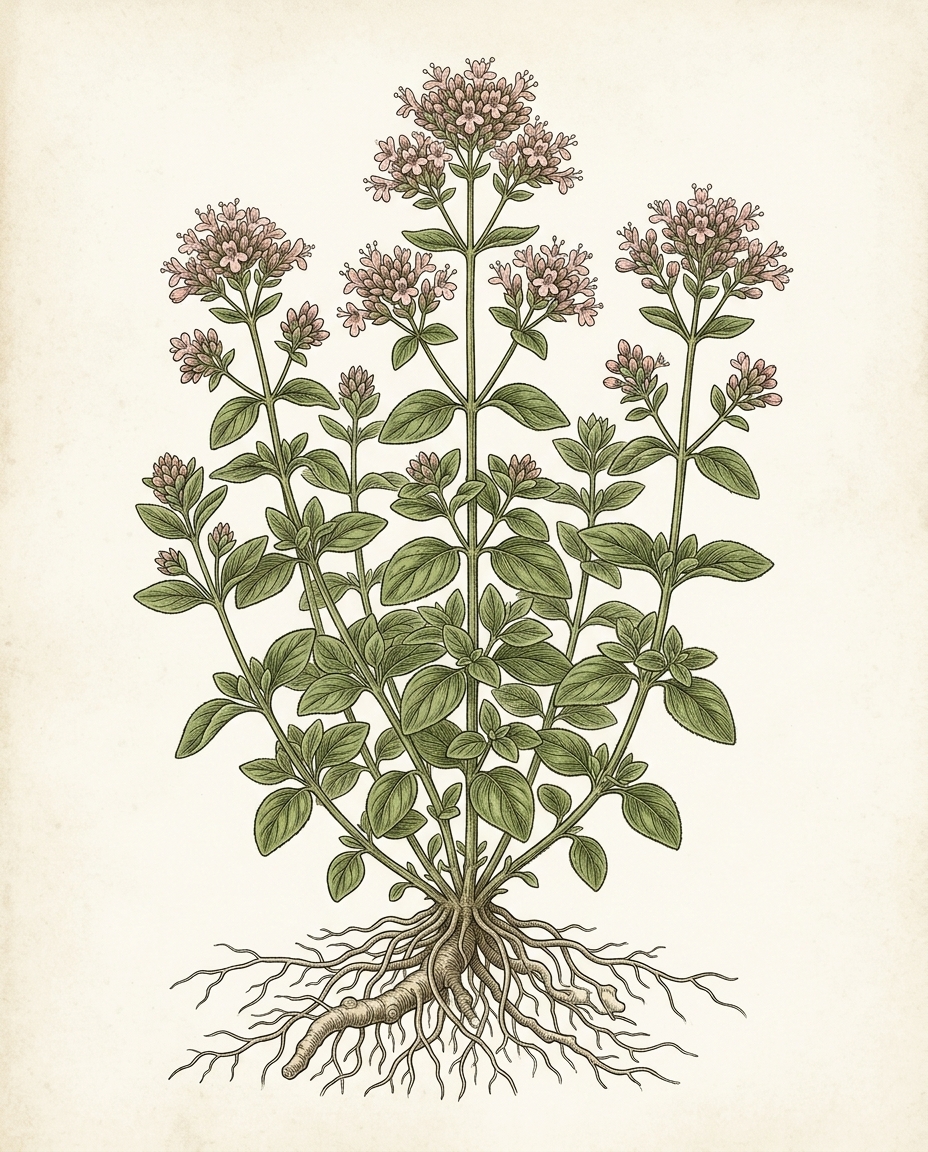

Plate IOriganum vulgare hirtum — Greek oregano. Small oval leaves on woody square stems with clusters of pink-white flowers. ASPCA toxic — essential oils (carvacrol, thymol).
Three plants that look the part, without the risk.
Same Mediterranean kitchen-herb aesthetic without the toxic essential-oil load — these substitutes give the herb-garden look at ASPCA non-toxic.
Basil
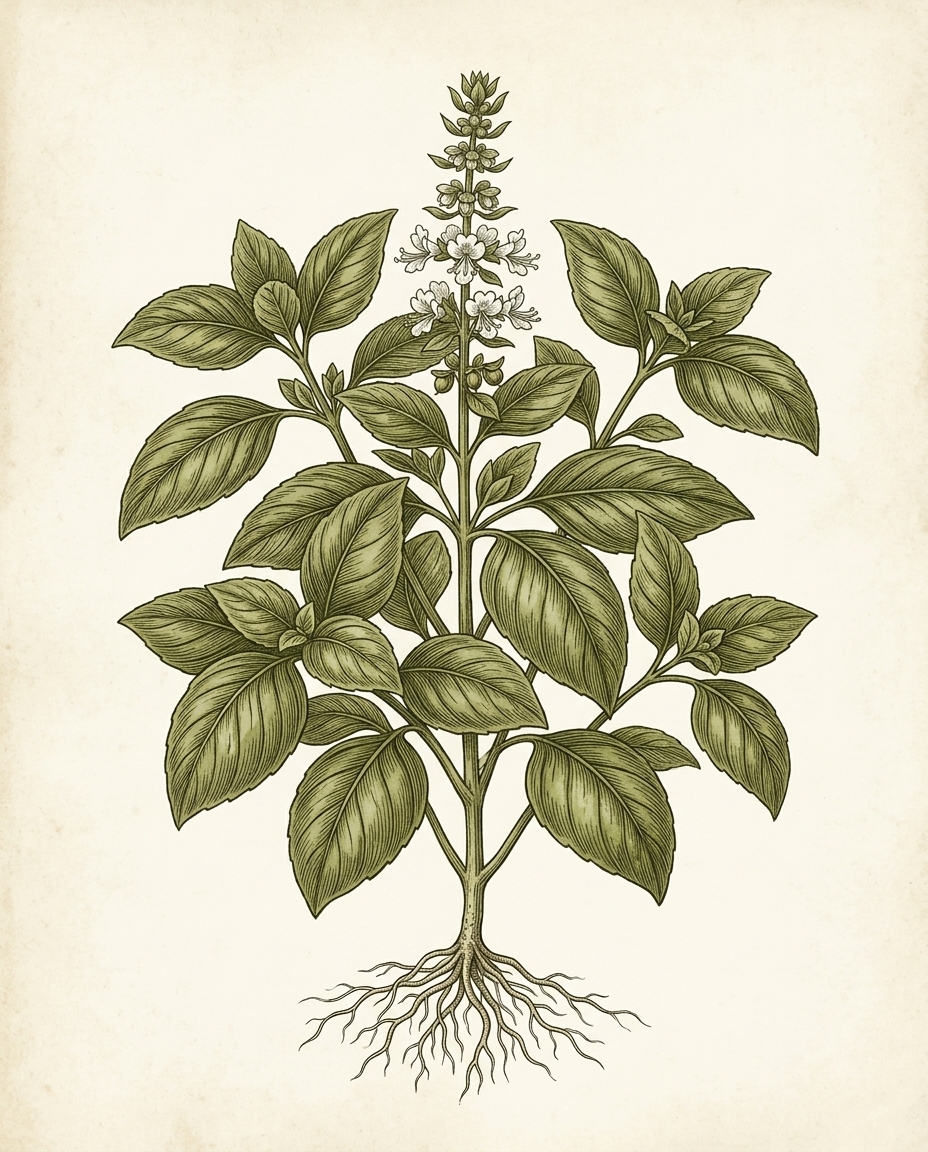
For Mediterranean culinary use at ASPCA non-toxic. The cleaner-safety counterpart to oregano in the same dishes.
Rosemary
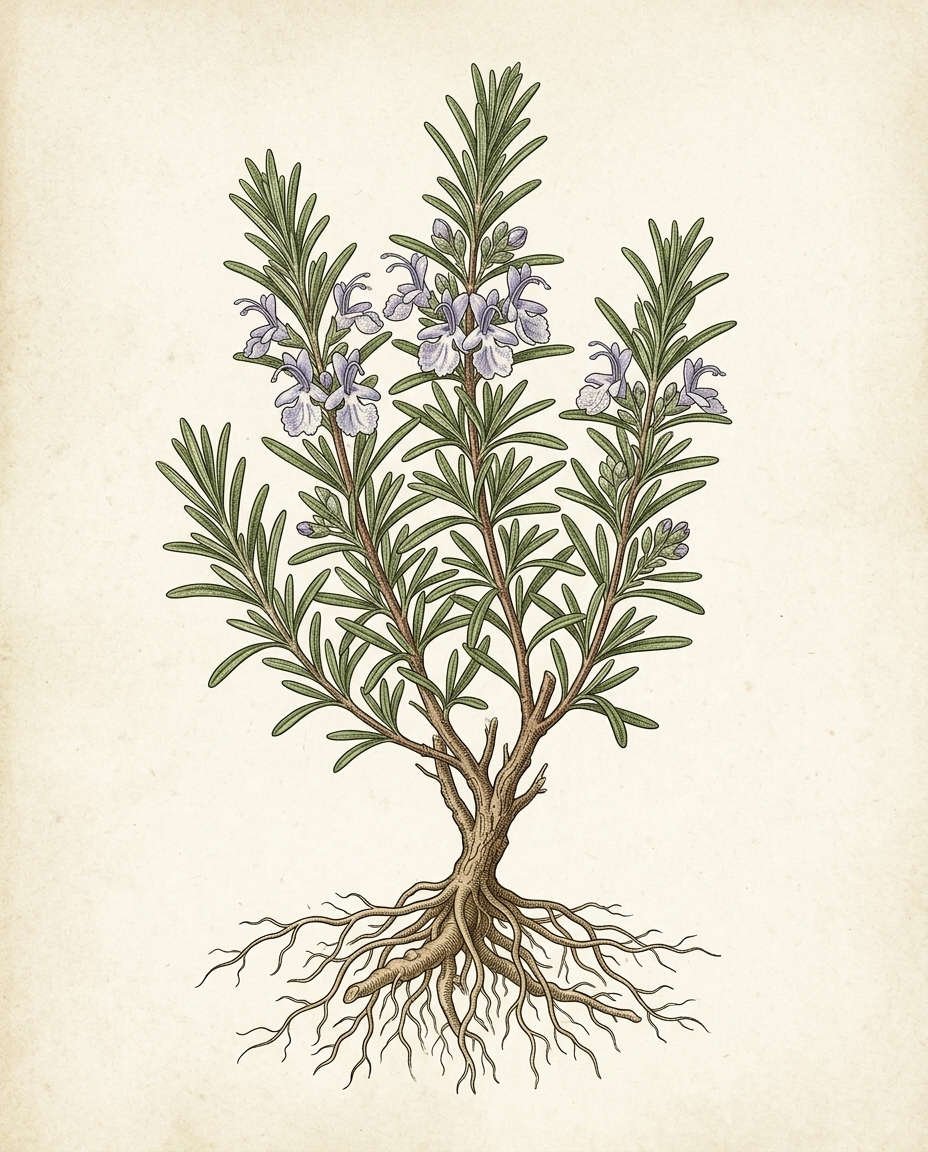
For woody Mediterranean herbs in a kitchen pot. ASPCA non-toxic, stronger scent, also Lamiaceae but cleared.
Thyme
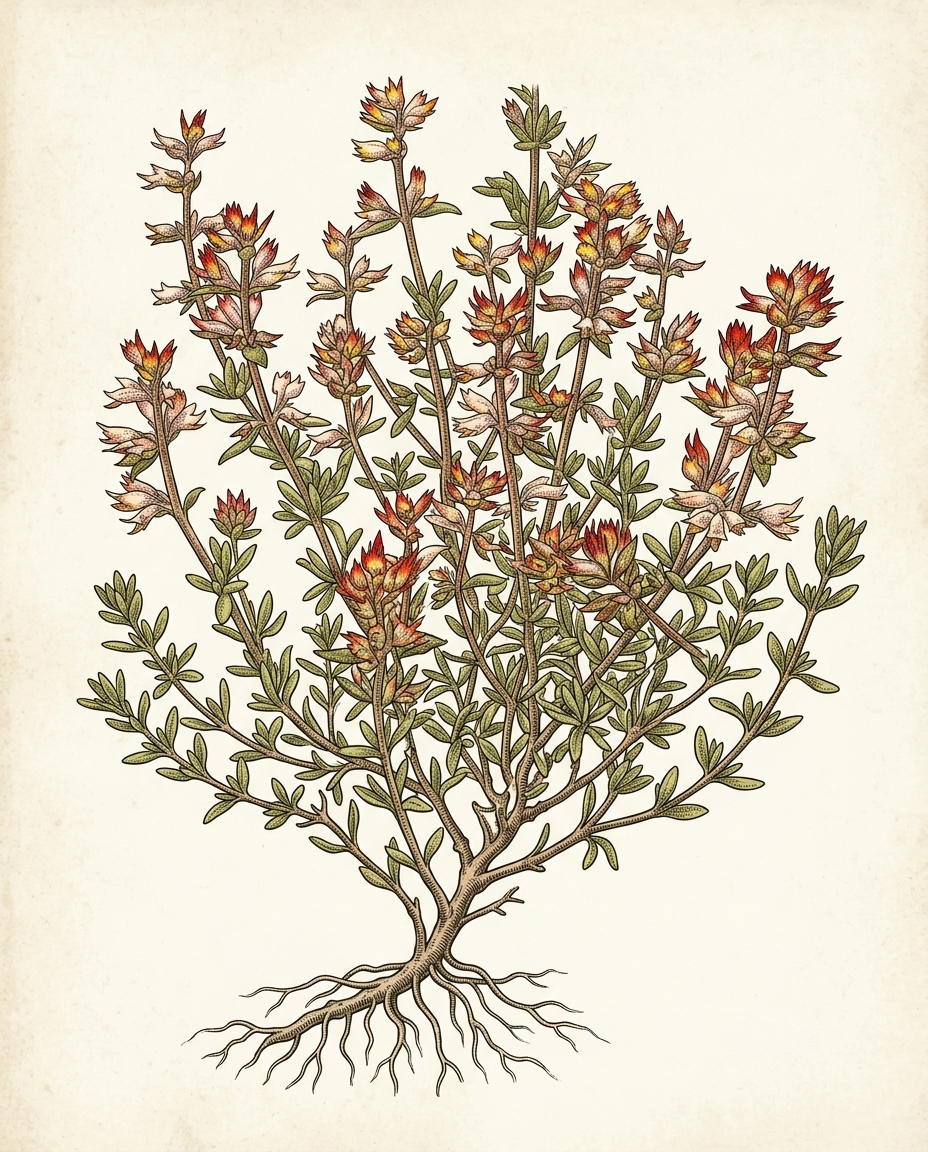
For low-growing aromatic Lamiaceae at ASPCA non-toxic. Similar role in slow-cooked dishes; same shelf neighbour in a herb garden.
What it does to a cat.
No — oregano is not safe for cats. The ASPCA lists Origanum vulgare hirtum (Greek oregano) as toxic to cats, dogs, and horses. The mechanism is the plant's heavy load of phenolic essential oils — primarily carvacrol and thymol — which cats clear poorly because they lack the UGT1A6 glucuronidation enzyme pathway dogs use to detoxify these compounds.
The ASPCA verdict, verbatim: Additional Common Names: Greek Oregano · Scientific Name: Origanum vulgare hirtum · Family: Lamiaceae · Toxicity: Toxic to Dogs, Toxic to Cats, Toxic to Horses.
Why oregano is on the toxic list when basil isn't
This trips owners up — oregano and basil are both in the Lamiaceae (mint) family, both common kitchen herbs, both sold in pots at the supermarket. Basil is ASPCA non-toxic; oregano isn't. The difference is the chemistry, not the family.
- Basil's main aromatic compound is linalool, which cats metabolise reasonably well.
- Oregano's main aromatic compounds are carvacrol and thymol — phenolic monoterpenes. Cats can't efficiently glucuronidate phenols (the UGT1A6 enzyme deficiency), so exposure stays in the cat's system longer, the liver carries a heavier load, and toxicity develops at lower doses than in dogs or humans.
ASPCA splits the Lamiaceae family by individual essential-oil profile rather than blanket-classifying. Rosemary, thyme, sage are non-toxic. Oregano, mint, pennyroyal are toxic. Same plant family, opposite verdicts.
Live plant vs concentrated essential oil
This is the most important distinction in practice. The toxicity scale runs from trivial to dangerous depending on the form:
- Single leaf chewed in passing — trace dose. The cat will be fine, possibly a single mild vomit at worst.
- Whole sprig or several stems eaten — meaningful dose. Expect GI upset (vomiting, drool, refusal of food) for several hours, resolution in a day. Worth a vet call if signs persist.
- Dried oregano shaken from a spice jar — heavier concentration than fresh leaves per gram. A cat that licks a counter dusted with oregano gets a real exposure.
- Concentrated oregano essential oil — different category, much more serious. Diffused or topical essential oils accumulate in the cat's system over time. Even small repeated exposures can produce systemic toxicity. Oregano oil belongs in the same "skip around cats" list as tea tree, peppermint, eucalyptus, cinnamon, and clove.
For the live garden plant, the practical risk is real but manageable. For the bottled concentrated oil, the risk is high enough to avoid entirely.
What it does to a cat
After a meaningful chew on the live plant or a lick of dried oregano:
- Vomiting and diarrhea (1–6 h) — the GI lining responds to the essential-oil irritation.
- Drooling and oral discomfort — some cats react to the strong taste with visible drool, mouth pawing, and brief food refusal.
- Reduced appetite for half a day to a day — the cat may skip a meal or two. Usually self-resolves.
The cat is uncomfortable for hours, sometimes a day, and recovers. Severe cases are rare with the live plant; they happen mainly with concentrated essential oil exposures over time.
What to do if your cat ate a meaningful amount
- Call your vet or the ASPCA Animal Poison Control Center at 888-426-4435 for severity assessment.
- Note the form and amount. Single leaf or full stem? Live plant or dried jar? Was a diffuser running?
- Treatment is supportive. Anti-emetics if vomiting is heavy, subcutaneous fluids if the cat is off water, monitoring for 24–48 hours.
- For essential-oil exposures, move the cat to fresh air immediately and call the vet. Diffuser exposures need ventilation; topical exposures need bathing.
Cat-safe alternatives in a kitchen herb garden
The cleaner Lamiaceae picks at ASPCA non-toxic: basil, rosemary, thyme, sage. Round out the safe-herb cluster with dill (Apiaceae) and catnip (Lamiaceae, the cat-attractive one). The other herbs to skip: chives and the rest of Allium (organosulfur anemia), parsley (furanocoumarins, calibrated), and mint (calibrated, same essential-oil family as oregano). For the full reference, see toxic plants for cats.
What we have actually seen.
Vomiting and diarrhea
First signs — onset 1–6 hours after a meaningful chew. The essential oils irritate the GI lining and the cat's liver works harder than a dog's to clear them.
Drooling and oral discomfort
Some cats react to the strong essential-oil taste with visible drooling, mouth pawing, and refusal of food for a few hours.
Reduced appetite
Cats may refuse food for half a day to a day after a noticeable oregano ingestion. Usually self-resolves.
Concentrated oil exposure
Diffused or topical oregano essential oil is a separate, more serious problem. Cats lack glucuronidation enzymes to clear concentrated terpenes; even small undiluted exposures can produce systemic toxicity.
- ASPCA Animal Poison Control Center. Toxic and Non-Toxic Plants: Oregano.Accessed June 2026 · aspca.org · Origanum vulgare hirtum · Toxic to cats, dogs, horses · Greek oregano · Family: Lamiaceae
- Pet Poison Helpline. Essential oils and pets — cats lack glucuronidation pathway.Clinical reference · 2024
- Merck Veterinary Manual. Essential oil toxicosis in cats.Standard veterinary toxicology reference · UGT1A6 deficiency in cats