Basil
Ocimum basilicum
Yes — basil is safe for cats. The ASPCA lists Ocimum basilicum as non-toxic. A cat that nibbles a leaf is fine; the only caveat is the usual mild upset from eating a lot of any plant.
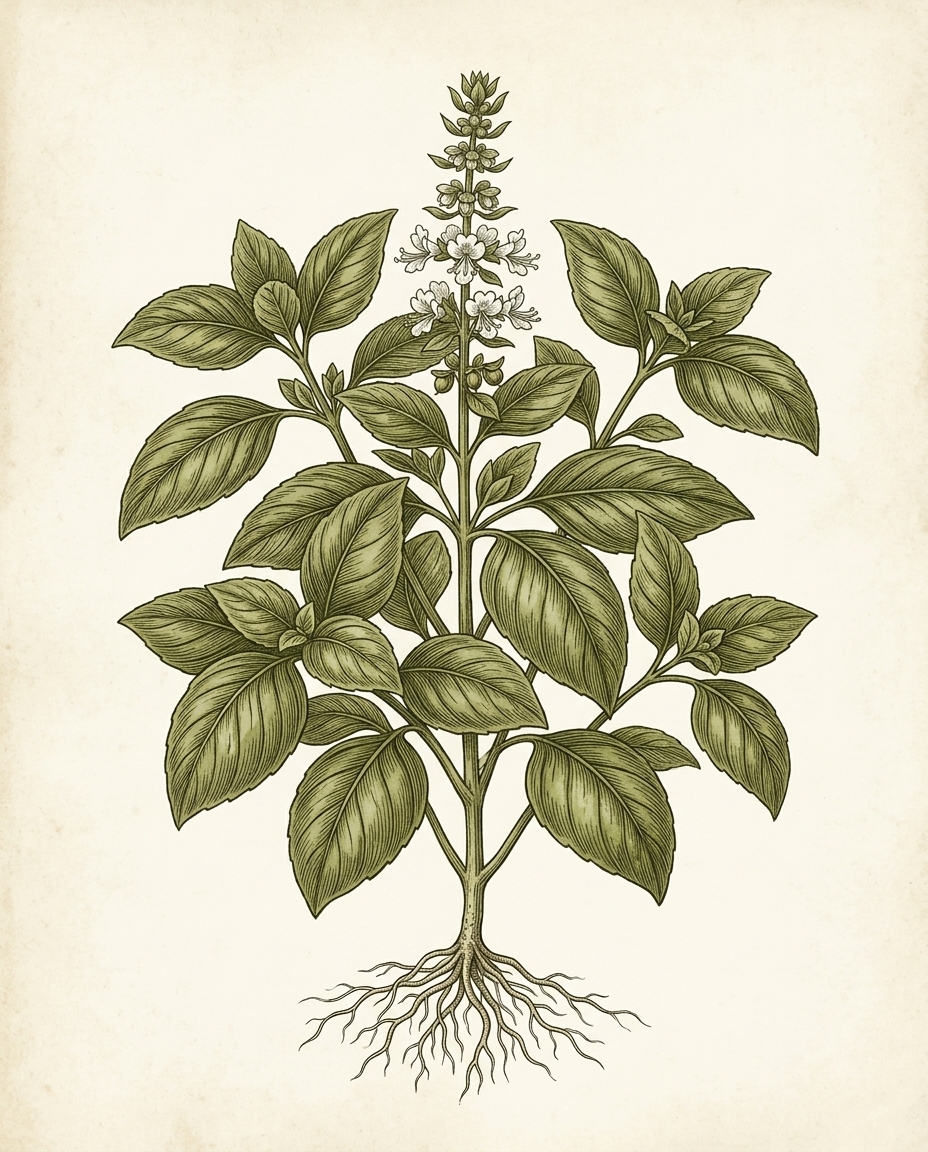
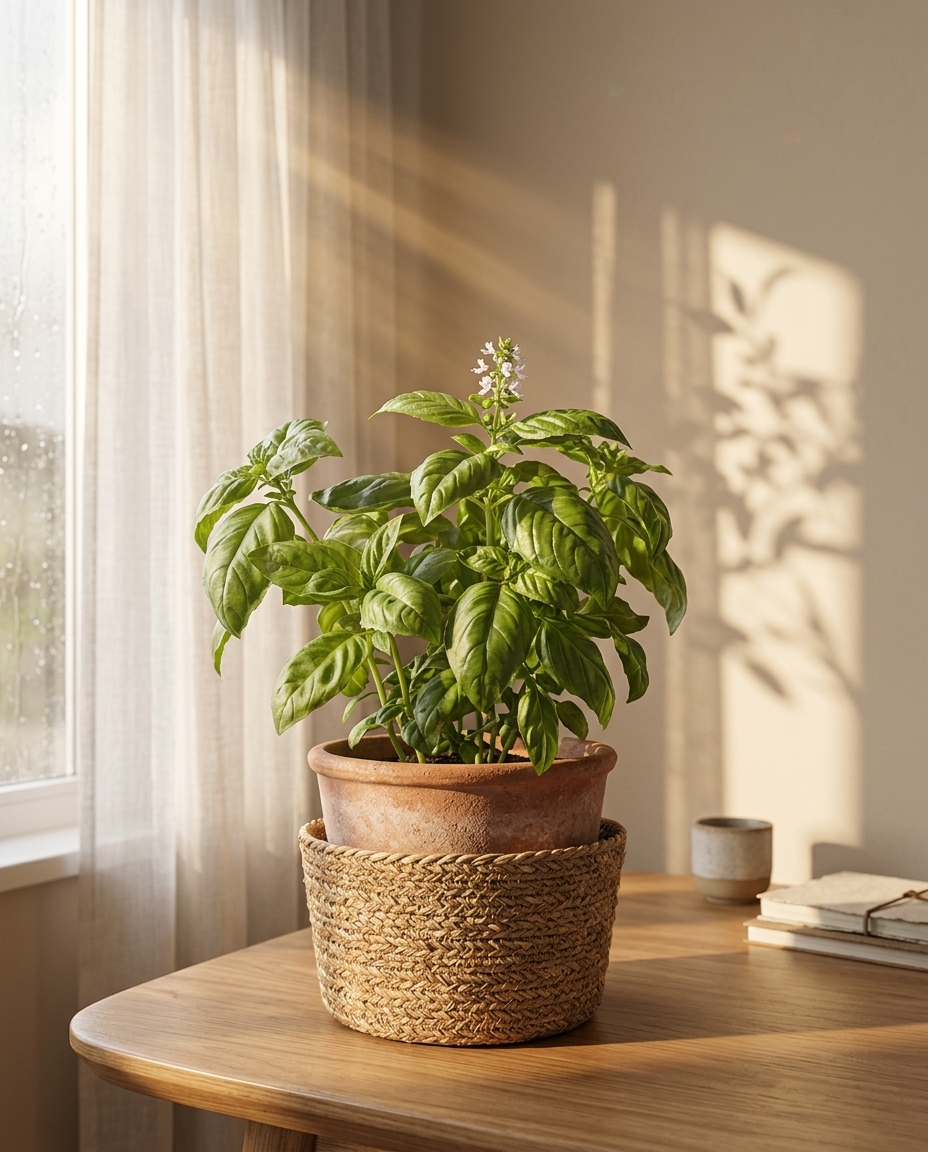
Plate IOcimum basilicum — sweet basil. A non-toxic culinary herb, safe to keep on a sunny kitchen windowsill with a cat in the house.
What happens if your cat eats it.
Nothing to worry about. The ASPCA lists basil (Ocimum basilicum) as non-toxic to cats. You can keep a pot on the windowsill and let it share the kitchen — a cat that samples a leaf will be perfectly fine, with at most the mild stomach upset any animal might get from eating a lot of fibrous greenery.
In practice, basil rarely tempts cats at all. Its strong aroma, prized in cooking, tends to make cats sniff once and move on. That makes it one of the most relaxed plants to own in a feline household: safe if eaten, usually ignored anyway.
One distinction worth making
The growing or fresh herb is safe. Concentrated basil essential oil is a different thing entirely and, like most essential oils, should be kept away from cats. If you grow basil to harvest, also keep it free of pesticides and systemic feeds in case your cat is the sampling type.
Not all herbs are this friendly
Basil is a happy exception in a mixed bag. In the same mint family, lavender is toxic, and the Allium herbs — chives, garlic, onion — are dangerous. For an aromatic herb a cat can genuinely enjoy, see catnip.
What we have actually seen.
No toxicity
Basil contains nothing poisonous to cats. A nibbled leaf is entirely harmless.
Mild stomach upset
As with any plant, a cat that eats a large amount of leaves may vomit from the fibre — not from a toxin.
Indifference
The strong aroma means most cats sniff once and walk away. Basil is rarely a target for chewing.
Watch the additives
Keep basil free of pesticides or systemic plant feeds if your cat does like to sample it.
Four common varieties.
Sweet Basil (classic culinary)
The standard kitchen basil — large soft leaves, fast-growing, happiest in warmth and sun.
Thai Basil (anise-scented)
Purple stems and a spicier aroma. Equally non-toxic and a touch more cold-tolerant.
Keeping the plant alive.
Bright, sunny
Basil wants at least six hours of light. A south-facing windowsill keeps it compact and flavourful.
Keep moist
Water when the top of the soil feels dry. Basil wilts quickly when thirsty but recovers fast.
Free-draining mix
Standard potting compost with good drainage. Pinch flower spikes to keep leaves coming.
Sunny worktop
A kitchen windowsill suits both of you. Most cats ignore the strong scent, but it does no harm if sampled.
- ASPCA Animal Poison Control Center. Toxic and Non-Toxic Plants: Basil.Accessed May 2026 · aspca.org
- Pet Poison Helpline. Plants Non-Toxic to Cats.Reference list · 2024 ed.
If you liked this, also safe.