Lavender
Lavandula angustifolia
Yes — lavender is toxic to cats. The ASPCA attributes it to linalool and linalyl acetate. The plant itself causes mild upset; concentrated lavender essential oil is far more dangerous.
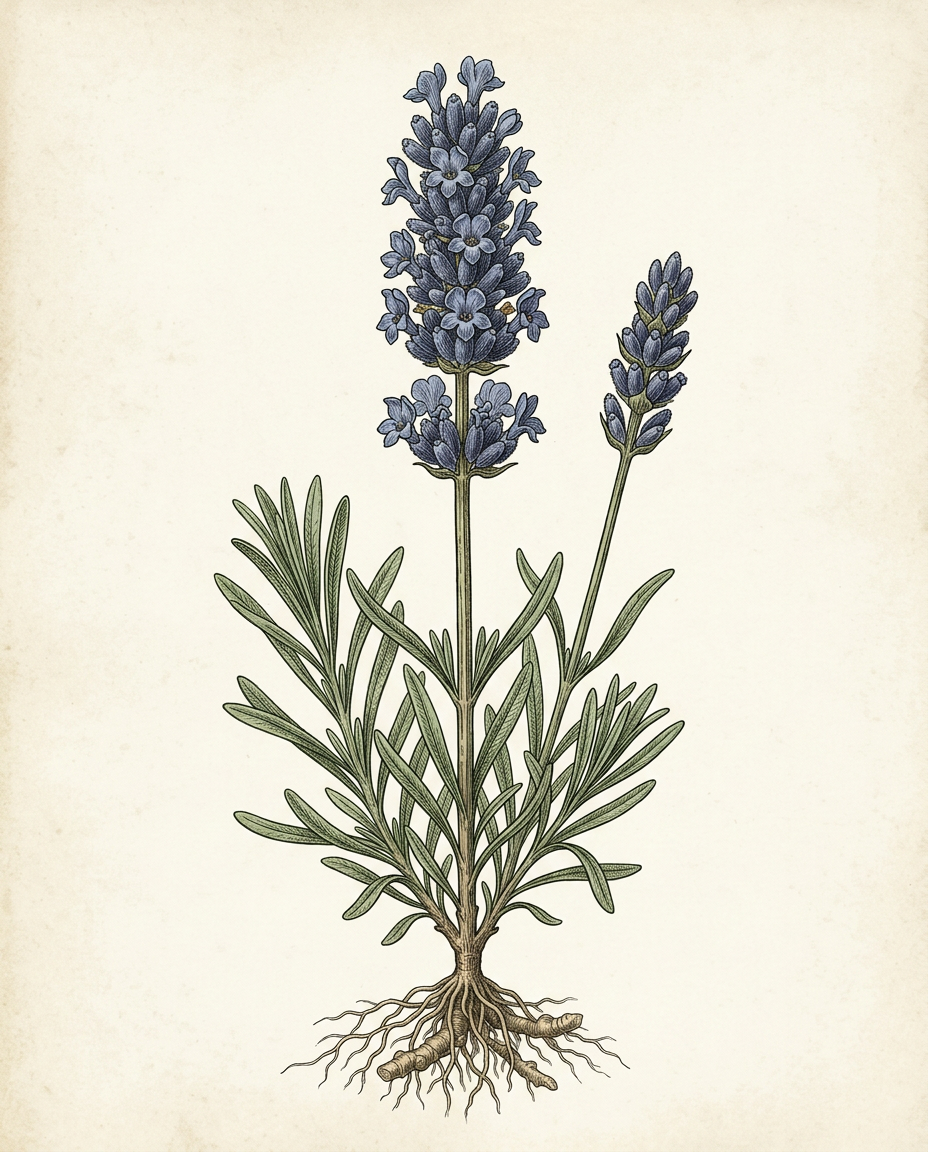
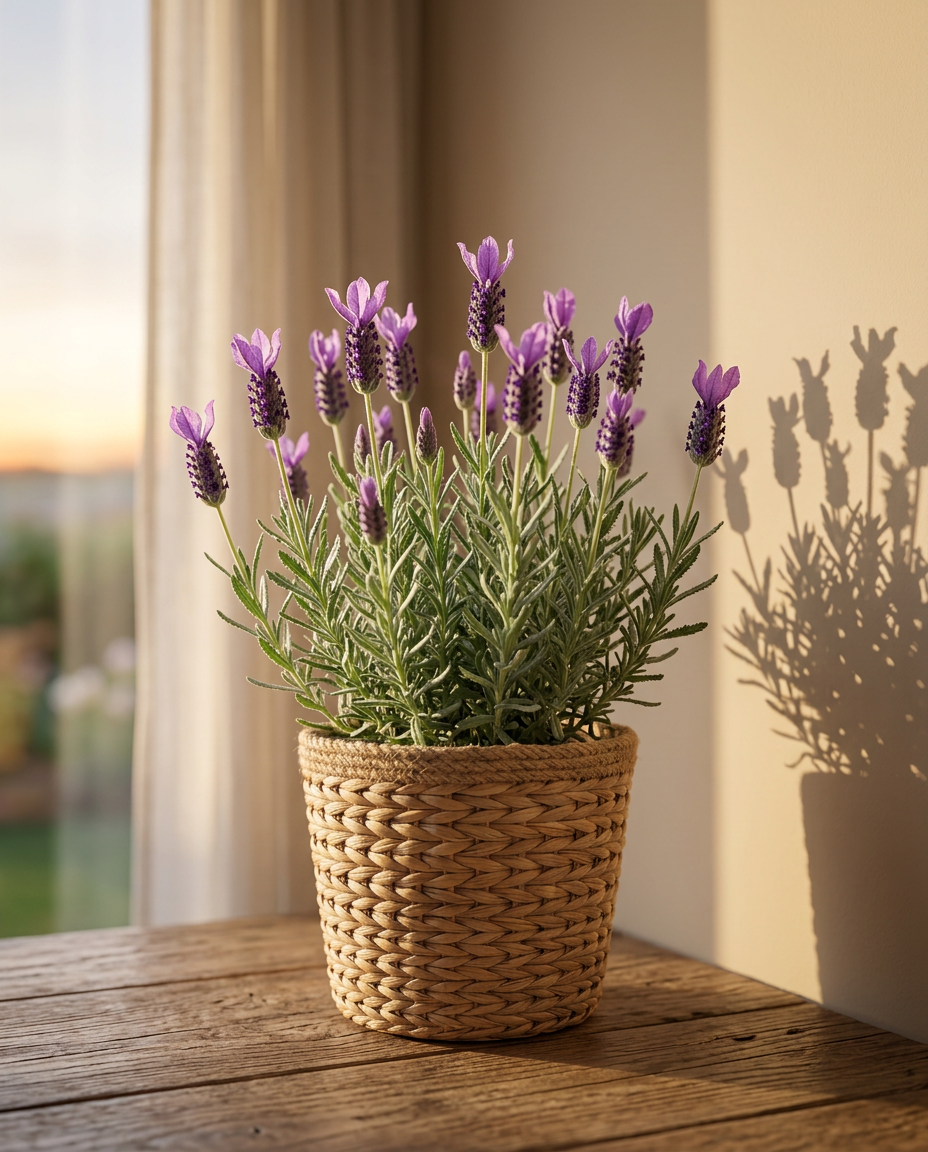
Plate ILavandula angustifolia — English lavender. The fragrance comes from linalool and linalyl acetate, the same compounds that make it toxic.
Three plants that look the part, without the risk.
Fragrant, soft greenery for a cat home — all ASPCA non-toxic.
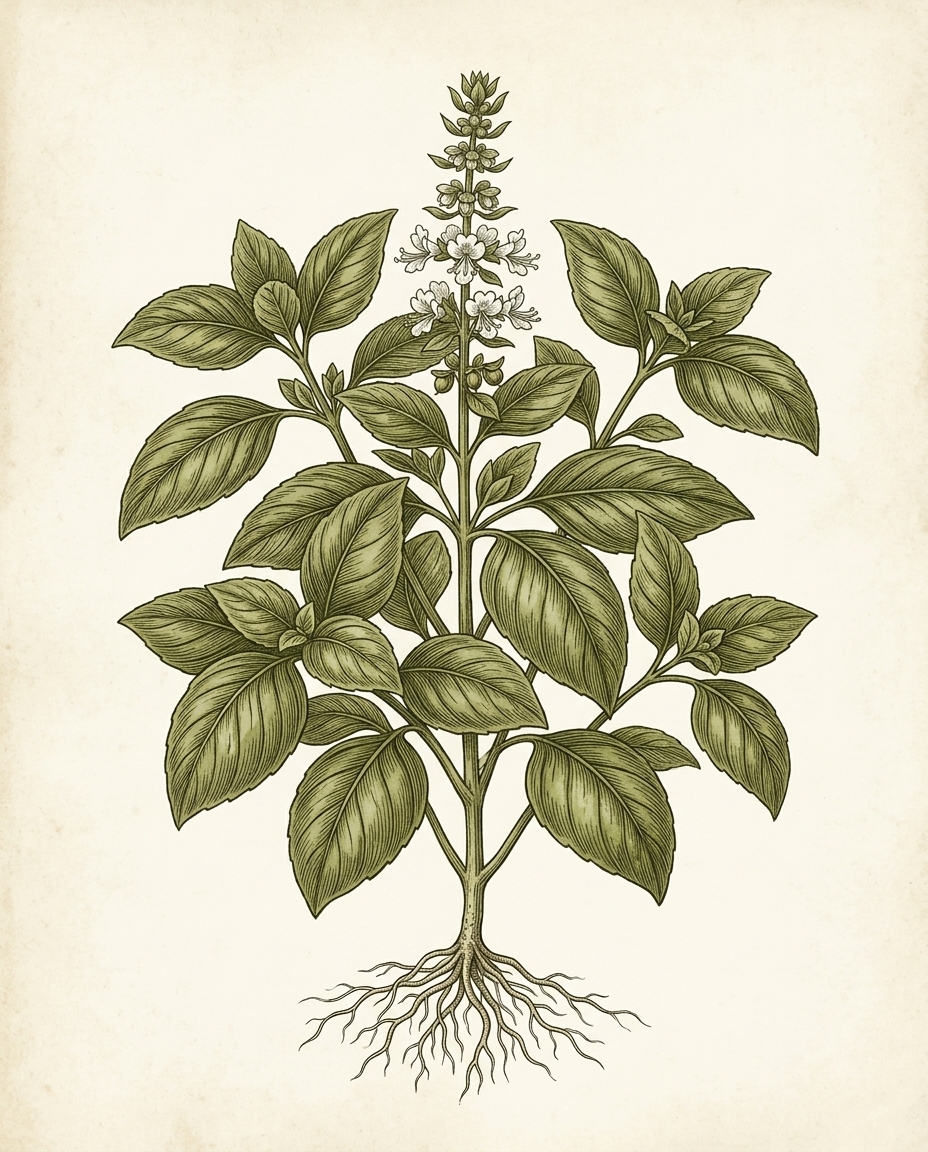
Basil
An aromatic kitchen herb that is safe for cats — a fragrant pot without the toxin.
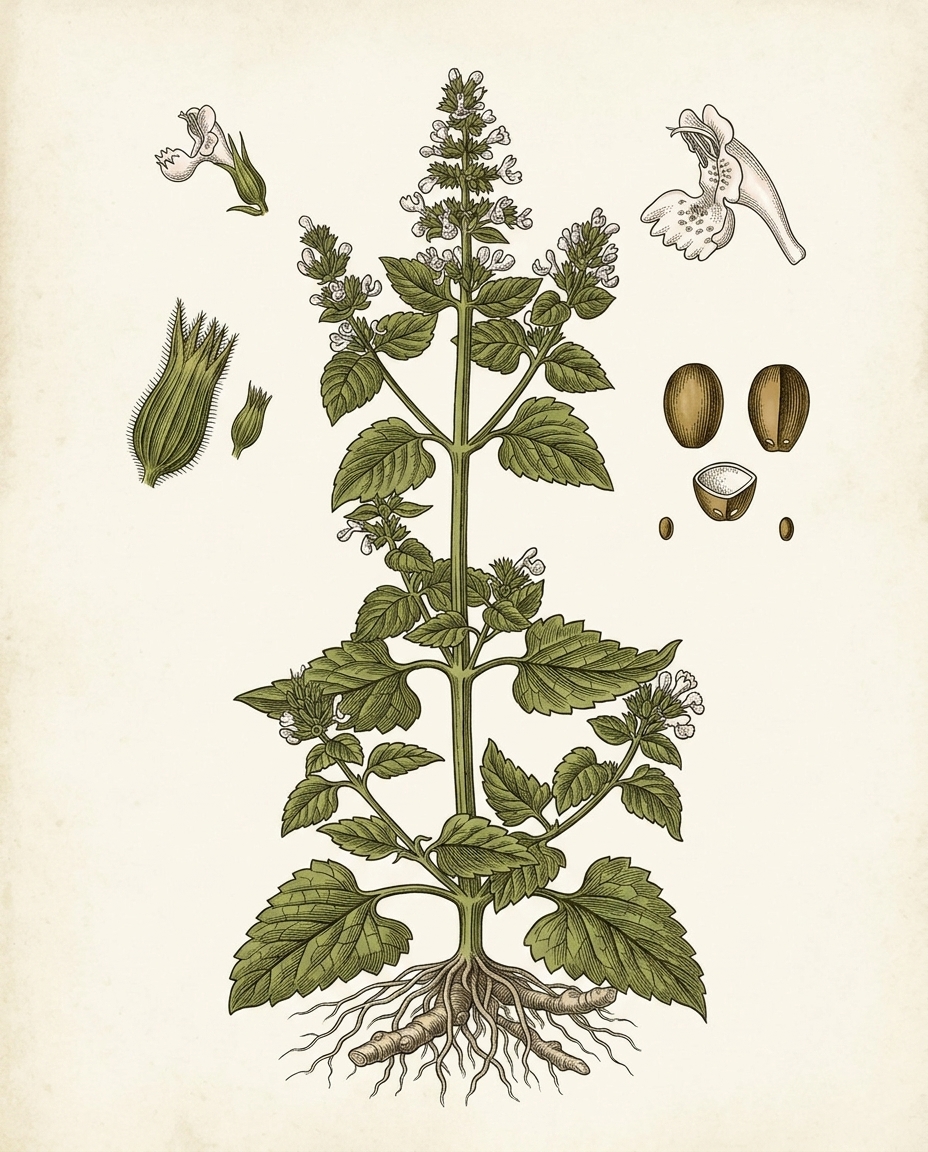
Catnip
A scented mint-family herb cats can actually enjoy. Safe and, for some, irresistible.
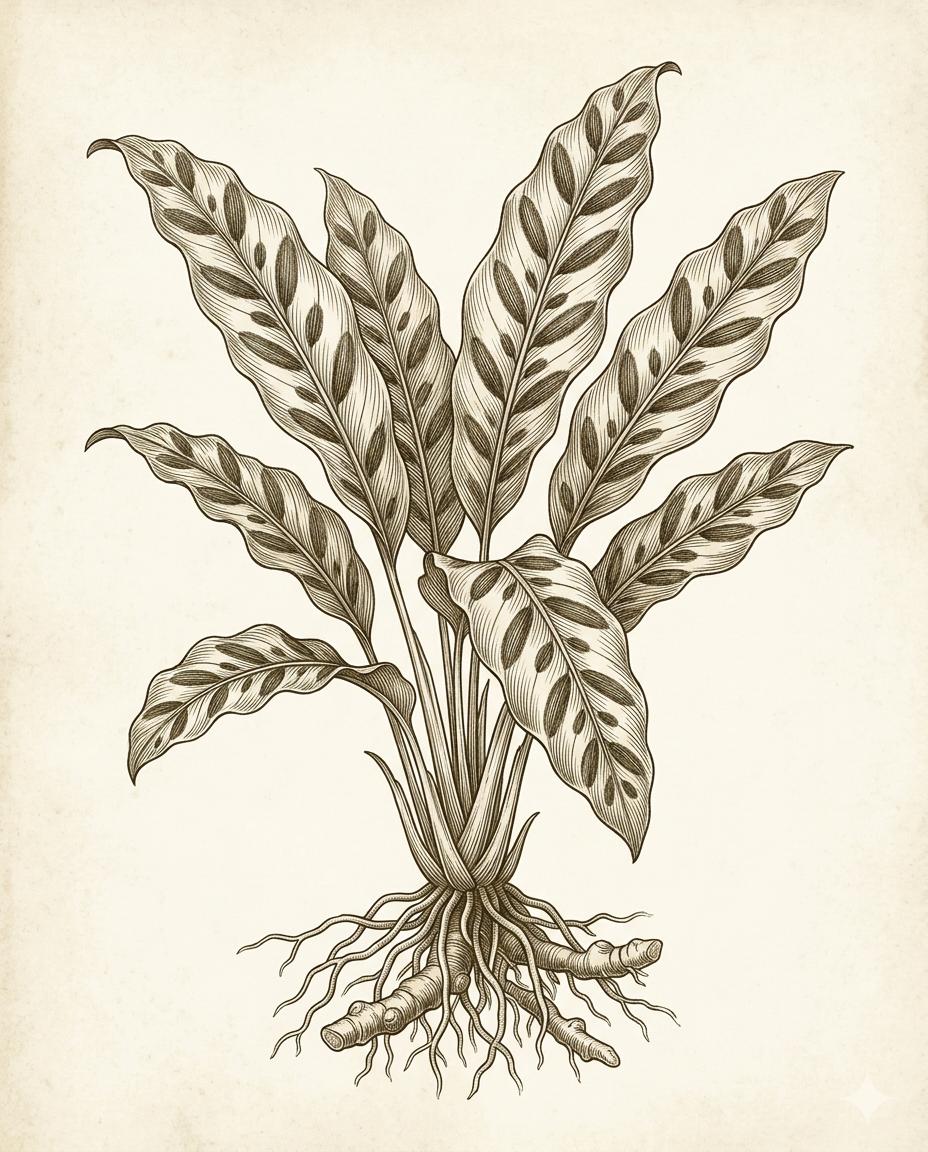
Calathea
Soft, calming foliage for a bedroom corner where you might have wanted lavender. Non-toxic.
What it does to a cat.
Yes — lavender is toxic to cats. The ASPCA lists Lavandula angustifolia as toxic, naming linalool and linalyl acetate — the very compounds responsible for its scent — as the toxic principles. The signs from eating the plant are usually mild: nausea, vomiting, and a temporary loss of appetite.
The plant is the smaller half of the problem. Lavender essential oil is concentrated and considerably more dangerous, because cats lack the liver enzymes to process these compounds efficiently. Diffusers, room sprays, and spills are the exposures that most often end at the vet, and asthmatic cats are especially vulnerable to airborne oil.
A mint-family scent without the risk
Lavender sits in the mint family (Lamiaceae) alongside two herbs cats can safely share a room with: basil and catnip. Both are aromatic and ASPCA-safe. If you kept lavender for calm rather than cooking, soft foliage like calathea suits a bedroom corner, and a feline pheromone diffuser does the calming job that essential oils cannot safely do.
If you suspect oil exposure
Do not let the cat groom oil from its fur. Call your vet or ASPCA Animal Poison Control at (888) 426-4435 promptly — oil exposures can escalate faster than plant ingestions.
What we have actually seen.
Nausea & vomiting
Chewing the plant irritates the gut. Drooling, vomiting, and reduced appetite are the usual signs.
Essential-oil toxicity
Lavender oil is concentrated and far more dangerous — cats lack the liver enzymes to clear it. Diffusers, sprays, and spills are the real hazard.
Lethargy
Larger ingestions or oil exposure can leave a cat dull and unsteady. Treat as a vet matter.
Skin & respiratory irritation
Topical oil or heavy diffuser use can irritate skin, eyes, and airways, especially in asthmatic cats.
- ASPCA Animal Poison Control Center. Toxic and Non-Toxic Plants: Lavender.Accessed May 2026 · aspca.org
- Pet Poison Helpline. Essential Oils and Cats.Clinical brief · 2024 ed.