Calathea
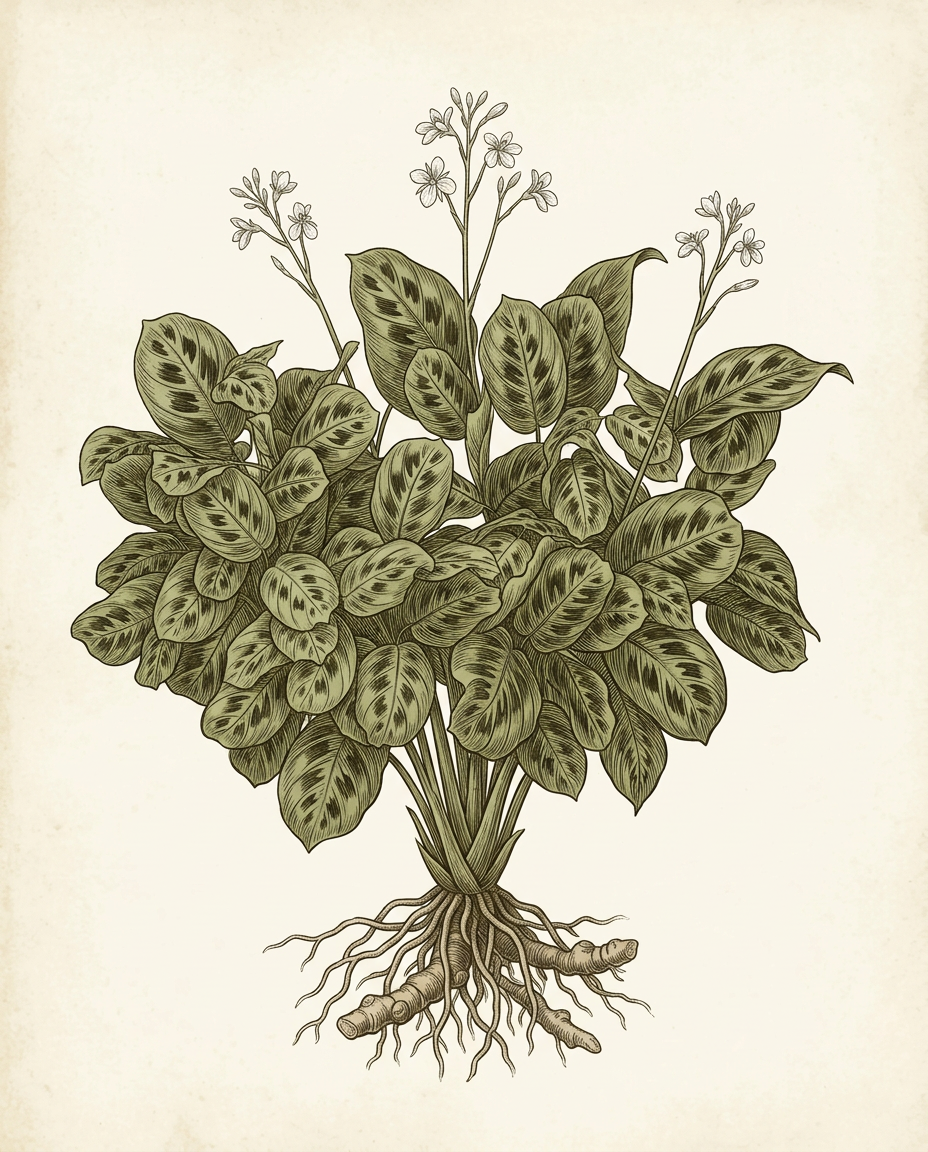
Calathea orbifolia
Painted leaves and nyctinastic movement without a toxic compound. The ASPCA lists calathea as non-toxic to cats — a rare tropical that matches philodendron's look safely.
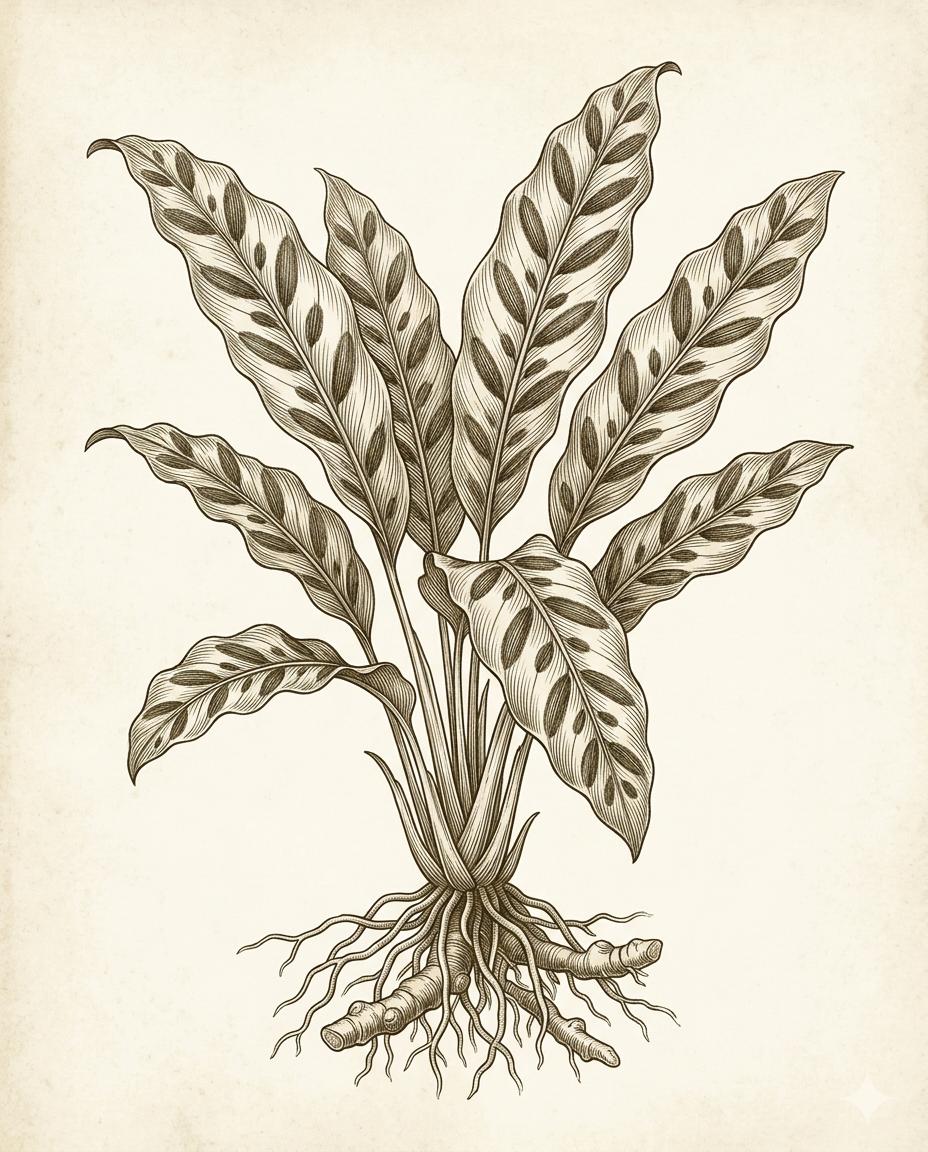
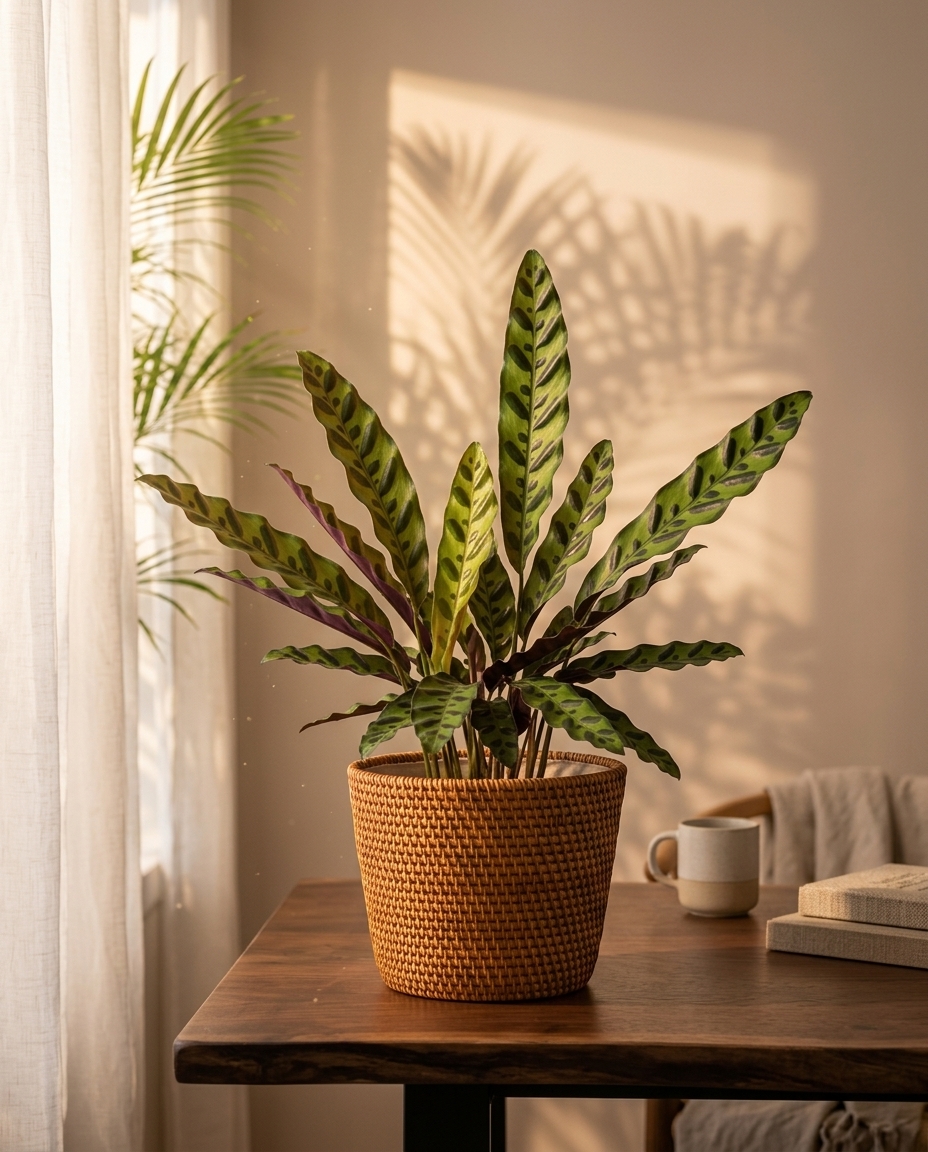
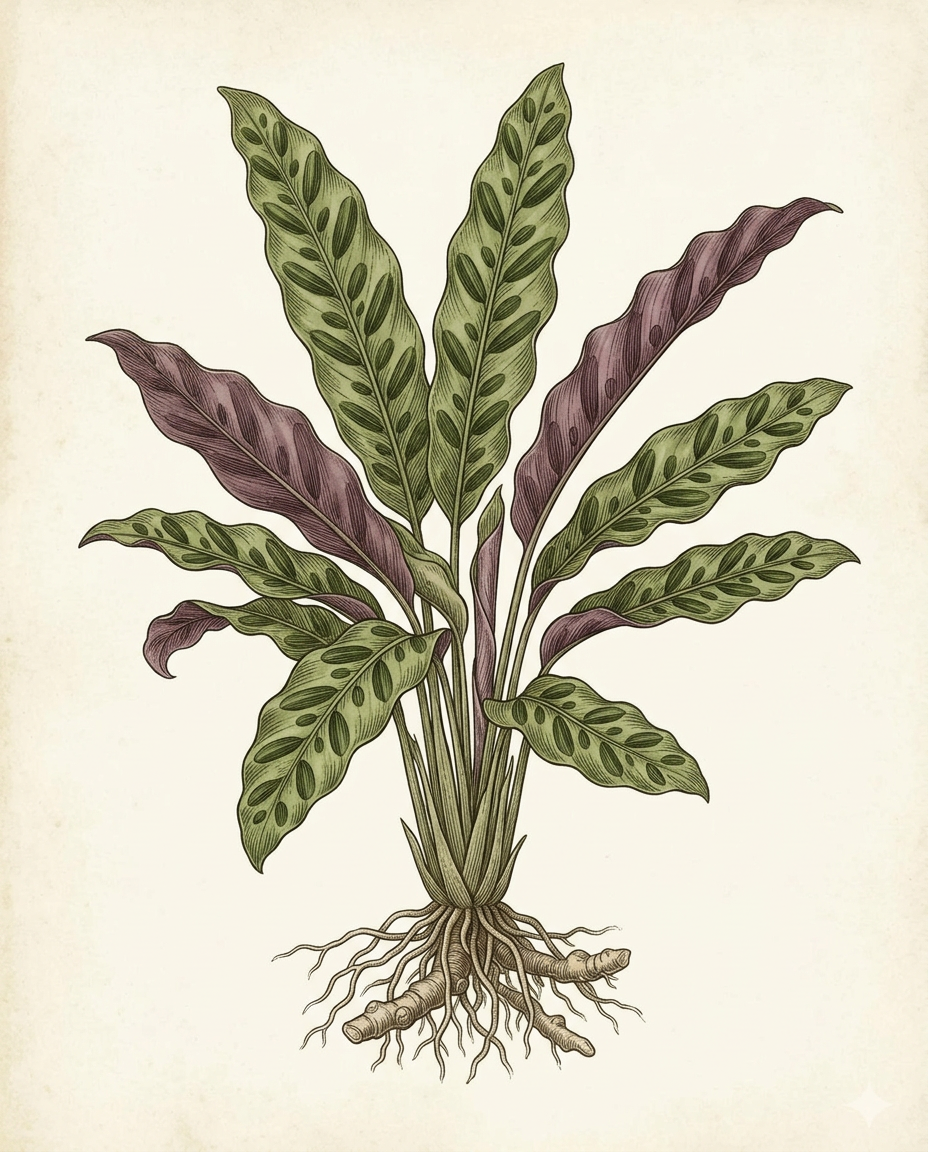
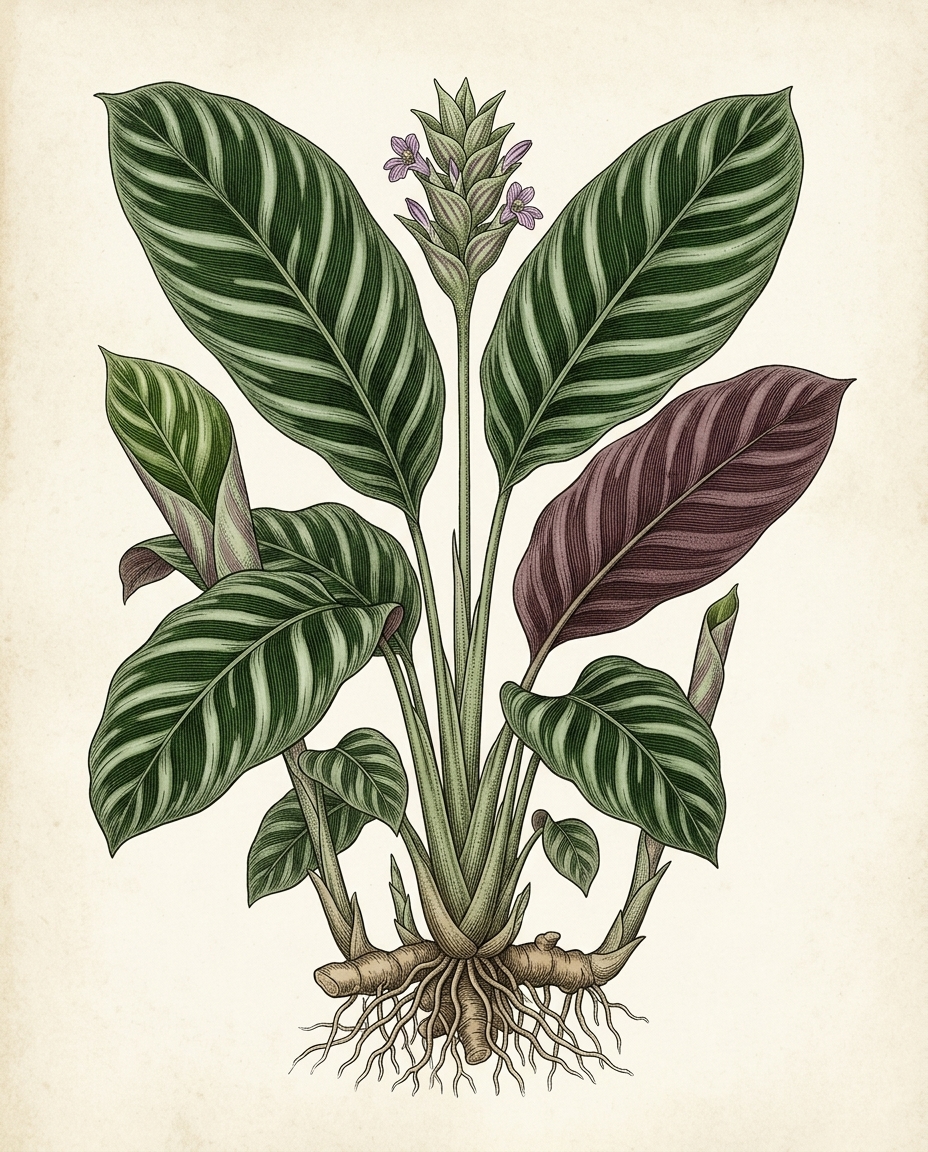
Plate ICalathea orbifolia — one of many patterned species sold as prayer plants. All are non-toxic to cats per ASPCA.
What happens if your cat eats it.
Yes — calathea is safe for cats. The ASPCA lists Calathea species as non-toxic. Cats may chew patterned leaves out of curiosity; the plant contains no calcium oxalates or saponins responsible for emergency toxicosis.
Calathea is the safest swap for households tempted by philodendron or monstera — similar tropical presence, very different chemistry.
Care honesty
Calatheas are harder to grow than they are toxic. They need humidity, stable warmth, and careful watering. A cat-safe plant that dies of dry air helps no one — bathrooms and kitchens are the usual compromise.
Name confusion in shops
"Prayer plant" may refer to Maranta (also generally non-toxic) or mislabeled Calathea. Avoid anything sold near pothos trays without checking the botanical tag. When in doubt, match the genus to ASPCA before purchase.
Pair with other safe plants
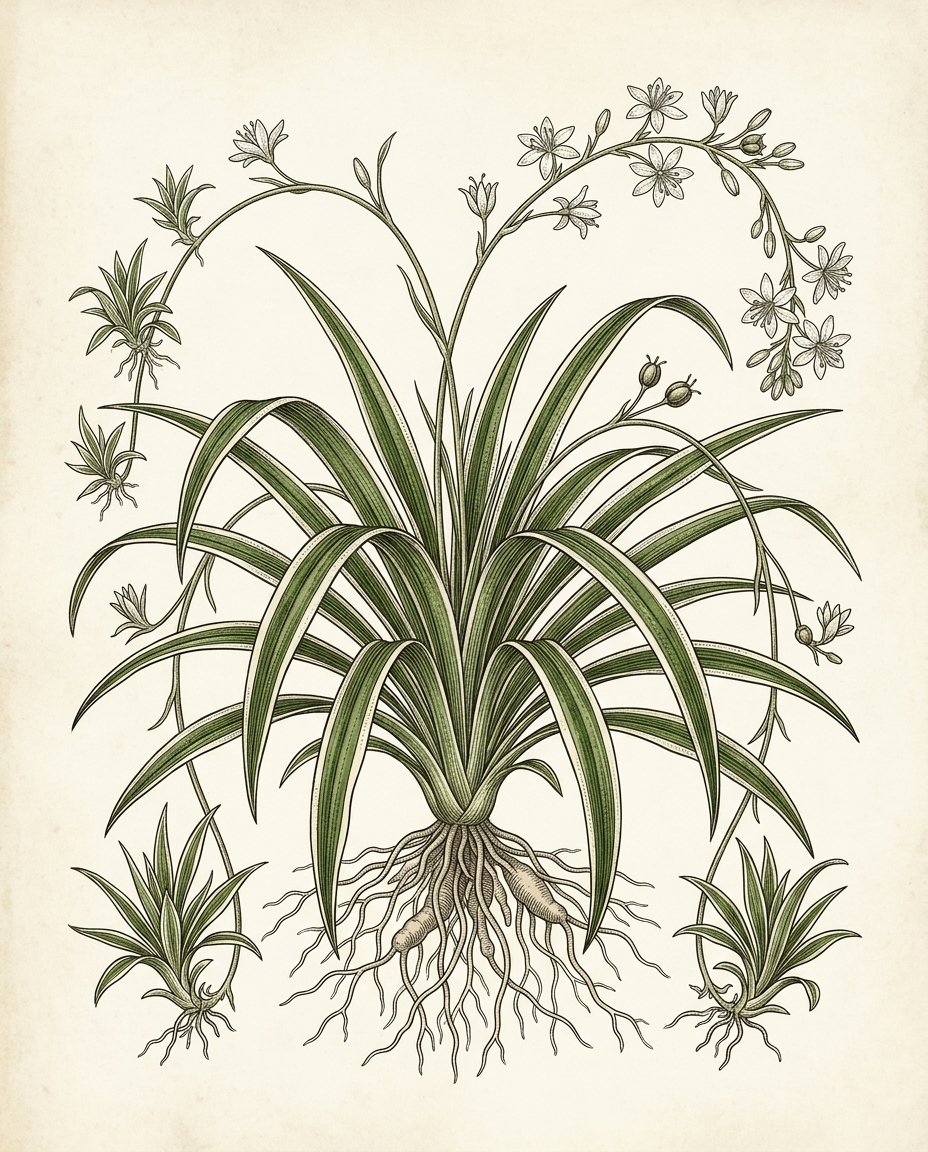
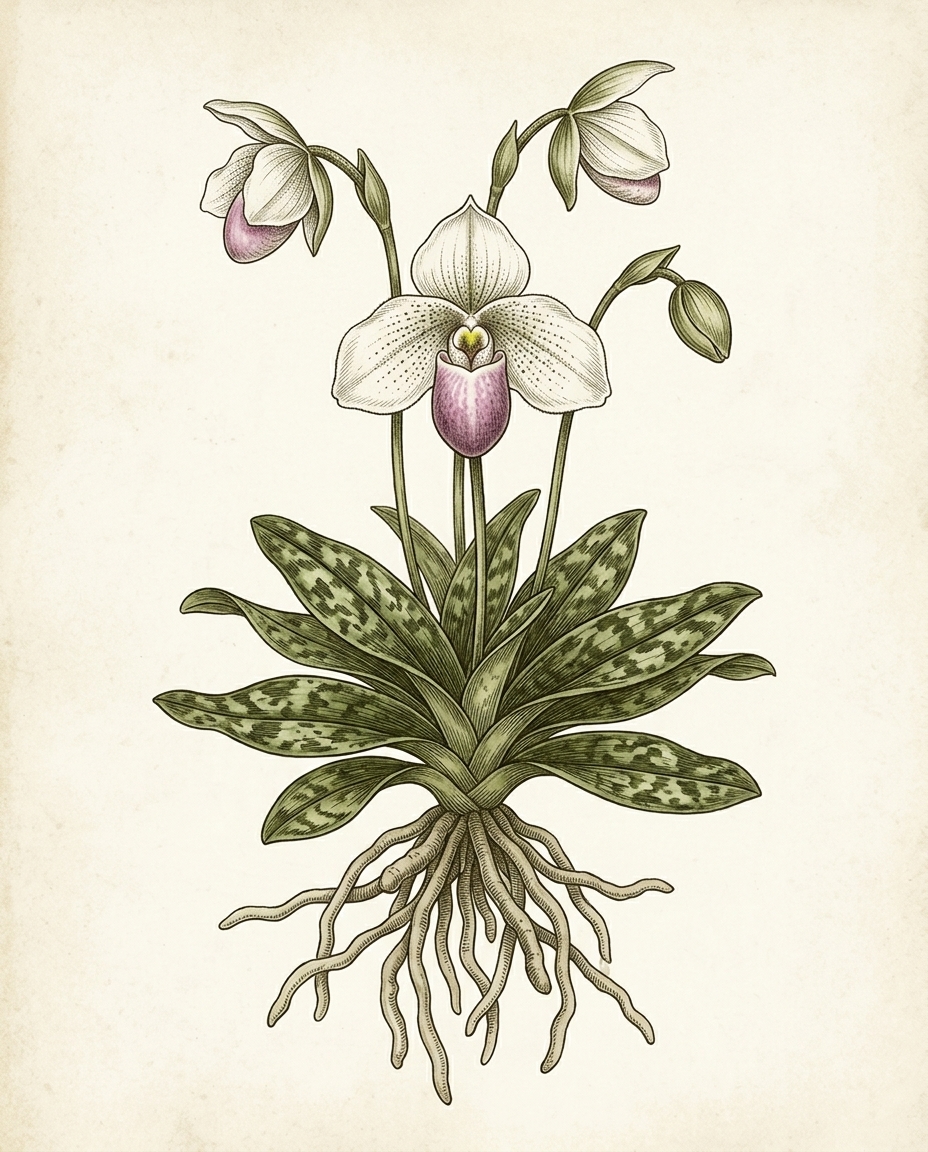
Orchid for tabletop flowers, Christmas cactus for seasonal colour, and spider plant for an easier beginner option in the same room.
What we have actually seen.
Leaf movement
Leaves fold upward at night (nyctinasty). Harmless — cats sometimes watch or pat the motion.
Occasional chewing
Non-toxic. Large mouthfuls may cause mechanical vomiting only.
Frond damage
Calatheas dislike rough handling. Cat curiosity can ruin leaf edges — elevate if needed.
Soil ingestion
Fertiliser in potting mix can upset stomachs unrelated to the plant itself.
Four common varieties.
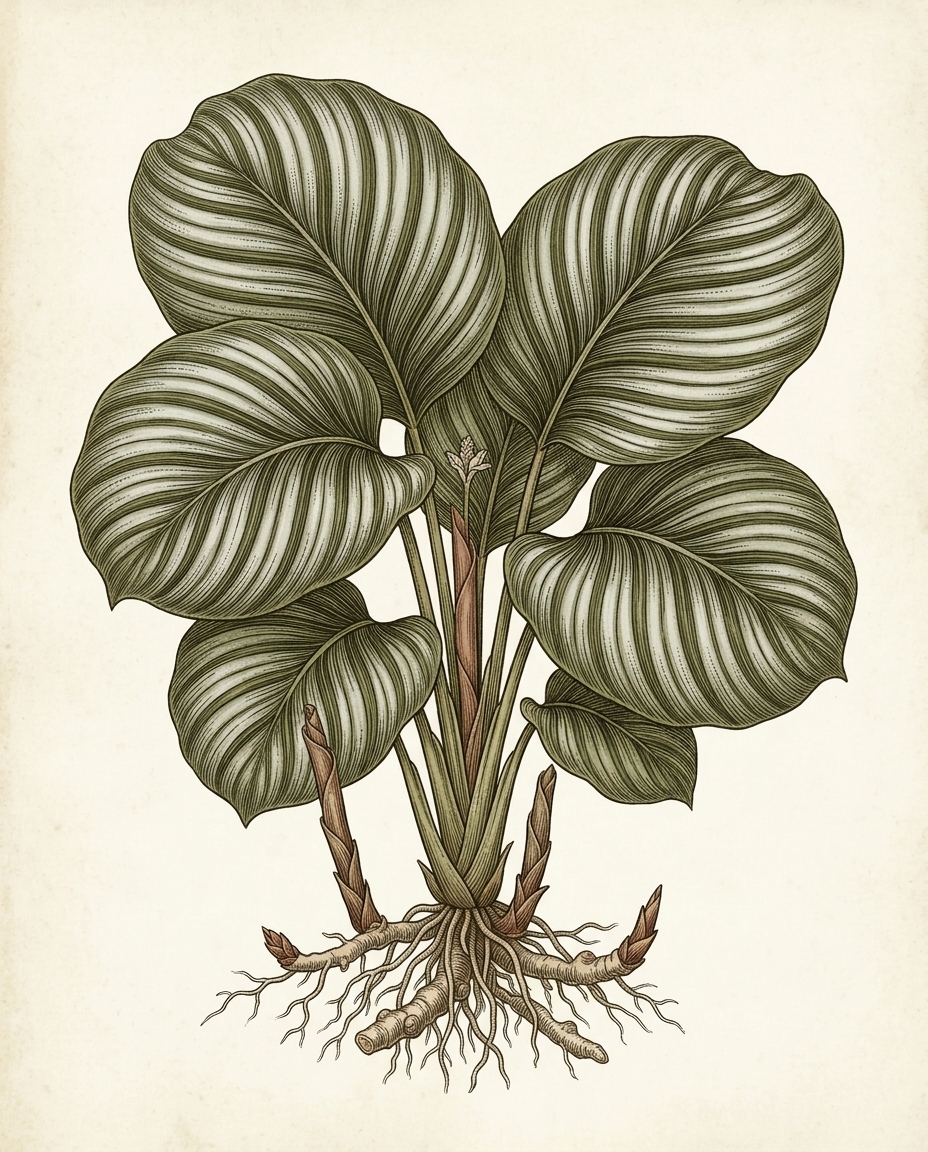
Orbifolia (round silver stripes)
Large round leaves with silver bands — the specimen shown on many care guides.
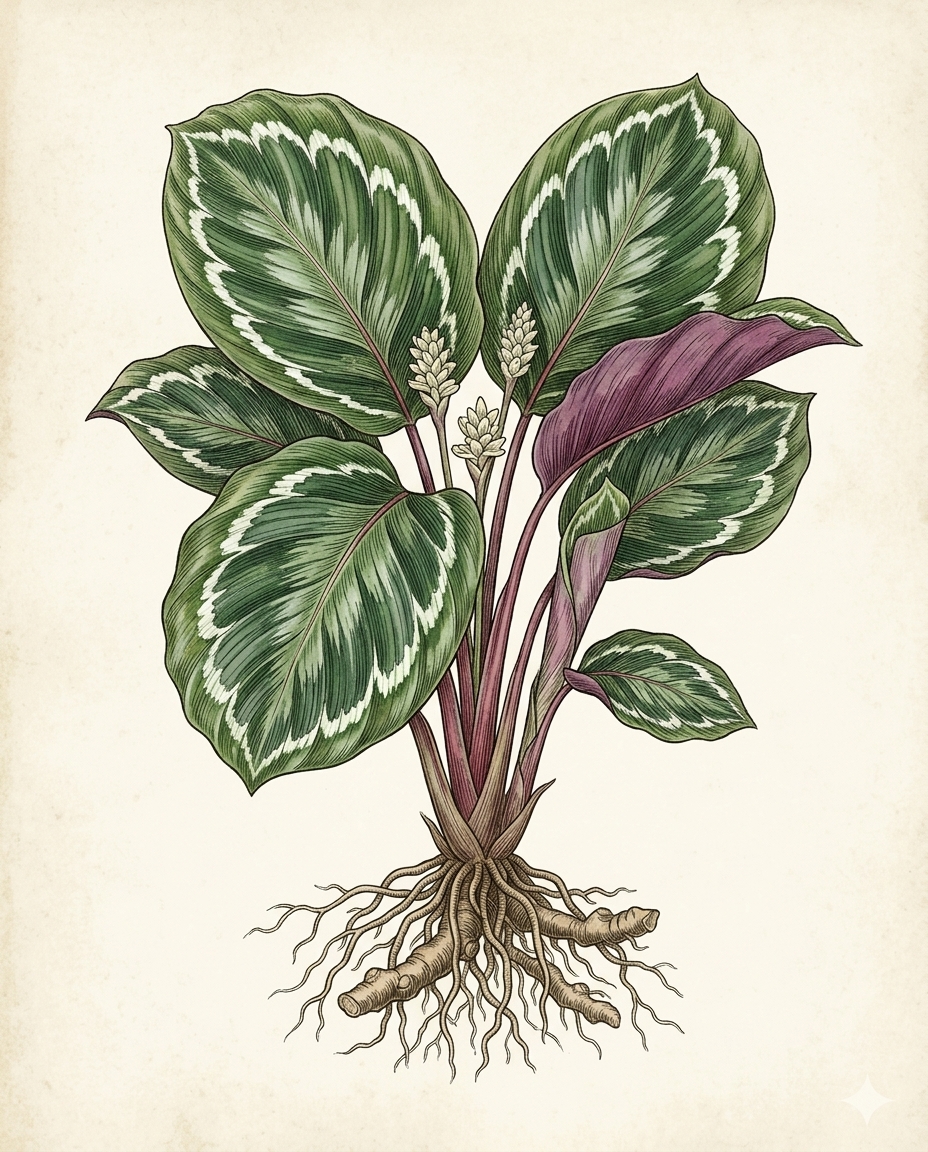
Medallion (rose painted)
Dark green with feathery lighter patterns. Compact and dramatic.
Keeping the plant alive.
Bright, indirect
Direct sun bleaches patterns. North or east windows are ideal.
Filtered or rainwater
Sensitive to fluoride and chlorine. Keep evenly moist, never sodden.
Peaty, well-draining
African violet mix or houseplant blend with perlite works well.
Humid room
Bathrooms and kitchens suit calatheas. Mist or use a pebble tray in dry homes.
- ASPCA Animal Poison Control Center. Toxic and Non-Toxic Plants: Calathea.Accessed May 2026 · aspca.org
If you liked this, also safe.