Spider
Plant.
Chlorophytum comosum
Perhaps the most generously tolerant houseplant a cat could chew. Not merely permissible — actively dull, in the chemical sense, which is the kindest thing a leaf can be.
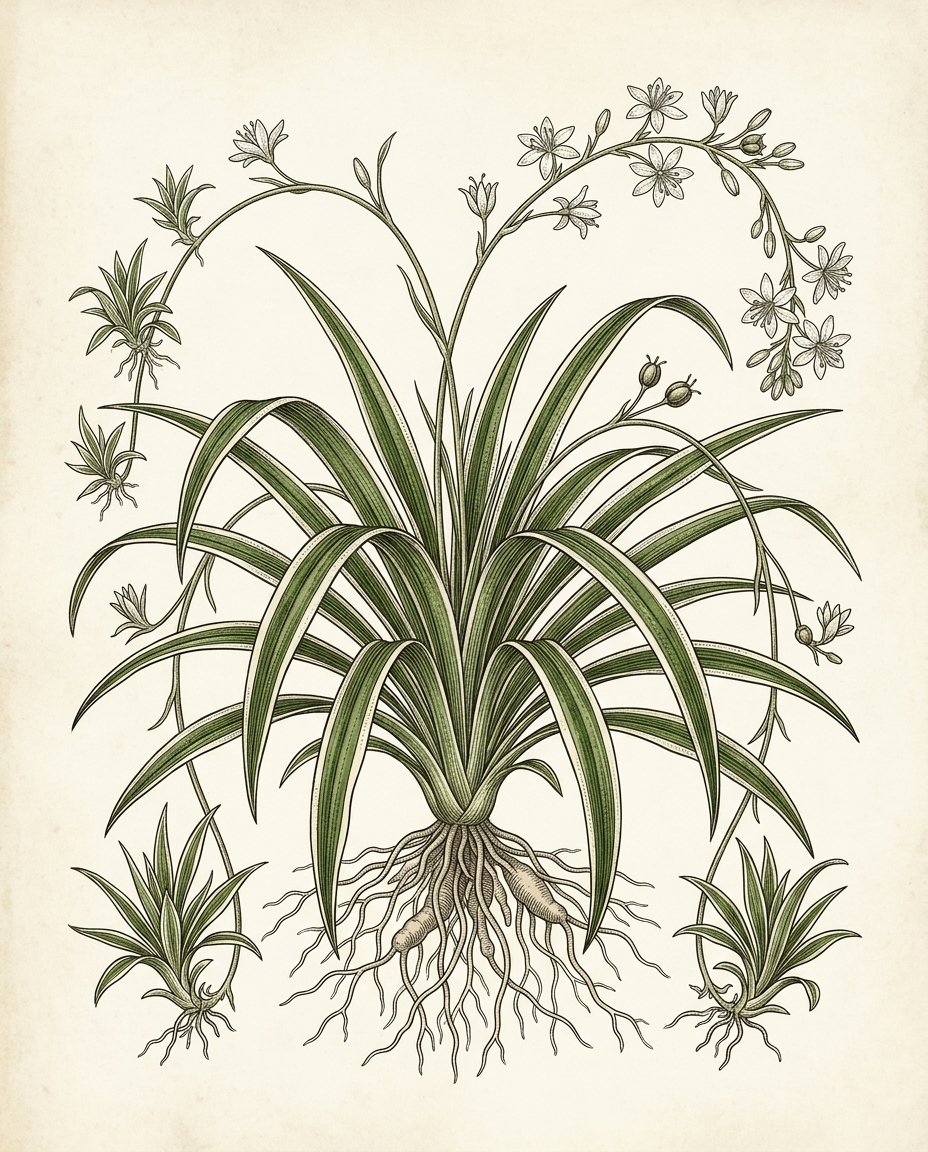
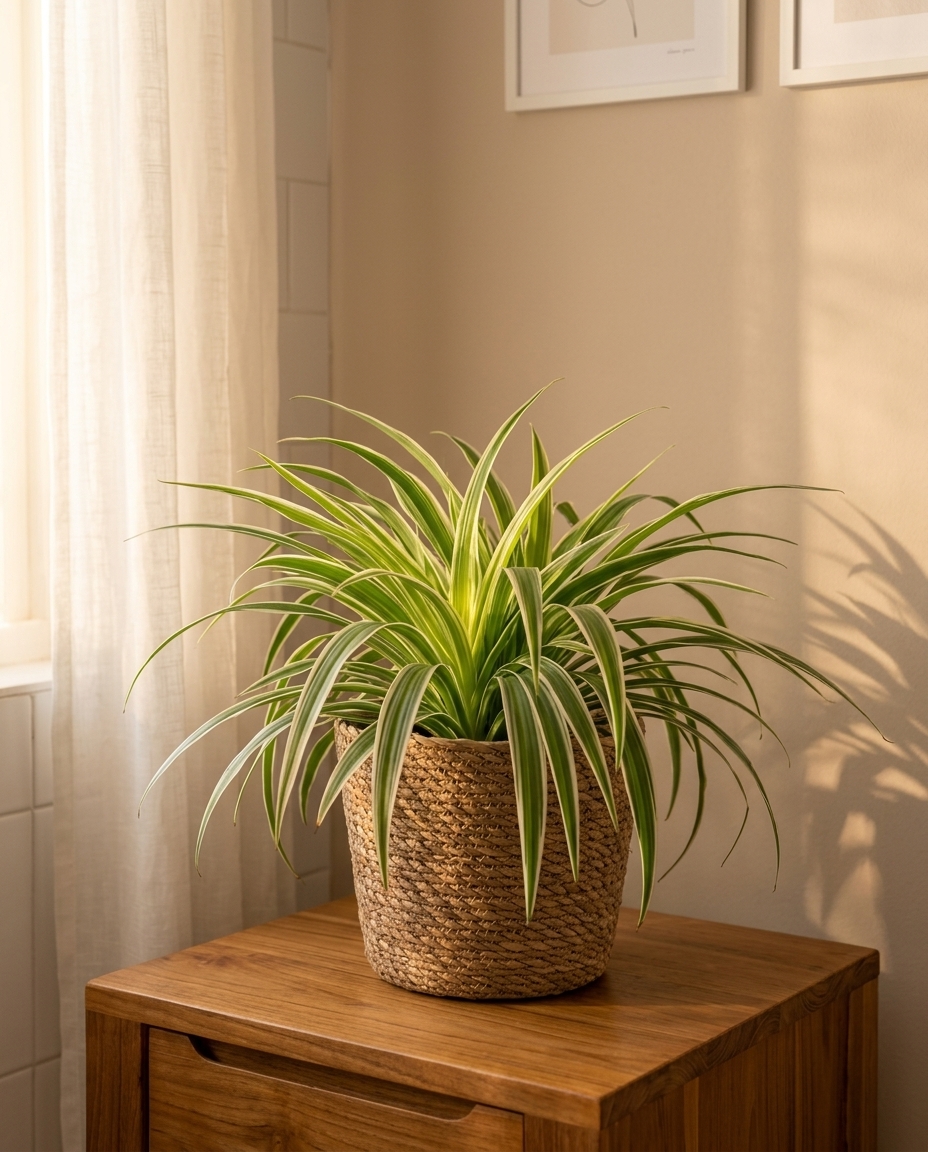
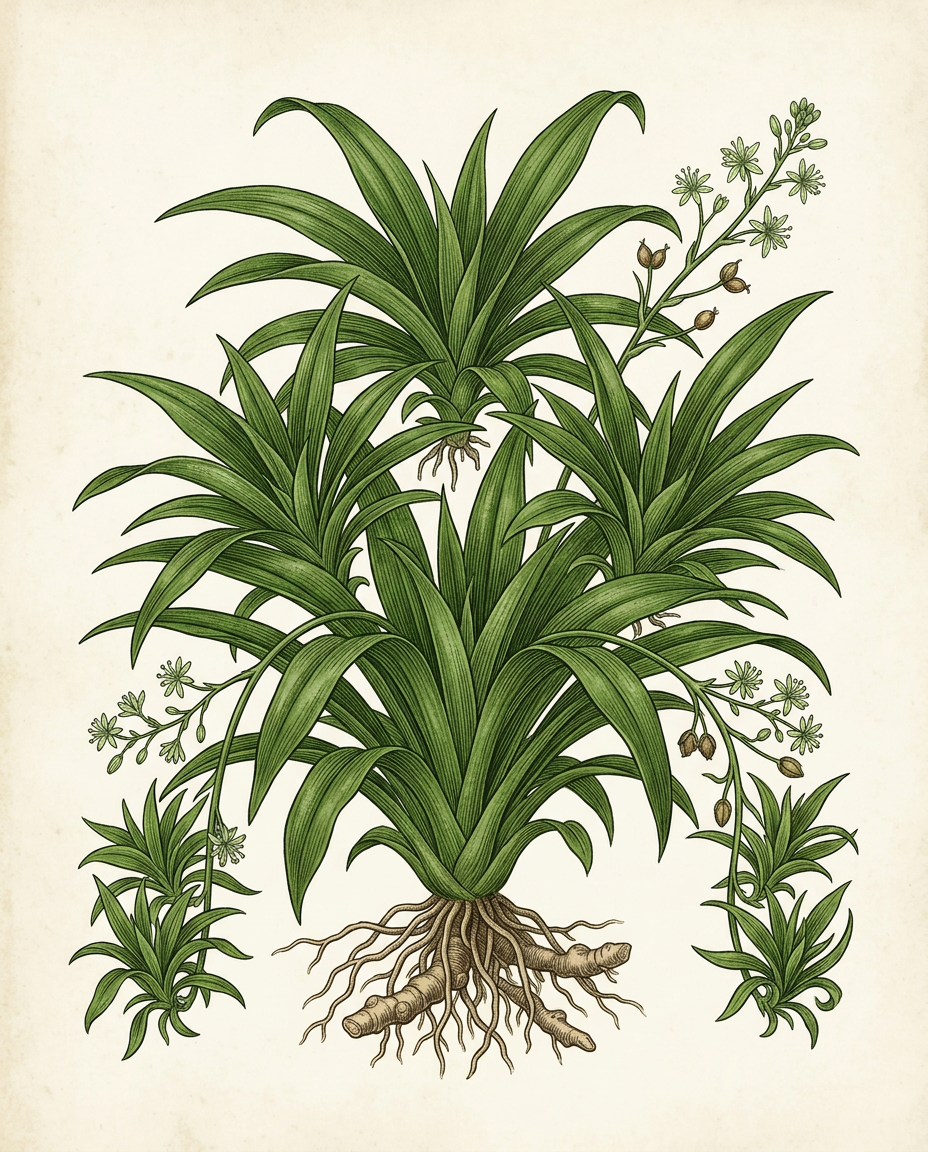
Plate IMature specimen showing characteristic arching foliage, stoloniferous runners, and the small white inflorescences from which plantlets descend.
What happens if your cat eats it.
Nothing, mostly. The Spider Plant contains no calcium oxalates, no cardiac glycosides, no insoluble irritants — none of the usual culprits responsible for the dramatic vet visits. The ASPCA lists it among the small, dependable set of houseplants a cat may chew with no consequence beyond the occasional soggy leaf-tip.
There is a persistent rumour, often repeated, that Spider Plants are "mildly hallucinogenic" to cats. This is half true. The leaves contain trace opioid-like compounds — chemically related to those in catnip, though much weaker — which can leave some cats briefly fascinated. They will not get high, exactly. They will simply find the plant much more interesting than the plant deserves.
Why a chewed leaf is still a problem
Even non-toxic foliage, eaten in volume, can upset a cat's stomach. Plant fibre is not part of a feline's natural diet, and large quantities irritate the gut wall mechanically rather than chemically. Most cats self-regulate; the few that don't may vomit, then move on. If chewing becomes compulsive, offer cat grass (oat or wheat) as a sanctioned alternative and place the Spider Plant somewhere harder to reach — for the plant's sake, not the cat's.
Other animals in the household
This page focuses on cats. The ASPCA also lists spider plants as non-toxic to dogs. Birds — particularly parrots — should be kept away from the soil rather than the leaves, as the plant readily accumulates trace minerals from fertiliser that some species metabolise poorly.
More cat-safe houseplants like this
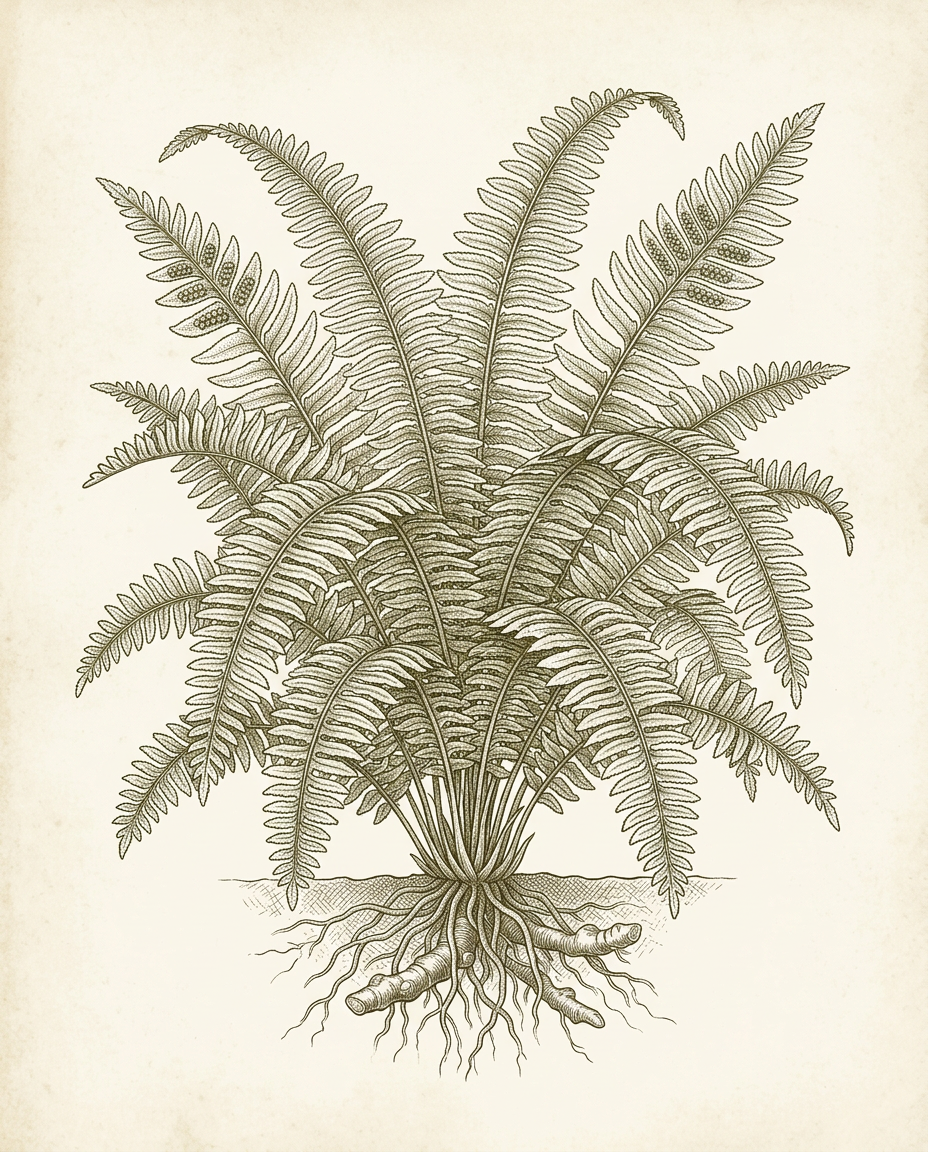
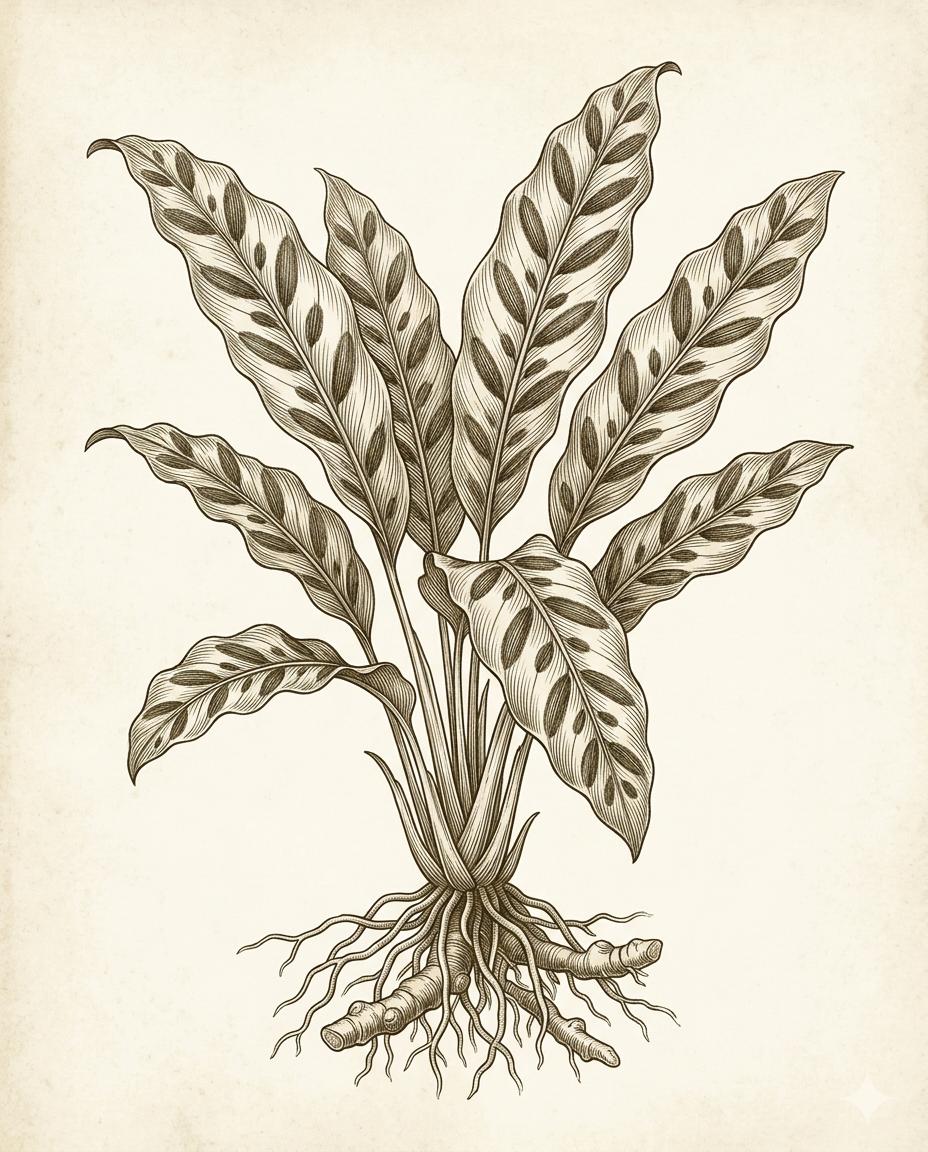
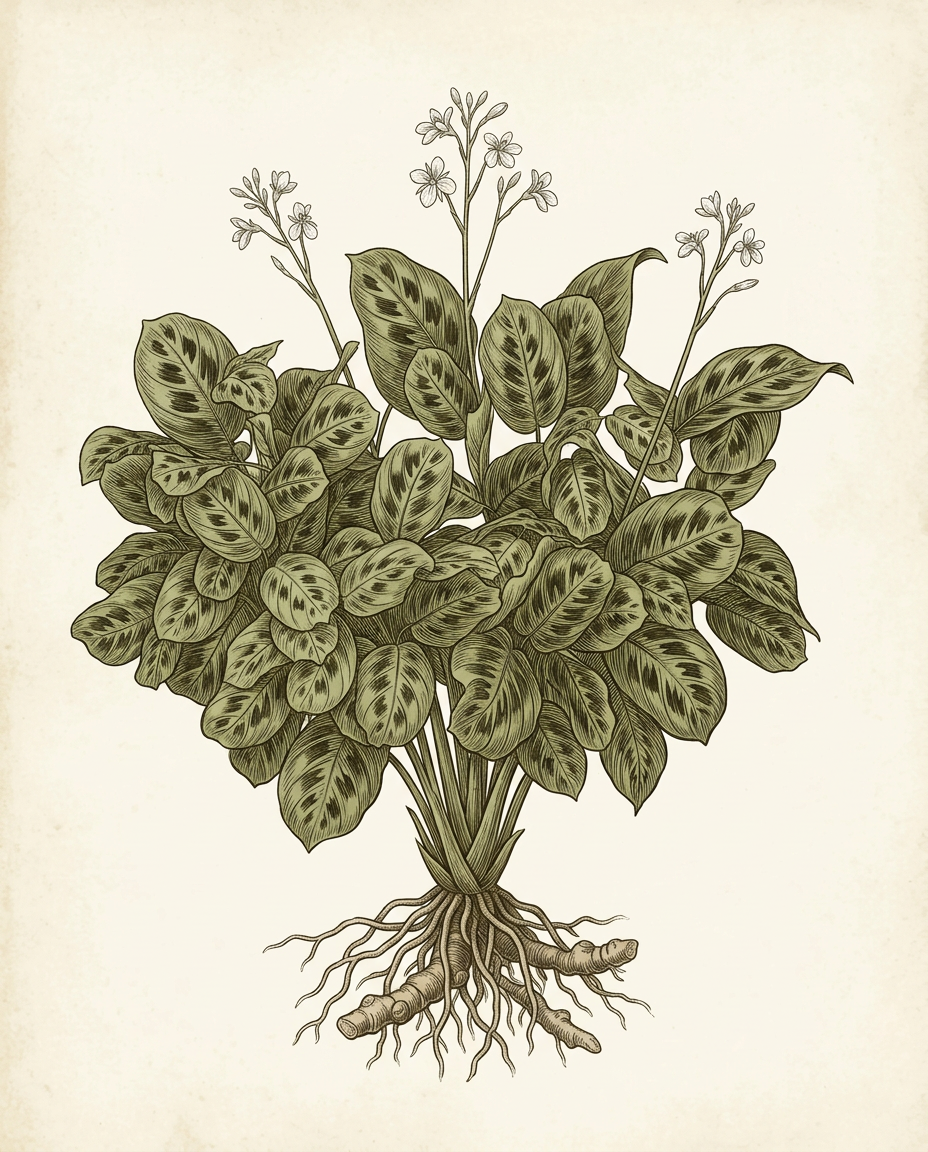
For more easy, cat-safe indoor plants in the same low-maintenance register, see boston fern, calathea, and prayer plant. All three are ASPCA non-toxic and pair well with a spider plant in a multi-plant indoor jungle.
What we have actually seen.
Mild euphoria
Trace opioid-like compounds in the foliage produce a brief, harmless fascination in roughly one in three cats. Catnip-adjacent in mechanism, much milder in degree.
Compulsive chewing
Some cats return repeatedly. Not pathological — but the plant suffers. Provide cat grass as a sacrificial alternative.
Mechanical vomiting
Large fibrous mouthfuls may be regurgitated. The plant itself is not the cause; the cat's anatomy is.
Soil-borne upset
Fertiliser, pesticide residue, or perlite ingestion can cause symptoms that are mistakenly attributed to the plant.
Four common varieties.
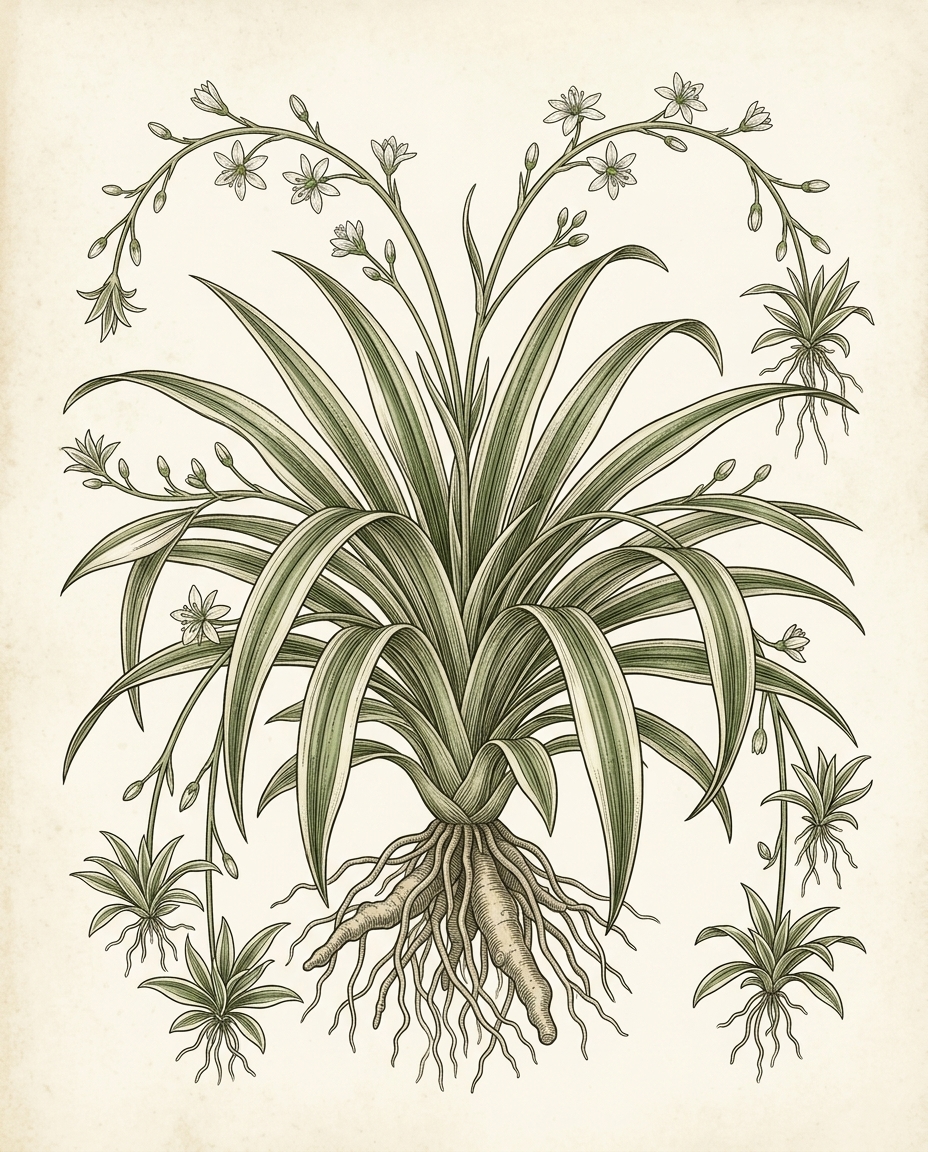
Variegatum (white-margined)
The classic variety. Green centre, cream-white edges; the most widely sold.
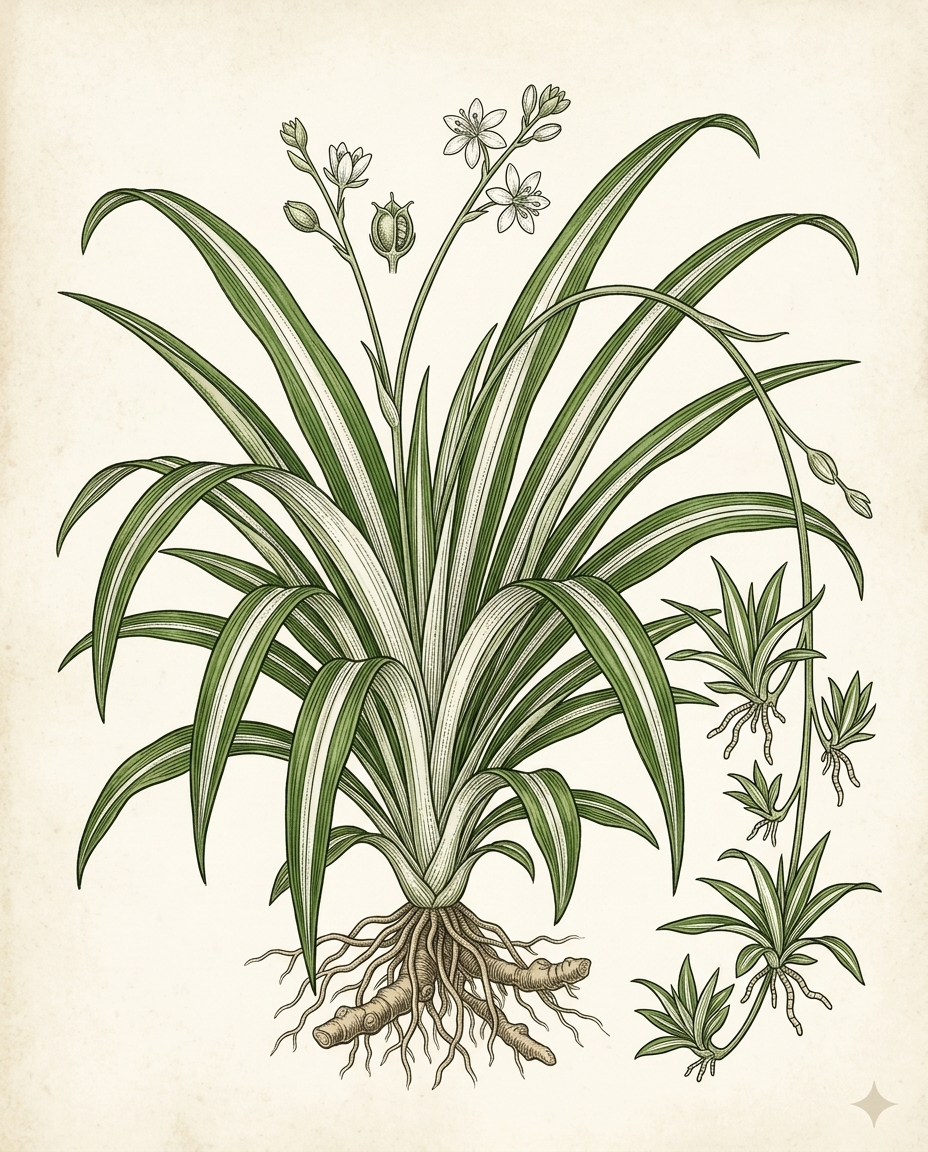
Vittatum (centre-striped)
White stripe runs down the leaf centre. Older cultivar — the original variegated form.
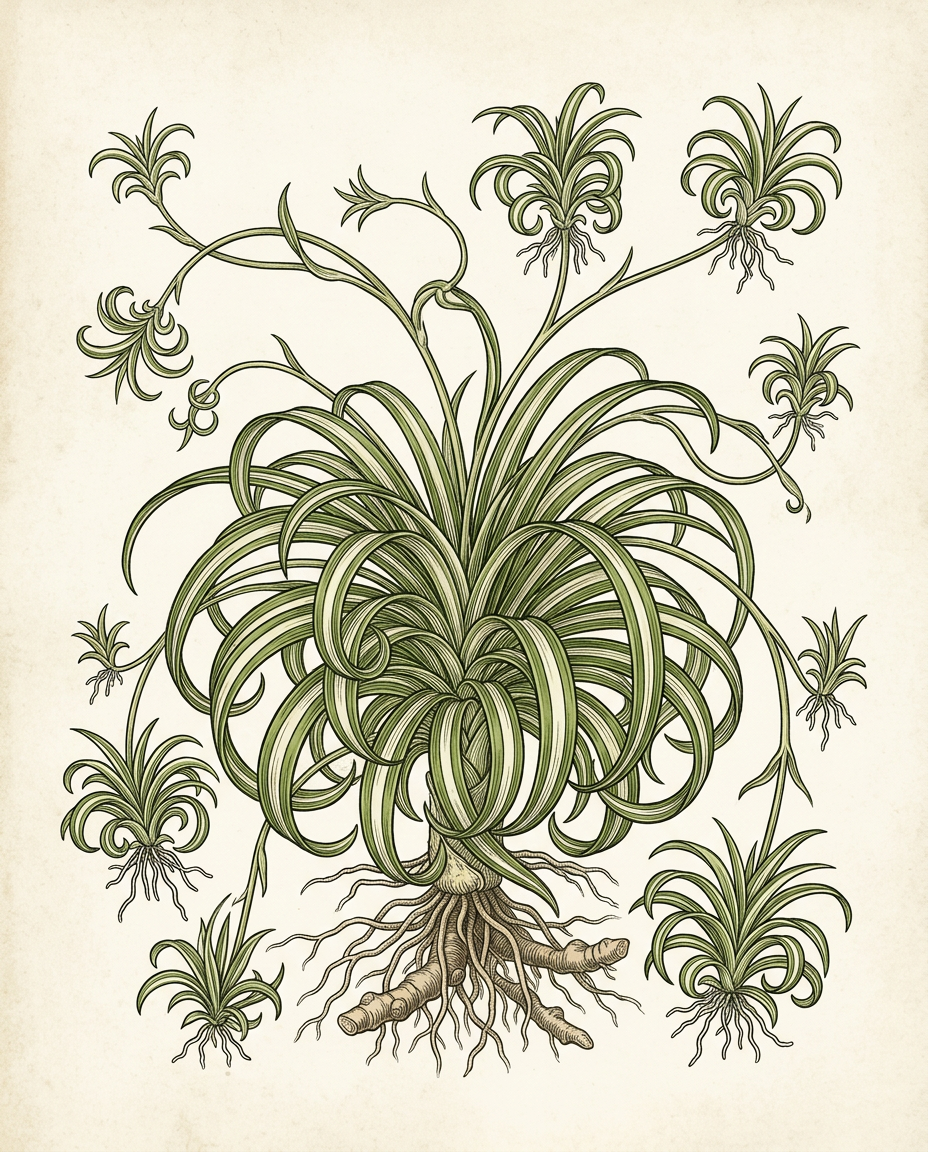
Bonnie (curly)
A compact, tightly curling sport. Cats find the texture especially worth investigating.
Hawaiian (solid green)
Unvariegated, glossier, more vigorous. A subtler cousin for the less-decorated room.
Keeping the plant alive.
Bright, indirect
Will tolerate low light at the cost of variegation. Direct sun scorches the leaf-tips.
When dry to touch
Roughly weekly in summer, fortnightly in winter. Tolerates neglect better than over-care.
Standard potting mix
Nothing special. Good drainage matters more than composition.
Hanging, out of paw
For the plant's sake, not the cat's. A high shelf or hanging pot will keep both happier.
- ASPCA Animal Poison Control Center. Toxic and Non-Toxic Plants: Spider Plant.Accessed June 2026 · aspca.org
- Pet Poison Helpline. Plants Toxic and Non-Toxic to Cats. Bloomington, MN.Reference list · 2024 ed.
- Royal Horticultural Society. Chlorophytum comosum cultivar register.rhs.org.uk · plant database
If you liked this, also safe.