Prayer
Plant.
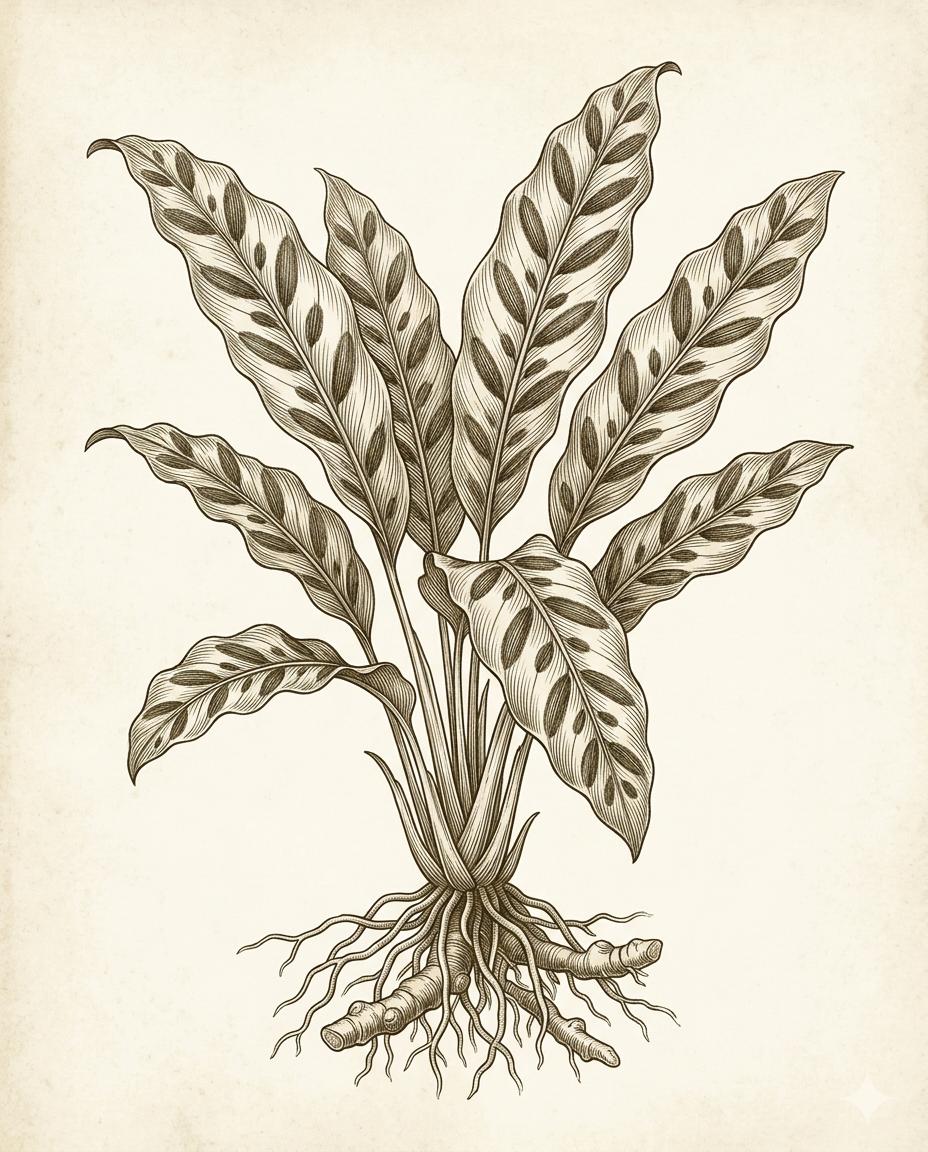
Maranta leuconeura
Oval leaves that fold at dusk, without a single calcium oxalate crystal. The ASPCA lists prayer plant as non-toxic to cats — the closest safe match to peace lily's leaf shape.
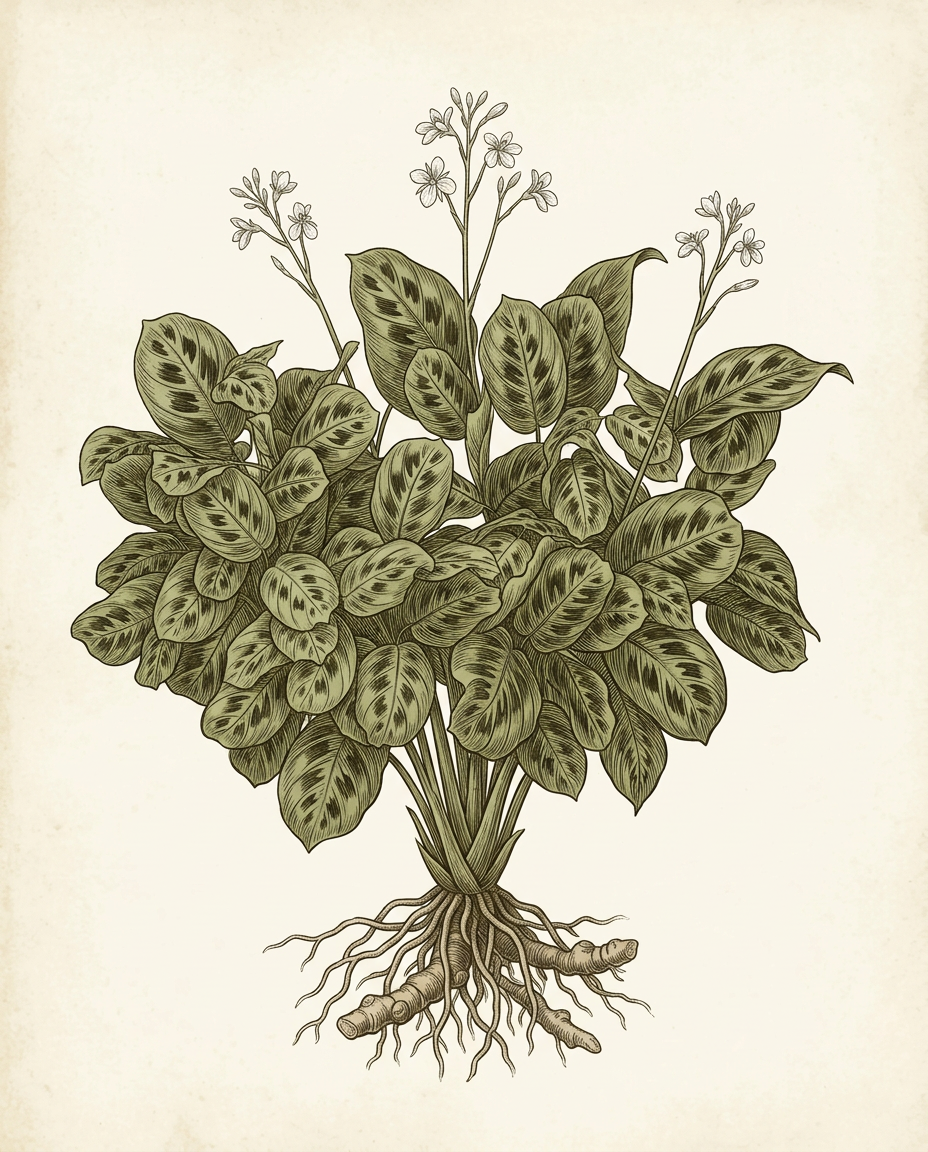
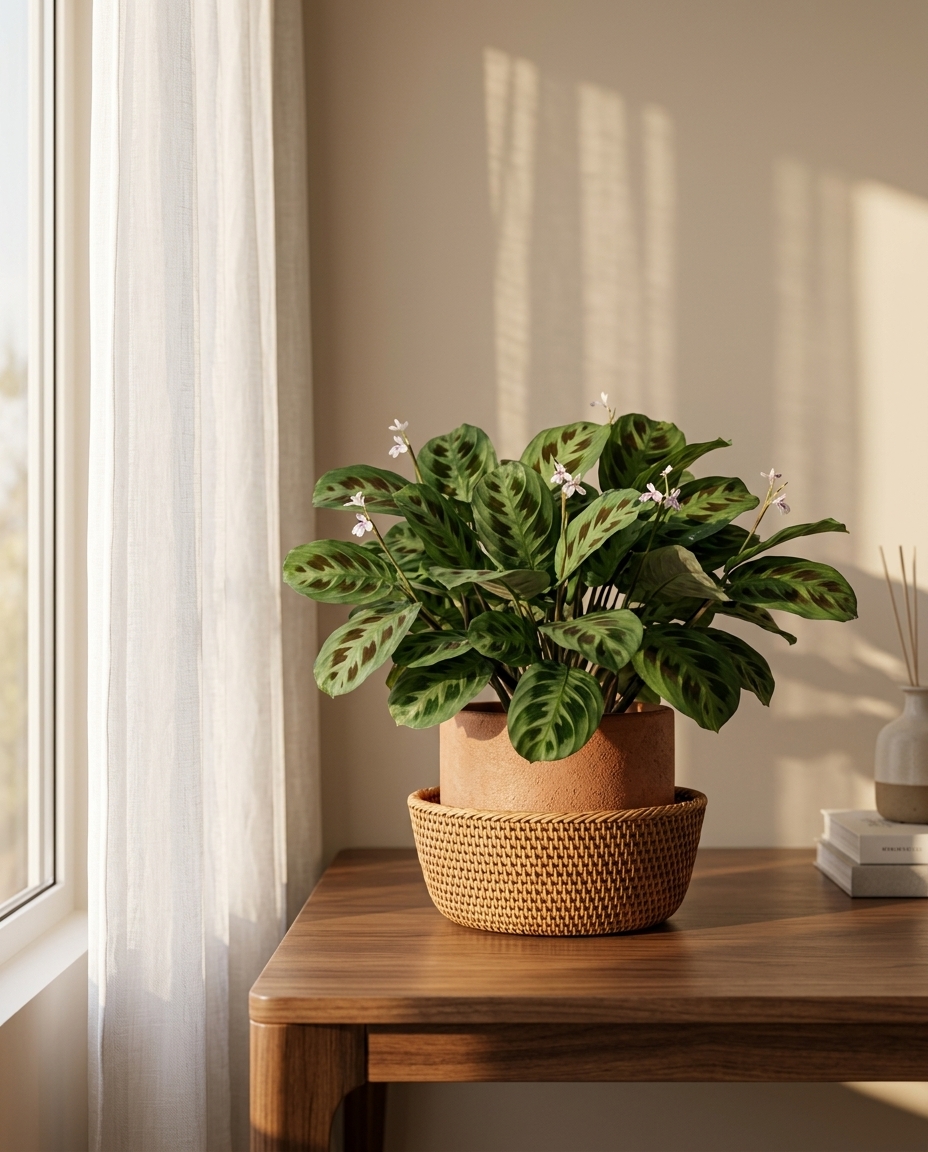
Plate IMaranta leuconeura — leaves fold upward at night (nyctinasty). Often confused with toxic peace lily at a glance.
What happens if your cat eats it.
Yes — prayer plant is safe for cats. The ASPCA lists prayer plant (Marantaceae) as non-toxic. Maranta leuconeura offers the oval tropical leaf of peace lily without calcium oxalate crystals — the best shape match in the safe column.
Cats may chew patterned leaves out of curiosity. The plant contains no insoluble oxalates or saponins responsible for emergency toxicosis.
Why it beats peace lily
Peace lily's white spathe and dark leaves tempt buyers in low-light corners. Prayer plant fills the same visual role — lush green, gentle movement at dusk — and ASPCA data supports keeping it within paw reach.
Not the same as calathea — but equally safe
Calathea is a close cousin, also non-toxic, with bolder patterns. Maranta tends toward herringbone and rabbit-track markings. Either works; both beat philodendron on chemistry.
Care honesty
Prayer plants need humidity and stable warmth. A cat-safe plant that crispens at the edges from dry air helps no one — group it with other tropicals or place it in a bathroom with bright indirect light.
What we have actually seen.
Leaf movement
Nyctinasty — leaves fold at night. Harmless; cats sometimes bat at the motion.
Occasional chewing
Non-toxic. Large mouthfuls may cause mechanical vomiting only.
Name confusion
Shops label both Maranta and Calathea as "prayer plant." Both are ASPCA non-toxic — verify genus on the tag.
Soil ingestion
Fertiliser in potting mix can upset stomachs unrelated to the plant itself.
Four common varieties.
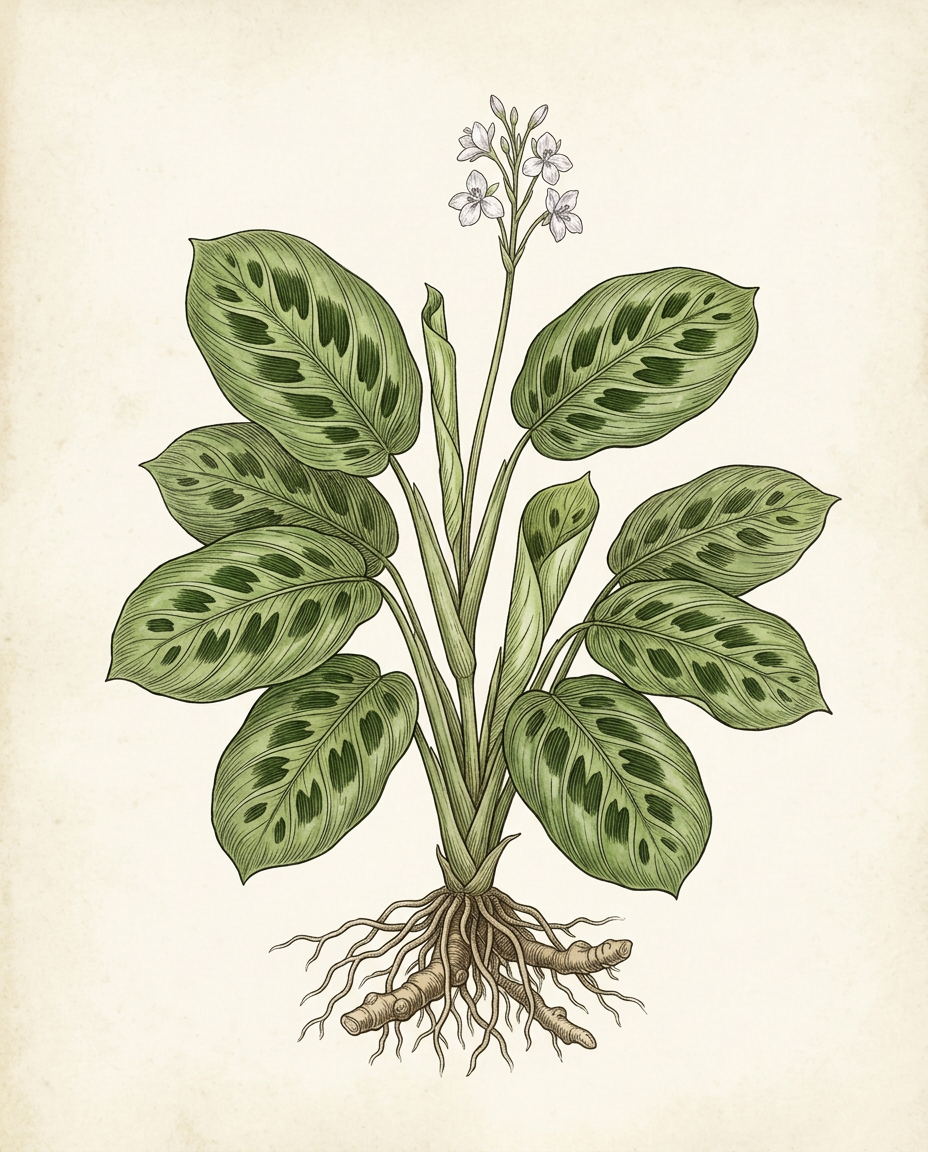
Kerchoveana (rabbit tracks)
Green leaves with dark brown splotches — the classic "rabbit's foot" pattern.
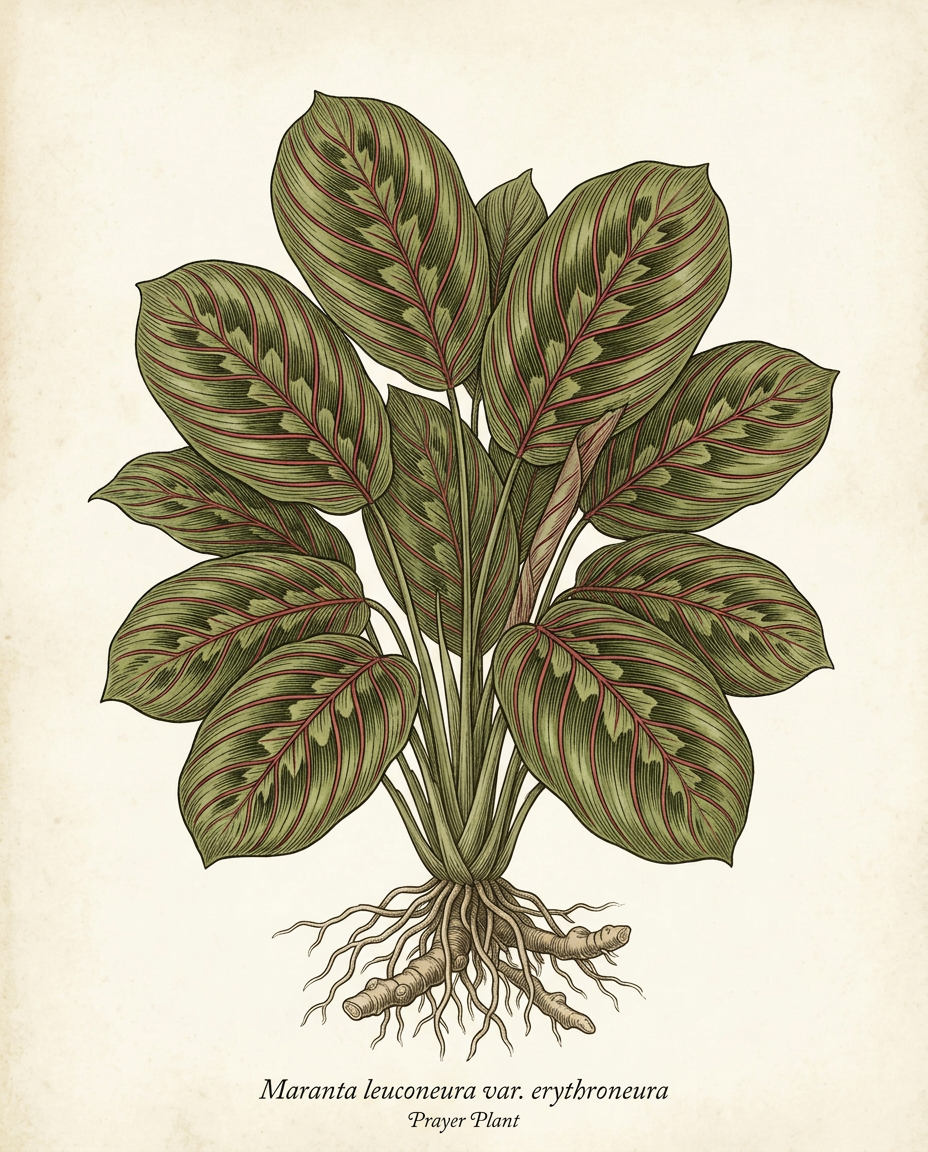
Erythroneura (red veins)
Dark green with vivid red midrib and veins. Striking on a shelf.
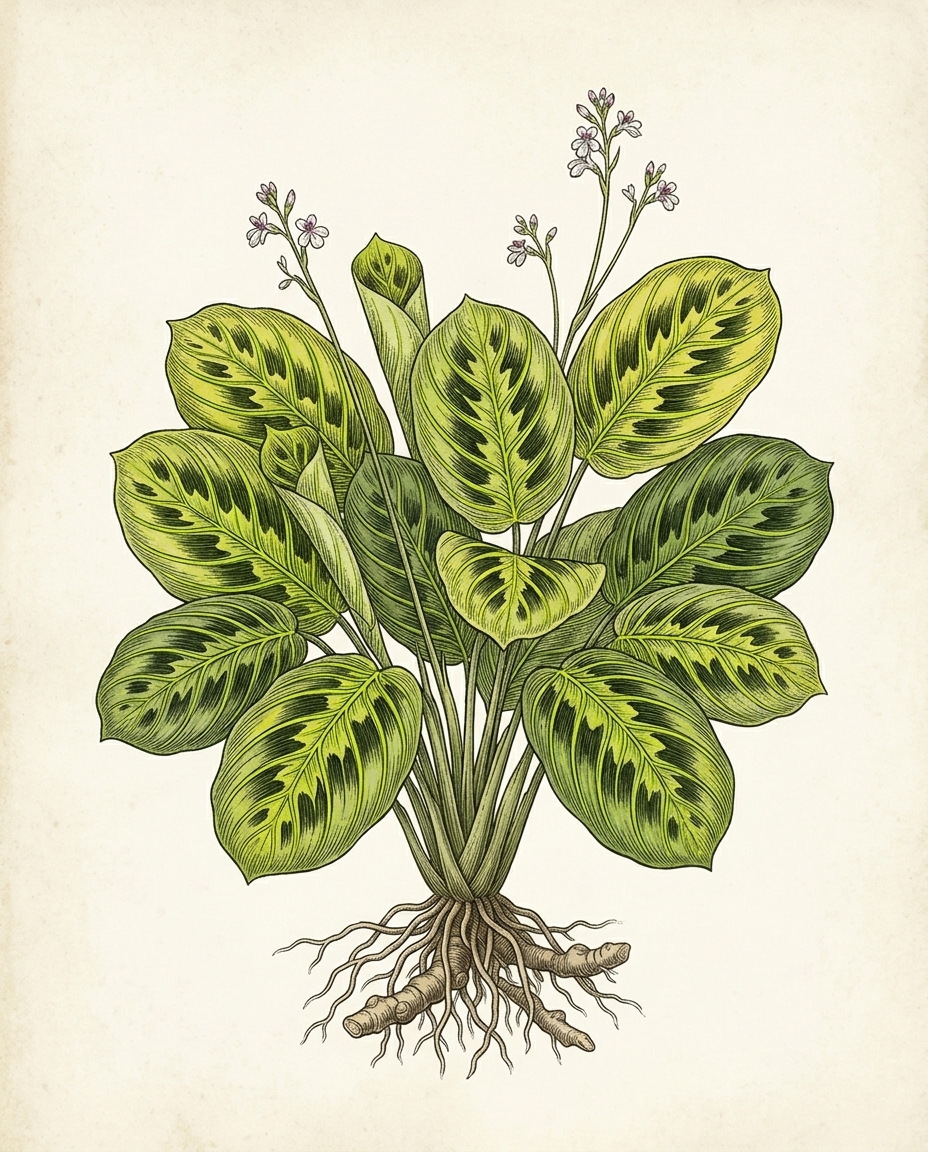
Lemon Lime (chartreuse)
Bright yellow-green variegation. Needs slightly more light than darker forms.
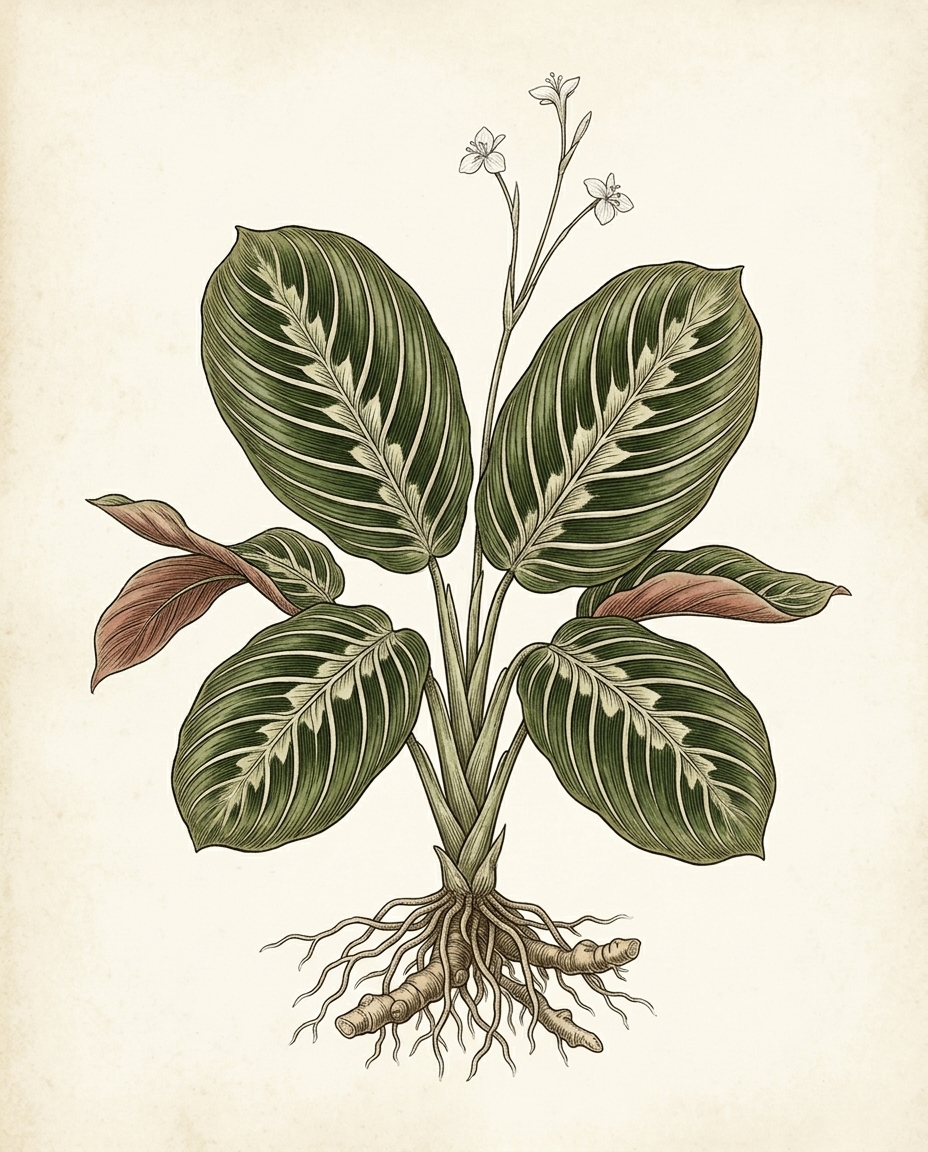
Fascinator (herringbone)
Deep green with light green herringbone patterning along each leaf.
Keeping the plant alive.
Bright, indirect
Direct sun bleaches leaf patterns. North or east windows suit Maranta best.
When top inch dries
Keep evenly moist — never bone dry, never soggy. Use filtered water if leaves brown at tips.
Peaty, well-draining
African violet mix or houseplant blend with perlite. Likes humidity.
Humid room
Bathrooms and kitchens work well. Mist in dry homes or group with other tropicals.
- ASPCA Animal Poison Control Center. Toxic and Non-Toxic Plants: Prayer Plant.Accessed May 2026 · aspca.org
If you liked this, also safe.