Peace
Lily.
Spathiphyllum wallisii
Calcium oxalate crystals throughout the leaf and stem. One chewed bite produces immediate, intense burning of the mouth — distressing for the cat, frightening for everyone watching.
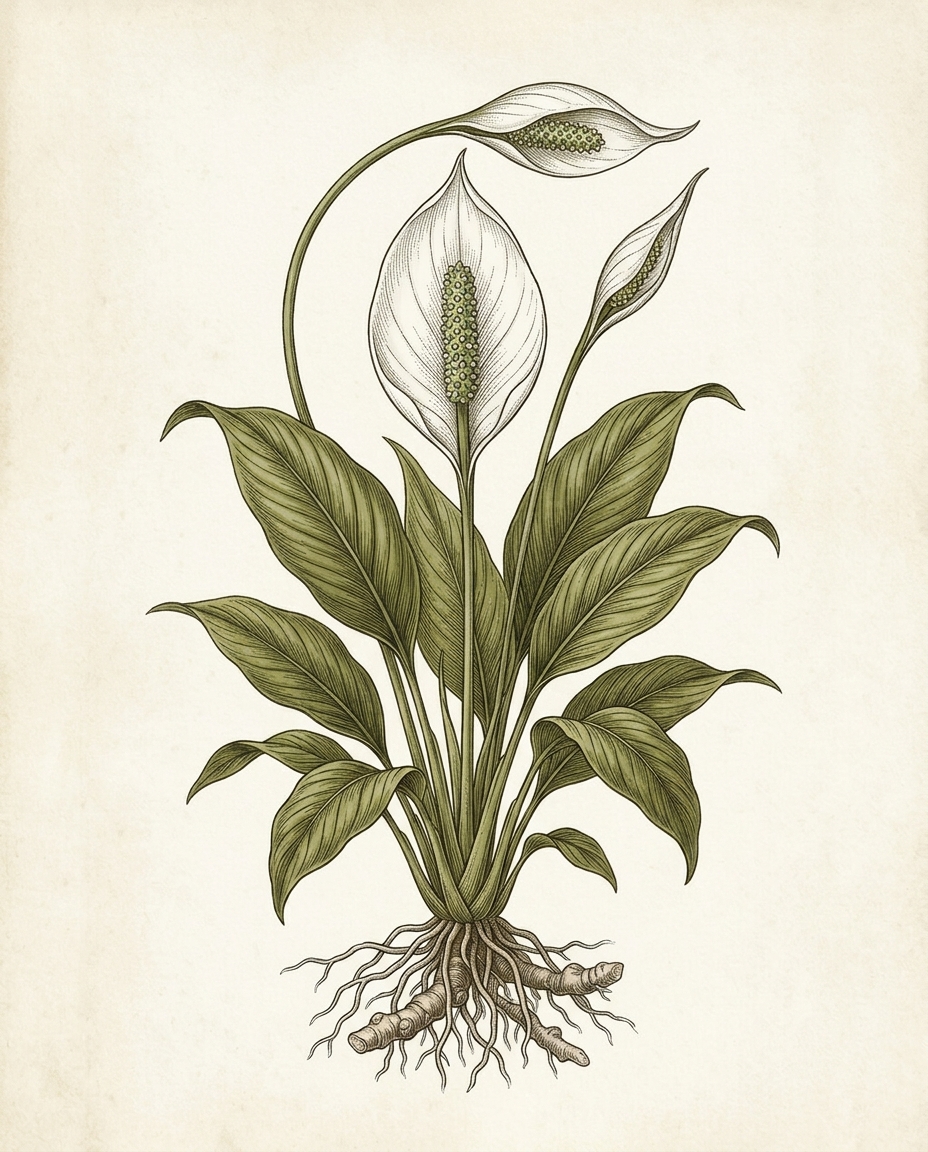
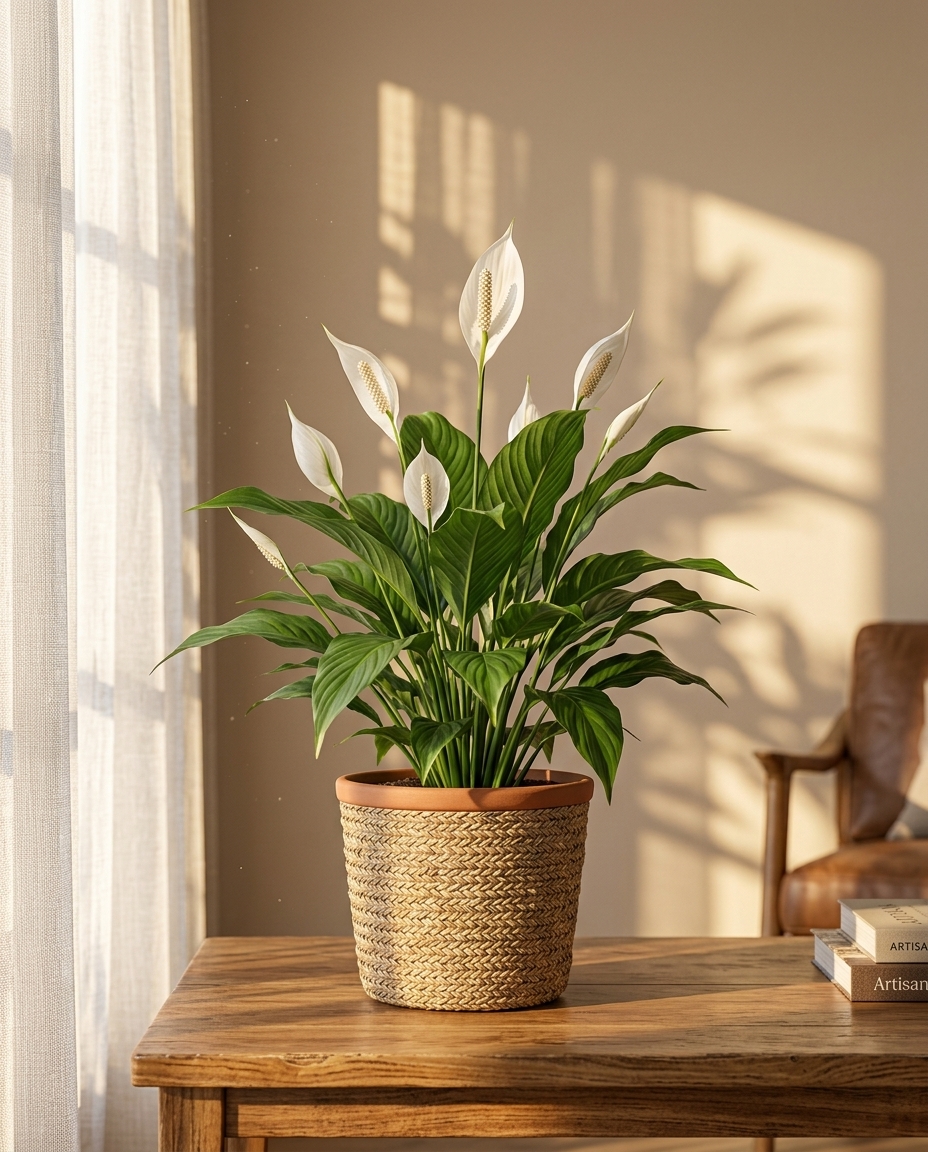
Plate IMature specimen with characteristic white spathe surrounding a pale spadix — the source of much confusion with the (entirely unrelated, far deadlier) true lilies.
Three plants that look the part, without the risk.
The closest safe matches for peace lily's leaf shape and low-light habit — all ASPCA non-toxic, with dedicated pages on this site.
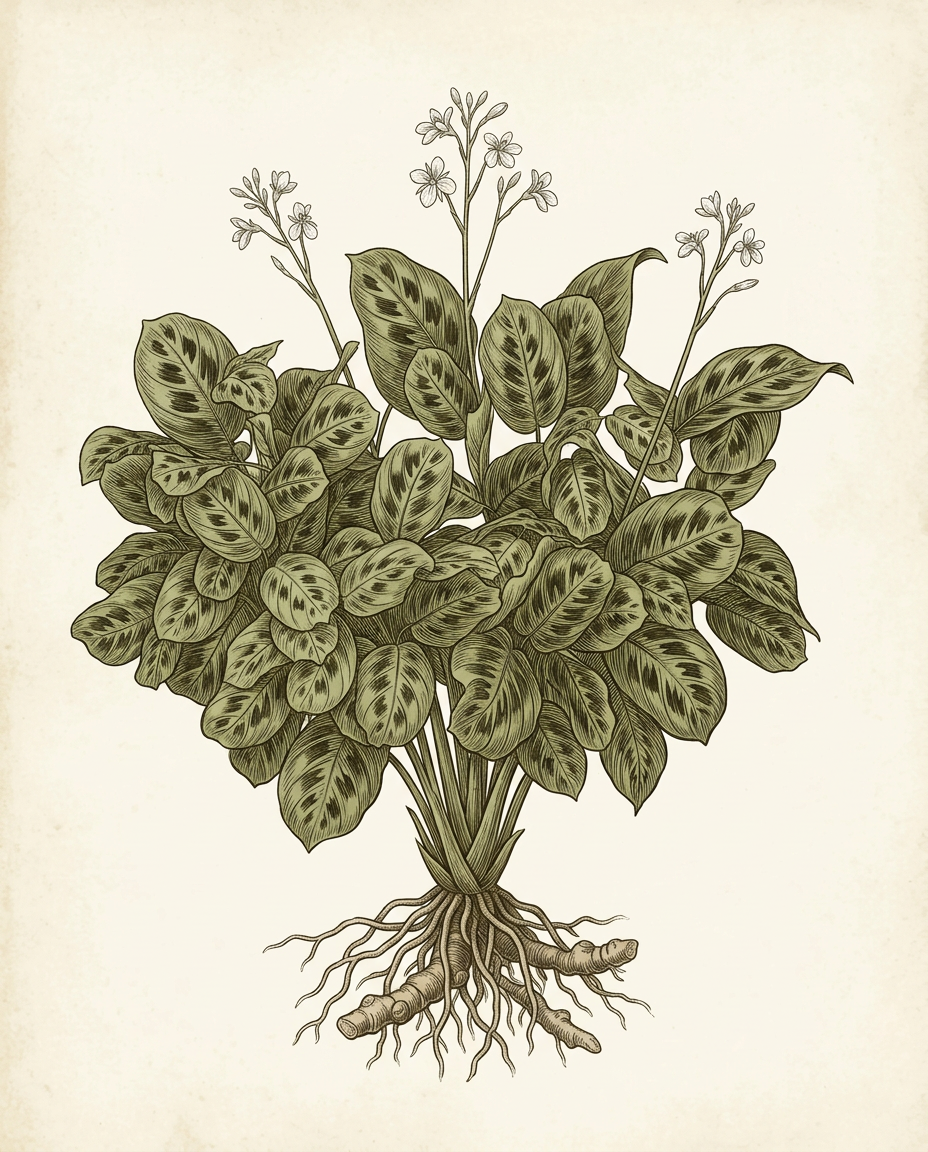
Prayer Plant
The closest leaf-shape match. Folds at dusk — same oval tropical silhouette without oxalates.
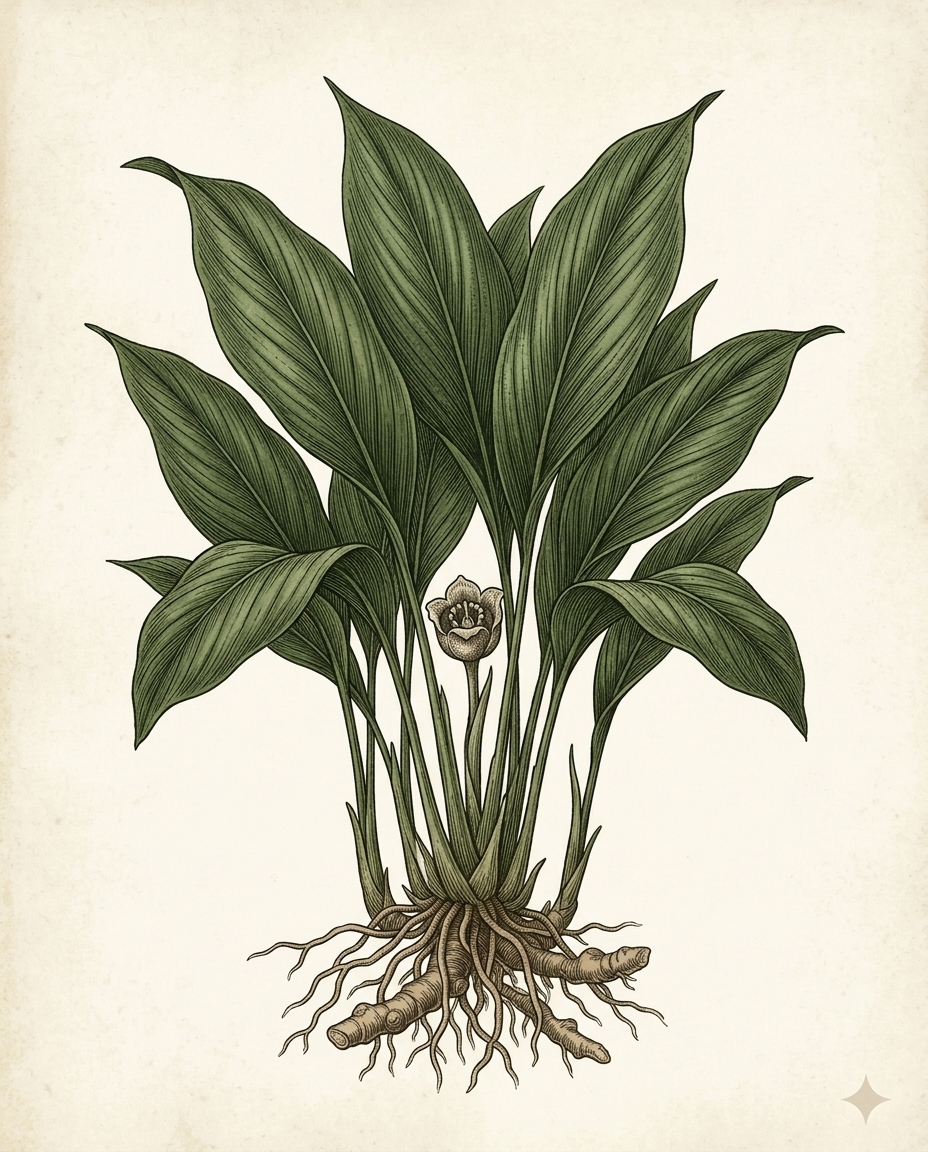
Cast-Iron Plant
Same low-light tolerance and dark glossy foliage. Genuinely unkillable in dim corners.
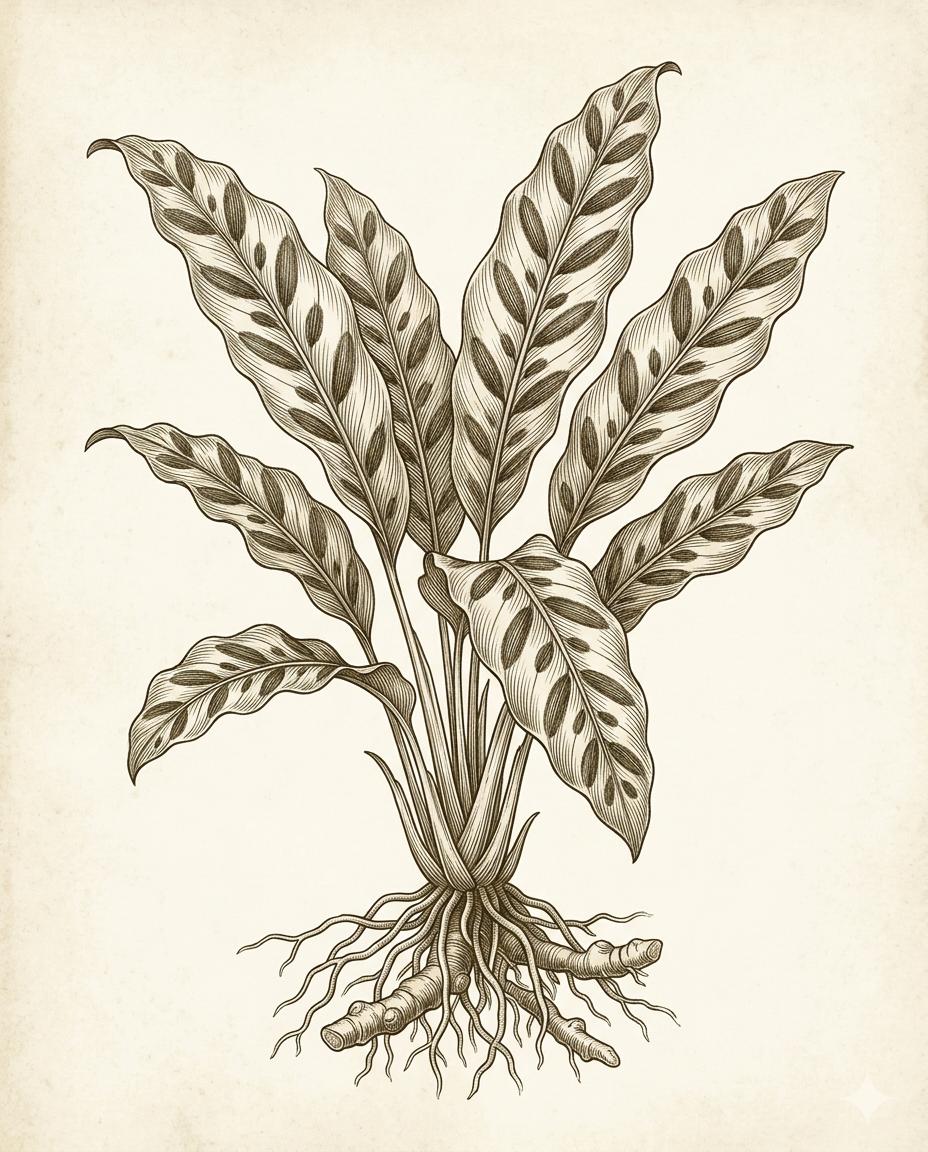
Calathea
Bold patterned tropical leaves for bright-indirect spots. Non-toxic Marantaceae cousin.
What it does to a cat.
The leaves and stems are studded with microscopic calcium oxalate crystals — raphides — bundled inside specialised cells called idioblasts. The moment a cat chews, the idioblasts rupture and fire the needle-like crystals into the soft tissue of the mouth, tongue and throat. The pain is immediate and chemical, not abrasive: it does not stop because the cat stops chewing.
Most cases resolve at home within twelve hours with the help of cold water and a quiet room. The danger is rarely fatal, but the experience is frightening for the cat and for the household, and severe reactions can swell the airway. Any change in breathing is a same-day veterinary emergency.
Why it is confused with the deadly lilies
The Peace Lily is not, botanically, a lily at all. The true lilies — Lilium and Hemerocallis — cause acute renal failure in cats from pollen exposure alone, and require emergency care within hours. Spathiphyllum belongs to a different family entirely (Araceae) and is far less dangerous. They share only a common name and, regrettably, the same gift-shop sticker. See also our Easter lily page for the deadliest variant of the true lilies.
Safer indoor alternatives
For the same architectural broad-leaf look without the calcium oxalate burn, calathea and boston fern are ASPCA non-toxic. For the lush trailing white-flower vibe, an orchid sits beautifully on a sideboard and is completely cat-safe.
Other animals in the household
This page focuses on cats. The ASPCA also lists peace lilies as toxic to dogs. The mechanism is mechanical-chemical and does not depend on the species. Children should also be kept away — paediatric exposures present in much the same way.
What we have actually seen.
Oral pain & drooling
The signature effect. Onset within minutes; heavy salivation, pawing at the mouth, vocalising. Self-resolves over hours.
Vomiting
Often within the first half-hour, occasionally with leaf fragments. A reasonable sign — the body is clearing the source.
Refusal to eat
The mouth hurts. Most cats refuse food and water for several hours; some, into the next day. Soft, cool food helps once interest returns.
Airway swelling
Rare but serious. Audible breathing changes warrant immediate veterinary attention.
- ASPCA Animal Poison Control Center. Toxic and Non-Toxic Plants: Peace Lily.Accessed June 2026 · aspca.org
- Pet Poison Helpline. Calcium Oxalate Plant Toxicosis in Companion Animals.Clinical brief · 2024 ed.
- National Capital Poison Center. Peace Lily & the Confusion with True Lilies.poison.org · accessed 2026