Orchid
Phalaenopsis spp.
Phalaenopsis orchids bring long-lasting blooms without lily toxicity. The ASPCA lists orchid as non-toxic to cats — a safe centrepiece for cat households that still want flowers indoors.
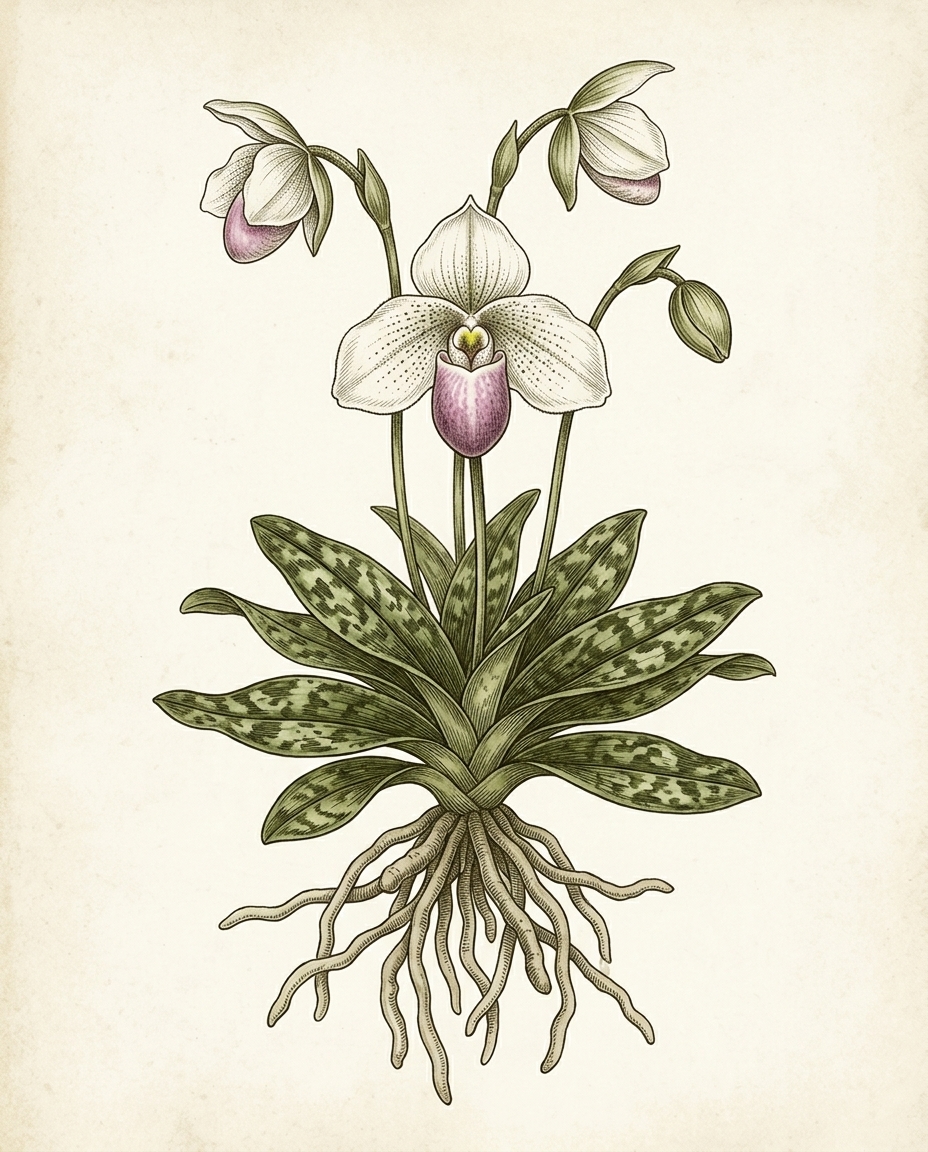
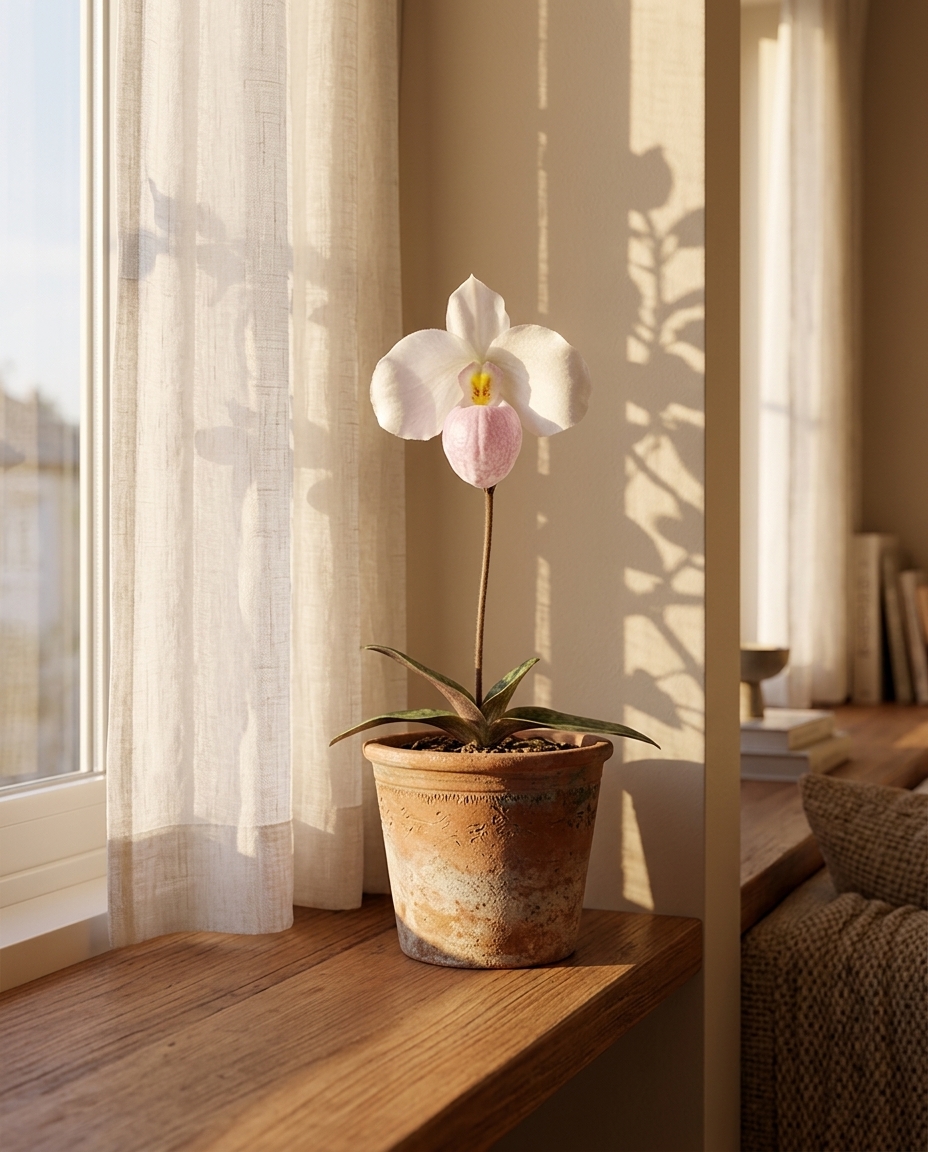
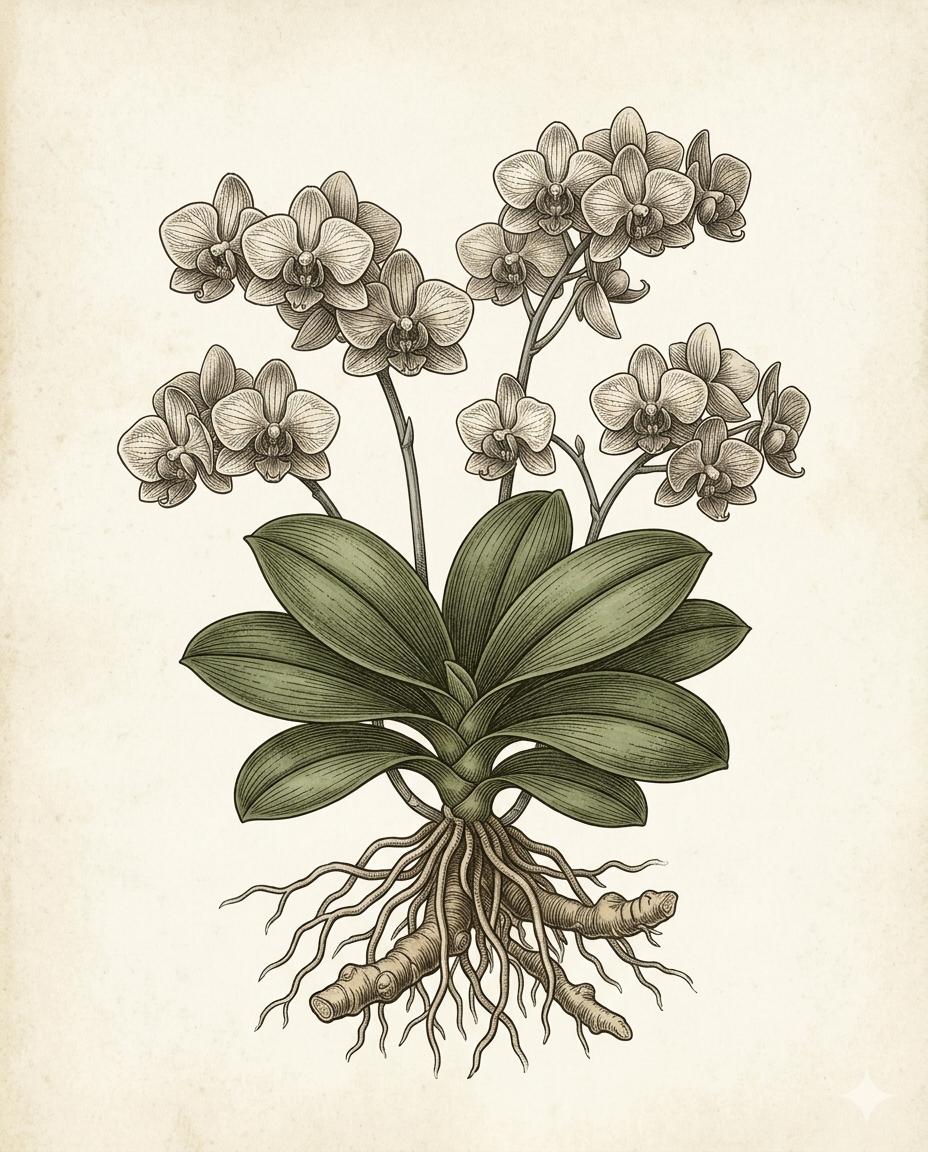
Plate IPhalaenopsis — moth orchid. The ASPCA orchid listing covers common house orchids; true lilies remain a separate, deadly category.
What happens if your cat eats it.
Yes — orchids are safe for cats. The ASPCA lists orchid as non-toxic. Phalaenopsis moth orchids — the type sold in supermarkets and florists — contain none of the renal toxins found in true lilies.
The critical distinction: orchid is not lily. Names sound alike; botany does not. Easter lily and all Lilium species are emergencies for cats. Orchids are not.
Bouquet vigilance
Florists sometimes combine orchids with true lilies in wedding and sympathy arrangements. Read every stem tag. Remove any Lilium or Hemerocallis before the bouquet enters a cat home — orchid safety does not protect against a lily hidden in the same vase.
Care basics
Orchids want bright indirect light, sparse watering, and bark-based media. They are less forgiving than spider plant but safer than almost any flowering lily. For patterned foliage year-round, pair with calathea.
Mechanical upset still possible
Non-toxic is not edible. Bark mix and fertiliser cause more problems than petals. Keep pots stable on windowsills cats use as lookouts.
What we have actually seen.
Bouquet confusion
Orchids in mixed arrangements may sit beside true lilies. Inspect every stem before bringing bouquets home.
Potting media
Bark chips are not toxic but can cause mechanical upset if eaten in volume. Discourage digging in the pot.
Flower nibbling
Non-toxic petals may still be chewed. Plant damage is the main consequence.
Fertiliser exposure
Orchid feed in the pot is the real risk — not the flowers. Use pet-safe practices when fertilising.
Four common varieties.
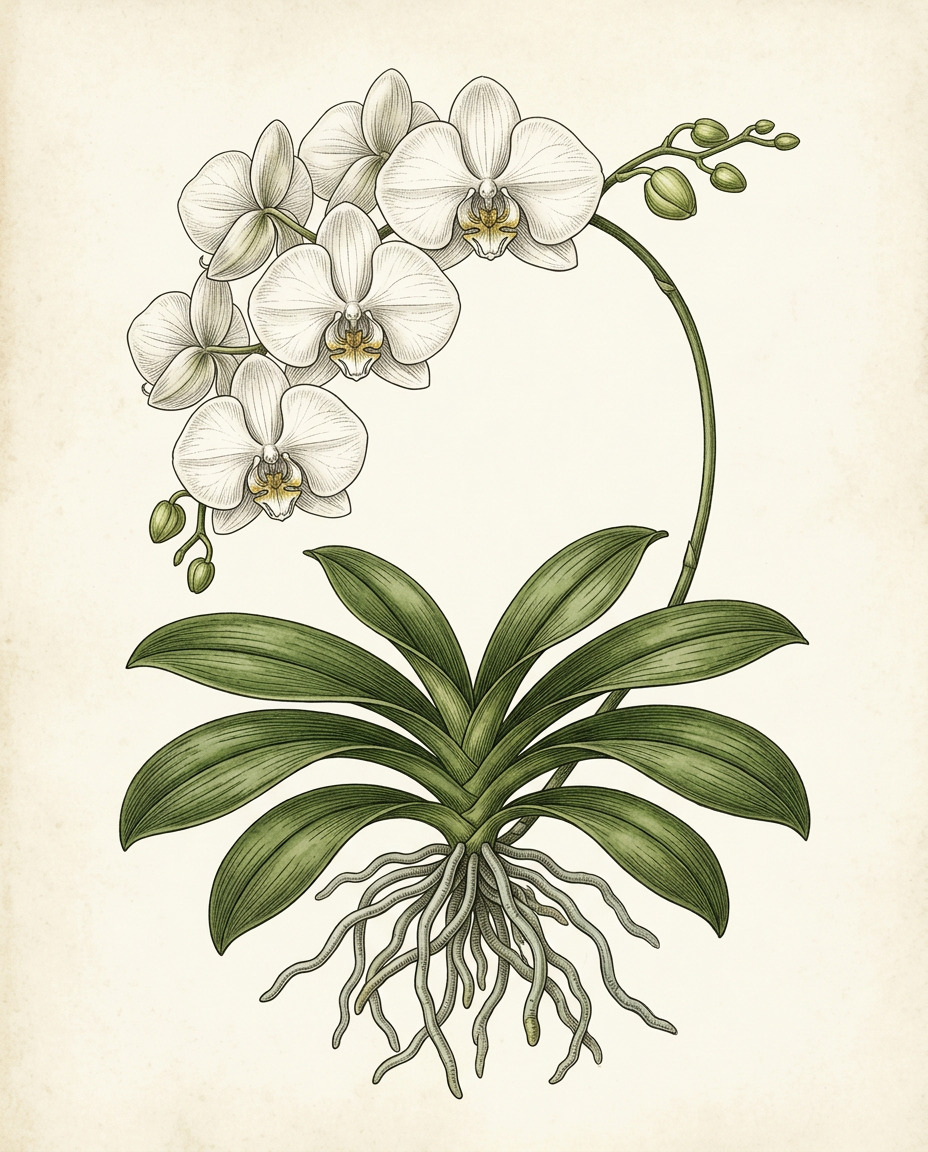
White Phalaenopsis (classic)
The safest visual substitute for white lily bouquets in cat homes.
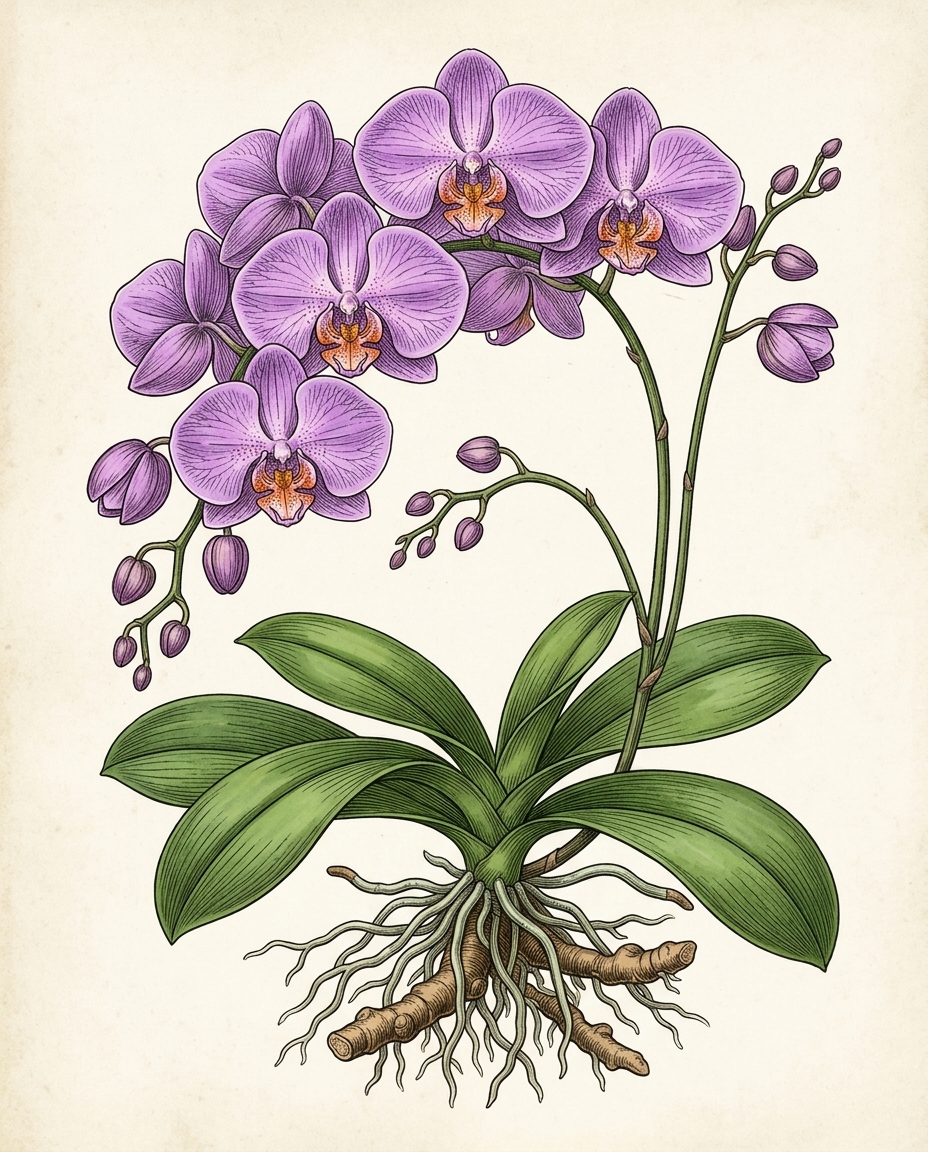
Mini Phalaenopsis (compact)
Smaller footprint for desks and shelves — easier to keep above paw reach.
Keeping the plant alive.
Bright, indirect
East-facing windows are ideal. Too little light prevents rebloom.
Weekly soak
Water when roots turn silvery. Avoid leaving roots in standing water.
Orchid bark mix
Free-draining bark — never standard potting soil alone.
Stable temperature
Avoid cold drafts and heating vents. Cats on windowsills — secure the pot.
- ASPCA Animal Poison Control Center. Toxic and Non-Toxic Plants: Orchid.Accessed May 2026 · aspca.org
If you liked this, also safe.