Christmas
Cactus.
Schlumbergera bridgesii
Segmented stems and winter blooms without euphorbia sap or lily toxins. The ASPCA lists Christmas cactus as non-toxic to cats — the holiday plant worth keeping.
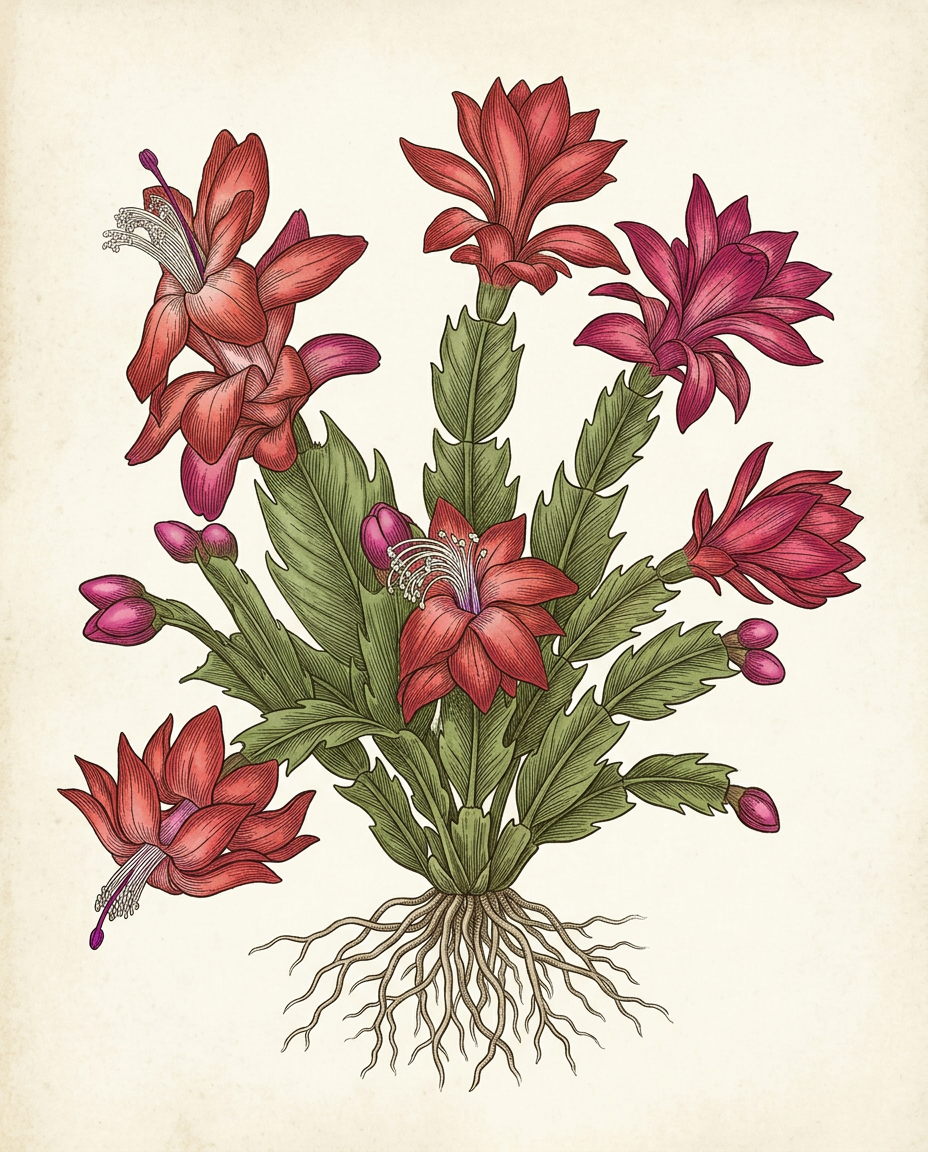
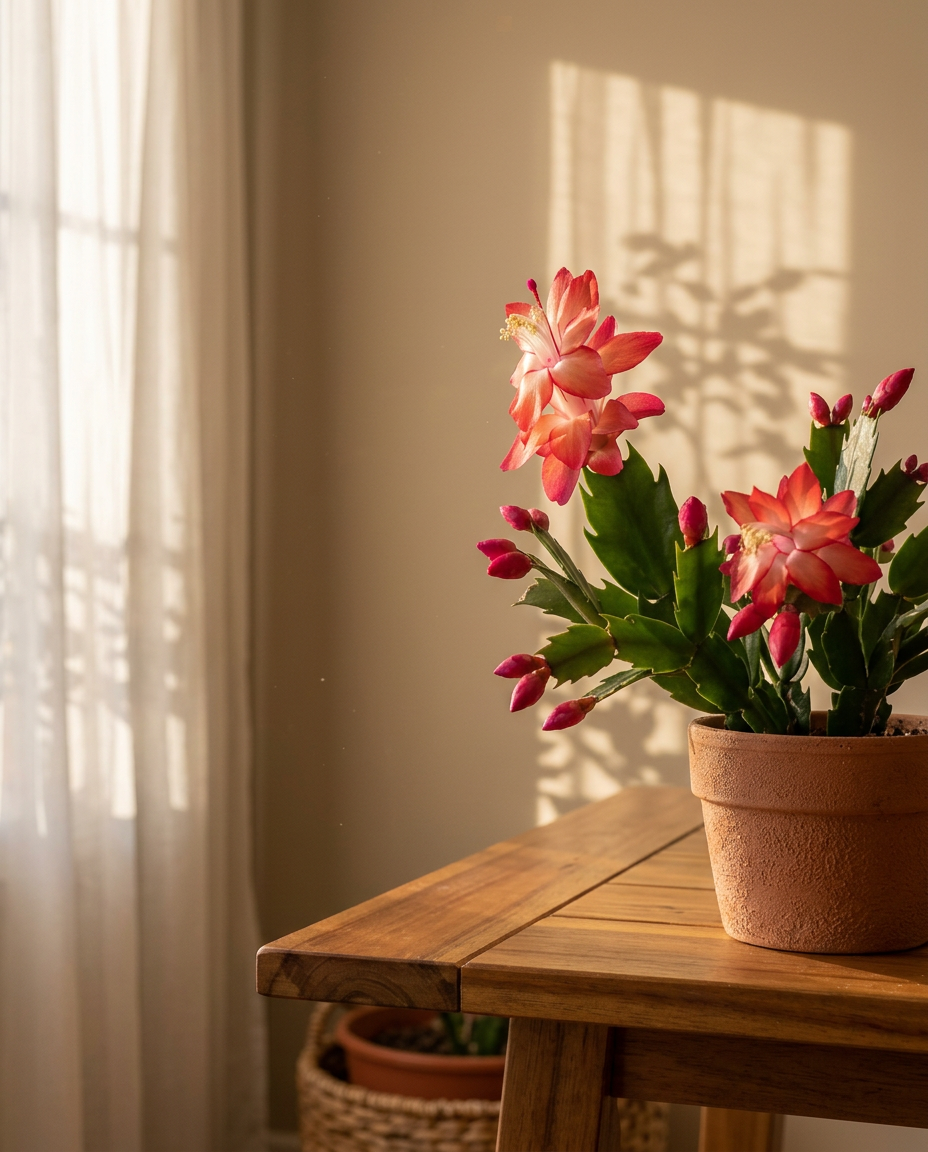
Plate ISchlumbergera bridgesii — flat segmented stems unlike desert cacti. Thanksgiving and Easter cactus are close relatives, also non-toxic.
What happens if your cat eats it.
Yes — Christmas cactus is safe for cats. The ASPCA lists Schlumbergera (Christmas cactus) as non-toxic. Segmented stems and winter flowers bring holiday colour without the milky sap of poinsettia or the renal toxin of true lilies.
If you want one seasonal plant on the mantel in a cat household, this is the one ASPCA data supports.
Not every cactus is safe
Christmas cactus is a jungle epiphyte — no spines, flat joints. Desert cacti vary. Aloe, jade, and kalanchoe are toxic succulents cats also target. Read labels; do not assume "cactus" means safe.
Blooming tips
Short days and cool nights in autumn trigger buds. Plants pass through cat traffic on windowsills — a hanging basket keeps blooms intact and stems out of reach.
Year-round companions
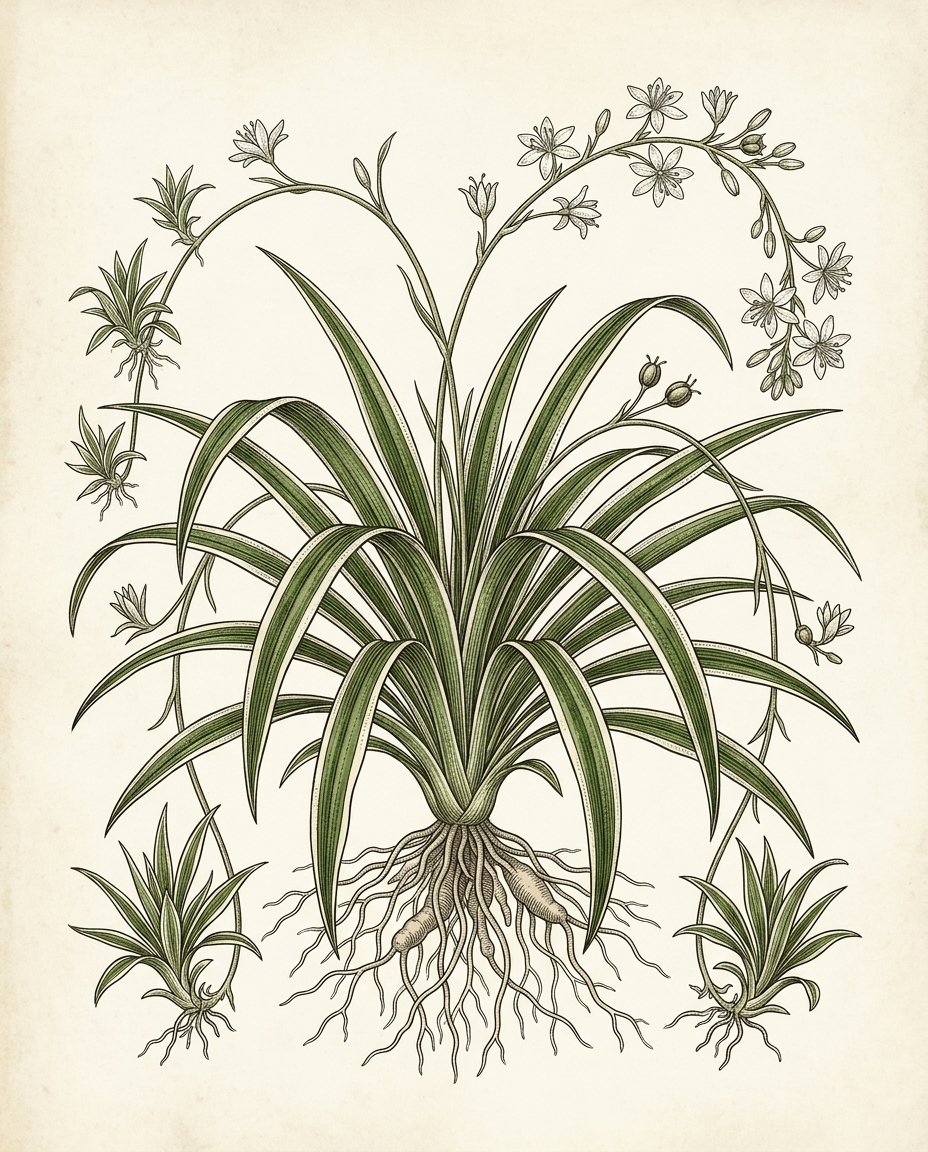
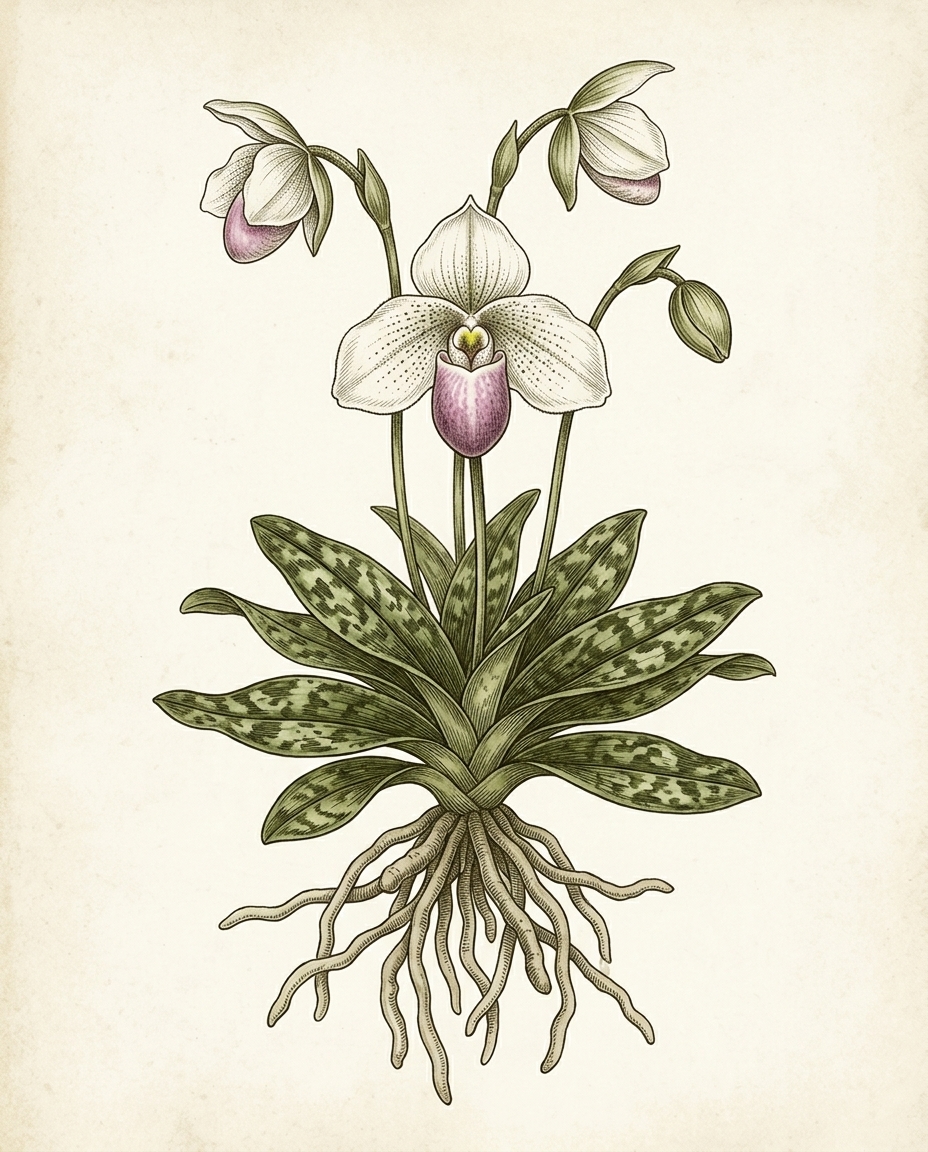
Pair with orchid for tabletop flowers or spider plant for easy trailing green. All three are non-toxic and cover the seasons poinsettia and Easter lily once dominated — unsafely.
What we have actually seen.
Stem nibbling
Succulent segments attract curious cats. Non-toxic — mechanical upset only with large amounts.
Seasonal blooms
Pollen and petals are not lily-toxic. Still discourage chewing to protect flowers.
Hanging placement
Cascading stems suit baskets above paw reach — good for plant and cat coexistence.
Confusion with desert cacti
Christmas cactus is epiphytic, not spiny. Other succulents (jade, aloe) may be toxic — verify names.
Four common varieties.
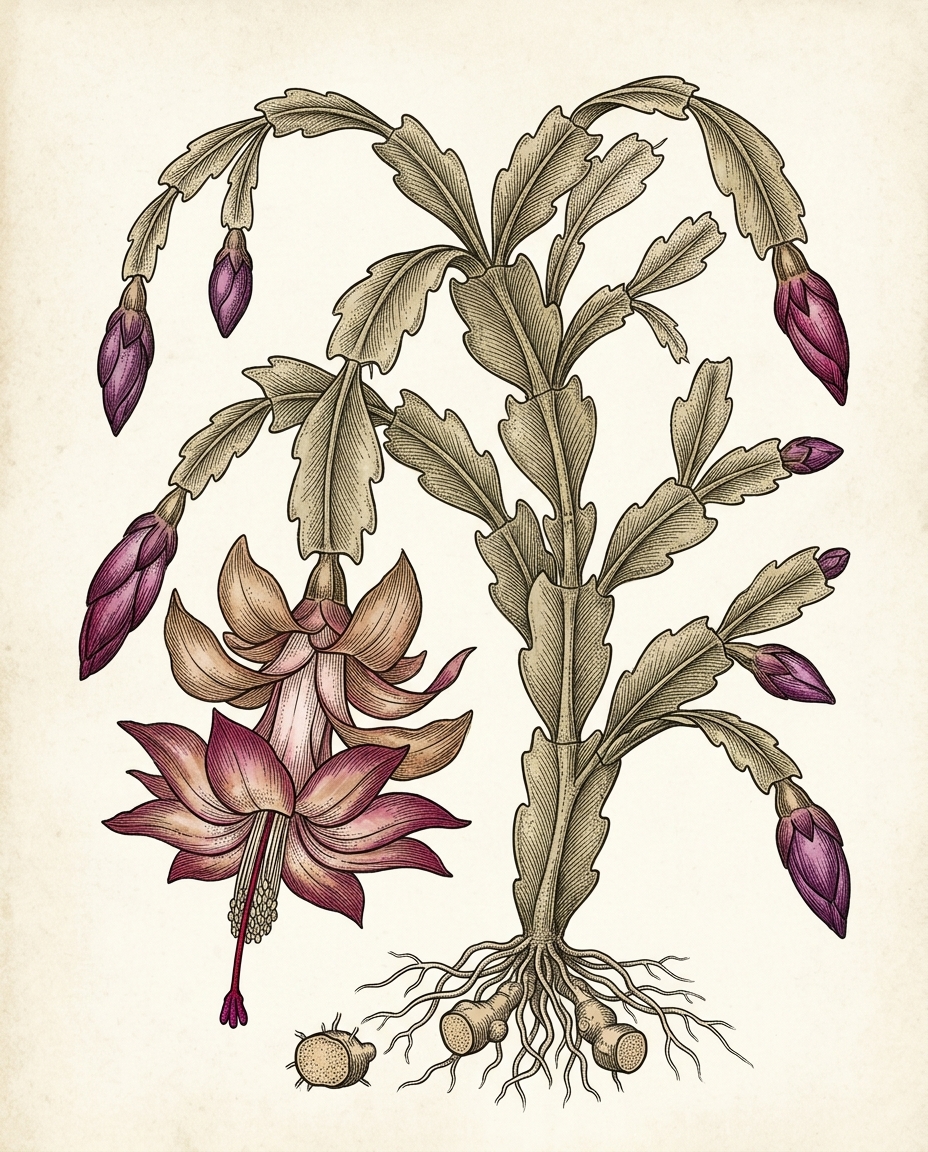
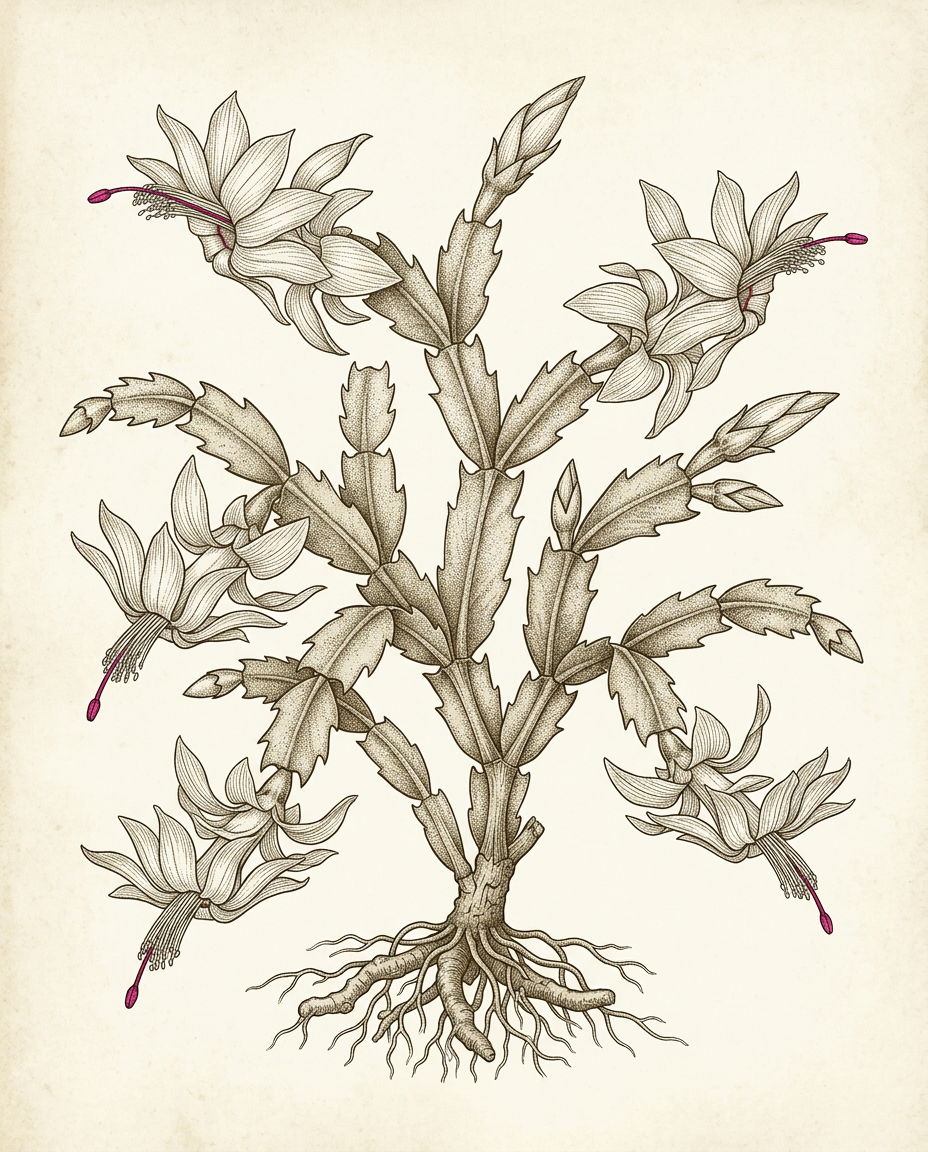
Thanksgiving Cactus (earlier bloom)
Schlumbergera truncata — pointed teeth on segments. Also non-toxic per ASPCA holiday cactus guidance.
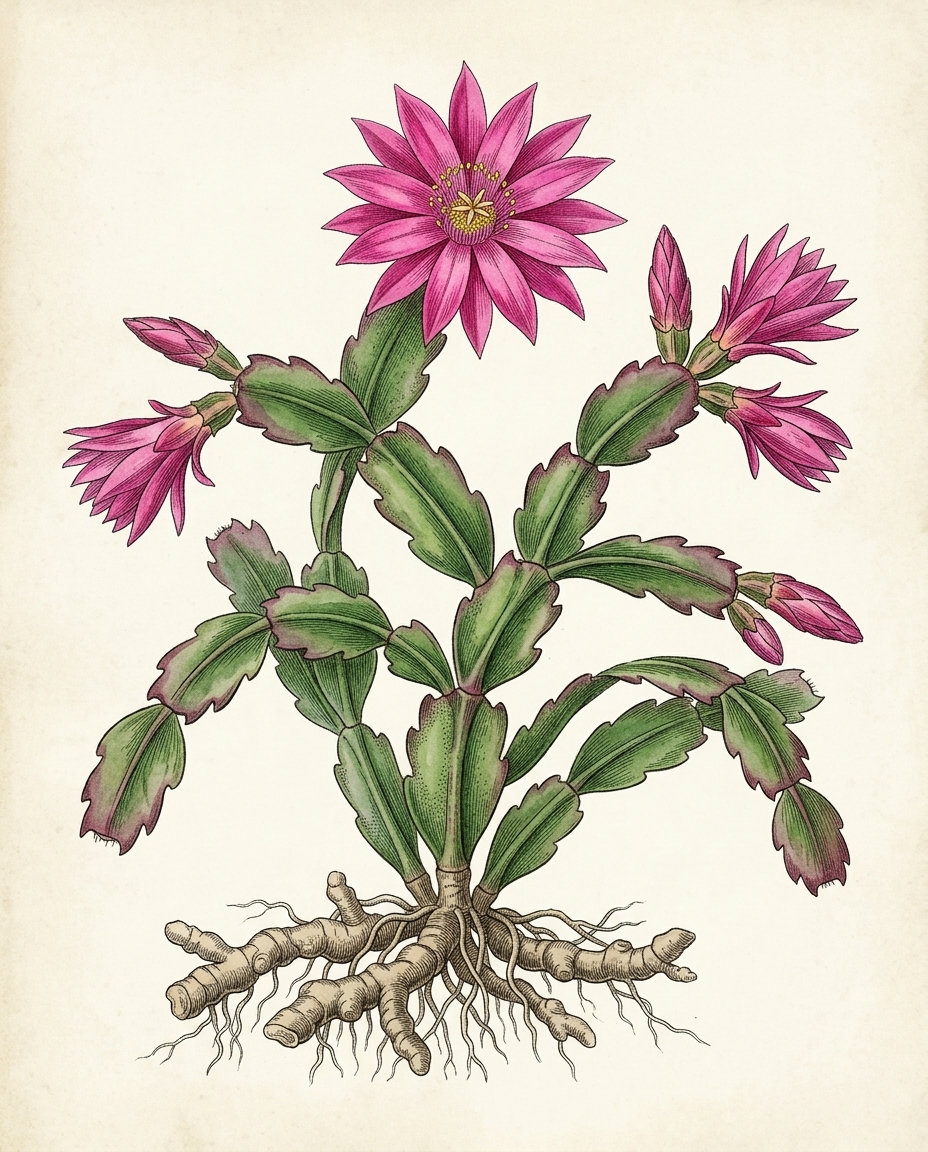
Easter Cactus (spring)
Rhipsalidopsis gaertneri — spring-blooming relative, equally safe for cats.
Keeping the plant alive.
Bright, indirect
Short autumn days trigger blooming. Avoid hot afternoon sun on segments.
When top dries
More water while blooming, less while resting. Do not let sit in soggy soil.
Well-draining mix
Cactus blend or houseplant mix with extra perlite. Epiphytes hate waterlogged roots.
Hanging basket
Keeps segments away from chewers. Cool autumn nights help set buds.
- ASPCA Animal Poison Control Center. Toxic and Non-Toxic Plants: Christmas Cactus.Accessed May 2026 · aspca.org
If you liked this, also safe.