Easter
Lily.
Lilium longiflorum
True lilies cause acute kidney failure in cats. Pollen on fur, a single leaf, or vase water can be fatal. Easter lilies are among the most dangerous plants a cat household can bring inside.
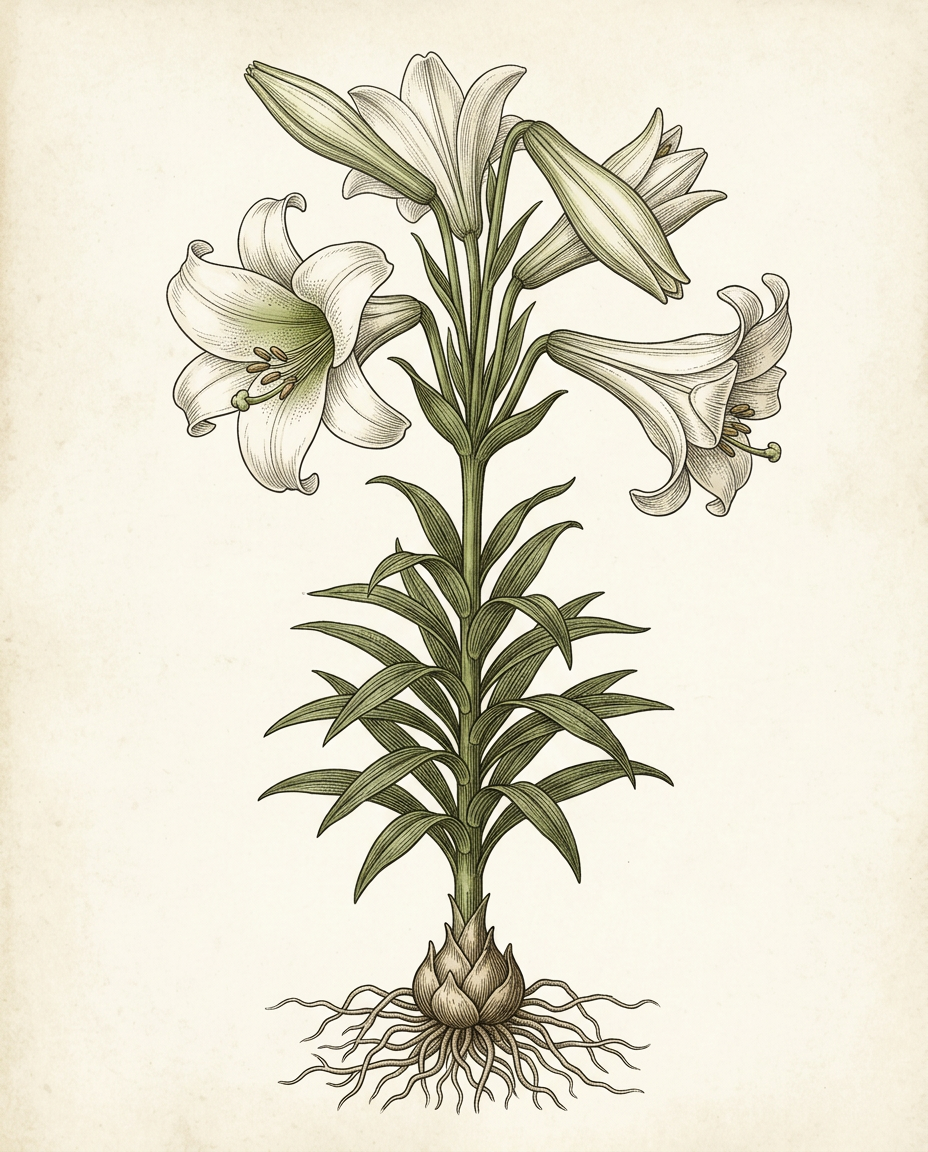
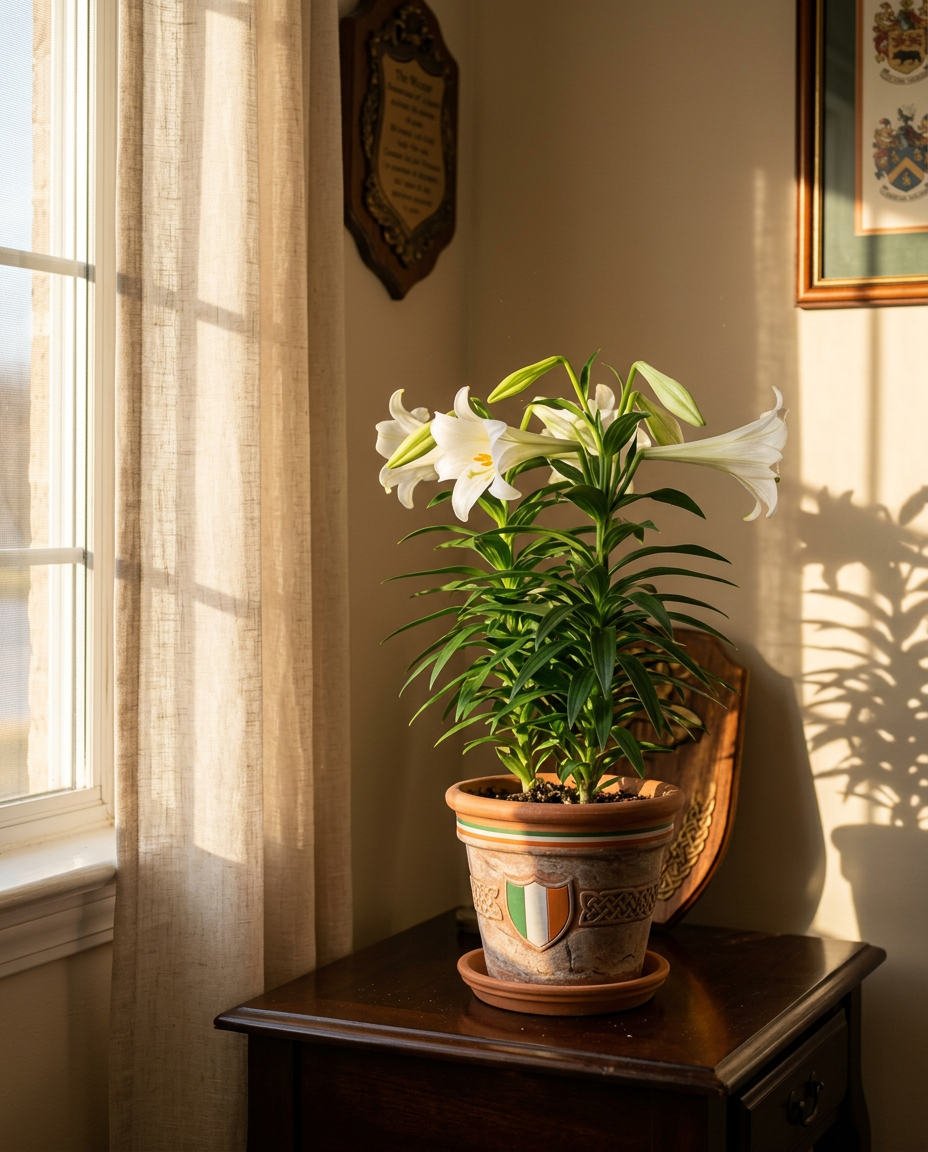
Plate ILilium longiflorum — the white trumpet lily sold at Easter. All true lilies in the Lilium genus carry the same renal toxin for cats.
Three plants that look the part, without the risk.
Elegant indoor flowers without renal toxin — never substitute true lilies; these three are ASPCA non-toxic.
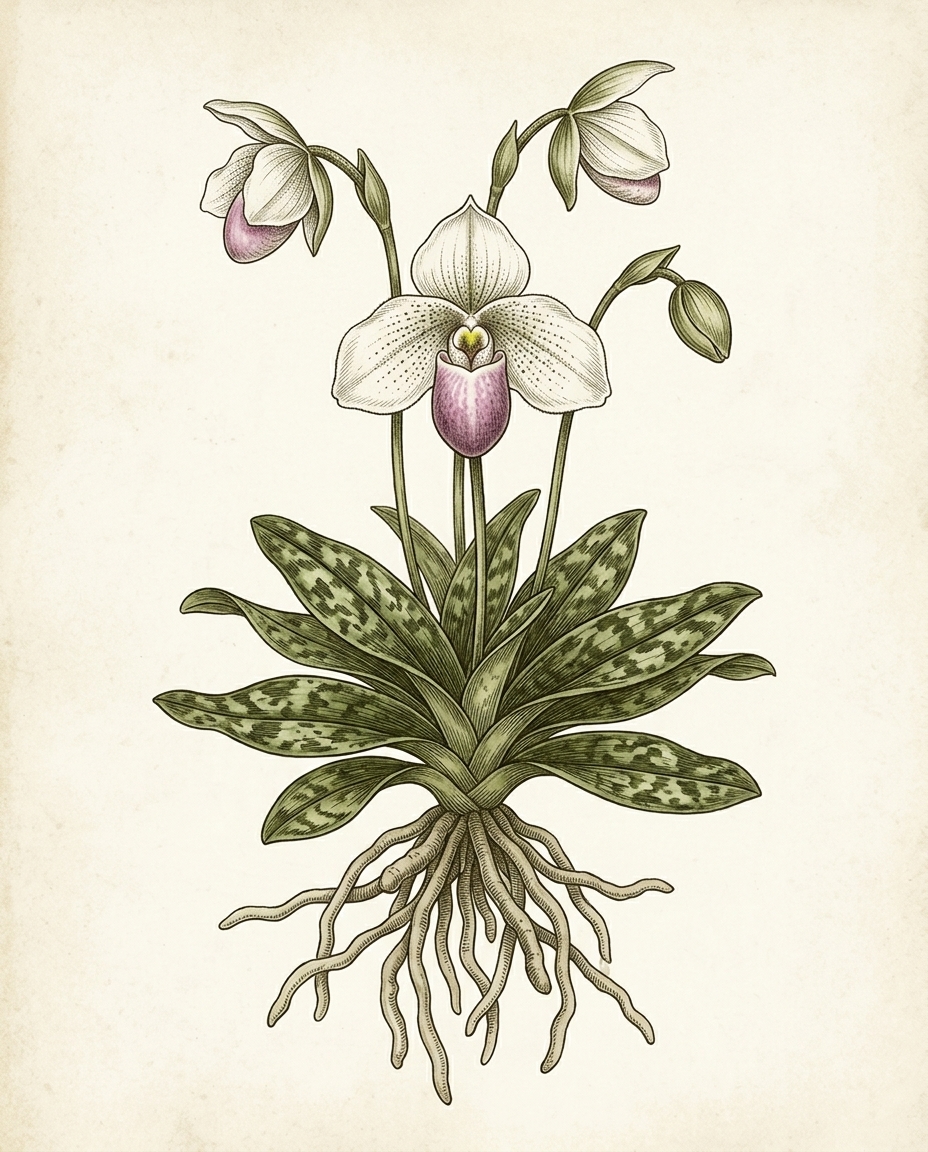
Orchid
White elegant blooms without lily toxicity. The closest visual substitute for a tabletop display.

African Violet
Compact purple or white flowers year-round. No kidney toxin — safe on the windowsill.
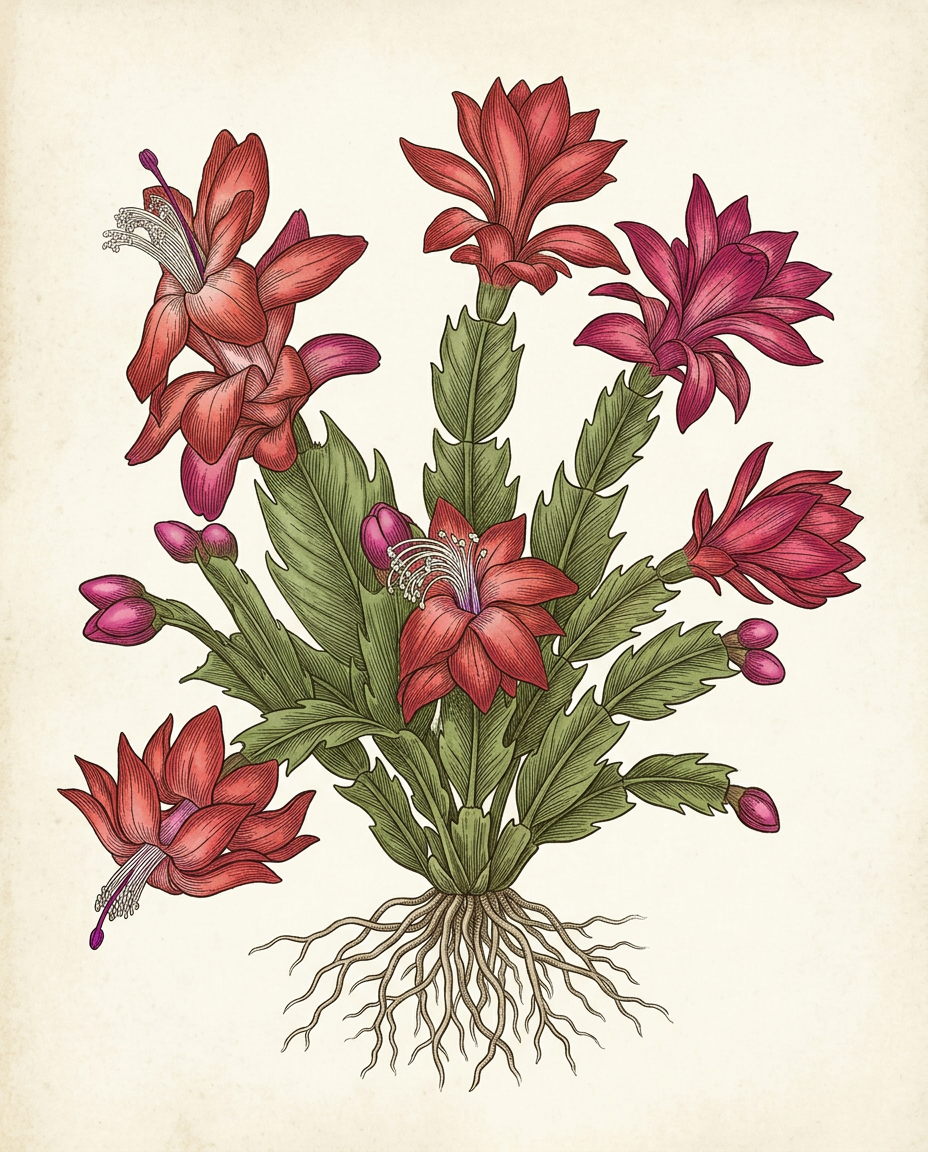
Christmas Cactus
Seasonal colour without risk. Cascading stems suit the same shelf or windowsill.
What it does to a cat.
Yes — Easter lilies are among the most dangerous plants for cats. The ASPCA lists all Lilium species, including Lilium longiflorum (Easter lily), as highly toxic to cats. Ingestion of any part — leaf, petal, stem, pollen, or even water from the vase — can cause acute kidney failure, often fatal without emergency treatment within hours.
This is not the same plant as peace lily (Spathiphyllum), which causes painful mouth irritation but rarely kills. True lilies operate on the kidneys. Daylilies (Hemerocallis) are equally dangerous and must be avoided for the same reason.
Why spring is the dangerous season
Easter lilies arrive in supermarkets, church displays, and gift bouquets just as households are not thinking about toxicity. Cats brush against pollen, groom it from their coats, or drink from vases on low tables. None of these exposures require the cat to chew a leaf deliberately.
Treatment window
Veterinary care is most effective when started early — ideally before symptoms worsen. If you suspect any lily exposure, call your vet or ASPCA Animal Poison Control at (888) 426-4435 immediately. Do not induce vomiting unless directed by a professional. Our step-by-step emergency plan walks through what to do in the first hour.
Safe alternatives for cat households
If you want white flowers indoors, orchids and non-toxic seasonal plants like Christmas cactus carry none of the renal toxin. For everyday greenery, spider plant and Boston fern are ASPCA-listed as safe.
What we have actually seen.
Acute kidney failure
The defining risk. Even small ingestions can destroy renal function within 24–72 hours without prompt treatment.
Early vomiting & lethargy
Often within 2–4 hours of ingestion. Do not wait for more symptoms — treat as an emergency immediately.
Pollen exposure
Cats grooming pollen from fur or paws can ingest enough toxin without chewing the plant directly.
Vase water ingestion
Water from lily arrangements concentrates toxins. Keep all lily vases inaccessible.
- ASPCA Animal Poison Control Center. Toxic and Non-Toxic Plants: Lily.Accessed May 2026 · aspca.org
- Pet Poison Helpline. Lily Toxicosis in Cats.Clinical brief · 2024 ed.