Cast-Iron
Plant.
Aspidistra elatior
Dark glossy leaves that survive neglect and dim rooms — without a toxic compound in the leaf. The ASPCA lists cast-iron plant as non-toxic to cats.
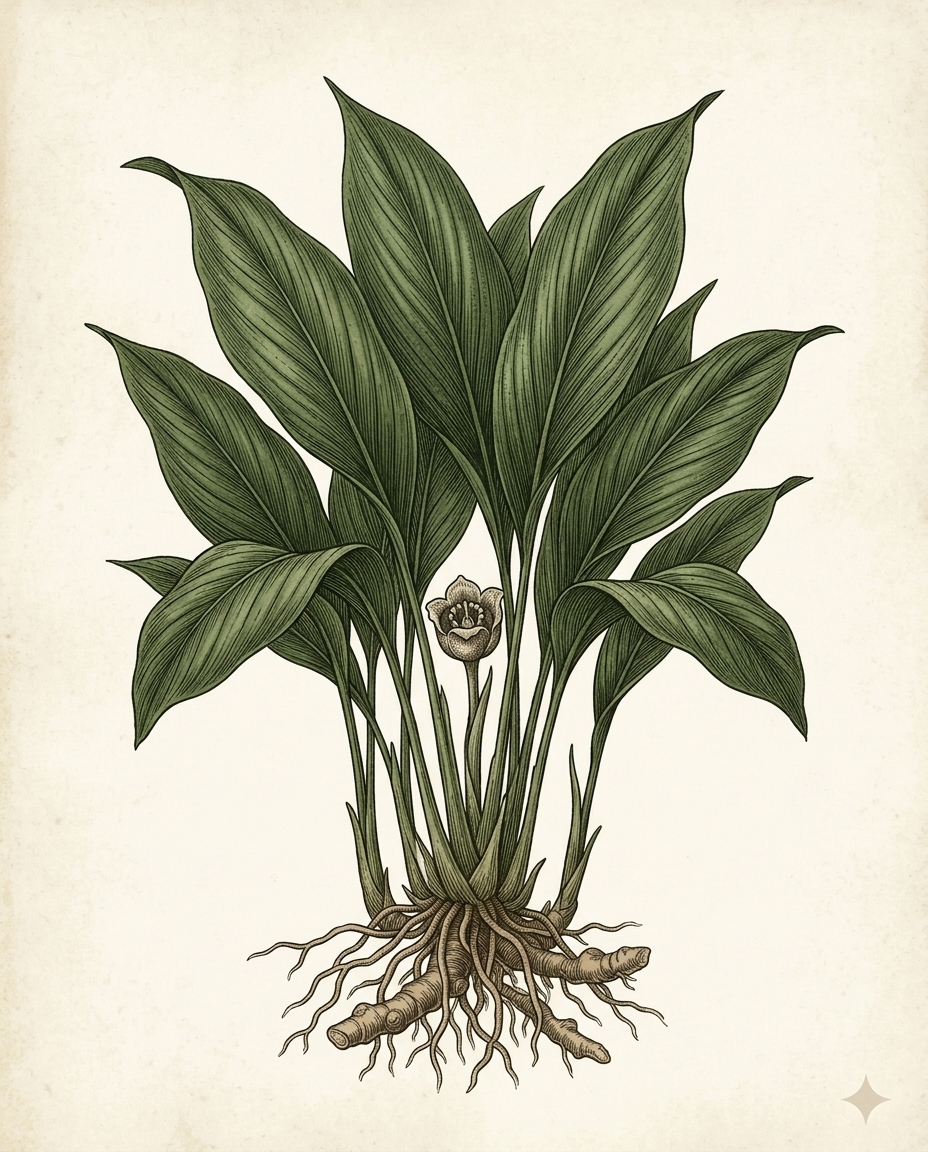
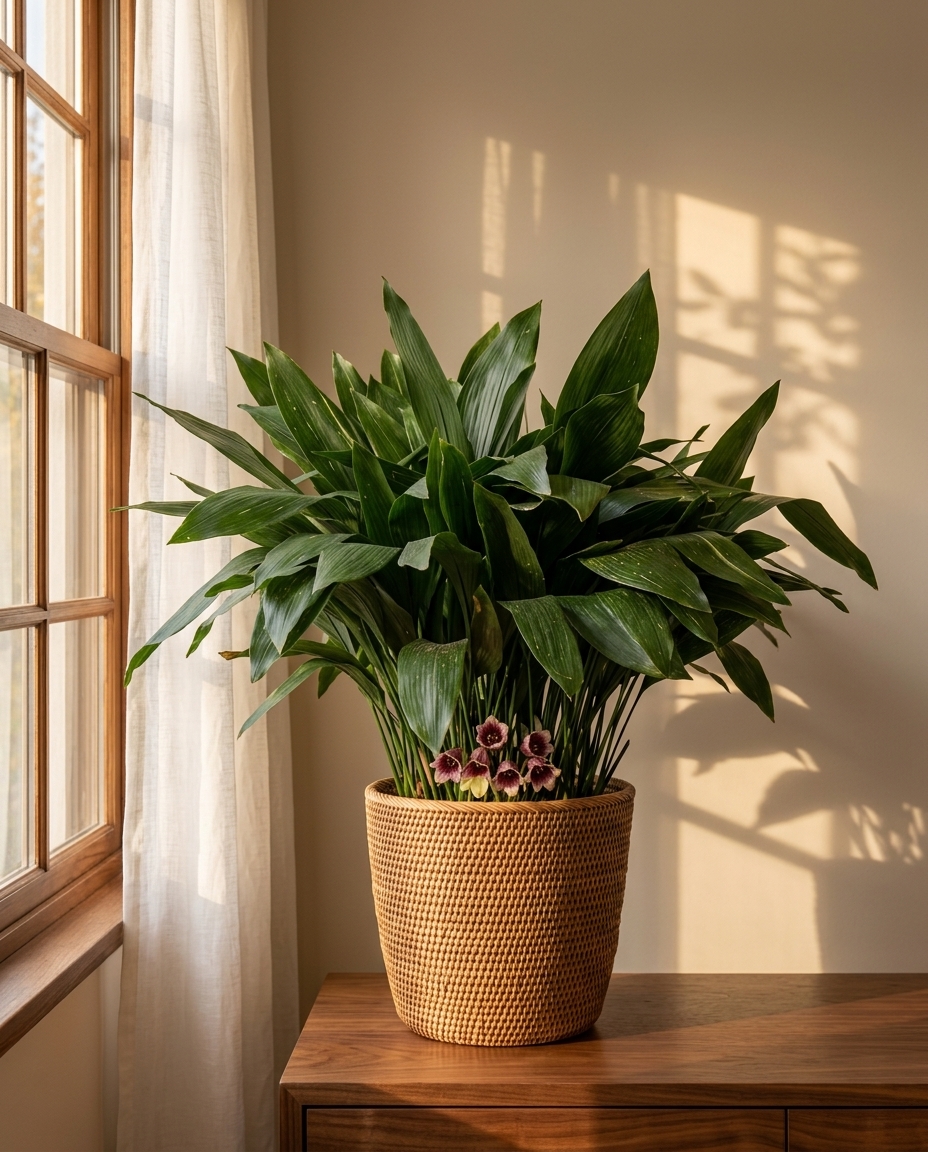
Plate IAspidistra elatior — strappy evergreen foliage that tolerates shade, drought, and curious cats equally well.
What happens if your cat eats it.
Nothing toxic — cast-iron plant is safe for cats. The ASPCA lists Aspidistra elatior as non-toxic. Dark upright leaves fill the same dim corners as peace lily and dracaena without saponins or calcium oxalates.
Cats rarely bother tough, leathery foliage. When they do, the outcome is uneventful — no oral pain, no emergency protocol.
The low-light swap
If your room cannot support a fern and you would otherwise buy a peace lily, cast-iron plant is the ASPCA-backed alternative. It tolerates neglect, irregular watering, and shade — genuinely the kindest beginner plant for cat households.
Upright form for floor planters
Dracaena and corn plant fill vertical space but carry saponins. Cast-iron plant offers strappy height in the same planter without the vet call. Slow growth means less frequent repotting when cats use the pot as a launch pad.
Pair with softer texture
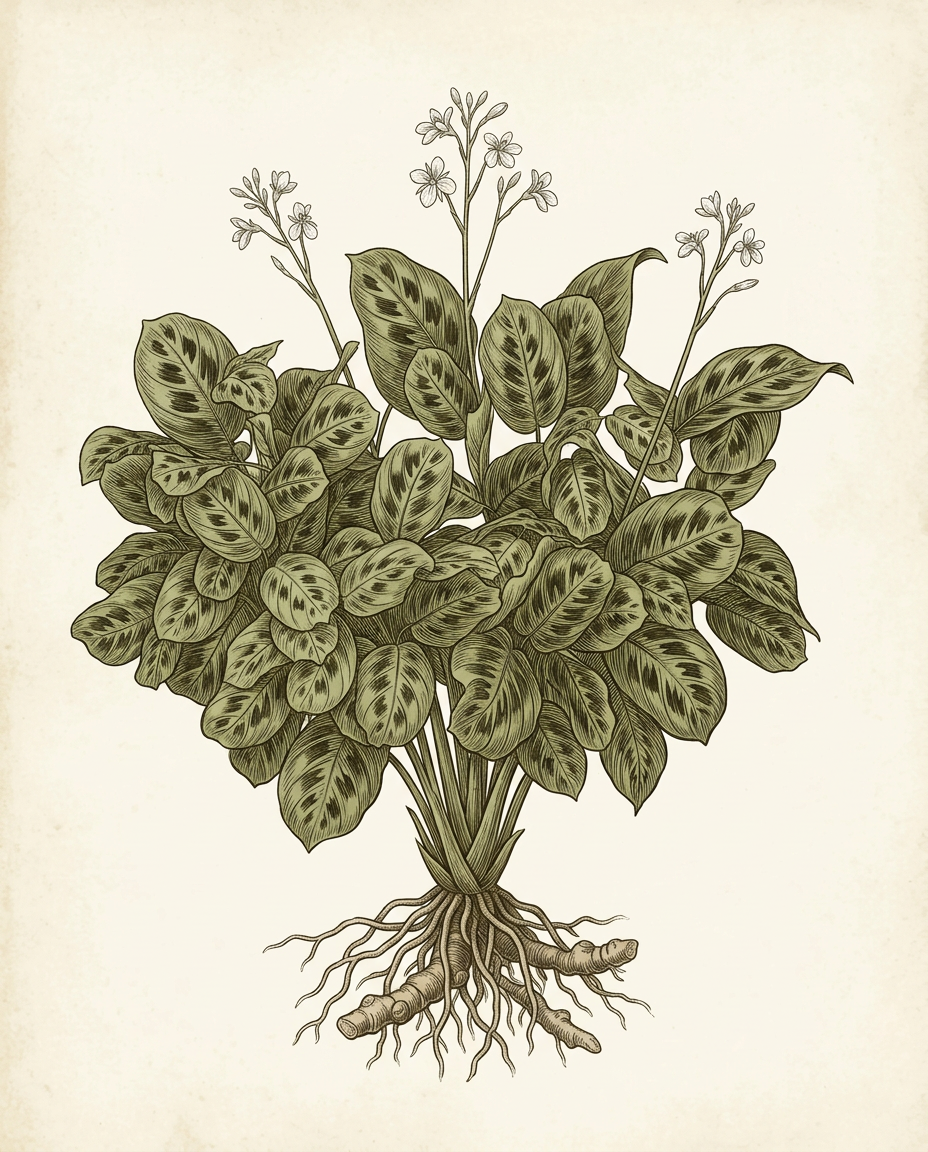
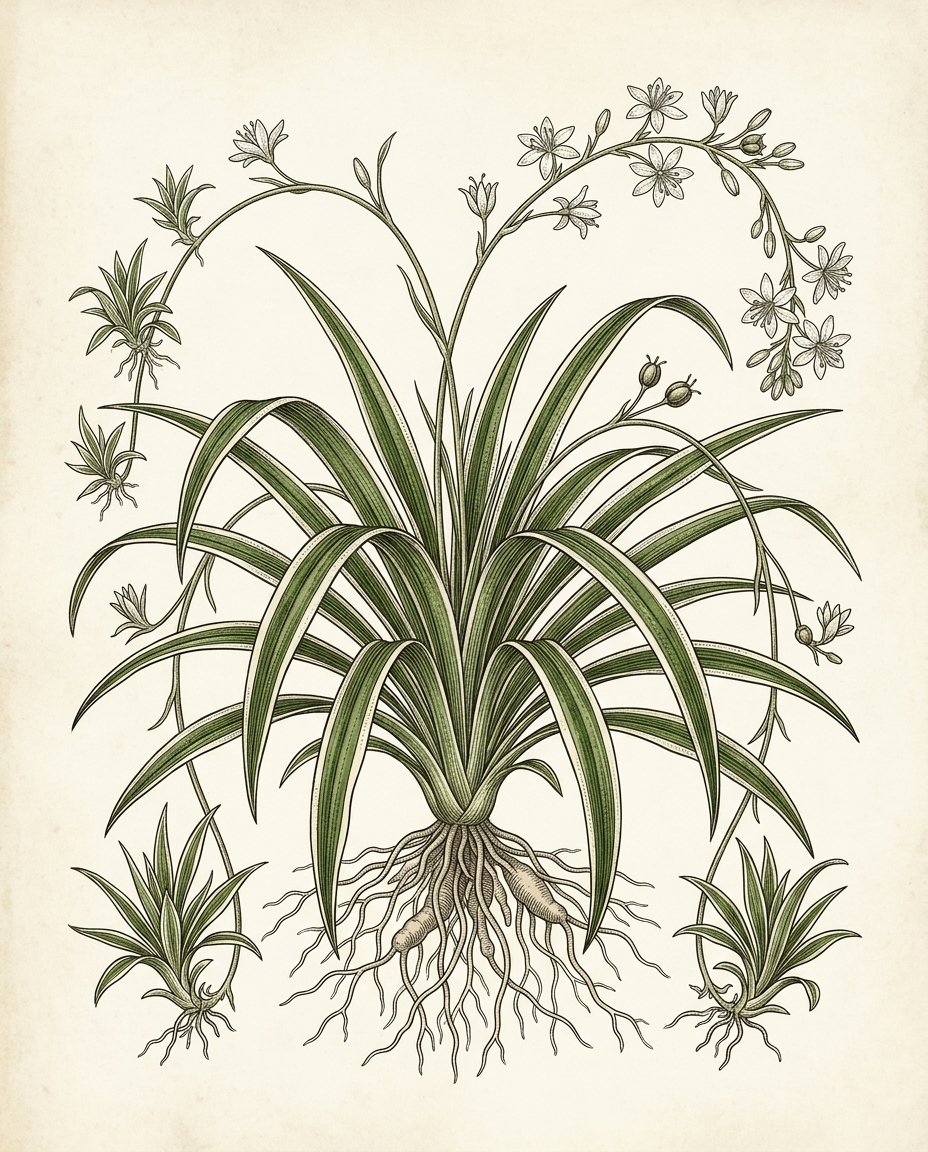
Balance rigid Aspidistra leaves with prayer plant or spider plant on a shelf above. All three are non-toxic and cover different light levels in the same room.
What we have actually seen.
Leaf chewing
Tough leaves deter most cats. Non-toxic if nibbled — mechanical upset only with large amounts.
Low-light tolerance
Thrives where peace lily and dracaena also sit — but without their toxins.
Slow growth
Unhurried habit suits busy households. Less replacement cost when cats investigate.
Soil ingestion
Fertiliser in potting mix can upset stomachs unrelated to the plant itself.
Four common varieties.
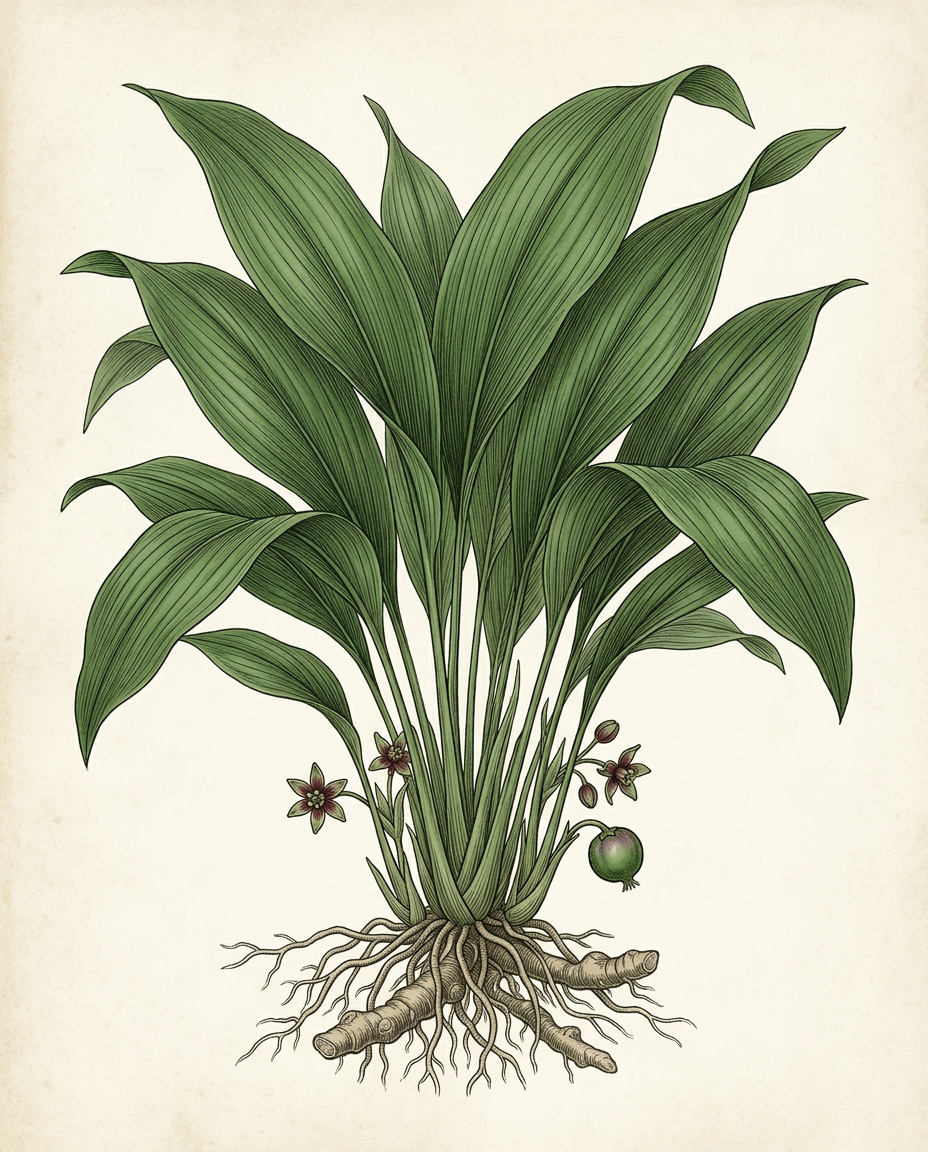
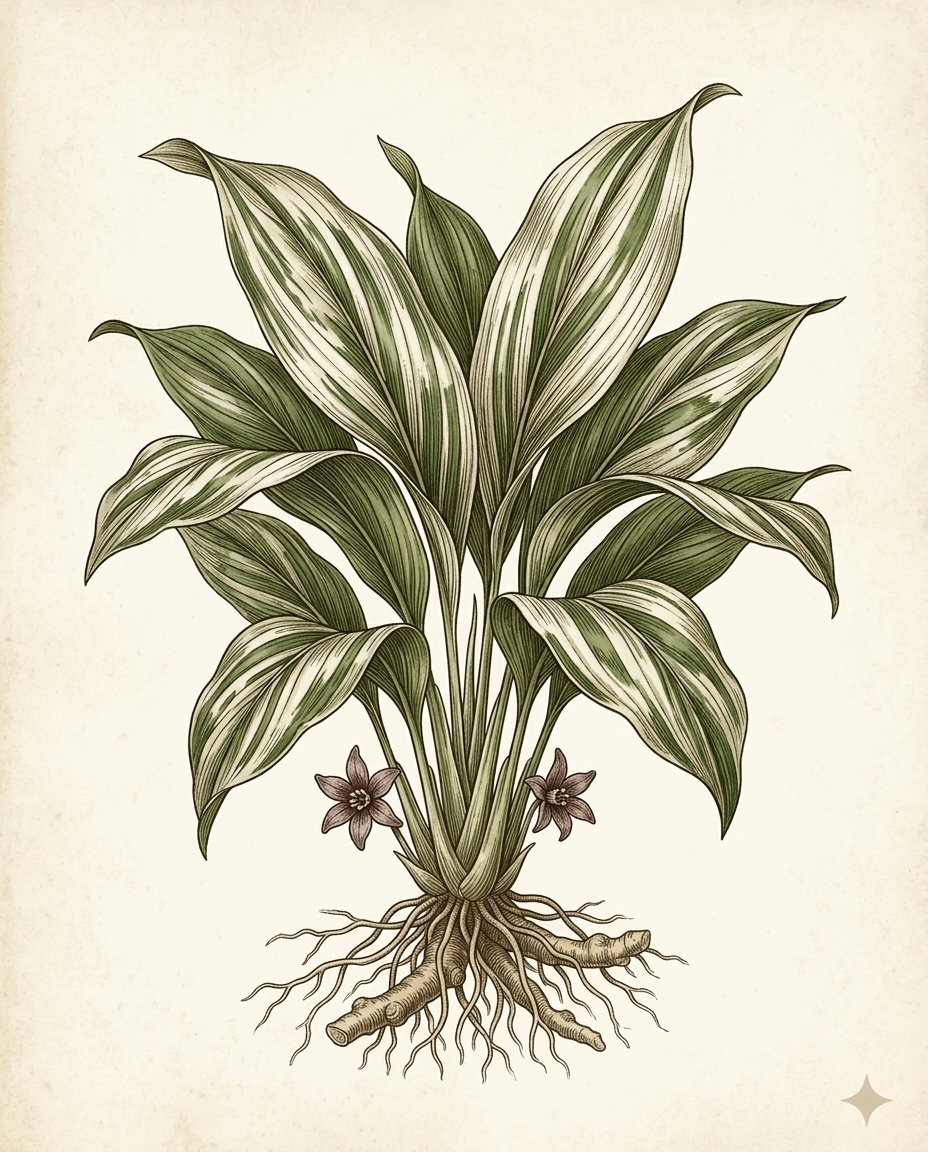
Variegata (striped)
Cream stripes on green leaves. Slightly less shade-tolerant than the green form.
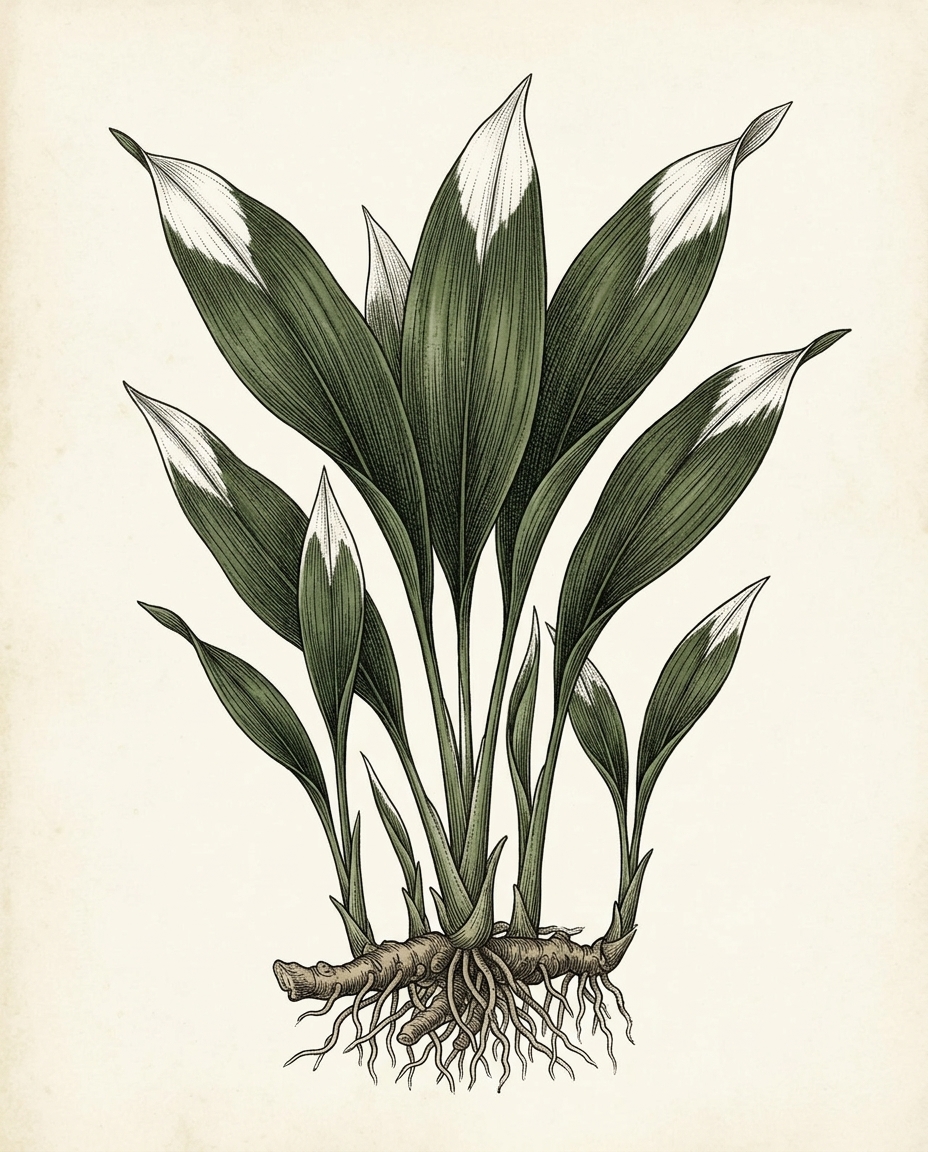
Asahi (white tips)
Leaf tips fade to white. Needs a touch more light than solid green types.
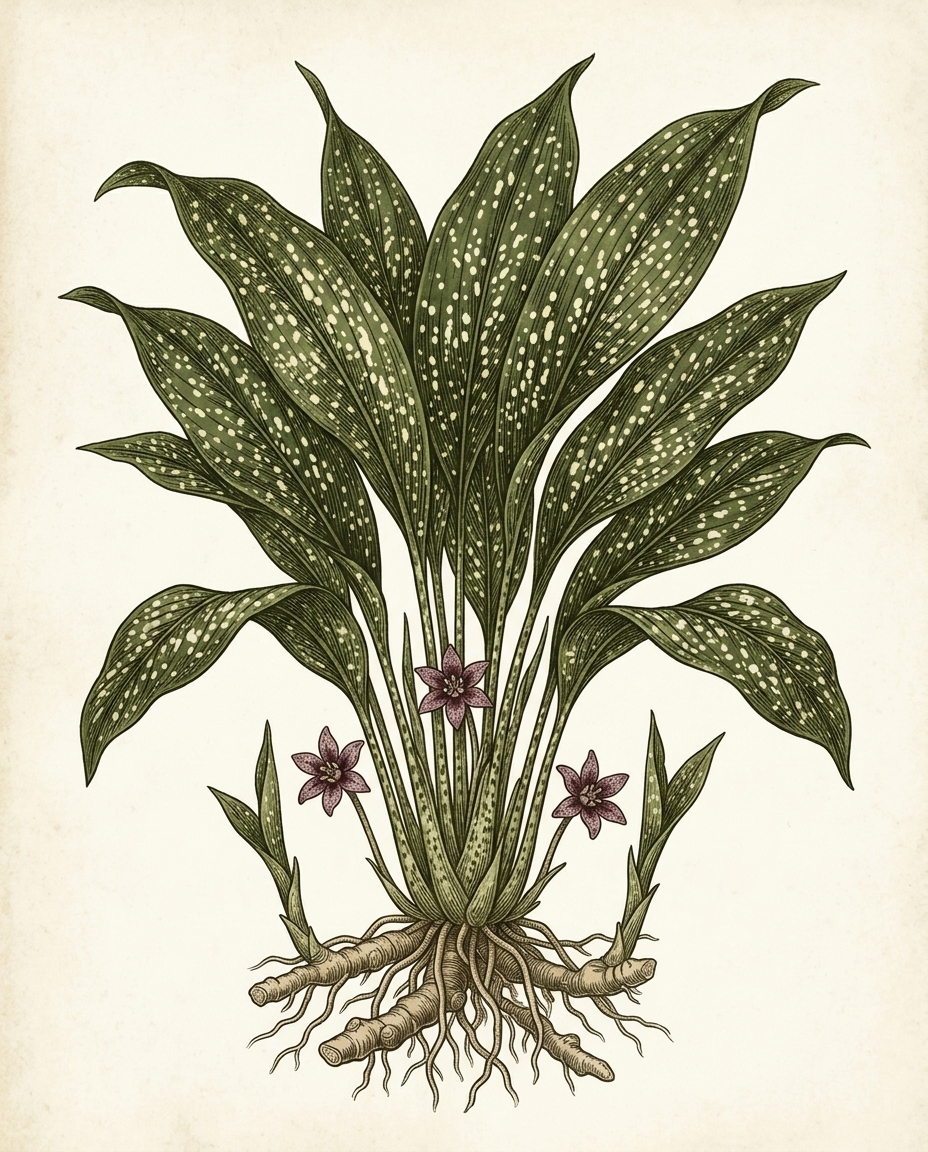
Milky Way (speckled)
White dots scattered across dark leaves — a collector's form, equally non-toxic.
Keeping the plant alive.
Low to medium
One of the few houseplants that genuinely tolerates dim corners and north-facing rooms.
When dry
Water sparingly — every two to three weeks in winter. Overwatering is the main killer.
Standard potting mix
Well-draining blend. Tolerates root-bound conditions for years.
Floor or corner
Upright strappy form suits the same spots as dracaena and peace lily — safely.
- ASPCA Animal Poison Control Center. Toxic and Non-Toxic Plants: Cast Iron Plant.Accessed May 2026 · aspca.org
If you liked this, also safe.