Catnip
Nepeta cataria
Yes — catnip is safe for cats. The ASPCA lists Nepeta cataria as non-toxic. The famous "high" is harmless and short-lived; overindulgence at most causes mild, temporary tummy upset.
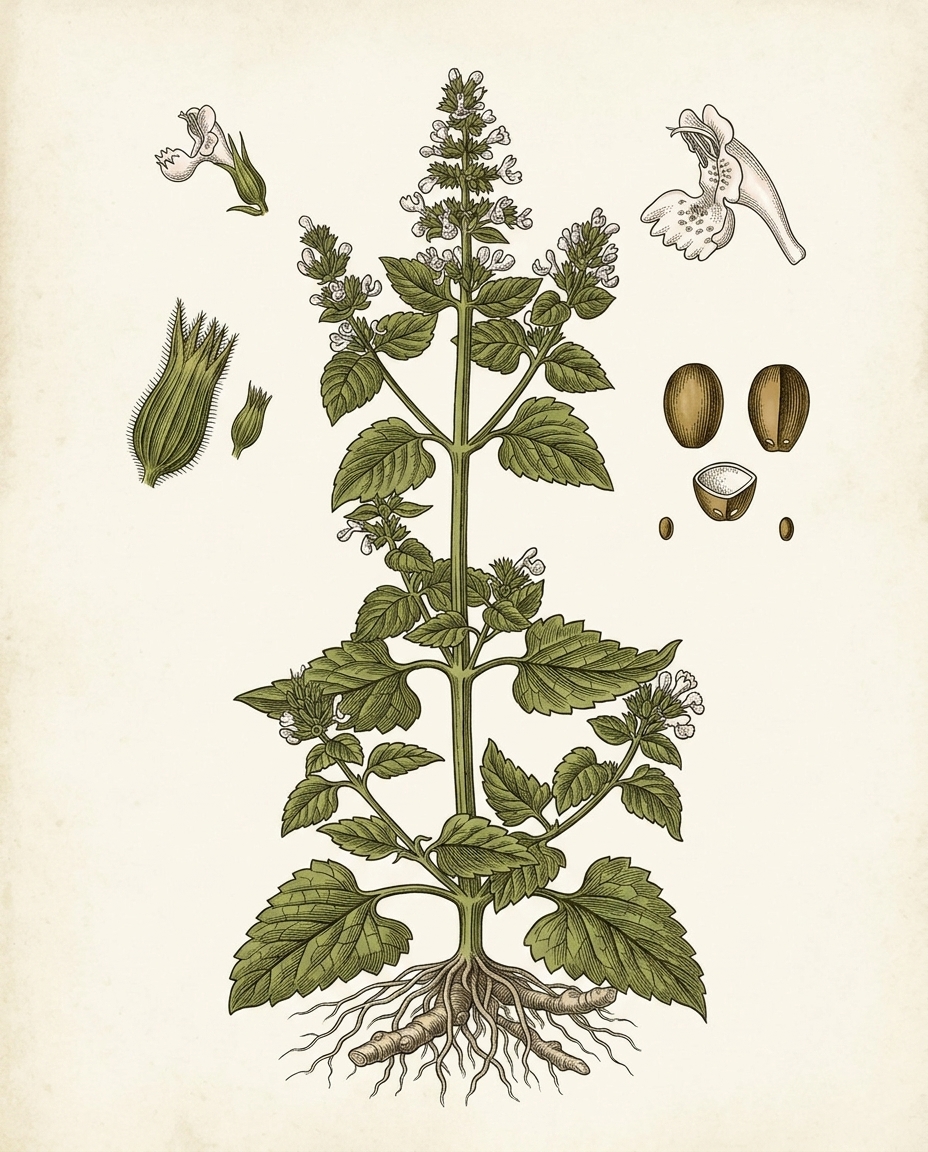
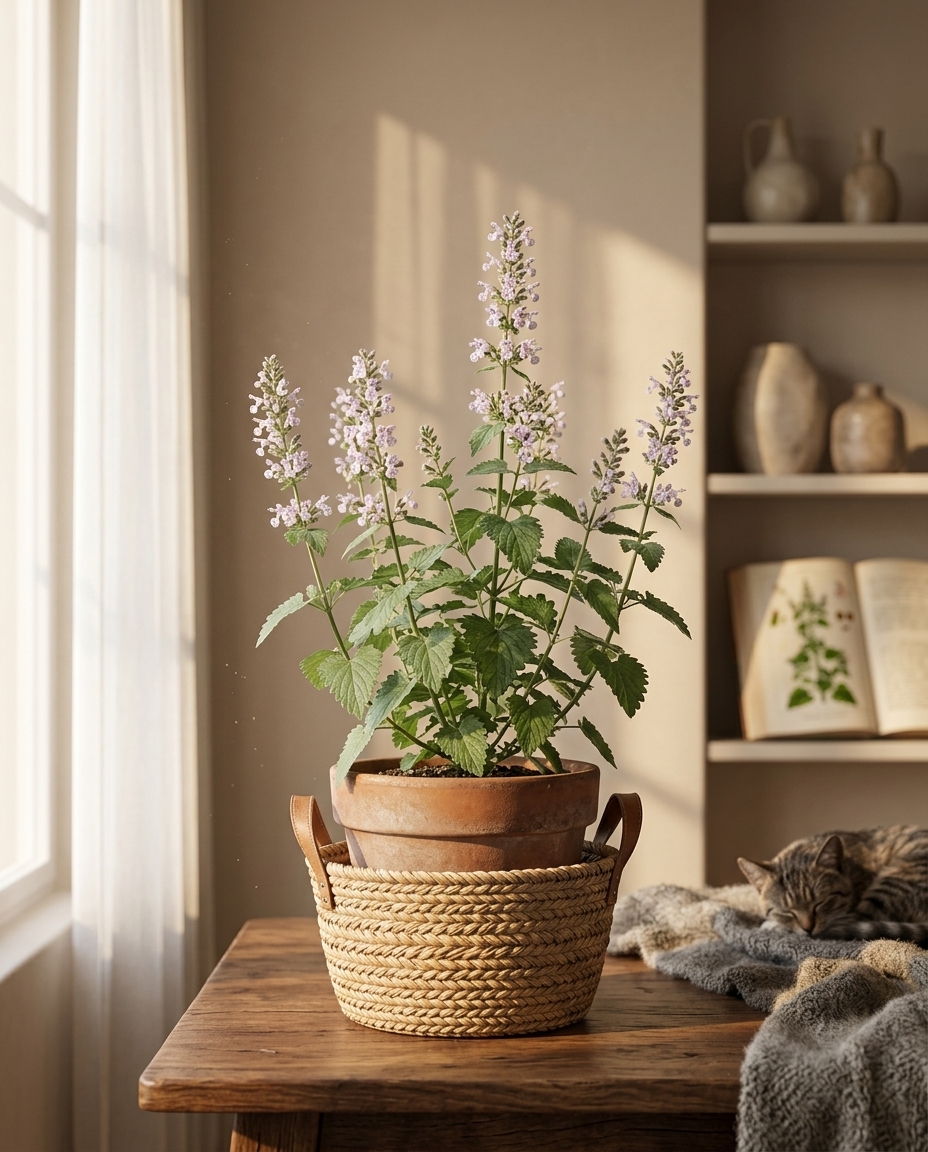
Plate INepeta cataria — catnip. A non-toxic mint-family herb whose volatile oil, nepetalactone, produces the familiar harmless euphoria.
What happens if your cat eats it.
Mostly, a good time. The ASPCA lists catnip (Nepeta cataria) as non-toxic to cats. The plant's volatile oil, nepetalactone, produces the famous five-to-fifteen-minute bout of rolling, rubbing, and blissed-out mellowness — and then it simply wears off, with no hangover and no harm.
Eating catnip is just as safe as smelling it. The only realistic downside is the one common to every plant: a cat that gorges on a large quantity may vomit or pass loose stool. That is temporary and not dangerous, and it is easily avoided by offering catnip in moderation rather than letting a cat strip the whole pot.
Why some cats shrug
Roughly one cat in three feels nothing at all — sensitivity to nepetalactone is an inherited trait. Very young kittens also tend not to respond until they mature. If your cat ignores catnip, it isn't doing it wrong; it simply lacks the gene.
A cat-safe herb garden
Catnip pairs naturally with basil, another non-toxic windowsill herb, and with cat grass for nibbling. It belongs to the same mint family as the toxic lavender — proof that family membership alone tells you nothing, and the ASPCA list tells you everything.
What we have actually seen.
Harmless euphoria
Nepetalactone triggers a brief, pleasurable response — rolling, rubbing, and mellowness — lasting only minutes.
Mild GI upset
A cat that eats a large amount may vomit or pass loose stool. Temporary and not dangerous.
Over-excitement
A small minority become briefly over-stimulated or nippy. Give space; it passes quickly.
No response
Roughly a third of cats are genetically unaffected — and kittens under a few months rarely react.
Four common varieties.
Common Catnip (the classic)
The true catnip, richest in nepetalactone. Grown for the dried herb and fresh nibbling alike.
Catmint (ornamental)
A tidier, more floriferous relative. Milder effect on cats but the same non-toxic, cat-safe profile.
Keeping the plant alive.
Full sun
Catnip thrives in bright light. A sunny sill or balcony keeps the leaves potent and the plant bushy.
Let it dry out
Drought-tolerant once established. Water when the soil is dry; it dislikes constantly wet roots.
Free-draining
Ordinary, well-drained potting mix. Easy from seed and quick to regrow after a cat's attention.
A dedicated cat pot
Grow one to share. Offer in moderation and keep a backup plant — enthusiastic cats can flatten it.
- ASPCA Animal Poison Control Center. Toxic and Non-Toxic Plants: Catnip.Accessed May 2026 · aspca.org
- Pet Poison Helpline. Plants Non-Toxic to Cats.Reference list · 2024 ed.
If you liked this, also safe.