Sage
Salvia officinalis
Common garden sage (Salvia officinalis) is non-toxic to cats per the ASPCA. The kitchen herb belongs on the cat-safe windowsill with basil, rosemary, and English thyme.
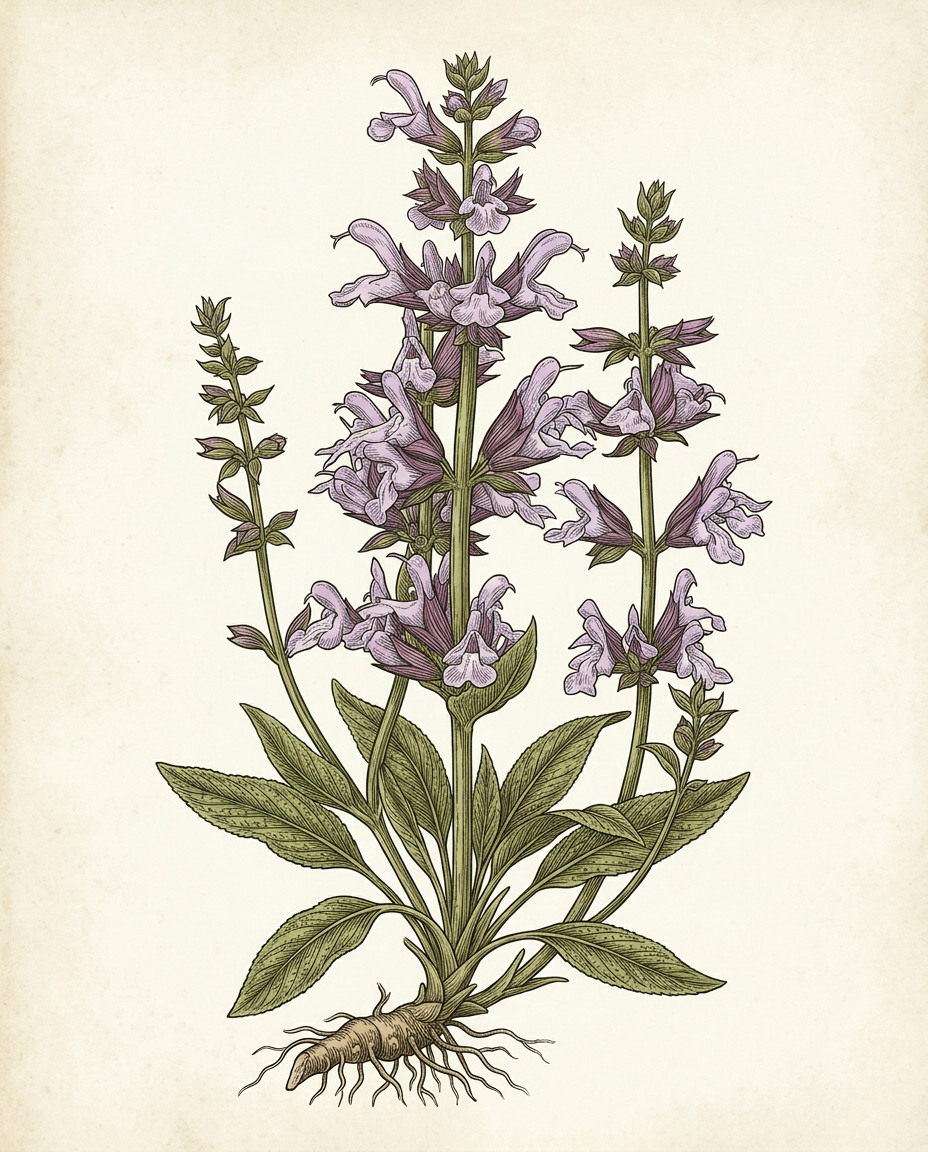
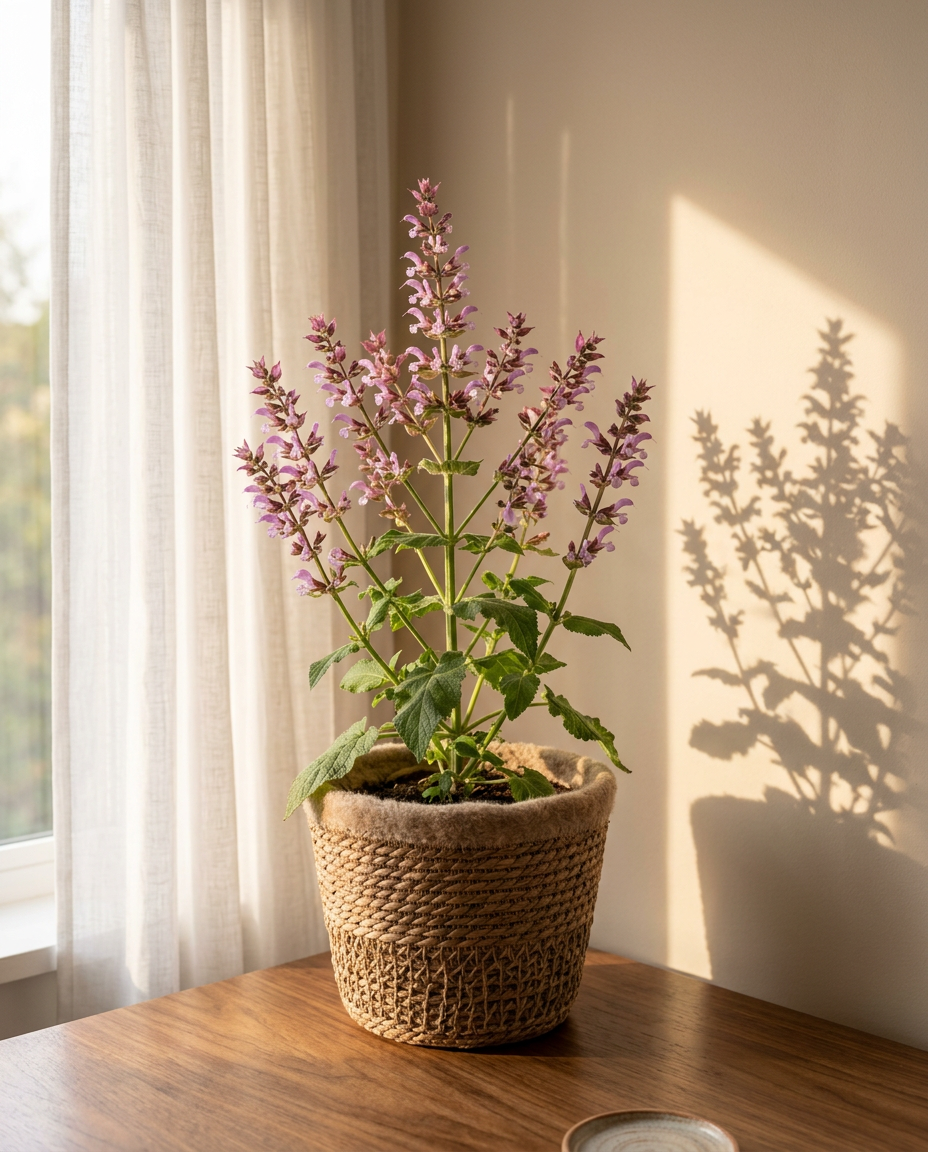
Plate ISalvia officinalis — common sage, garden sage. The Mediterranean kitchen herb. Soft, pebbled leaves with the unmistakable sage aroma; ASPCA non-toxic to cats, dogs, and horses.
How to grow sage.
Yes — common garden sage is safe for cats. The ASPCA lists Salvia officinalis (also called common sage, garden sage) as non-toxic to cats, dogs, and horses. No toxic principles. The kitchen herb belongs on the cat-safe windowsill alongside basil, rosemary, and English thyme.
It is one of the four reliable safe culinary herbs and the easiest to grow alongside the others — all four want the same Mediterranean conditions: full sun, sparing water, well-draining soil.
The Salvia genus and where it gets interesting
The genus Salvia is enormous — about 1,000 species — and most are not on the ASPCA list one way or the other. Two are explicitly cleared:
- Common sage (Salvia officinalis) — ASPCA non-toxic. Includes the cultivars Purpurascens (purple), Tricolor (variegated), and Berggarten (broad-leaf culinary). The kitchen herb.
- Pineapple sage (Salvia elegans) — ASPCA non-toxic. Pineapple-scented leaves, bright red flowers in late summer.
One important caveat: "Russian Sage" (Perovskia atriplicifolia, sometimes reclassified into Salvia as Salvia yangii) is not on the ASPCA list. Secondary sources flag it as mildly toxic from essential oils. We lean conservative when ASPCA is silent — the same approach as our ZZ plant and marigold pages. Avoid Russian Sage where you have the choice.
Care
Mediterranean origin, hardy woody perennial. Practical points:
- Light: at least 6 hours of direct sun. Indoors, the sunniest windowsill you have. Lower light produces leggy growth and weaker flavour.
- Water: sparing. Let the top 2 to 3 cm of soil dry between waterings. Overwatering causes root rot and woody die-back faster than under-watering does.
- Soil: well-draining, slightly alkaline, gritty. Add extra perlite or sand to potting mix; in the ground, raised beds and drainage matter more than richness.
- Placement: 18 to 24 °C ideal. Hardy outdoors in USDA zones 5 to 9. Avoid humid, stagnant indoor corners.
Cultivars
The standard culinary form is the soft grey-green common sage. 'Purpurascens' adds a purple flush to the young leaves and stronger flavour. 'Tricolor' is more ornamental — cream and pink variegation on the foliage. 'Berggarten' is a non-flowering form with broad, soft leaves and milder flavour, popular with cooks who want pure leaf yield without bolting. All four are still Salvia officinalis and all are ASPCA non-toxic.
The essential-oil caveat
The live plant is safe. Concentrated sage essential oil is not — and this is true across most aromatic herbs. Cats lack the liver enzyme glucuronyl transferase that other mammals use to clear many essential oils. Sage oil in a diffuser, sage oil in a topical product, sage oil in "natural" cleaning products — all warrant caution. Keep concentrated essential-oil products away from cats.
Cat-safe companion herbs
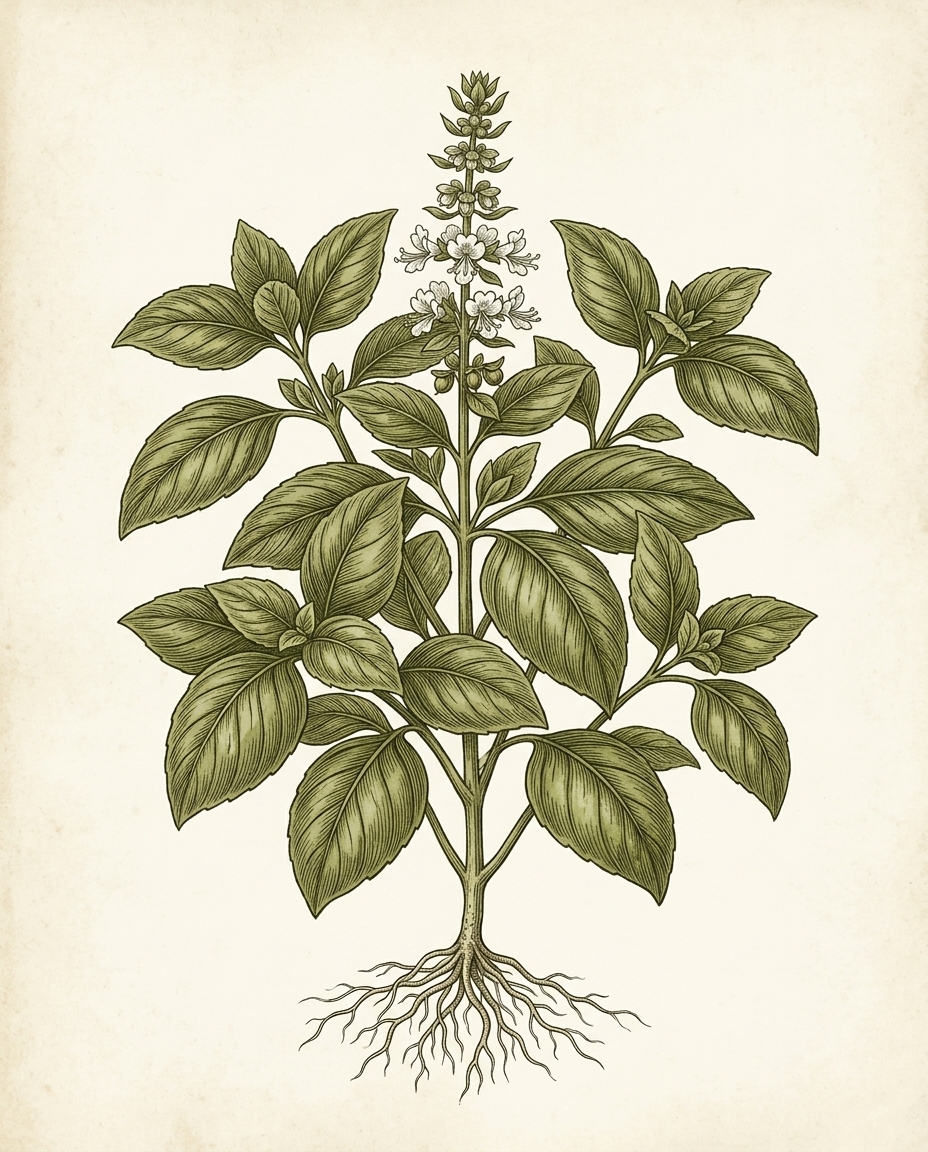
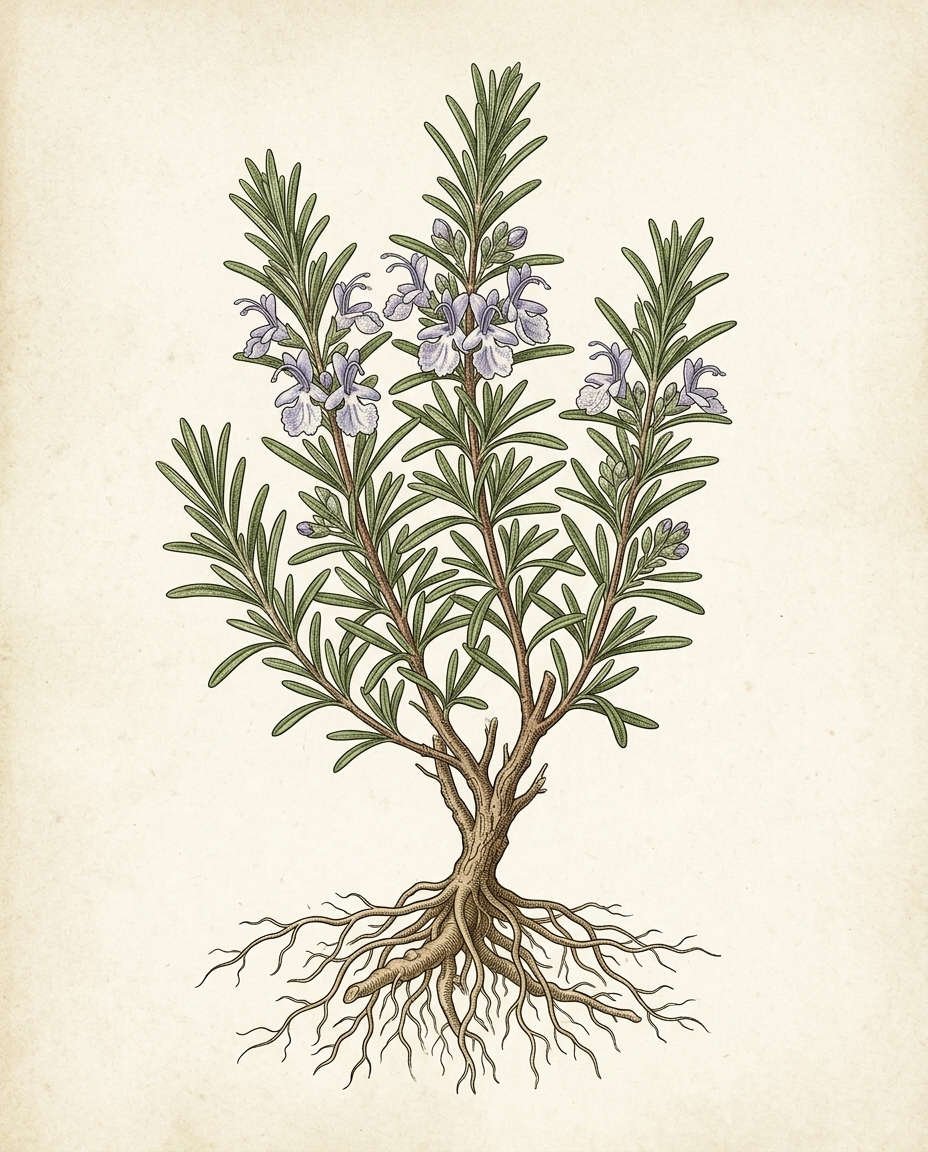
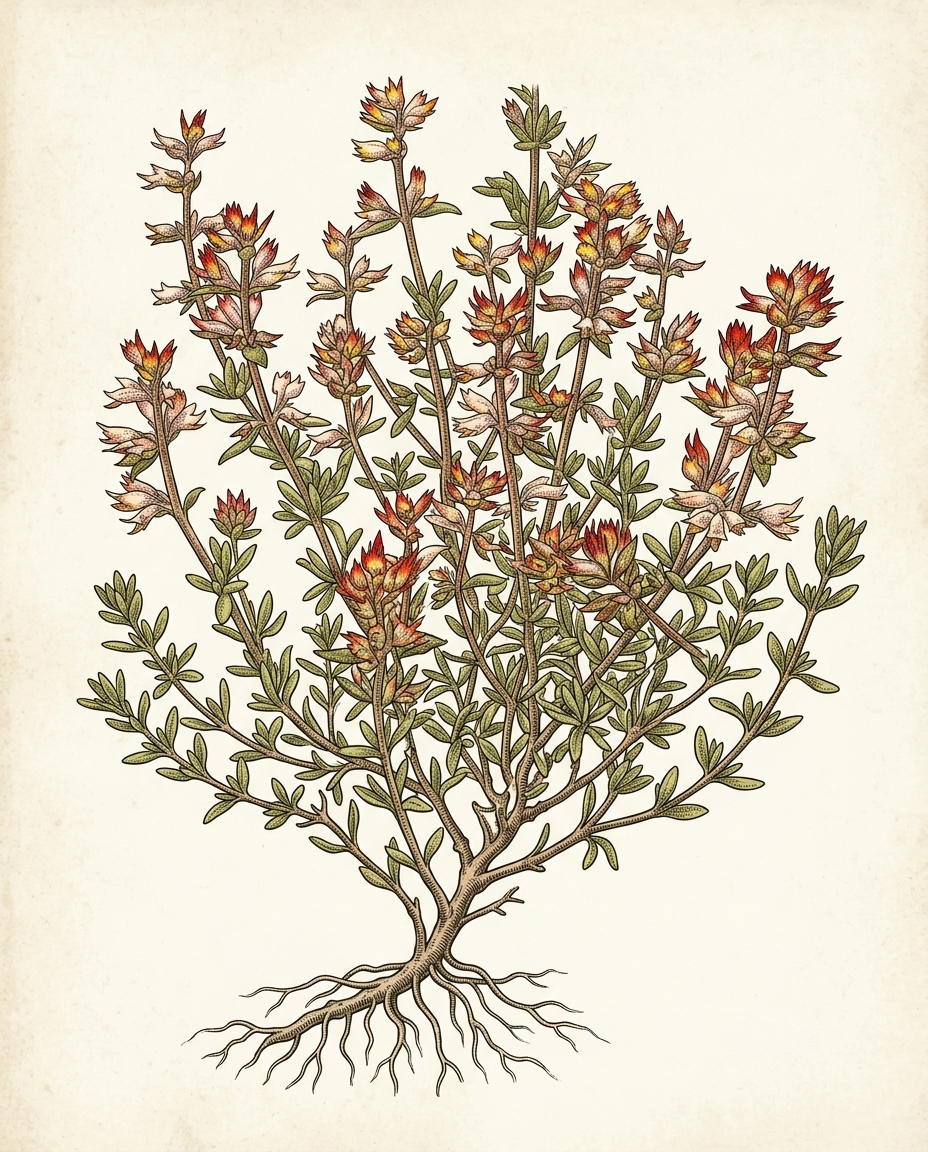
For a complete cat-safe windowsill herb pot, pair sage with basil, rosemary, and English thyme — all four are ASPCA non-toxic and live in the same conditions. (Important caveat from the thyme page: "Spanish thyme" is actually Plectranthus amboinicus and is ASPCA toxic. Buy English thyme — Thymus vulgaris — specifically.)
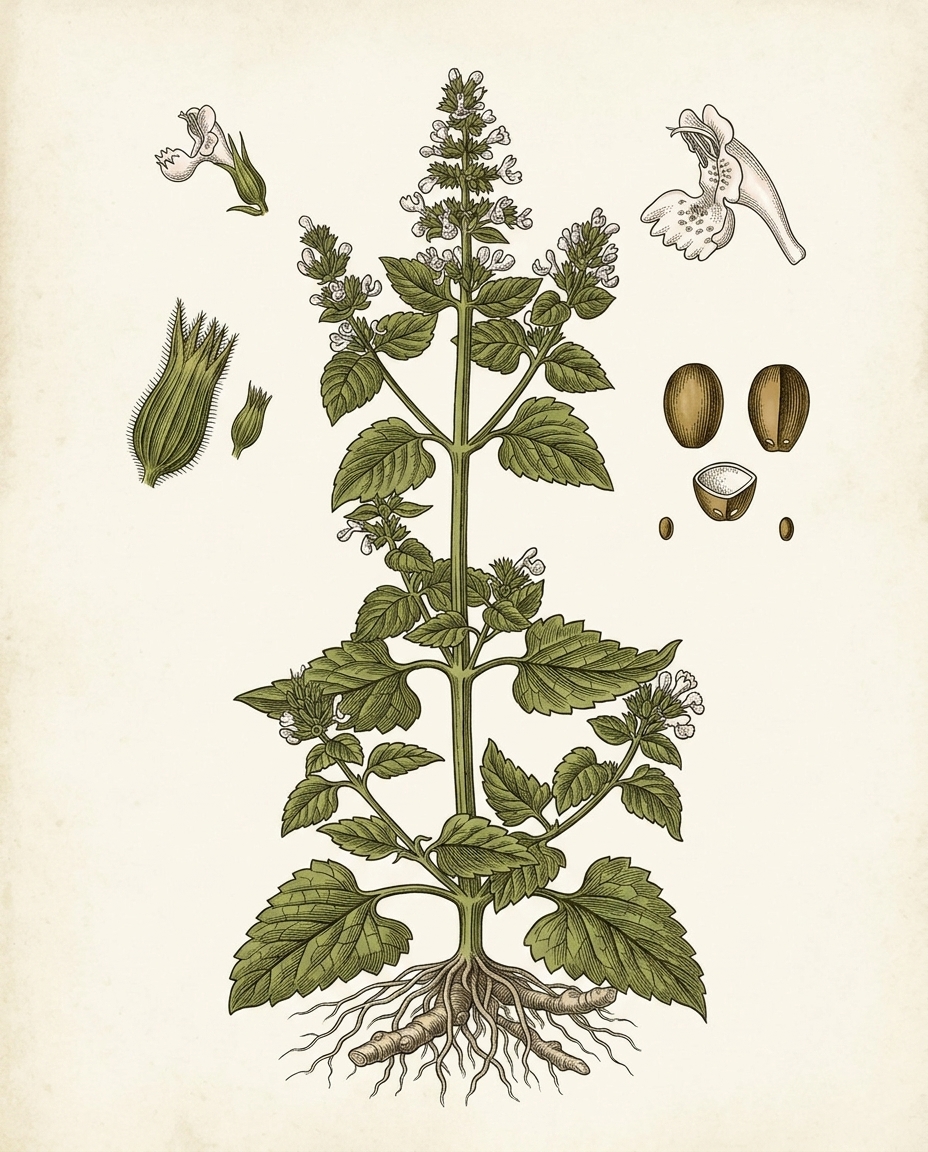
For cats that love the texture of greenery, catnip is the redirect — a same-family relative on the cat-safe list, actively enjoyed by most cats.
Disclosure
We include Amazon affiliate links on safe-plant pages. As an Amazon Associate, we earn from qualifying purchases. We never affiliate-link a plant we have not ASPCA-verified.
What we have actually seen.
Casual chewing
Cats that take a bite of leaf get an aromatic, slightly bitter mouthful and not much else. No toxic principle, no expected symptoms.
Aromatic curiosity
The strong sage scent can interest cats. Most lose interest after a sniff; some chew briefly. No safety concern.
Mild GI upset
As ASPCA notes for any plant material, ingestion may cause mild vomiting in some cats. Not specific to sage and not a toxicity issue.
Four common varieties.
Common Sage (the kitchen standard)
The familiar soft grey-green sage. Use fresh or dried in stuffing, sausages, and roast vegetables. ASPCA-named species.
Purpurascens (purple sage)
Same Salvia officinalis with purple-flushed young leaves. Stronger flavour. ASPCA non-toxic.
Tricolor (variegated sage)
Cream and pink variegation on the foliage. More ornamental than culinary; still ASPCA non-toxic.
Berggarten (broad-leaf culinary)
A non-flowering cultivar with much broader, softer leaves and a milder flavour. Cooks' favourite.
Keeping the plant alive.
Full sun
Sage needs at least 6 hours of direct sun for healthy growth and the best leaf flavour. Indoors, the sunniest windowsill you have.
Sparing
Mediterranean origin makes sage drought-tolerant. Water when the top 2–3 cm of soil is dry; overwatering causes root rot and woody die-back.
Well-draining
Sage prefers slightly alkaline, gritty soil. Standard houseplant mix with extra perlite or sand works for pots; in the ground, raised beds and good drainage matter more than soil richness.
Bright, dry corner
18–24 °C ideal. Tolerates cooler temperatures outdoors as a hardy perennial in mild climates. Avoid humid, stagnant spots indoors.
- ASPCA Animal Poison Control Center. Toxic and Non-Toxic Plants: Sage.Accessed June 2026 · aspca.org · Salvia officinalis · Non-Toxic to cats, dogs, horses
- Royal Horticultural Society. Salvia officinalis cultivation guide.Horticultural reference for growing
- Pet Poison Helpline. Garden sage safety profile.Secondary reference confirming non-toxicity · 2024
If you liked this, also safe.