Chamomile
Anthemis nobilis
Chamomile is toxic to cats per the ASPCA — despite the popular "gentle calming herb" marketing. Volatile oils (bisabolol, chamazulene, anthemic acid) cause GI signs and allergic reactions; long-term use causes bleeding tendencies.
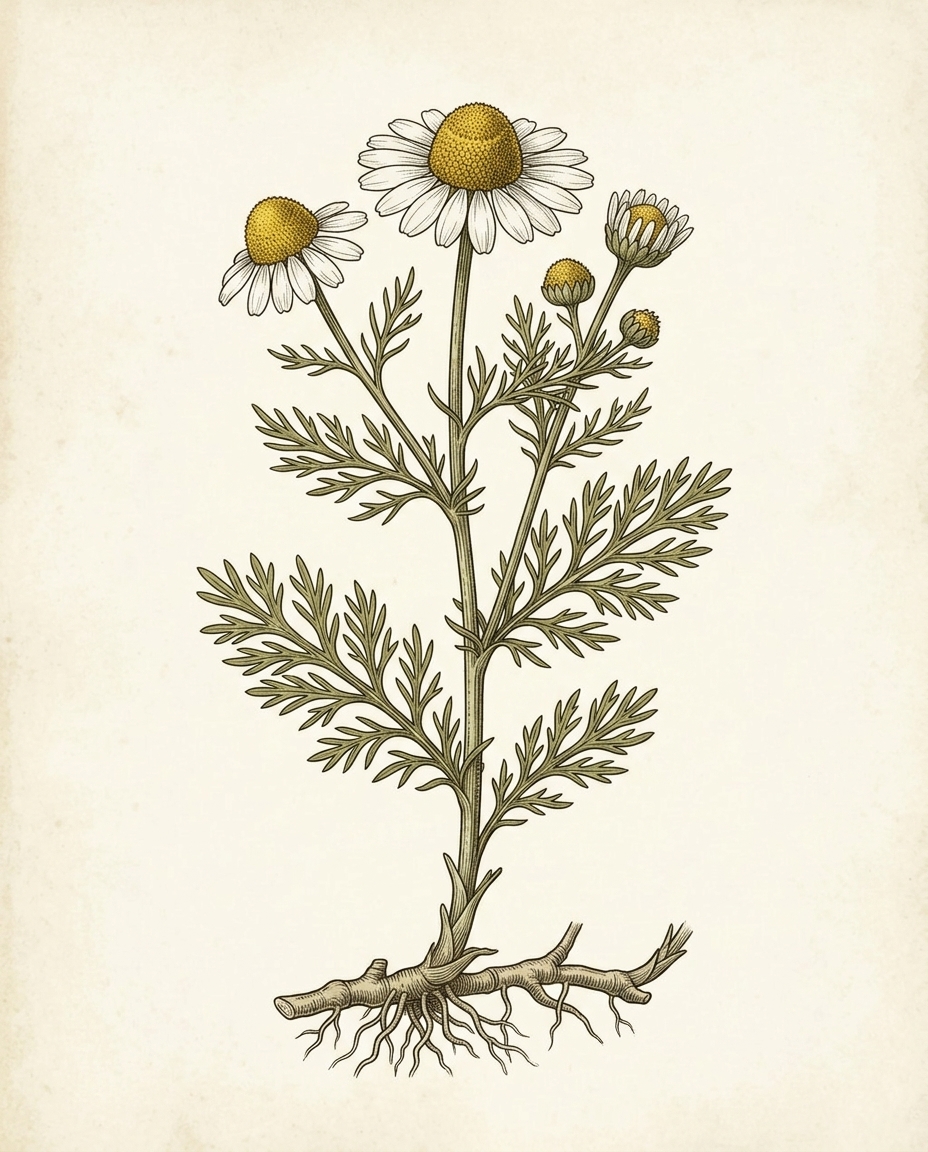

Plate IAnthemis nobilis — Roman chamomile / garden chamomile. Daisy-like white-petalled flowers with golden yellow conical centres on slender stems above feathery apple-scented foliage. ASPCA toxic — volatile oils.
Three plants that look the part, without the risk.
Same calming-herb / aromatic-foliage role without the bisabolol chemistry — these ASPCA-safe substitutes give chamomile's wellness aesthetic without the bleeding-risk long-tail.
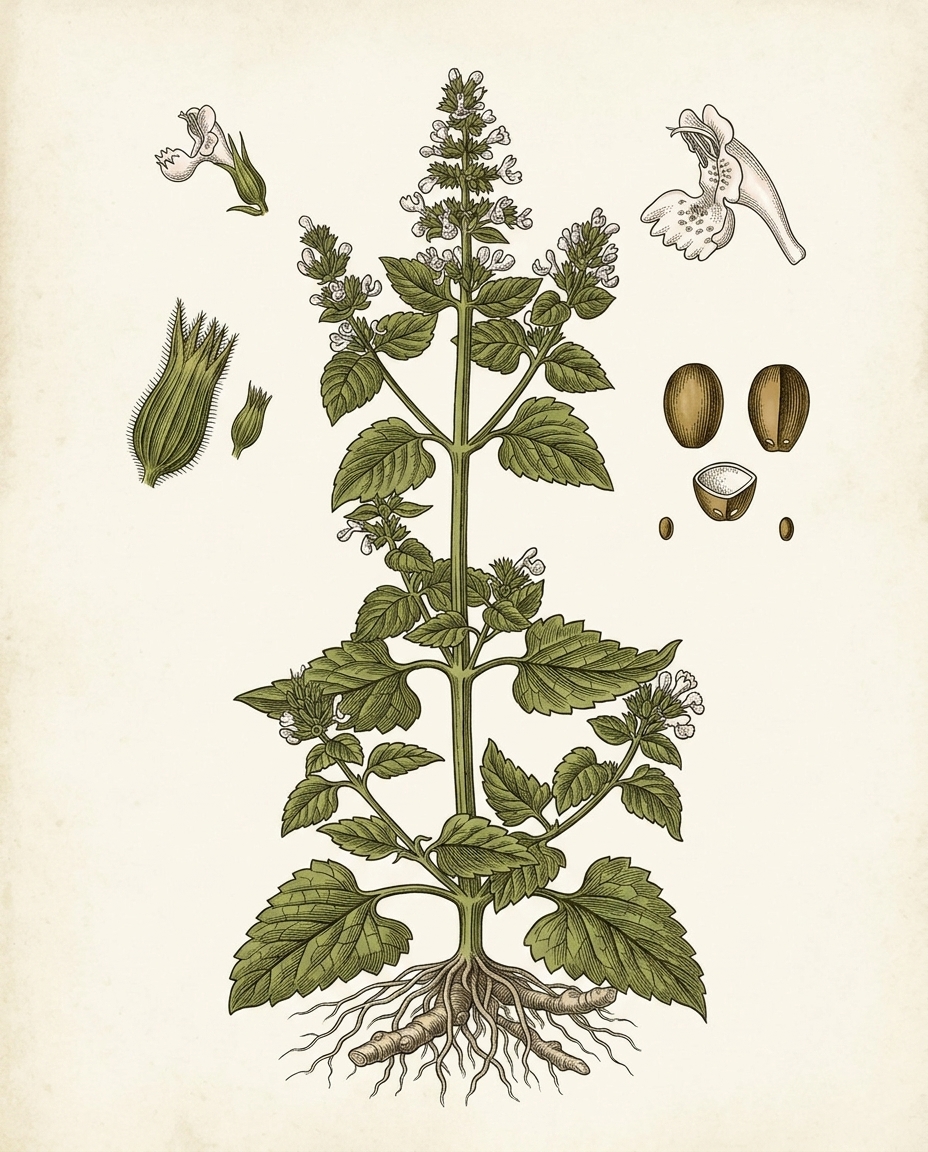
Catnip
For an actively cat-positive calming-herb at ASPCA non-toxic. Different effect on cats (gentle euphoria) than its sedative effect on humans, but a better choice for a feline herb garden.
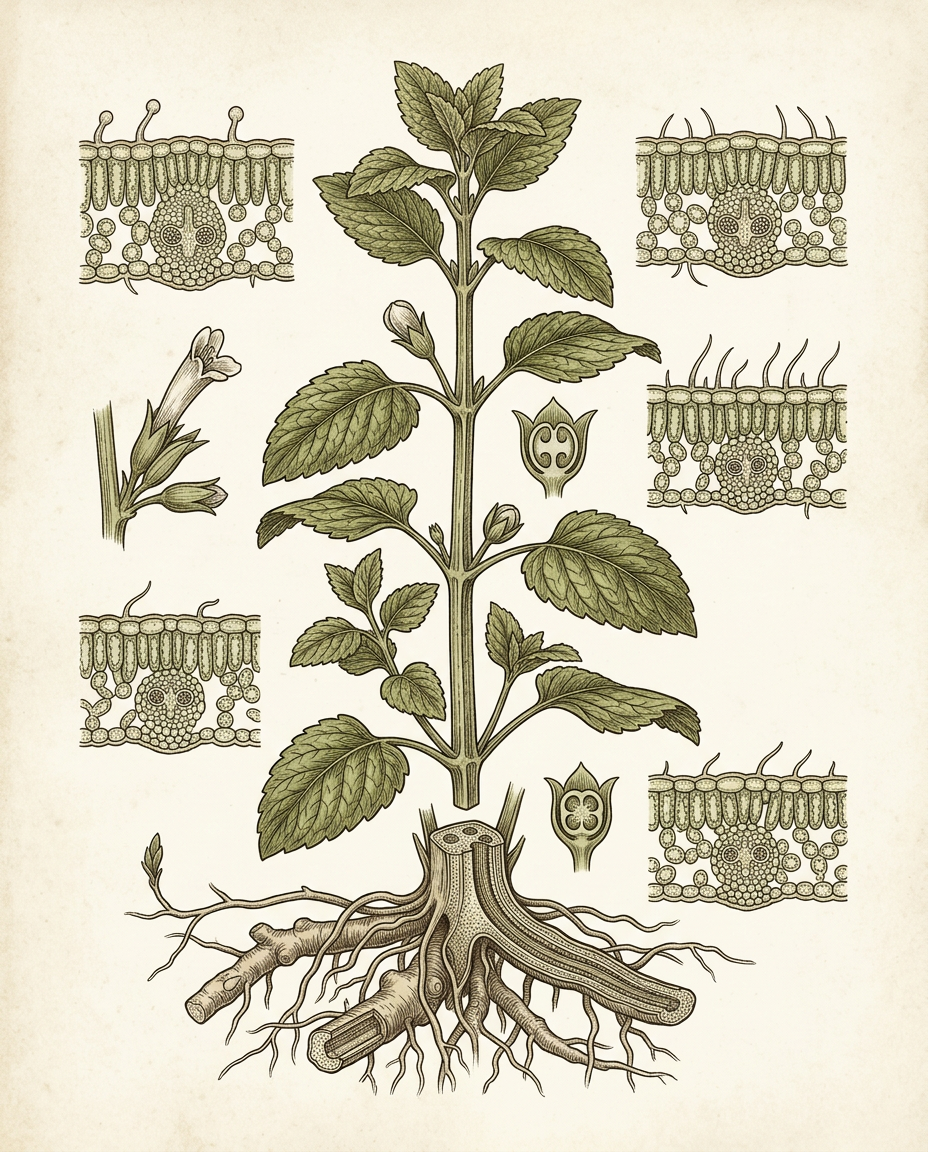
Lemon balm
For a calming aromatic kitchen herb at ASPCA non-toxic. Similar gentle citrus-mint flavour, often substituted for chamomile in herbal teas.
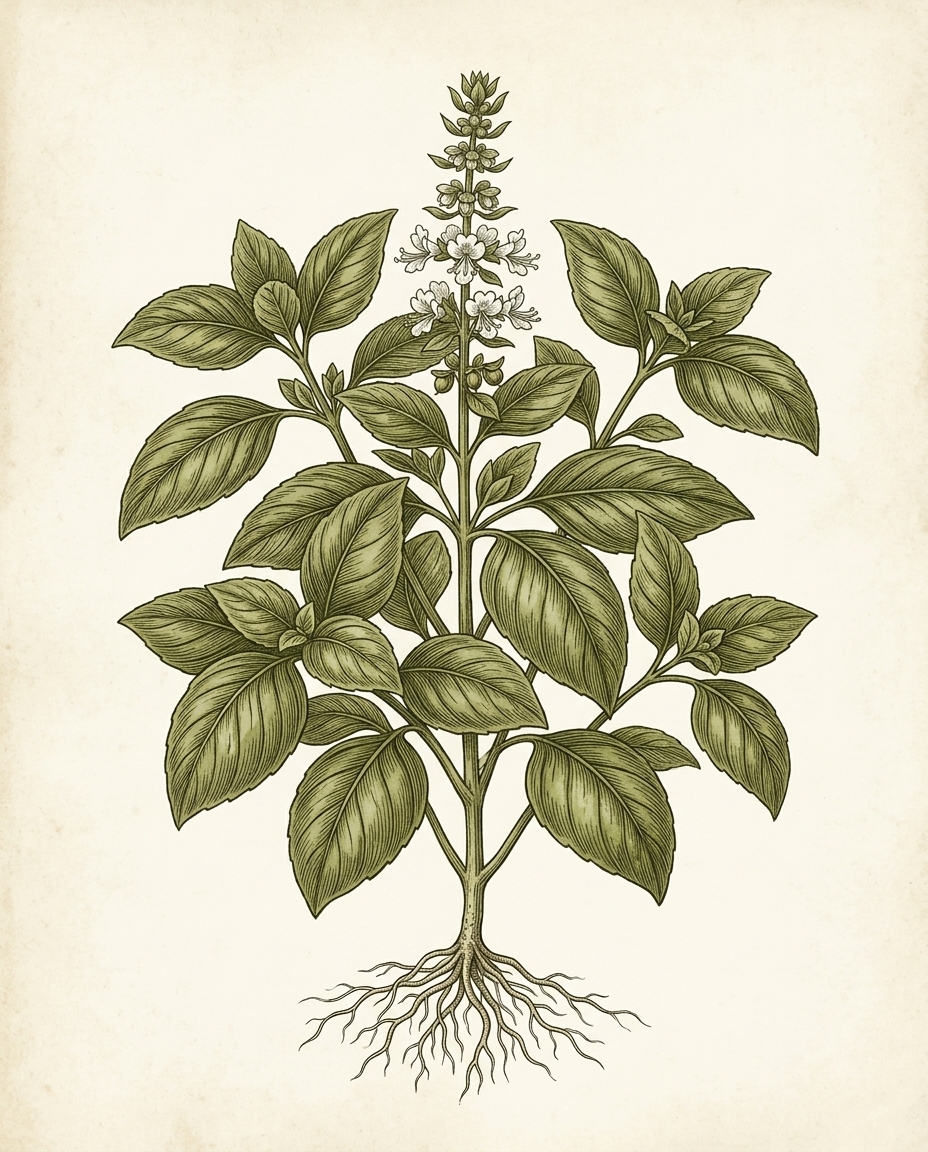
Basil
For a kitchen-window aromatic herb at ASPCA non-toxic. Different role (culinary not medicinal) but the same low-pot herb-garden niche.
Why chamomile is on the toxic list — and the chronic risk.
No — chamomile is not safe for cats. The ASPCA lists Anthemis nobilis (Roman chamomile, garden chamomile, true chamomile, manzanilla, and several other common names) as toxic to cats, dogs, and horses. The toxic principle is volatile oil — bisabolol, chamazulene, anthemic acid, and tannic acid.
The ASPCA verdict, verbatim — and the last sentence is the one most owners haven't seen: Toxicity: Toxic to Dogs, Toxic to Cats, Toxic to Horses · Toxic Principles: Volatile oil; bisabolol, chamazulene, anthemic acid, tannic acid · Clinical Signs: Contact dermatitis, vomiting, diarrhea, anorexia, allergic reactions. Long term use can lead to bleeding tendencies.
The "chamomile is gentle" misconception
Chamomile has a strong reputation as a gentle, calming herbal tea in human use, and many holistic-pet blogs casually recommend small chamomile doses for feline anxiety. The ASPCA listing directly contradicts this. Three things explain the gap:
- Cats lack liver enzymes that humans use to clear plant terpenes. Specifically, cats are deficient in the UGT1A6 glucuronidation pathway that lets humans metabolise volatile oils efficiently. The same mechanism is why concentrated essential oils (tea tree, eucalyptus, citrus oils, peppermint, and many others) are dangerous for cats while being harmless to humans at the same dose. Chamomile is on the same metabolic spectrum.
- Compositae family allergies are more common in cats than in humans. The sesquiterpene lactones in chamomile cross-react with ragweed, chrysanthemum, and dozens of other Compositae plants. A cat sensitised once can react more strongly on each subsequent exposure.
- The bleeding-tendency risk is real and chronic. Chamomile contains coumarin compounds with mild anticoagulant activity. In a single human cup of tea this is irrelevant — in chronic exposure in a cat, it can contribute to surgical or anaesthetic bleeding. The ASPCA-listed long-term-use signal isn't a copy-paste — it reflects veterinary reports.
The acute toxicity from a single chamomile exposure is mild; that's why so many casual recommendations slip through. The classification is appropriate; the mechanism is just slow rather than dramatic.
What an exposure actually looks like
Three layers, on different timescales:
- Acute (hours): vomiting, diarrhea, anorexia — GI irritation from the volatile oils. Self-limiting in most cases.
- Subacute (days): contact dermatitis or allergic reactions in sensitised cats. Sneezing, ocular discharge, skin itching, sometimes facial swelling on heavy exposure. May worsen with repeated contact.
- Chronic (weeks to months): bleeding tendencies. Subclinical in most cats; clinically apparent if surgery, anaesthesia, or concurrent NSAID use stress the haemostatic system. Worth telling your vet if the cat has been getting chamomile.
Compositae cross-reactivity
Chamomile sits in Compositae (also called Asteraceae), the daisy family. ASPCA-listed toxic Compositae include:
- Chrysanthemum — toxic, pyrethrin-related sesquiterpenes. ASPCA-listed.
- Chamomile (this page) — volatile oils + bleeding.
- Marigold (Tagetes spp.) — toxic, mild.
- Yarrow (Achillea millefolium) — toxic.
A cat sensitised to one Compositae plant can cross-react to others. If your cat has had eye-discharge or skin reactions around chrysanthemum, treat chamomile and other Compositae as higher-risk exposures too.
Cat-safe alternatives for the calming-herb niche
If you wanted chamomile for a cat calming routine, the better options:
- Catnip (Nepeta cataria) — ASPCA non-toxic, actively cat-positive. Nepetalactone produces gentle euphoria in roughly 50–70% of cats for 10 to 15 minutes; some cats are unaffected, none are harmed. This is the obvious swap.
- Silver vine (Actinidia polygama) — non-toxic, often works on cats unmoved by catnip.
- Lemon balm (Melissa officinalis) — ASPCA non-toxic. Same calming-tea cultural niche as chamomile for human use; safer for cats.
- Vet-prescribed pheromone diffusers (Feliway) — behaviourally tested, no plant chemistry.
For genuine feline anxiety, talk to your vet. Evidence-based options (pheromones, gabapentin for situational anxiety, environmental enrichment) work better than herbal teas and don't carry the chamomile risk profile.
What to do if your cat had chamomile
For a single accidental exposure (cat licked tea, chewed a flower, brushed past plant):
- Watch for GI signs over the next 24 hours — vomiting, diarrhea, anorexia.
- Call your vet if signs persist beyond 24 hours, or earlier if severe. The ASPCA Animal Poison Control Center at 888-426-4435 ($95 consultation fee) can grade severity.
- Stop any deliberate chamomile dosing. If you've been giving chamomile tea as a calming aid, this is the moment to stop. The chronic exposure is the bigger problem than the acute one.
- Tell your vet about prior chamomile use before any anaesthetic or surgical procedure — the bleeding-tendency risk is worth flagging.
For the broader herb-garden safety picture see parsley, oregano, and chives (all toxic herbs we cover) and basil, dill, rosemary (the safe alternatives). For the full toxic list see toxic plants for cats.
What we have actually seen.
GI signs
Vomiting, diarrhea, and anorexia per ASPCA. Onset within hours of ingestion. Usually self-limiting in mild cases.
Contact dermatitis and allergic reactions
ASPCA explicitly lists contact dermatitis and allergic reactions. Compositae-family allergens (sesquiterpene lactones) cross-react with chrysanthemum, ragweed, and other related plants. Cats with established Compositae sensitivity may react to chamomile contact alone.
Bleeding tendencies (chronic)
The under-publicised serious risk. ASPCA's full clinical-signs entry includes 'long term use can lead to bleeding tendencies' — chamomile contains coumarin compounds with mild anticoagulant activity. Repeated or chronic exposure can compound the effect, with anaesthetic or surgical bleeding as the worst-case manifestation. Owners offering 'a little chamomile tea' regularly should stop.
Acute toxicity is modest
A single garden chew or accidental tea sip almost never produces life-threatening signs. The risk profile is chronic exposure plus allergic individuals — not single-dose acute poisoning.
- ASPCA Animal Poison Control Center. Toxic and Non-Toxic Plants: Chamomile.Accessed June 2026 · aspca.org · Anthemis nobilis · Toxic to cats, dogs, horses · Toxic Principles: Volatile oil; bisabolol, chamazulene, anthemic acid, tannic acid · Clinical Signs: Contact dermatitis, vomiting, diarrhea, anorexia, allergic reactions. Long term use can lead to bleeding tendencies
- ASPCA Animal Poison Control Center. Toxic and Non-Toxic Plants: Garden Chamomile.Sibling ASPCA entry for the same Anthemis nobilis under a synonym common name
- Pet Poison Helpline. Compositae family allergic reactions in companion animals.Clinical reference · sesquiterpene lactone cross-reactivity