Chrysanthemum
Chrysanthemum spp.
Chrysanthemums are toxic to cats per the ASPCA. Pyrethrins and sesquiterpene lactones cause vomiting, drooling, and — in larger exposures — incoordination and skin reactions.
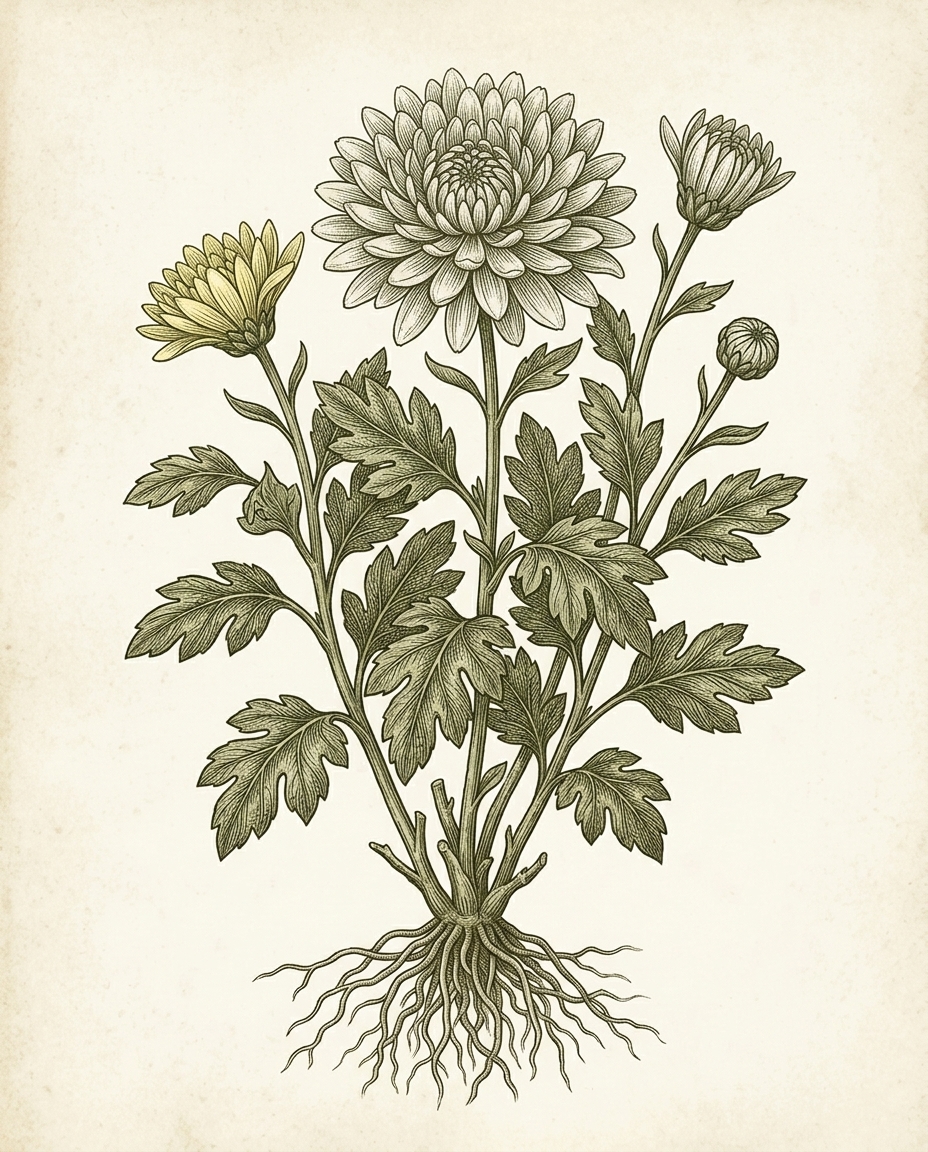
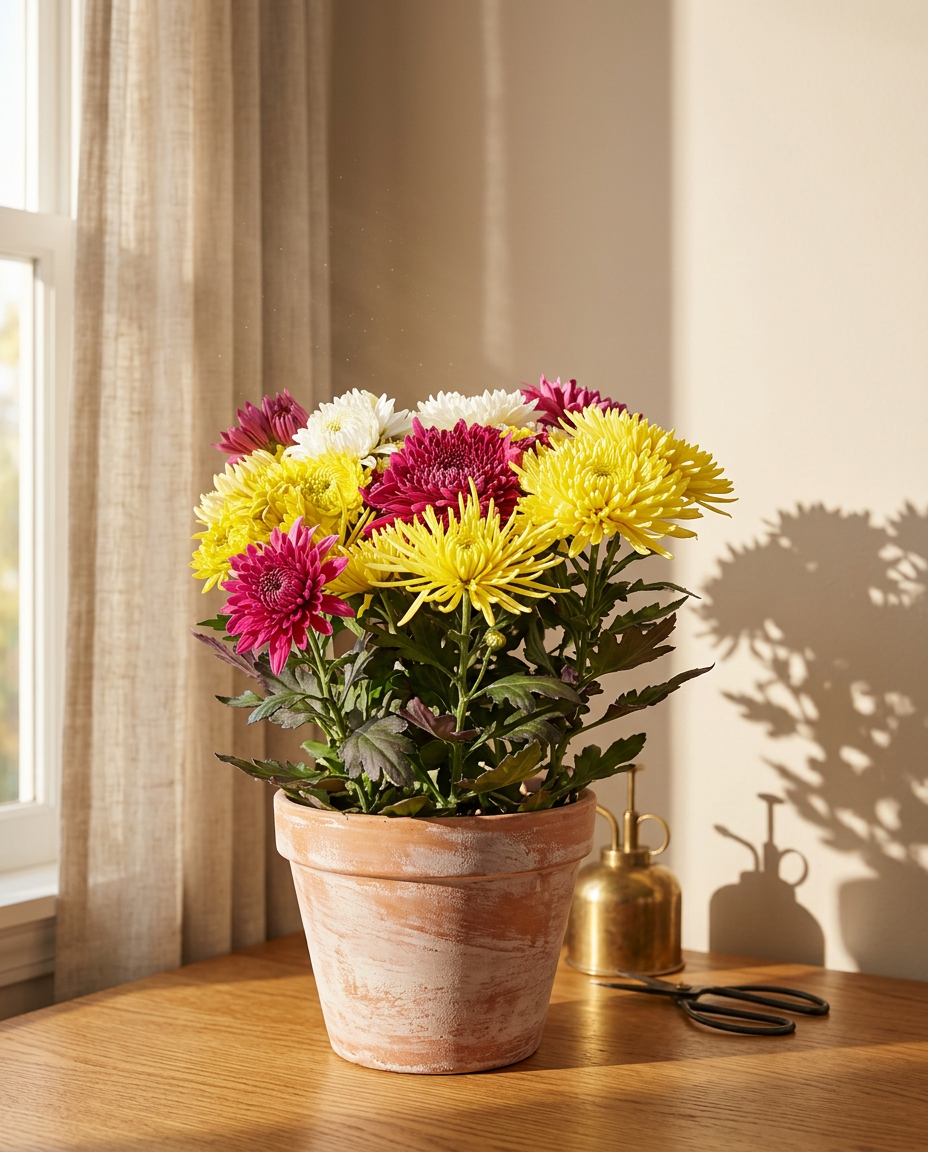
Plate IChrysanthemum spp. — the autumn florist staple. The same pyrethrins that make natural insecticides also irritate the feline gut, mouth, and nervous system.
Three plants that look the part, without the risk.
Cheerful, daisy-like blooms without the pyrethrins — these three are ASPCA non-toxic and fit the same autumnal palette.
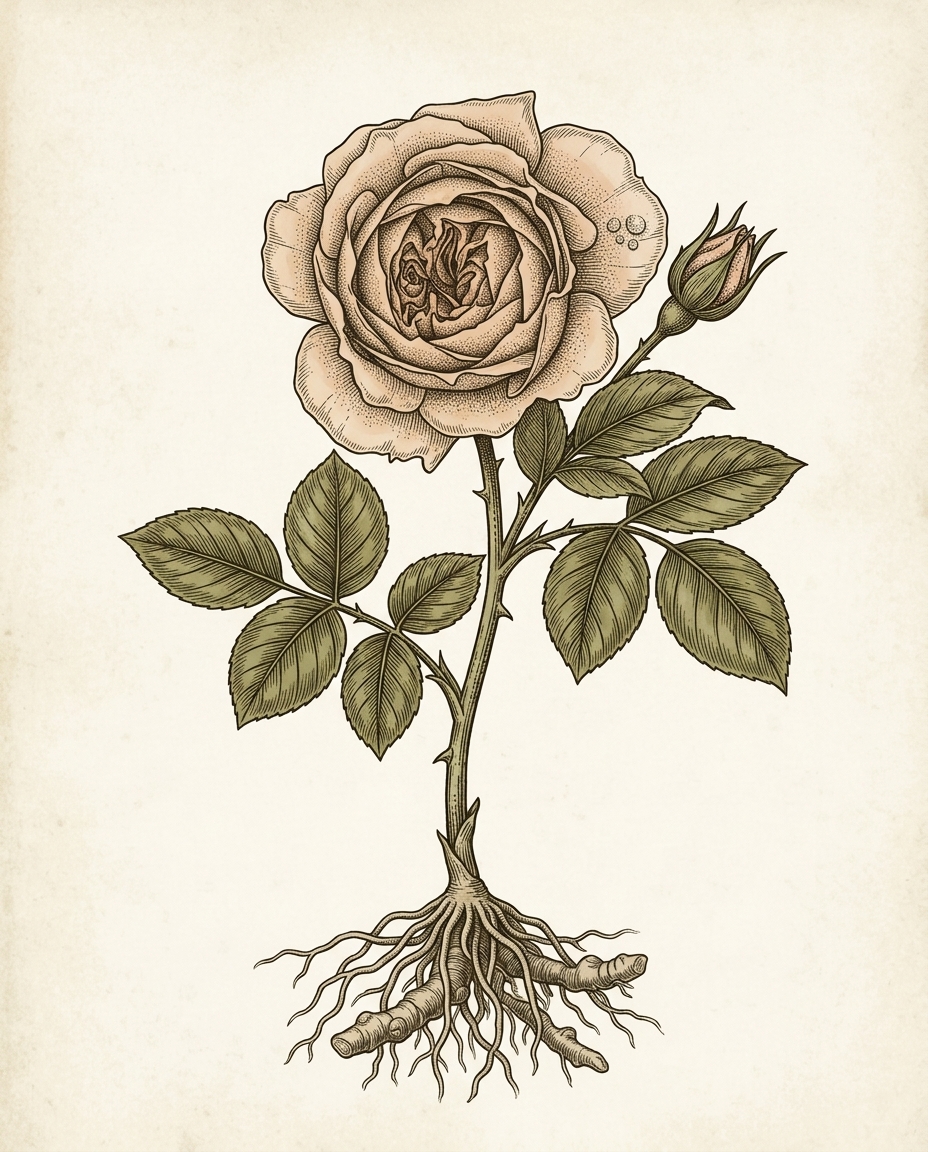
Rose
Classic cut flower for cat homes. ASPCA non-toxic — watch the thorns, not the chemistry.
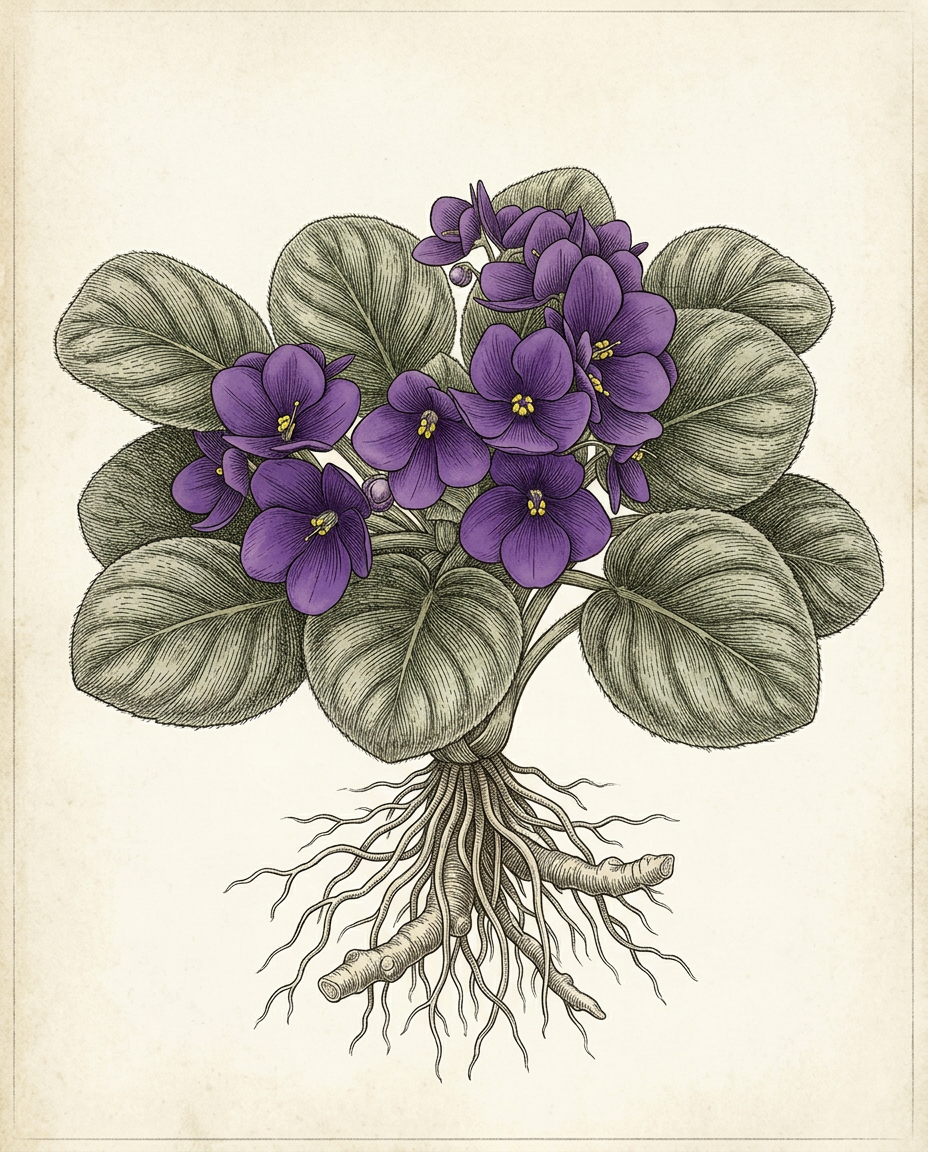
African Violet
Indoor color year-round, compact and generous. ASPCA non-toxic and entirely safe around cats.
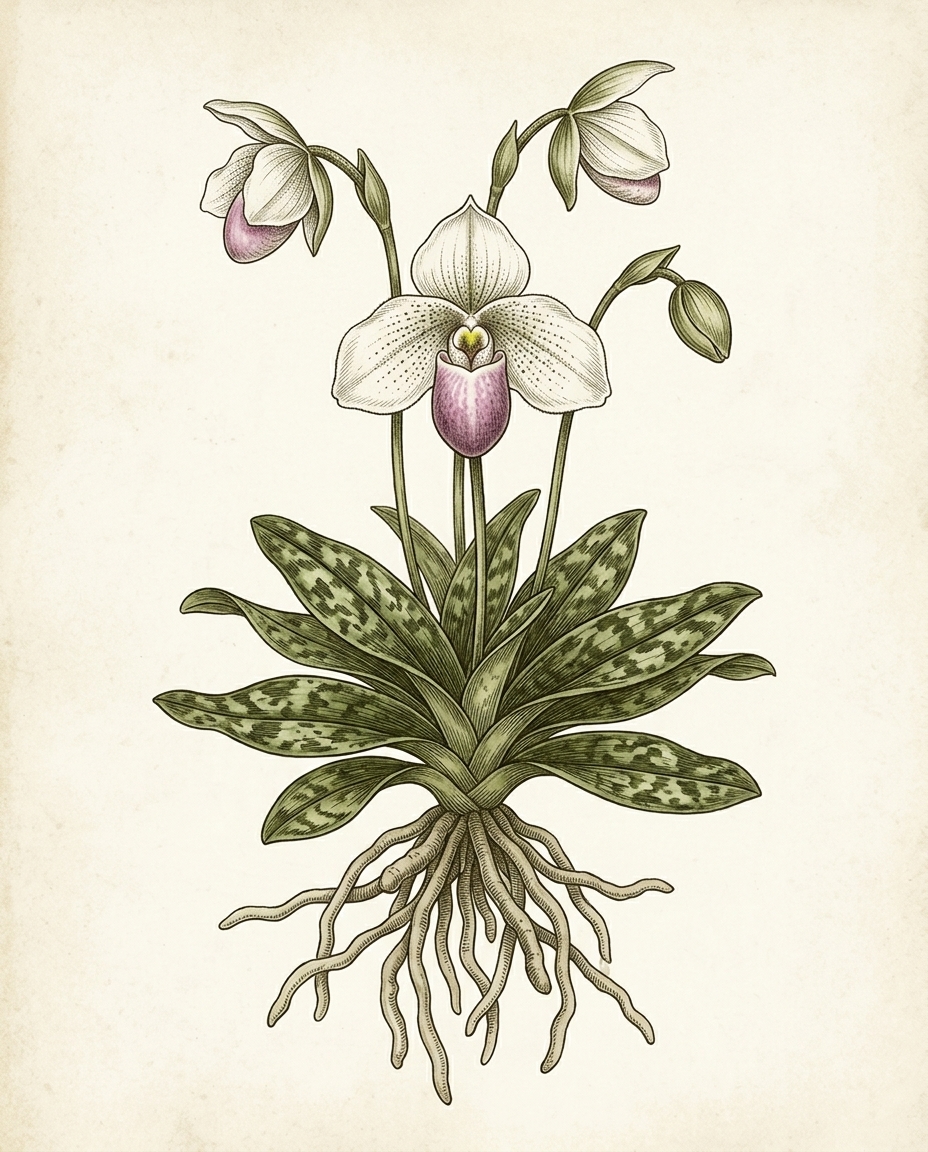
Orchid
Long-lasting elegant blooms — the safe substitute for any "no flowers because of the cat" household.
What it does to a cat.
Yes — chrysanthemums are toxic to cats. The ASPCA lists Chrysanthemum spp. — including the autumn florist "mums" and many daisy cultivars — as toxic to cats, dogs, and horses. The toxic principles are pyrethrins and sesquiterpene lactones. Signs include vomiting, diarrhea, hypersalivation, incoordination, and contact dermatitis.
Most exposures are uncomfortable but not life-threatening. Cats vomit within a few hours, drool through the bitter taste, and recover within a day or two. The exception is the neurological side: pyrethrins block sodium channels in nerve membranes, and in larger doses can produce tremors or ataxia worth a vet call.
The flea-product connection
Pyrethrins are extracted from chrysanthemum flowers and used as natural insecticides. Cats are exceptionally sensitive — they lack the liver enzymes to metabolise pyrethrins efficiently. The single most common cause of severe pyrethrin poisoning in cats is not the plant itself but flea products labelled for dogs being applied to cats. If you have both pets, never share flea treatment.
Seasonal trap
Chrysanthemums arrive in supermarket bouquets, porch displays, and fall arrangements. They share florist crates with lilies and tulips, so a single bouquet can carry several plants that are toxic to cats. When in doubt, ask the florist to substitute roses and orchids.
Safer flowering substitutes
For a cheerful, daisy-like flower that is genuinely cat-safe, Gerbera daisies (Gerbera jamesonii) are ASPCA non-toxic — a different genus despite the resemblance. African violets cover the indoor-color role without the pyrethrin risk.
If your cat has eaten one
Watch for vomiting, drooling, and any sign of incoordination. Most cases resolve at home within 24 to 48 hours. Call ASPCA Animal Poison Control at (888) 426-4435 if you see neurological signs, persistent vomiting, or refusal to eat. Bring the plant or a clear photo to the vet.
What we have actually seen.
Vomiting and drooling
Most common signs. Pyrethrins are bitter and irritating; cats usually drool heavily before vomiting within a few hours of ingestion.
Diarrhea
Often follows vomiting as the GI tract responds to the irritants. Usually self-limiting within 24 hours.
Incoordination and tremors
Pyrethrins affect sodium channels in nerves. In larger exposures cats can show ataxia, muscle tremors, or hypersalivation — worth a vet call.
Contact dermatitis
Sap on skin or fur can cause local irritation, redness, and itchiness — particularly around the mouth and paws.
- ASPCA Animal Poison Control Center. Toxic and Non-Toxic Plants: Chrysanthemum.Accessed May 2026 · aspca.org
- Pet Poison Helpline. Pyrethrin and pyrethroid toxicity in cats.Clinical brief · 2024 ed.
- Anadón A, et al. Pyrethrins and synthetic pyrethroids: use in veterinary medicine.Natural Products · 2013