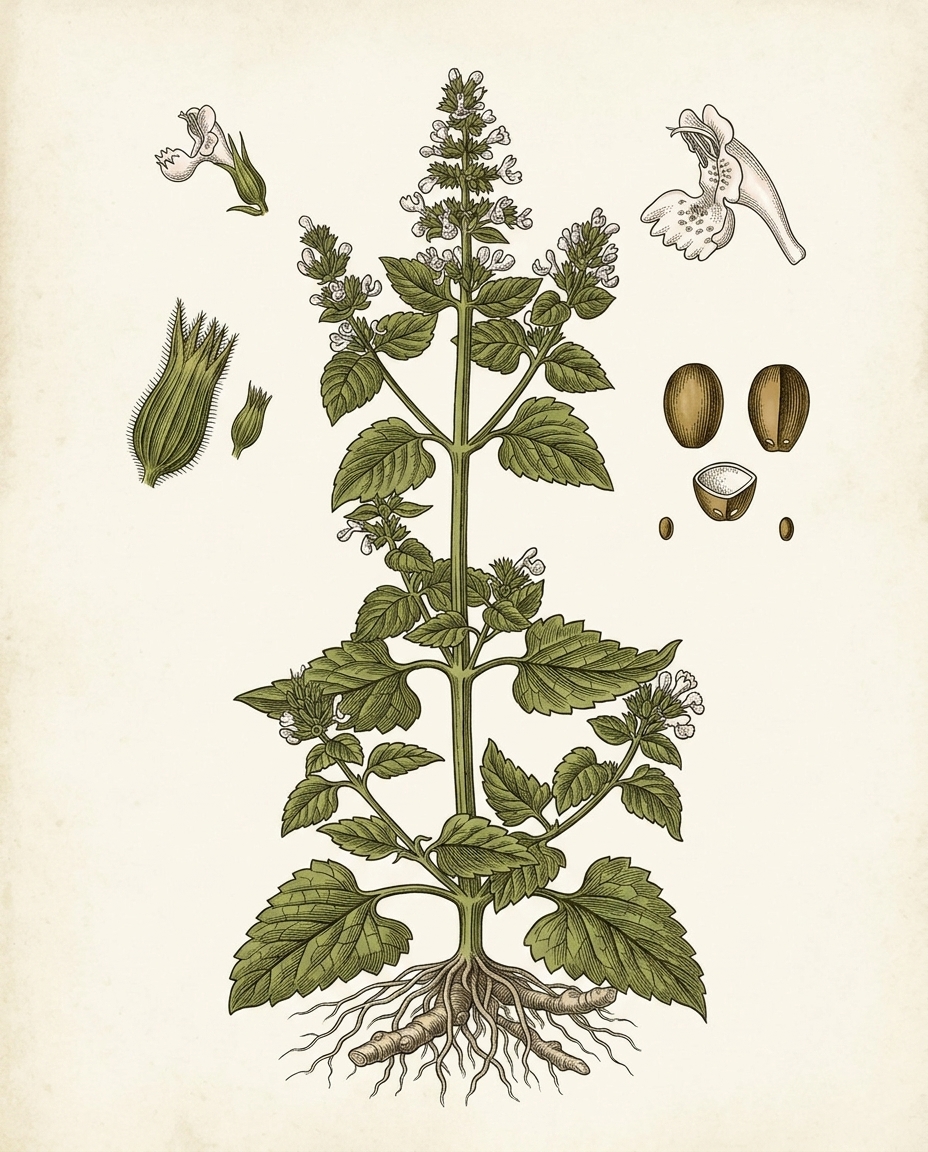
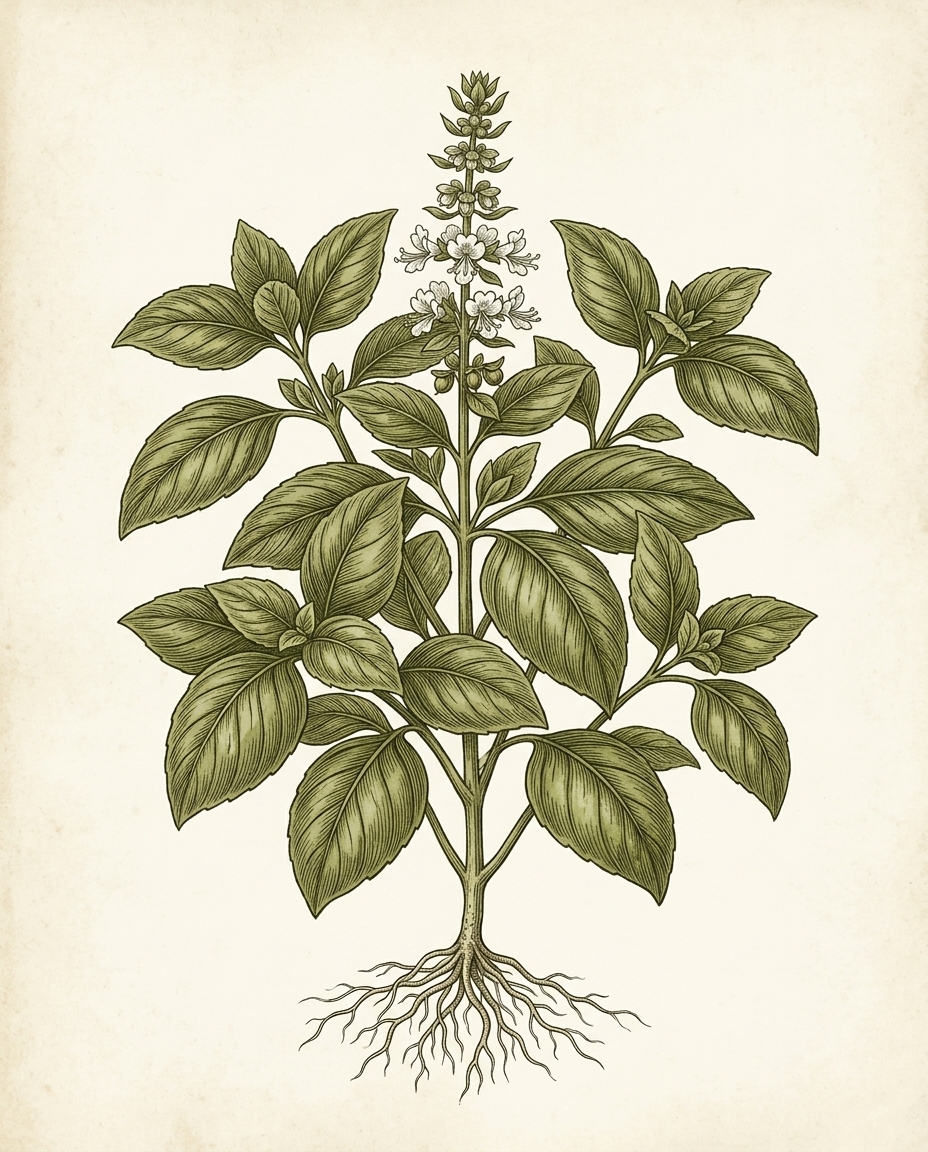
Lemon
Balm.
Melissa officinalis
Yes — lemon balm is safe for cats. The ASPCA lists it as non-toxic to cats. It's a fragrant Lamiaceae family herb that some cats find mildly stimulating (similar to catnip, though less predictable). Grow it on a sunny windowsill without worry.
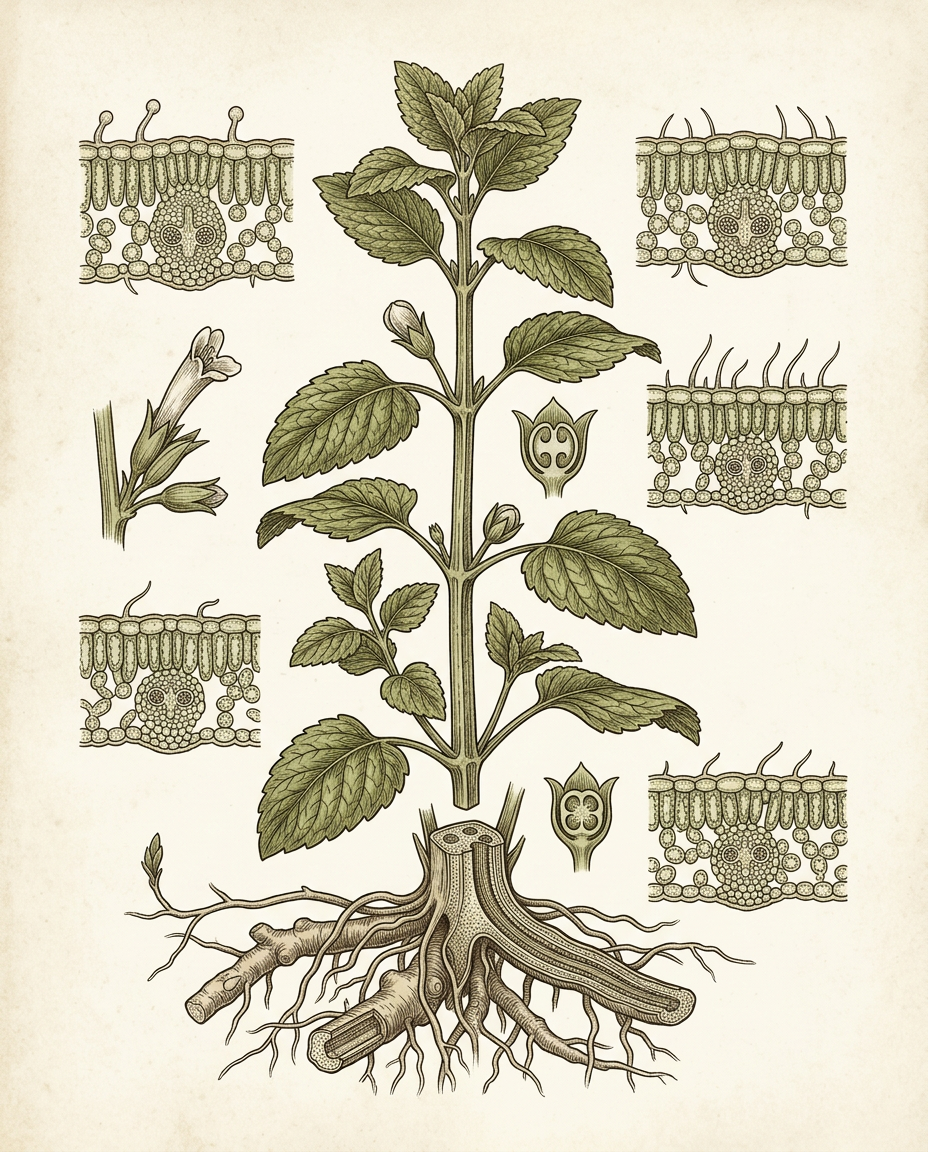
Plate ILemon balm (Melissa officinalis) — a fragrant mint-family herb with heart-shaped leaves. Completely non-toxic to cats per ASPCA.
Lemon balm is safe— grow it freely.
Yes — lemon balm is safe for cats. The ASPCA lists it as non-toxic. This fragrant herb from the mint family is completely cat-safe and a lovely addition to any windowsill herb garden.
ASPCA Data
According to the ASPCA:
Toxic Principles: Non-toxic. (Listed under Plants Non-Toxic to Cats.)
Lemon balm carries no toxins — no calcium oxalates, no essential oils that irritate, no gastrointestinal irritants. You can grow it, let your cat walk past it, even nibble the leaves with zero risk.
Is Your Cat Interested in Lemon Balm?
Some cats find lemon balm mildly interesting — similar to (but usually less intense than) catnip. The scent may produce a mild attraction or brief interest, though not all cats respond the same way.
This is anecdotal and not clinically documented, but gardeners report:
- Some cats show curiosity and brush against the plant
- A few cats will nibble the leaves (harmless, non-toxic)
- Most cats are indifferent
- Very few show the sustained interest typical of catnip response
If your cat becomes obsessed and damages the plant, move it to a high shelf or less accessible location — but not because of toxin risk. Simply to preserve your herb.
Growing Lemon Balm
Lemon balm thrives on a sunny windowsill and is nearly impossible to kill:
Light: 6+ hours of sunlight daily — a south or west-facing window is ideal.
Water: Keep the soil moist but not waterlogged. Water when the top inch of soil feels dry. These herbs dislike sitting in standing water.
Soil: Standard potting mix or garden soil mixed with compost. Lemon balm is not fussy about fertility.
Pinching: Pinch back the top 2–3 leaves weekly to encourage bushiness and prevent legginess. The more you harvest, the bushier the plant becomes.
Lemon Balm + Catnip Garden
If you already grow catnip, lemon balm is a natural companion. Both are:
- Lamiaceae family herbs
- Non-toxic to cats
- Fast-growing on windowsills
- Enjoyable for humans (tea, cooking) and occasionally for cats
Plant them side by side and let your cat explore both. One may spark their interest more than the other — or neither will, and that's fine. No toxin worry either way.
Safe Cultivars
All varieties of Melissa officinalis are safe:
- Green lemon balm — The standard type, most common, vibrant growth
- Golden lemon balm (cv. Aurea) — Yellow-variegated leaves, slower growth, ornamental
- Variegated lemon balm (cv. Variegata) — White-margined leaves, decorative
Pick whichever appeals to you. All are equally non-toxic.
The Bottom Line
Lemon balm is a cat-safe herb that you can grow freely on a windowsill without any concern. It's fragrant, attractive, easy to grow, and completely non-toxic. Some cats will show interest; most won't. Either way, there's no risk.
All parts of the plant — leaves, stems, and roots — are safe. Grow it, harvest it for tea, and let your cat enjoy your garden space.
What we have actually seen.
Fragrant foliage
Heart-shaped leaves emit a pleasant lemon scent when brushed. Safe to touch, safe to rub against, safe for cats to nibble.
Mild catnip-like effect
Some cats find the scent mildly stimulating, similar to (but usually weaker than) catnip. Not all cats respond.
Fast growth
Lemon balm grows quickly on sunny windowsills. Pinch back weekly for bushiness and to prevent legginess.
Culinary and medicinal
Safe for cats to have in the home while humans use it for tea, cooking, and herbal infusions. Dual-purpose plant.
Four common varieties.
Melissa officinalis (Green-leafed type)
The standard variety, most common in stores. Vibrant green, fast-growing, excellent for tea.
Aurea (Golden lemon balm)
Yellow-variegated leaves, slower growth, ornamental. Just as safe, but less vigorous in coolers climates.
Variegata (Variegated lemon balm)
White-margined leaves, mid-sized growth. Decorative and non-toxic.
Keeping the plant alive.
Bright, indirect to full sun
Lemon balm thrives in 6+ hours of sunlight daily. Windowsill or garden bed.
Keep soil moist, not soggy
Water when the top inch of soil feels dry. Avoid waterlogging; these herbs dislike sitting in water.
Well-draining, nutrient-rich
Standard potting mix or garden soil with compost. Lemon balm is not fussy about soil fertility.
Pinch back regularly for bushiness
Remove the top 2—3 leaves weekly to encourage branching and prevent legginess. Harvest as you pinch.
- ASPCA Animal Poison Control Center. Toxic and Non-Toxic Plants: Lemon Balm.Accessed June 2026 · aspca.org
If you liked this, also safe.