Pieris
Pieris japonica
Pieris japonica (Japanese Andromeda, Lily-of-the-Valley Bush, Fetterbush) is TOXIC to cats per the ASPCA — grayanotoxins. ASPCA's clinical signs include cardiovascular collapse and death, and explicitly warn that a few leaves can cause serious problems.
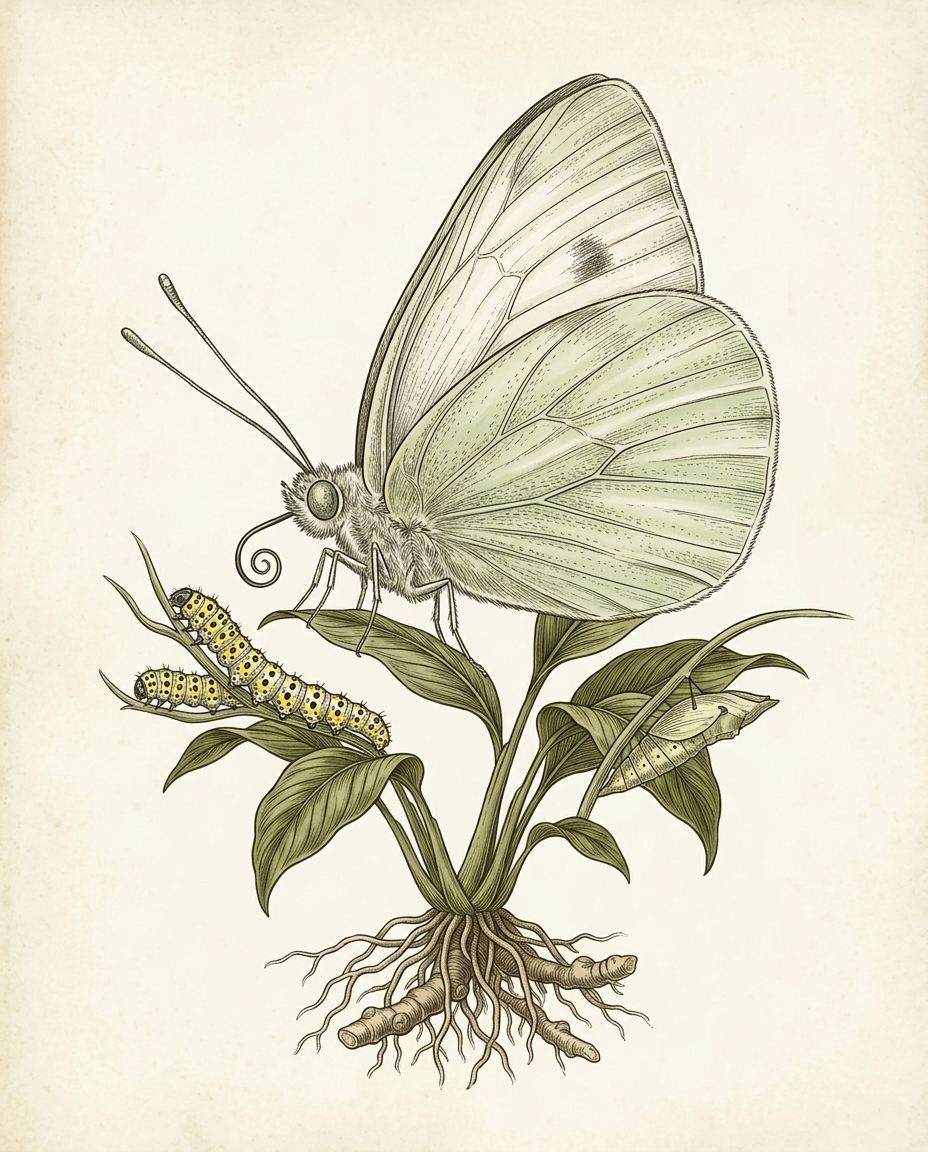
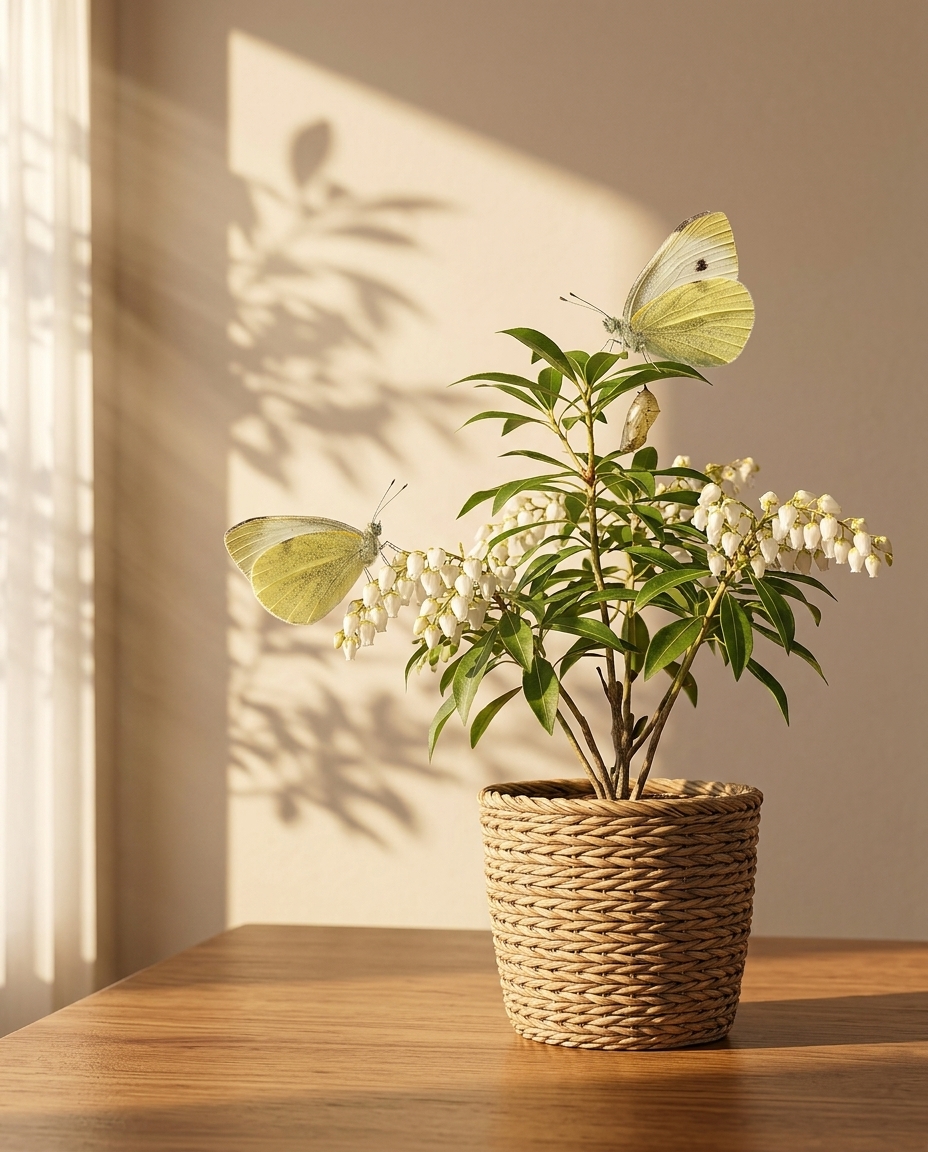
Plate IPieris japonica — Japanese Andromeda, Lily-of-the-Valley Bush, Fetterbush. Whorled glossy leaves, drooping panicles of urn-shaped white flowers. Ericaceae. ASPCA toxic.
Three plants that look the part, without the risk.
Garden flowering shrubs that are ASPCA-safe — the cat-friendly alternatives if you wanted the pieris-evergreen-shrub look without the grayanotoxin family chemistry.
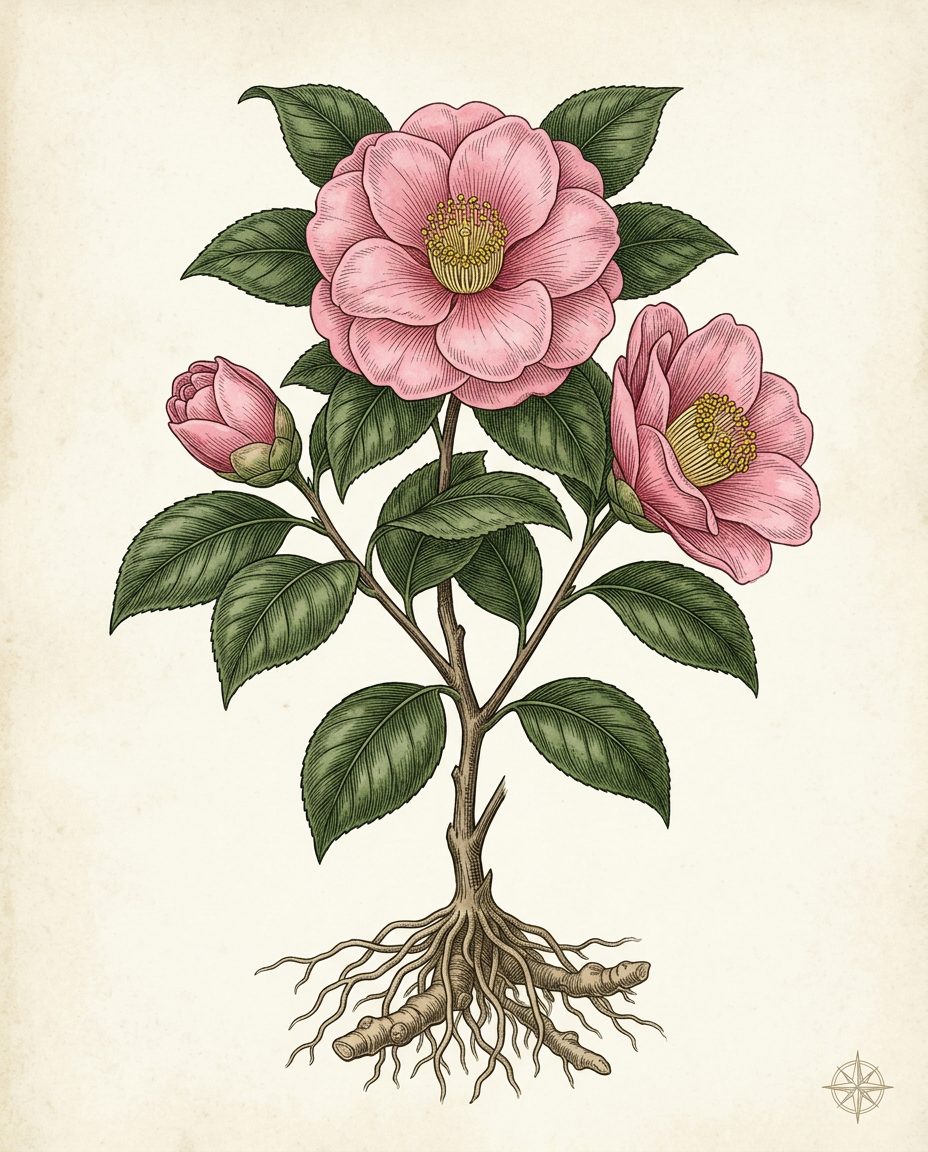
Camellia
For a glossy-leaved flowering evergreen shrub at ASPCA non-toxic. Different flower form (peony rather than urn) but the same garden role.
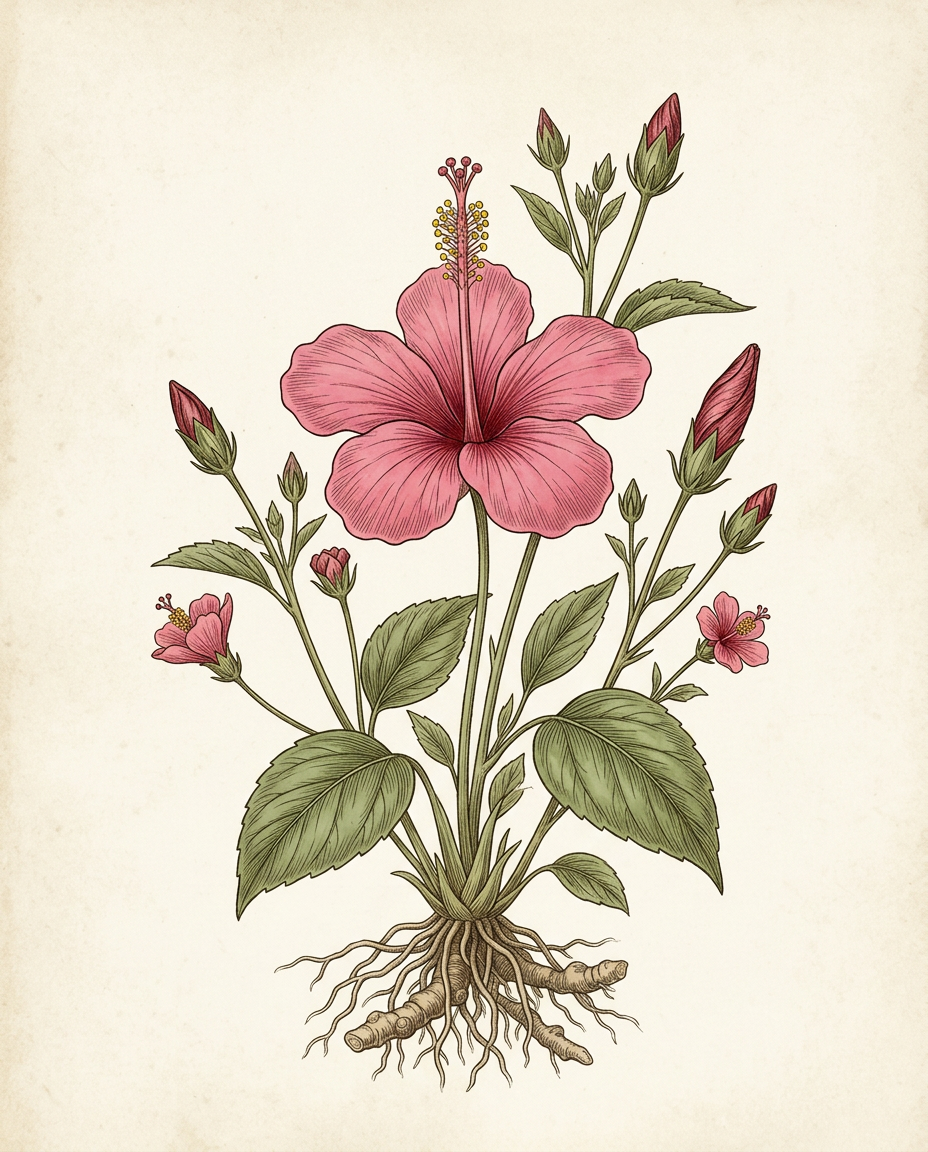
Hibiscus
For a flowering garden shrub at ASPCA non-toxic. Larger trumpet blooms, deciduous habit, similar back-of-border placement.
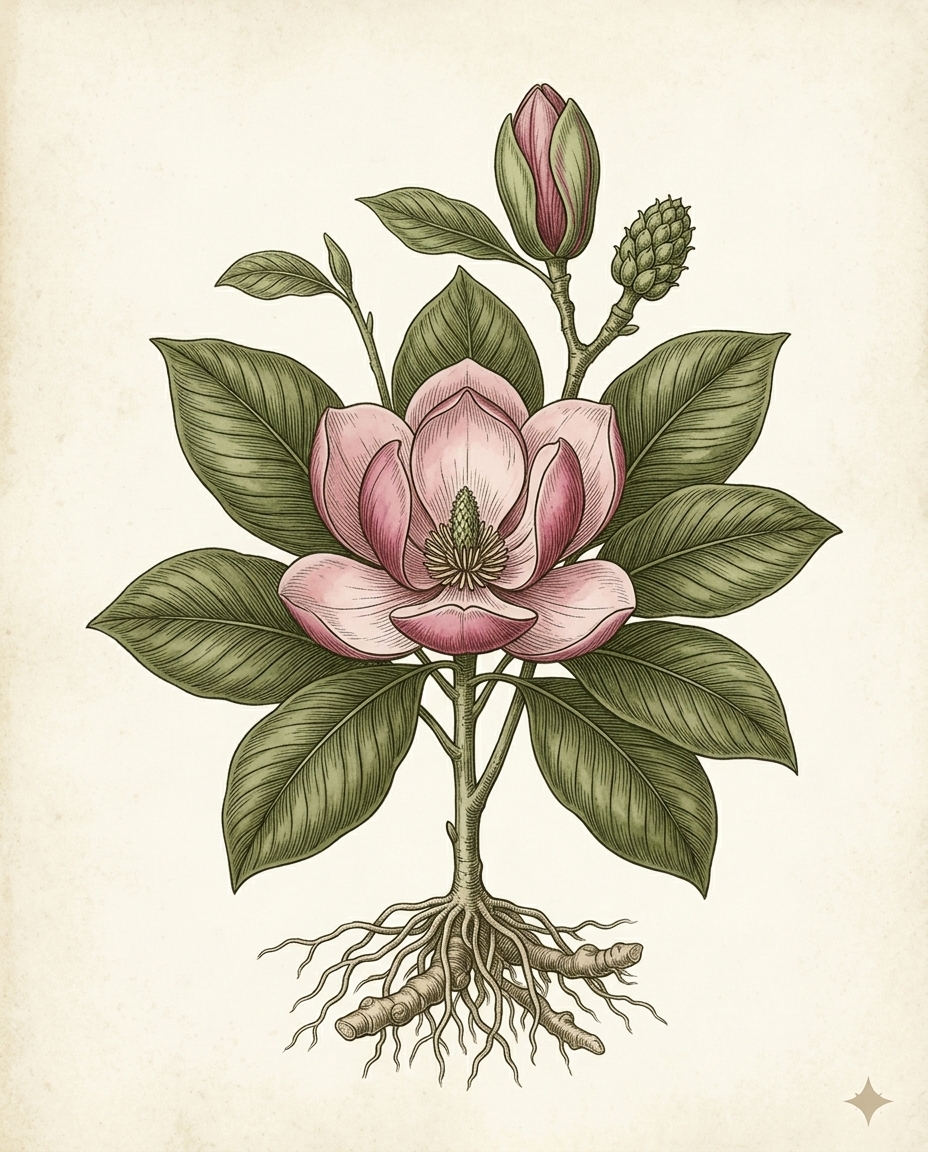
Magnolia
For a small flowering ornamental at ASPCA non-toxic. Star-shaped spring blooms on bare wood, then leaves out.
Why pieris needs a fast vet call.
Yes — pieris is toxic to cats, and seriously so. The ASPCA lists Pieris japonica (Japanese Andromeda, Lily-of-the-Valley Bush, Fetterbush) as toxic to dogs and toxic to cats. The toxic principles are grayanotoxins — the same family-wide Ericaceae mechanism that makes azalea and rhododendron toxic.
The ASPCA verdict, verbatim: Toxicity: Toxic to Dogs, Toxic to Cats · Family: Ericaceae · Additional Common Names: Lily-of-the-Valley Bush, Andromeda Japonica, Fetterbush · Scientific Name: Pieris japonica · Toxic Principles: Grayanotoxins · Clinical Signs: Vomiting, diarrhea, depression, cardiovascular collapse, hypersalivation, weakness, coma, low blood pressure, cardiovascular collapse and death. Ingestion of a few leaves can cause serious problems.
That last sentence — bolded by ASPCA itself — is unusual specificity in their database. Most ASPCA listings describe symptoms without quantifying dose. Pieris gets a direct quantitative warning: a few leaves is enough. Treat any pieris ingestion as a vet emergency.
The Ericaceae grayanotoxin trio
Pieris completes the cat-safety trio of common garden Ericaceae:
- Azalea (Rhododendron species — same genus as below) — ASPCA toxic, grayanotoxins.
- Rhododendron — ASPCA toxic, grayanotoxins, "few leaves" warning.
- Pieris (this page, Pieris japonica) — ASPCA toxic, grayanotoxins, "few leaves" warning.
All three are Ericaceae shrubs that share the grayanotoxin mechanism. Grayanotoxins bind voltage-gated sodium channels in cardiac and skeletal muscle, holding them in a prolonged open state. The cascade of clinical signs follows from that single mechanism — autonomic GI activation produces vomiting, salivation, and diarrhea; nervous system effects produce depression, weakness, and coma; cardiac effects produce low blood pressure, irregular heartbeat, and cardiovascular collapse.
If you have a cat-accessible garden with any of these three shrubs, you have a serious-tier toxic plant on the property. The mountain-laurel question (Kalmia latifolia, another Ericaceae grayanotoxin species) is more complicated — ASPCA does not currently mark it as toxic to cats despite the family-wide mechanism, so we are not yet shipping a cat-specific page on it.
The Lily-of-the-Valley Bush trap — the critical disambiguation
The single most dangerous naming overlap on this page is "Lily-of-the-Valley Bush" — one of ASPCA's Additional Common Names for Pieris japonica. This name overlaps with true Lily of the Valley, which is an entirely different plant with an entirely different toxin and an entirely different ASPCA entry.
- Lily-of-the-Valley Bush (this page) — Pieris japonica, Ericaceae shrub, grayanotoxins. Tall garden shrub with drooping panicles of urn-shaped white flowers.
- True Lily of the Valley — Convallaria majalis, Asparagaceae groundcover, cardiac glycosides (convallatoxin, convalloside). Low woodland plant with arching stems of bell-shaped white flowers.
Both are deadly to cats. But the mechanisms are different and the treatments diverge — cardiac glycoside toxicity (true Lily of the Valley) may benefit from specific antibody therapies that grayanotoxin toxicity (pieris) does not. If your cat ingested a plant called "lily of the valley," identify which one to your vet — the difference matters in the emergency room.
The shared common name comes from the visual resemblance of the small urn-shaped white blooms. Pieris is a 1.5-metre garden shrub with whorls of glossy leaves and panicles of flowers. True Lily of the Valley is a 25-cm groundcover with paired leaves and arching stems of widely-spaced bell-shaped flowers. Both have the deceptively-sweet flower silhouette that earned them the "lily" name.
Severity framing — when to call the vet
There is no nibble-and-watch tier for pieris. The ASPCA warning is specific:
- Any suspected ingestion — call your vet or the ASPCA Animal Poison Control Center at 888-426-4435 ($95 consultation) immediately. Do not wait for symptoms.
- Within 1 to 2 hours of ingestion — decontamination (induced vomiting, activated charcoal) is most effective. Earlier is better.
- Ongoing symptomatic care — IV fluids, anti-emetics, cardiac monitoring. Atropine for severe bradycardia. There is no specific grayanotoxin antidote; treatment is supportive.
- Cardiac signs (irregular heartbeat, weak pulse, collapse) — emergency vet visit, not phone consult.
Cat-safe alternatives for the pieris role
If you bought pieris as an evergreen flowering shrub and want a safer swap for a cat-accessible garden:
- Camellia — ASPCA non-toxic flowering evergreen shrub. Glossy leaves, different flower form but the same garden presence.
- Hibiscus — non-toxic flowering shrub (deciduous Hibiscus syriacus or tropical H. rosa-sinensis).
- Magnolia — non-toxic small flowering tree, star-shaped spring blooms.
- Rose — non-toxic flowering shrub, classic garden anchor.
Avoid placing pieris near azalea, rhododendron, oleander, foxglove, or lily-of-the-valley — those are the severity-tier garden plants most likely to be confused with each other or planted in the same border. For the full toxic landscape see toxic plants for cats and for safer flowering options cat-safe plants.
What we have actually seen.
GI signs early
ASPCA's clinical signs lead with vomiting and diarrhea — the early-hours grayanotoxin pattern. Drooling (hypersalivation) and depression follow. This phase warrants immediate vet contact.
Cardiovascular collapse — severity flag
Pieris is one of the few common garden plants whose ASPCA Clinical Signs entry literally lists cardiovascular collapse and death. Grayanotoxins bind sodium channels in cardiac and skeletal muscle. Weakness, low blood pressure, coma, collapse follow heavy ingestion. This is severity-tier toxicity.
A few leaves is enough
ASPCA's quote on pieris (ingestion of a few leaves can cause serious problems) is unusual specificity. Pieris is not a nibble-then-walk-away plant. Any meaningful ingestion warrants vet contact.
Lily-of-the-Valley Bush confusion
Pieris is sometimes called "Lily-of-the-Valley Bush" because the urn-shaped flowers resemble Convallaria majalis blooms. BOTH plants are deadly to cats but the toxins differ — pieris is grayanotoxin (sodium-channel), true Lily of the Valley is cardiac glycoside. Identify the actual plant before treatment if possible.
- ASPCA Animal Poison Control Center. Toxic and Non-Toxic Plants: Pieris.Accessed June 2026 · aspca.org · Pieris japonica (Lily-of-the-Valley Bush, Andromeda Japonica, Fetterbush) · Toxic to Dogs, Toxic to Cats · Family Ericaceae · Toxic Principles: Grayanotoxins · Clinical Signs: Vomiting, diarrhea, depression, cardiovascular collapse, hypersalivation, weakness, coma, low blood pressure, cardiovascular collapse and death. Ingestion of a few leaves can cause serious problems.
- ASPCA Animal Poison Control Center. Toxic and Non-Toxic Plants: Azalea.Same grayanotoxin mechanism — Ericaceae family-wide
- ASPCA Animal Poison Control Center. Toxic and Non-Toxic Plants: Lily of the Valley.For the critical disambiguation — Convallaria majalis is a totally different plant (cardiac glycosides, NOT grayanotoxin) that shares the "lily of the valley" name with pieris