Hibiscus
Hibiscus syriacus
Hibiscus (Hibiscus syriacus) is non-toxic to cats per the ASPCA, along with the Rose of Sharon common-name variant. The whole popular Hibiscus genus is treated as cat-safe.
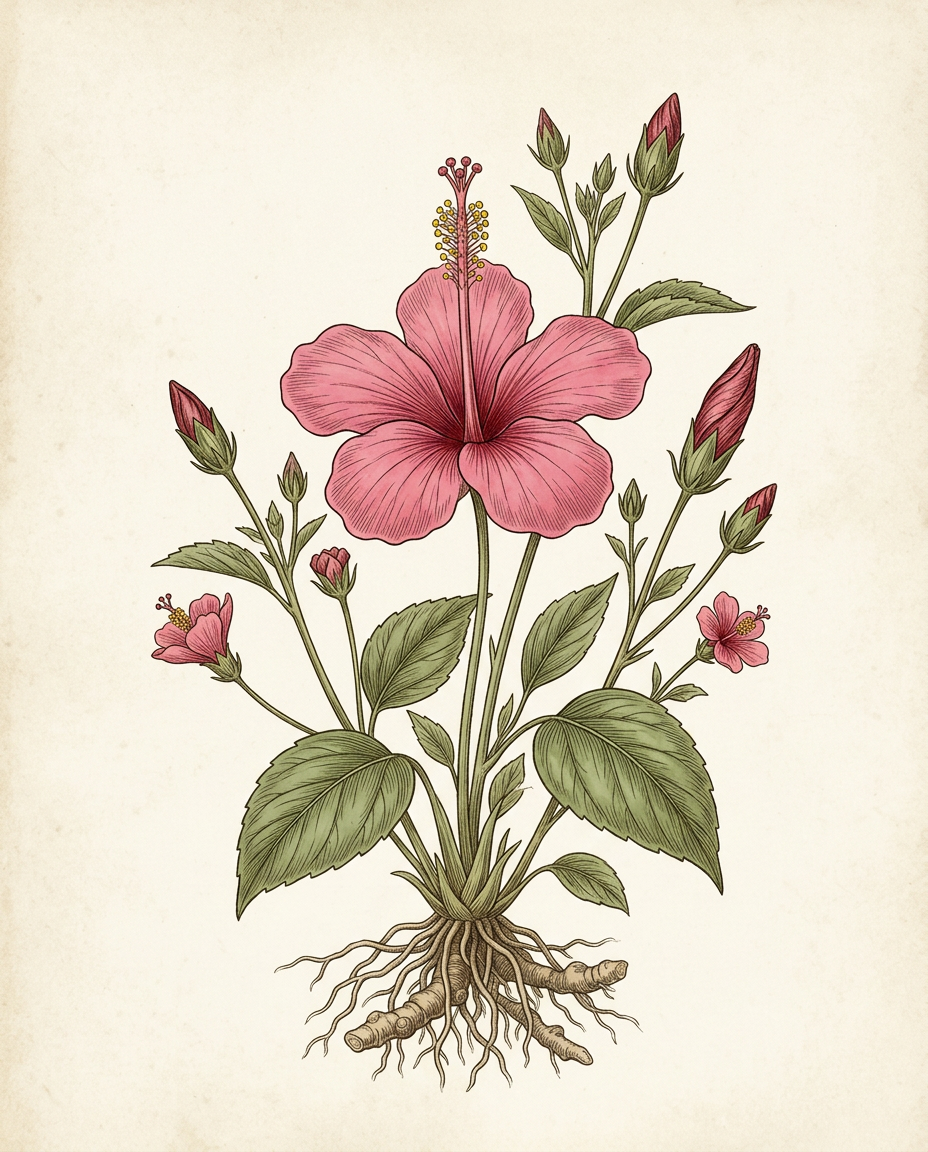
Plate IHibiscus syriacus — the Rose of Sharon hibiscus. Large flared trumpet flower with a prominent staminal column above lobed serrated leaves. ASPCA non-toxic across the popular genus.
How to grow hibiscus around cats.
Yes — hibiscus is safe for cats. The ASPCA lists Hibiscus syriacus — also called Rose of Sharon and Rose of China — as non-toxic to cats, dogs, and horses. The same verdict appears on ASPCA's separate Rose of Sharon entry (same Latin name, same chemistry). No toxic principle is listed and no clinical signs are flagged.
The ASPCA verdict, verbatim (from /hibiscus): Additional Common Names: Rose of Sharon, Rose of China · Scientific Name: Hibiscus syriacus · Family: Malvaceae · Toxicity: Non-Toxic to Dogs, Non-Toxic to Cats, Non-Toxic to Horses. The sibling /rose-sharon entry returns the same Latin name and the same non-toxic classification.
One plant, two ASPCA entries
A small ASPCA quirk: Hibiscus syriacus gets two separate pages because the common names "Hibiscus" and "Rose of Sharon" are used by different audiences for the same shrub. Both entries agree. Both say non-toxic. There is no hidden caveat on the Rose of Sharon page that the Hibiscus page leaves out.
What about tropical hibiscus?
The ASPCA species panel names Hibiscus syriacus directly. The two other Hibiscus species you'll encounter at a garden centre are:
- Hibiscus rosa-sinensis — tropical hibiscus, Chinese hibiscus, Hawaiian hibiscus. The big-flowered glossy-leafed form sold as bedding or houseplant.
- Hibiscus moscheutos — hardy hibiscus, swamp rose mallow, dinner-plate hibiscus. Native US perennial with enormous flowers.
Neither species is individually listed on ASPCA. Crucially, no Hibiscus species appears on the ASPCA toxic list either. The genus is genetically and chemically homogeneous; veterinary practice treats the entire popular Hibiscus genus as cat-safe by extension from the explicit H. syriacus clearance. If a vet tox specialist were asked about a H. rosa-sinensis ingestion, the response would be the same: non-toxic, low concern.
Two confusable plants you DO need to know about
The danger with hibiscus is not the plant itself — it's misidentification at a busy garden centre. Two showy flowering plants get muddled with it:
- Oleander (Nerium oleander, family Apocynaceae). DEADLY to cats — cardiac glycosides, the same drug class as foxglove and lily-of-the-valley. Sometimes sold near hibiscus as a "tropical flowering shrub." Always check the Latin name on the pot.
- Mandevilla (Mandevilla spp., family Apocynaceae). Mildly toxic flowering vine. Sometimes mis-tagged as "tropical hibiscus." Different growth habit (vine vs shrub) but the marketing can be vague.
If the Latin name on the tag is anything other than Hibiscus, look it up before buying.
Why we list it safe
ASPCA has cleared Hibiscus syriacus across both relevant common-name entries. The genus carries no characterised cardiac glycoside, no irritant raphide, no organosulfur, no furanocoumarin — none of the chemistry that makes other showy tropicals dangerous. Hibiscus flowers are even used as food and tea (hibiscus tea, agua de Jamaica) by humans for centuries with no toxicity profile, which is a strong corroborating signal.
Cat household notes
If you grow hibiscus indoors or out, no special precautions are needed. A cat that chews a leaf or bats a flower gets no toxic exposure. Vase water from cut hibiscus carries no plant toxin (though hibiscus flowers are single-day — not really a cut-flower plant).
The shrub itself is hardy (Rose of Sharon) or frost-tender (tropical), wants full sun, rich moist soil, and moderate water. Bloom is heavy from midsummer through autumn.
For other genuinely safe garden-shrub options, see rose (ASPCA non-toxic), and for the full reference of safe plants, safe plants for cats. For confirmed-toxic shrubs to avoid, oleander is the urgent one.
Disclosure
We include Amazon affiliate links on safe-plant pages. As an Amazon Associate, we earn from qualifying purchases. We never affiliate-link a plant we have not ASPCA-verified.
What we have actually seen.
Casual chewing
Cats sometimes bite at hibiscus petals or leaves. ASPCA lists no toxic principle and no clinical signs — expect nothing more than mild GI on a very large ingestion.
Vase-water sips
Hibiscus carries no toxin to the vase water. Single-day flowers don't last long as cut stems anyway; the plant is more an outdoor or container shrub than a florist staple.
Mild GI upset
Big chew on the foliage can produce vomiting — standard plant-material baseline, not hibiscus-specific.
Four common varieties.
Rose of Sharon (hardy shrub form)
The hardy garden shrub. Single and double-flowered cultivars in white, pink, lavender, and blue. The form ASPCA names directly.
Tropical Hibiscus (frost-tender)
The big-flowered Hawaiian-style form. Glossier leaves, larger flowers, indoor in winter outside zone 9. Same family, same non-toxic status by extension.
Hardy hibiscus (dinner-plate flowers)
Native US species with enormous flowers — "dinner-plate hibiscus." Hardy perennial. Same Malvaceae profile, same cat-safe.
Keeping the plant alive.
Full sun
Six or more hours of direct sun for the heaviest bloom and the most vigorous habit. Tolerates light afternoon shade in hot climates without losing many flowers.
Moderate
Even moisture during the growing season; established shrubs handle brief dry spells. Container plants need more frequent watering than in-ground ones.
Rich, free draining
Loamy, fertile, slightly acidic soil suits hibiscus best. Mulch heavily — they reward consistent root moisture with a heavier bloom.
Sheltered
Rose of Sharon (H. syriacus) is hardy across most temperate zones. Tropical hibiscus (H. rosa-sinensis) is frost-tender and lives outdoors only in zones 9+; container in colder climates.
- ASPCA Animal Poison Control Center. Toxic and Non-Toxic Plants: Hibiscus.Accessed June 2026 · aspca.org · Hibiscus syriacus · Non-Toxic to cats, dogs, horses · Family: Malvaceae · Additional common names: Rose of Sharon, Rose of China
- ASPCA Animal Poison Control Center. Toxic and Non-Toxic Plants: Rose of Sharon.Accessed June 2026 · aspca.org · sibling entry · Hibiscus syriacus · Non-Toxic
- Royal Horticultural Society. Hibiscus growing guide.Horticultural reference for garden + container care
If you liked this, also safe.