Azalea
Rhododendron spp.
Azaleas and rhododendrons are severely toxic to cats per the ASPCA. Every part contains grayanotoxin, which can produce vomiting, weakness, arrhythmia, and cardiac failure — a few leaves can be life-threatening.
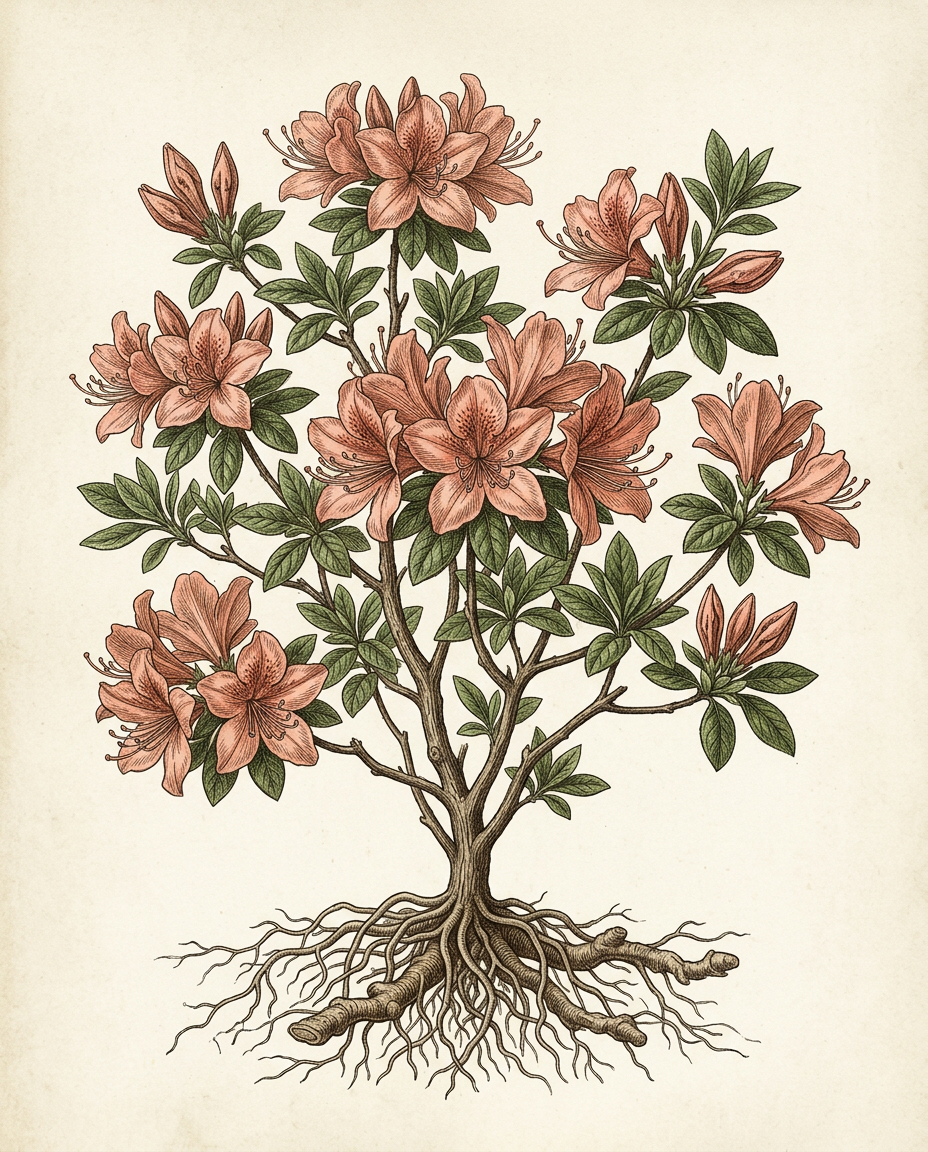

Plate IRhododendron spp. — the funnel-flowered shrub of woodland gardens. Every leaf, flower, and bit of pollen carries grayanotoxin, the cardiac toxin the ASPCA lists as the toxic principle.
Three plants that look the part, without the risk.
Funnel-flowered, evergreen shrubs and lush flowering plants without the grayanotoxin — these three are ASPCA non-toxic alternatives for the same woodland-border aesthetic.
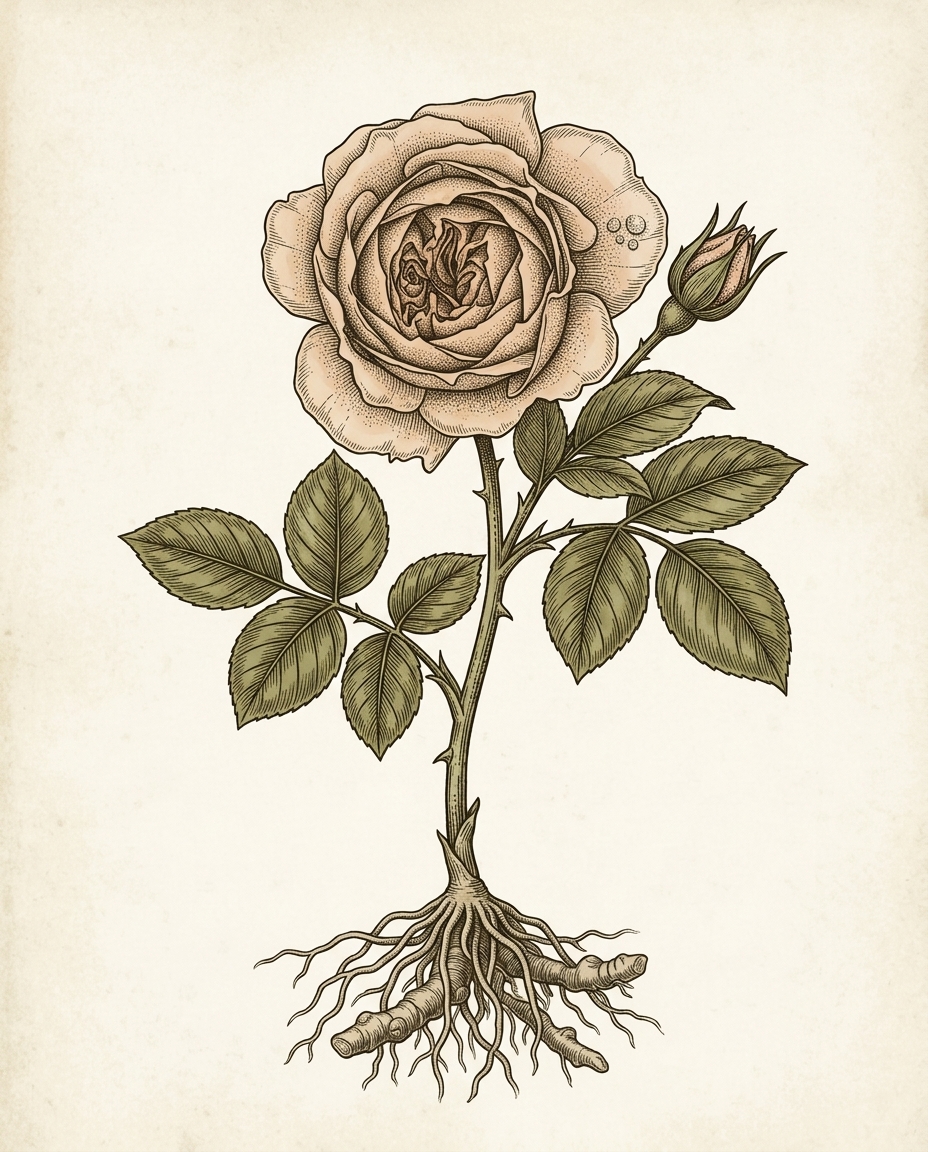
Rose
Classic flowering garden shrub with cat-safe credentials. ASPCA non-toxic.
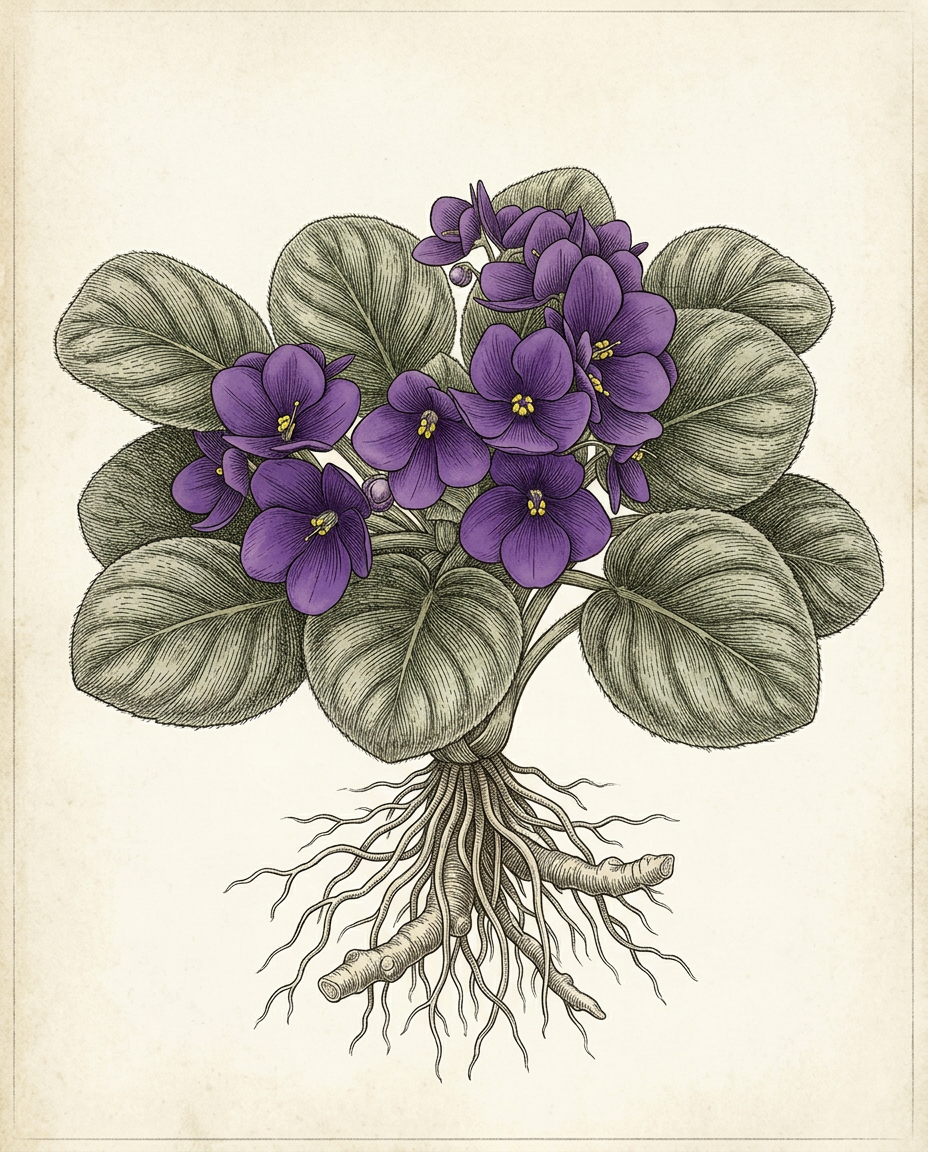
African Violet
Indoor flowering plant with the same gentle colour palette. ASPCA non-toxic.
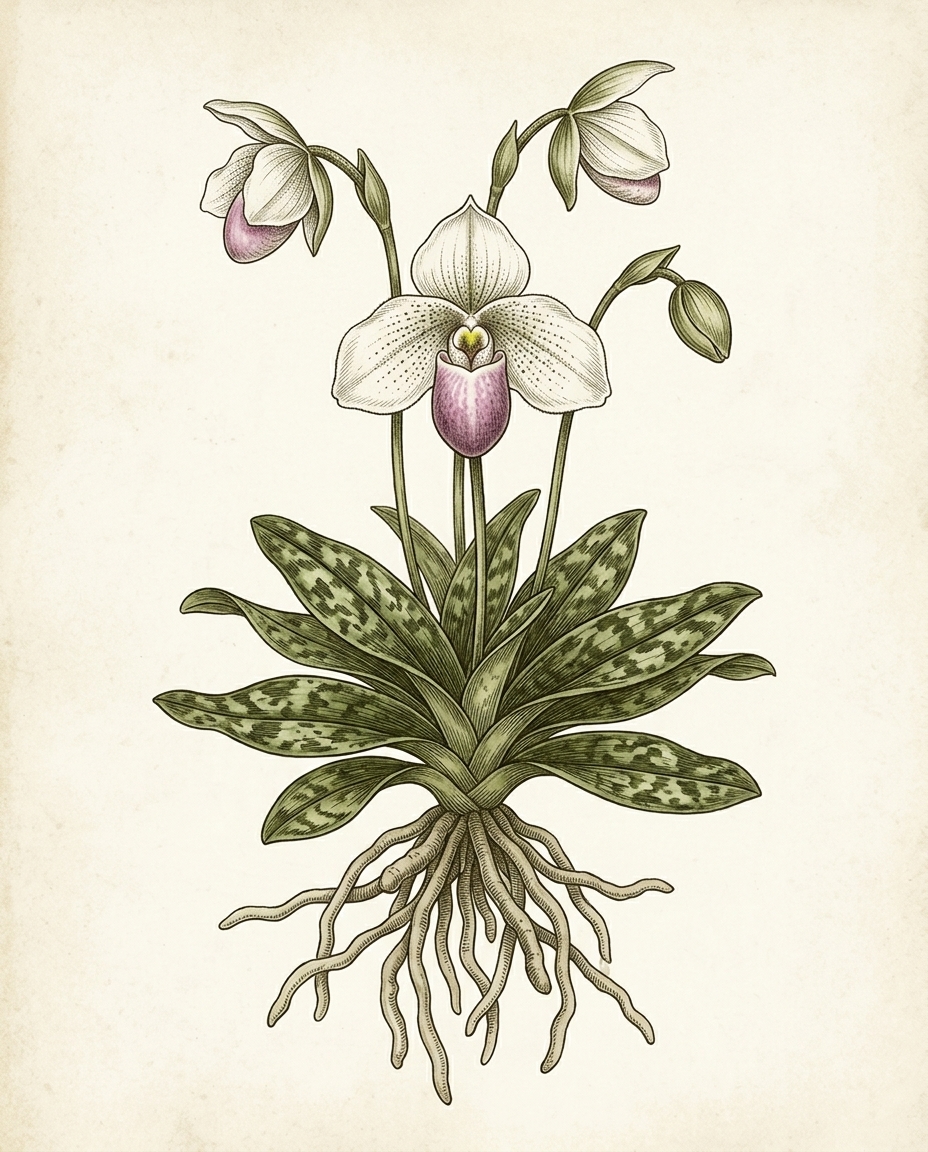
Orchid
Long-lasting tropical blooms, completely safe around cats per ASPCA.
What it does to a cat.
Yes — azaleas are severely toxic to cats. The ASPCA lists Rhododendron spp. — which includes both azaleas and rhododendrons — as toxic to cats, dogs, and horses. The toxic principle is grayanotoxin, a compound that opens sodium channels in skeletal and cardiac muscle. The result is a syndrome that starts as vomiting and weakness and can escalate to bradycardia, arrhythmia, and cardiac failure.
Symptoms typically begin within a few hours of ingestion. Even a small amount — a few leaves — can produce serious cardiac signs in a cat. Treat any chewing or mouthing of an azalea as a poisoning event.
Where cats meet azaleas
Azaleas are a foundation shrub in mild-climate gardens worldwide, and a popular flowering gift indoors during late winter and spring. Outdoor cats encounter them in foundation plantings and woodland borders. Indoor cats meet potted azaleas — sold by florists as compact flowering houseplants — at coffee-table height.
Why "azalea" and "rhododendron" mean the same thing here
Azaleas are botanically a subgroup within the genus Rhododendron. The ASPCA treats them as one entry because they share the same toxic principle. Evergreen Japanese azaleas, deciduous garden azaleas, large garden rhododendrons, and indoor florist pots all carry grayanotoxin. There is no cat-safe variety.
The "mad honey" connection
Grayanotoxin is famous in humans for its role in "mad honey" — honey made by bees foraging on Rhododendron nectar, which produces a brief but dramatic toxic syndrome of low blood pressure, weakness, and slow heart rate. Cats are far smaller and far more sensitive: they can develop the syndrome from chewing a single flower or leaf.
Safer flowering options
For flowering garden shrubs without the cardiac risk, roses are the obvious replacement. Indoors, African violets and orchids are ASPCA non-toxic and offer the same long-blooming colour. See our oleander, hydrangea, and sago palm pages for the other landscape plants cats should not be near.
If exposure has happened
Call your vet or ASPCA Animal Poison Control at (888) 426-4435 immediately. Bring a piece of the plant or a photo. Severe cases need IV fluids, atropine for bradycardia, and continuous cardiac monitoring. Most cats survive with prompt treatment — the danger is in waiting until the cardiac phase begins.
What we have actually seen.
Vomiting and drooling
The first signs — usually within a few hours of ingestion. Cats may drool excessively and vomit repeatedly as grayanotoxin irritates the GI tract.
Weakness and ataxia
Grayanotoxin opens sodium channels in skeletal muscle, producing muscle weakness, tremors, and an unsteady gait within hours of a meaningful dose.
Bradycardia and arrhythmia
The cardiac effects — slow or irregular heart rate, hypotension, and in severe cases cardiac failure. This is the syndrome that kills.
Diarrhea and abdominal pain
Often follows the vomiting phase. The GI irritation is severe enough on its own to cause dehydration in small cats.
- ASPCA Animal Poison Control Center. Toxic and Non-Toxic Plants: Azalea.Accessed June 2026 · aspca.org
- Pet Poison Helpline. Azalea and Rhododendron Toxicity in Companion Animals.Clinical brief · 2024 ed.
- Puschner B, et al. Grayanotoxin poisoning in domestic animals.Vet Clin North Am Small Anim Pract · review