Sago
Palm.
Cycas revoluta
Sago palms are among the most lethal plants a cat can encounter. Every part contains cycasin, a toxin the ASPCA links to vomiting, liver failure, and death. The seeds carry the highest dose.
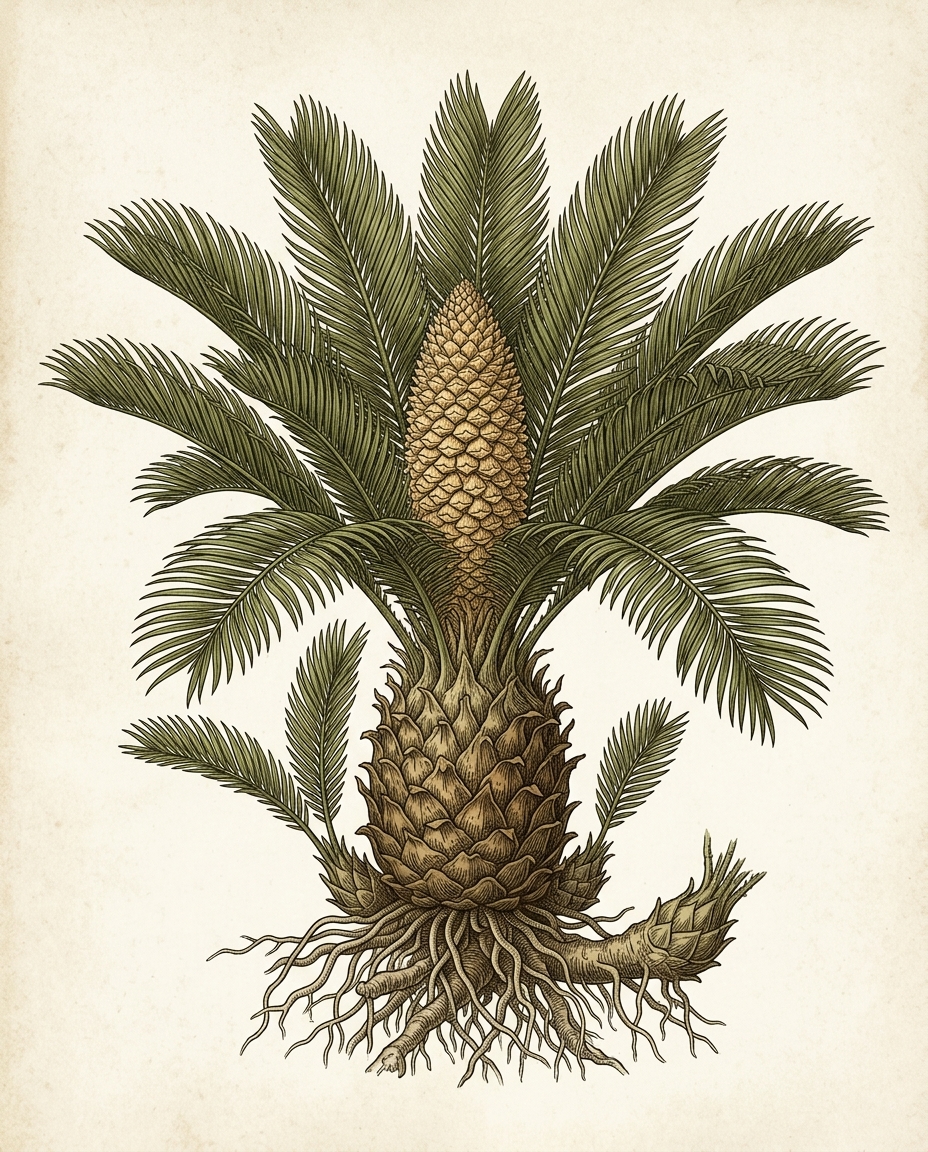
Plate ICycas revoluta — a cycad, not a true palm. Every frond, seed, and inch of the trunk carries cycasin, the hepatotoxin behind its catastrophic reputation.
Three plants that look the part, without the risk.
Feathery, palm-like foliage without the hepatotoxin — these three are ASPCA non-toxic and visually similar enough to scratch the same itch.
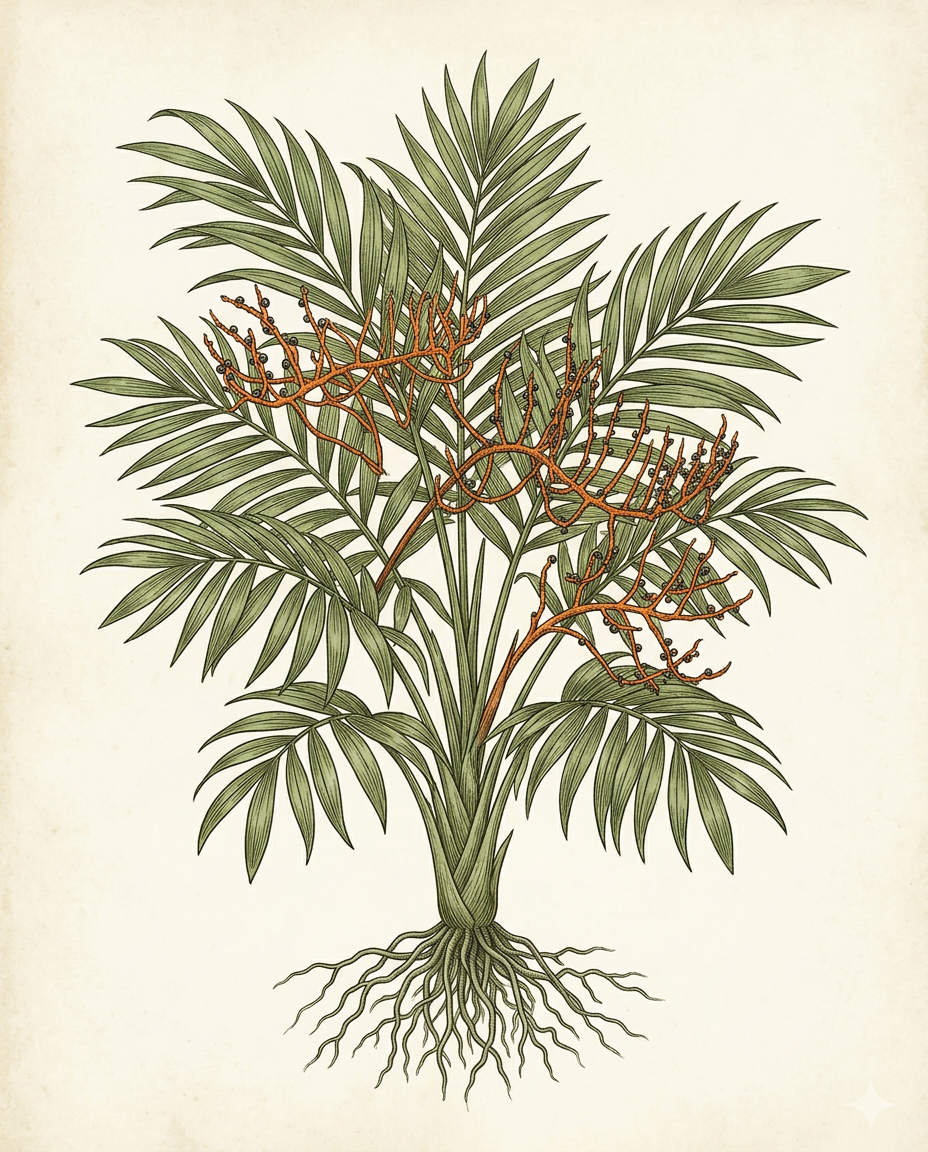
Parlor Palm
Genuine palm, ASPCA non-toxic, similar arching fronds and tropical feel without cycasin.
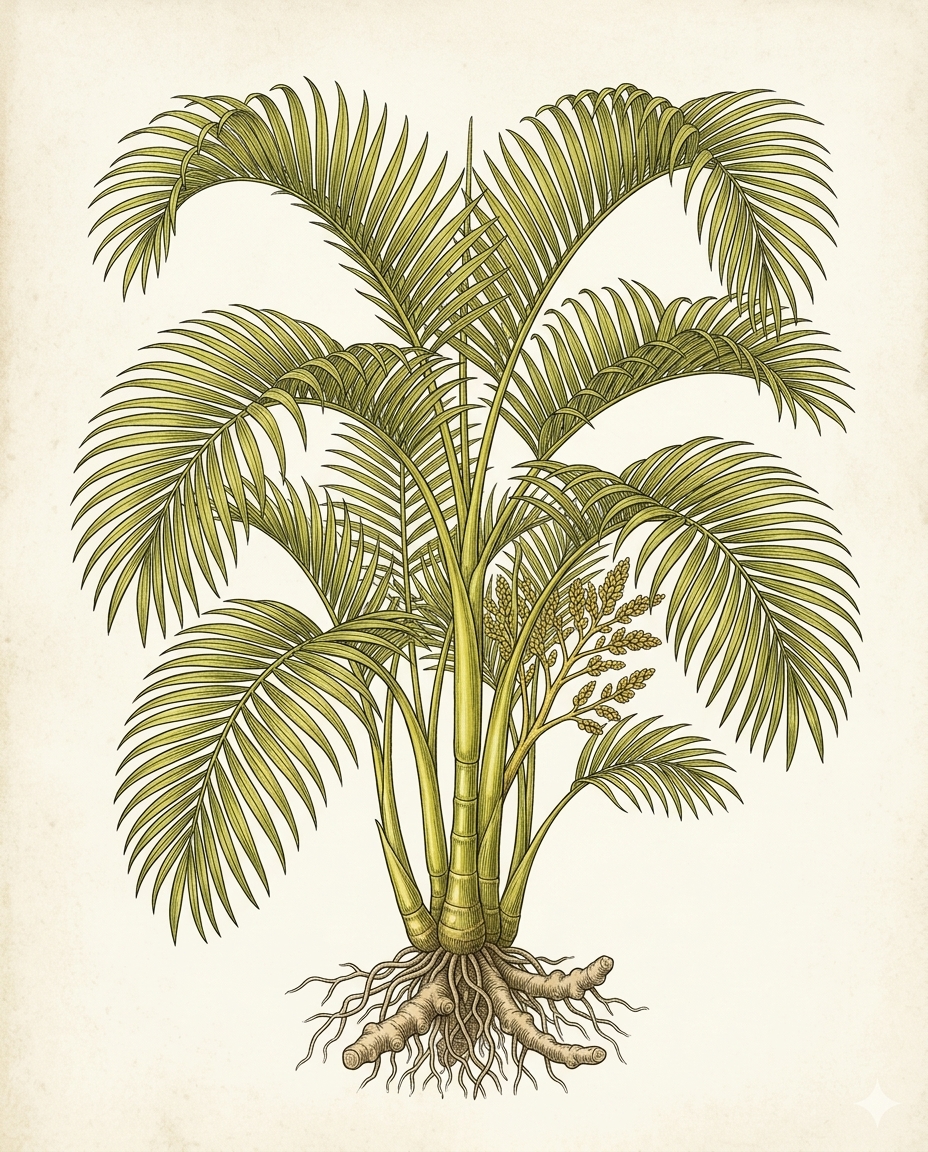
Areca Palm
True palm with the same feathery, sago-like silhouette. ASPCA non-toxic, no liver risk.
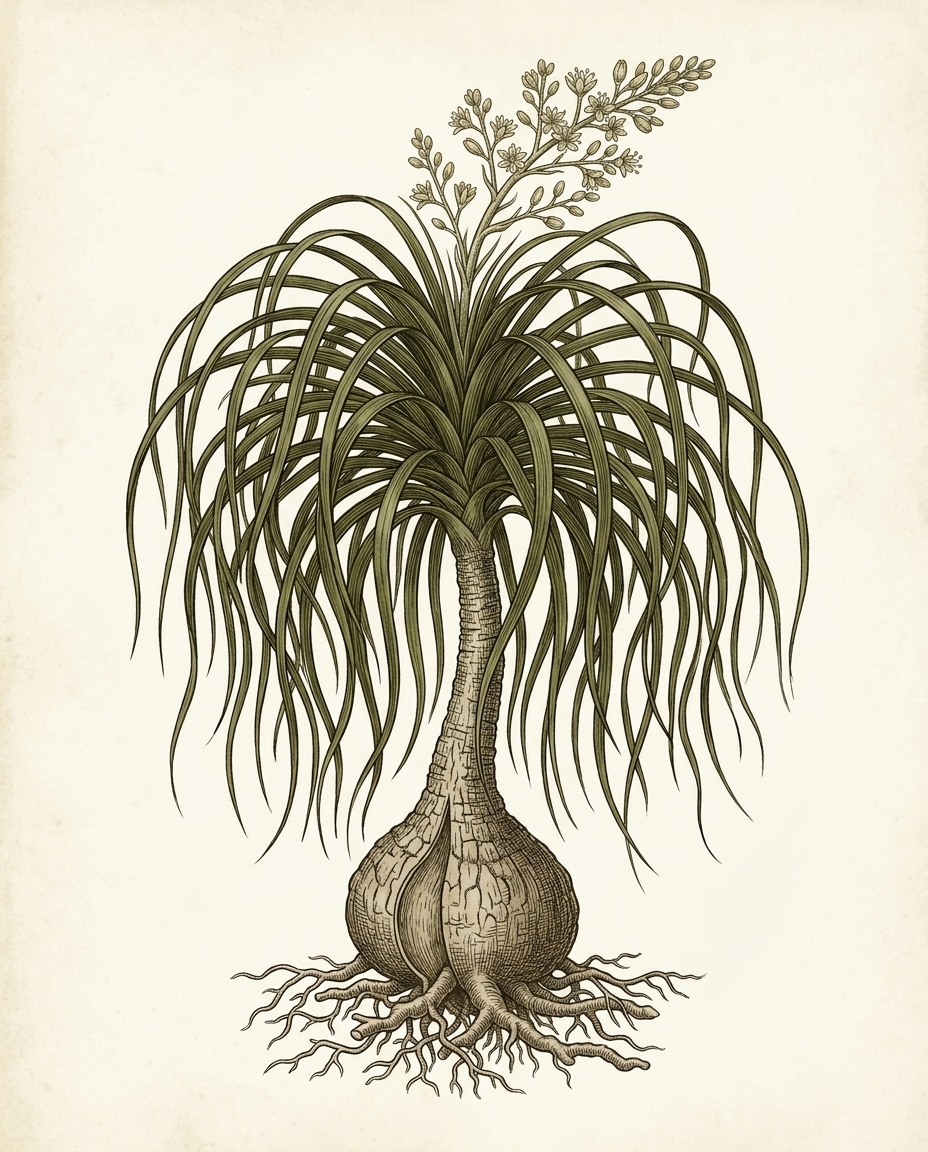
Ponytail Palm
Sculptural trunk and cascading leaves. ASPCA non-toxic and notoriously low-maintenance.
What it does to a cat.
Yes — sago palms are among the deadliest houseplants for cats. The ASPCA lists Cycas revoluta, along with related cycads and zamias, as toxic to cats, dogs, and horses. The toxin is cycasin, and it attacks the liver. Mortality remains around 50 percent or higher even when treatment begins promptly.
Every part of the plant is dangerous, but the seeds carry the highest concentration of cycasin. A single seed can be enough to kill a small cat. Vomiting often begins within minutes; liver failure follows over the next one to three days; bleeding from disrupted clotting can appear days later.
Why it kills so reliably
Cycasin is metabolised in the gut into methylazoxymethanol — a potent hepatotoxin and known carcinogen. The liver bears the brunt of the damage, but the toxin also disrupts the GI lining (causing the characteristic bloody stools) and impairs clotting factor production. By the time owners notice the bruising, the damage is often advanced.
This is not a true palm
Sago palm is a cycad — an ancient lineage older than the dinosaurs, unrelated to true palms (Arecaceae). Genuine palms like parlor palm, areca palm, and ponytail palm are ASPCA non-toxic and offer the same tropical silhouette without the cycasin. There is no reason to keep a sago palm in a cat household when these alternatives exist.
If exposure has happened
Call your vet or ASPCA Animal Poison Control at (888) 426-4435 immediately. Bring the plant or a clear photo. Aggressive decontamination, IV fluids, and liver support within the first few hours give the best chance of survival. Do not induce vomiting at home unless a professional directs you to. For context on other deadly common plants, see our pages on lily and oleander.
What we have actually seen.
Acute liver failure
Cycasin damages hepatocytes within 24 hours of ingestion. Even with aggressive treatment, mortality is estimated at 50 to 75 percent.
Early vomiting and bloody stools
Within 15 minutes to a few hours — often before owners realise the plant is involved. Melena (black, tarry stools) is a hallmark sign.
Seed ingestion
A single seed can deliver enough cycasin to kill a small cat. The orange seeds resemble nuts and attract curious paws.
Coagulopathy and bruising
Liver damage disrupts clotting. Owners may notice unexplained bruises, nosebleeds, or blood in vomit days after ingestion.
- ASPCA Animal Poison Control Center. Toxic and Non-Toxic Plants: Sago Palm.Accessed May 2026 · aspca.org
- Pet Poison Helpline. Sago Palm Toxicity in Pets.Clinical brief · 2024 ed.
- Ferguson D, et al. Sago palm toxicosis in dogs and cats. J Vet Emerg Crit Care.2011 · review