Areca
Palm.
Dypsis lutescens
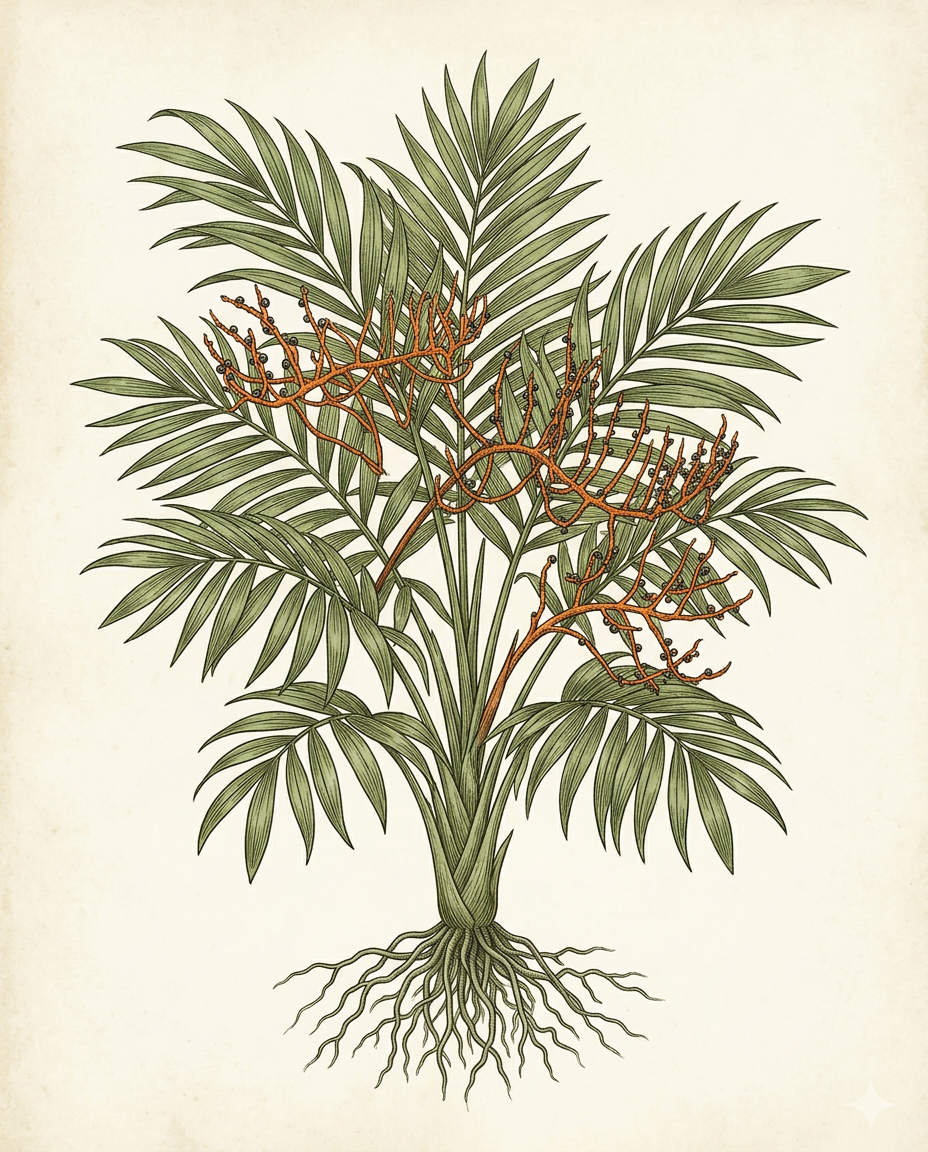
Yes — the areca palm is safe for cats. The ASPCA lists Dypsis lutescens as non-toxic. It is one of the best large statement plants for a cat home, with only mild upset if a cat eats a lot of frond.
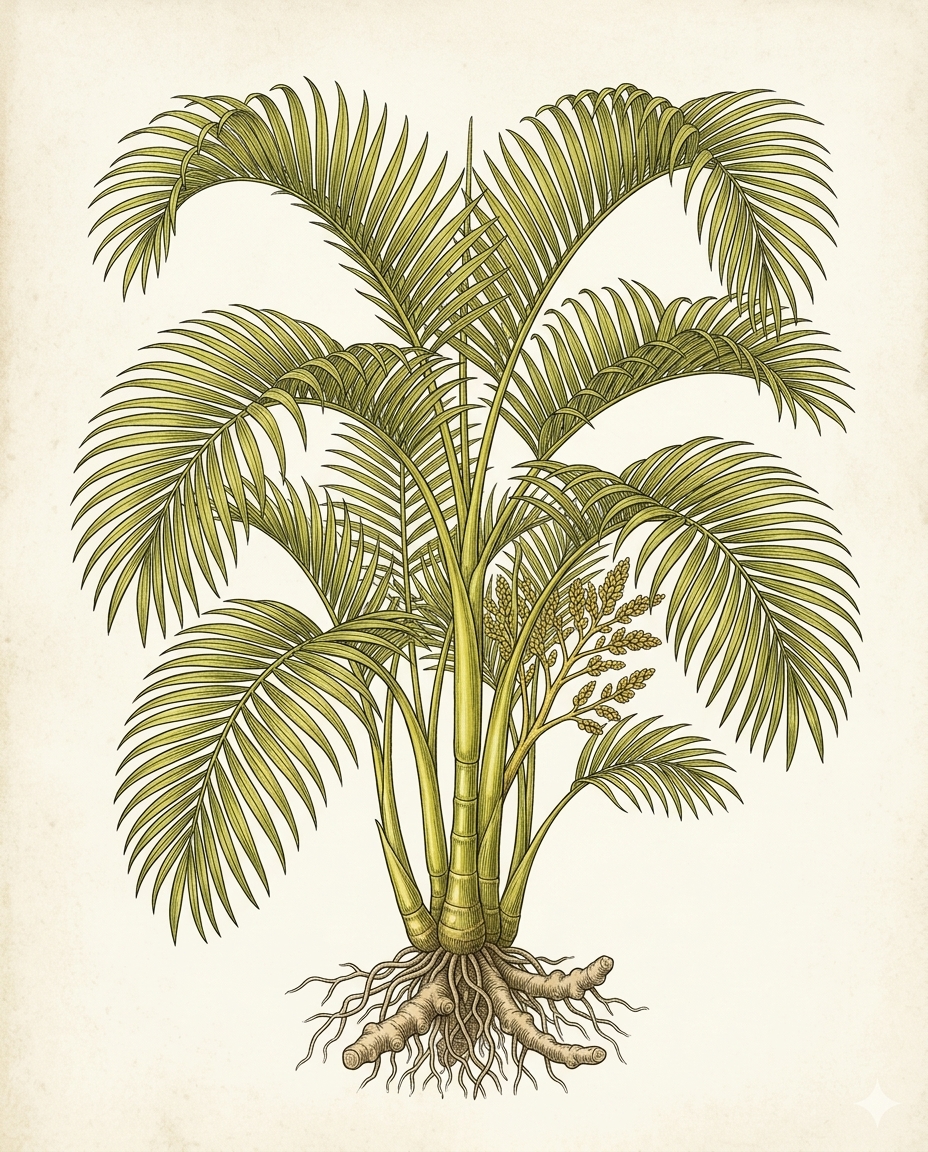
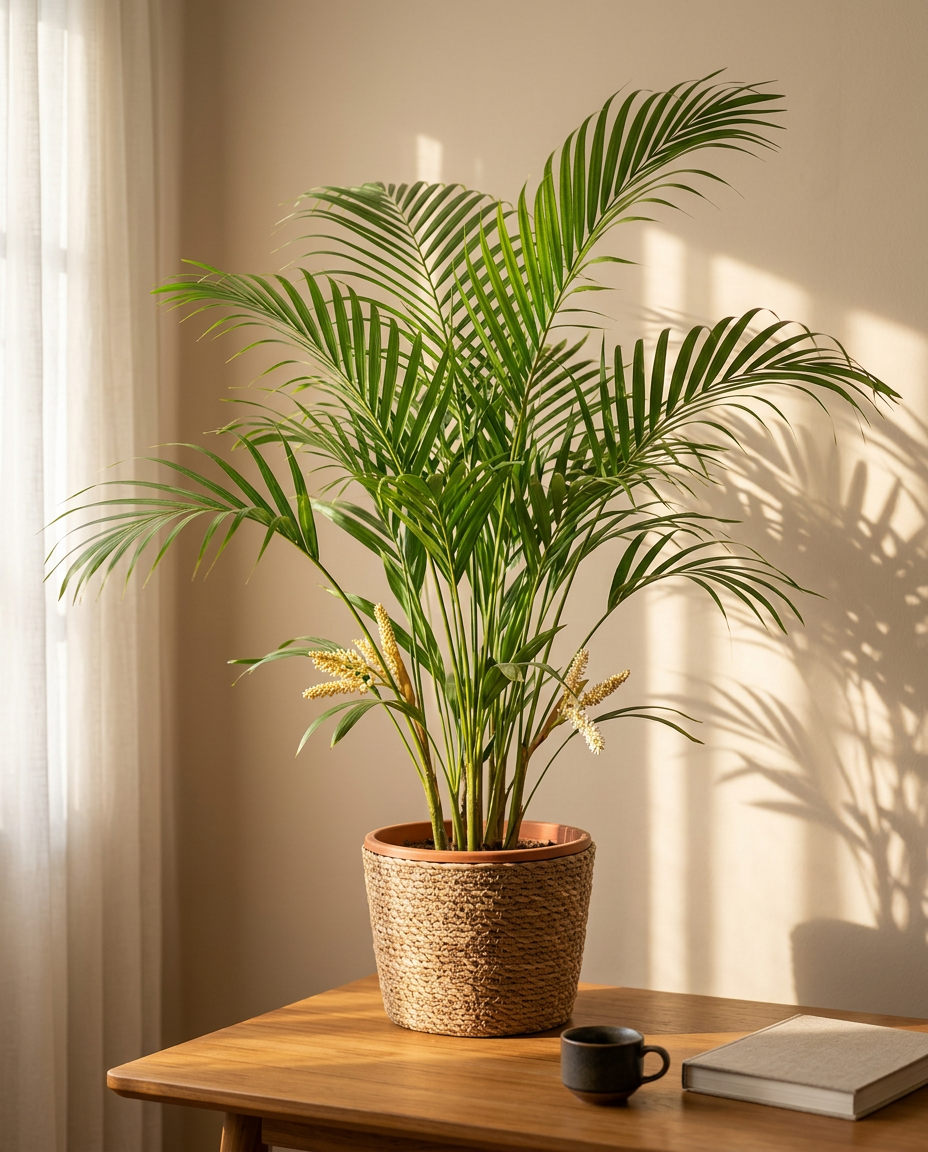
Plate IDypsis lutescens — the areca or golden cane palm. A non-toxic true palm, safe as a large floor plant in a cat household.
What happens if your cat eats it.
Nothing harmful. The ASPCA lists the areca palm (Dypsis lutescens) as non-toxic to cats. That makes it one of the most useful plants in this library: a genuine floor-filling statement plant that is completely cat-safe, where the worst a curious cat risks is mild stomach upset from eating a lot of fibrous frond.
For households that want height and greenery, the areca solves a common problem. Many large indoor "trees" — the rubber plant, the weeping fig, various dracaenas — are toxic. The areca delivers the same lush, tropical presence without any of the sap or oxalate worry.
The one palm to never confuse it with
A crucial warning sits next to this otherwise reassuring entry: the sago palm (Cycas revoluta) is not a true palm at all and is severely toxic to cats, causing liver failure. It is often sold as a small, innocent-looking tabletop plant. The areca is a true palm and is safe; the sago is neither.
Safe company
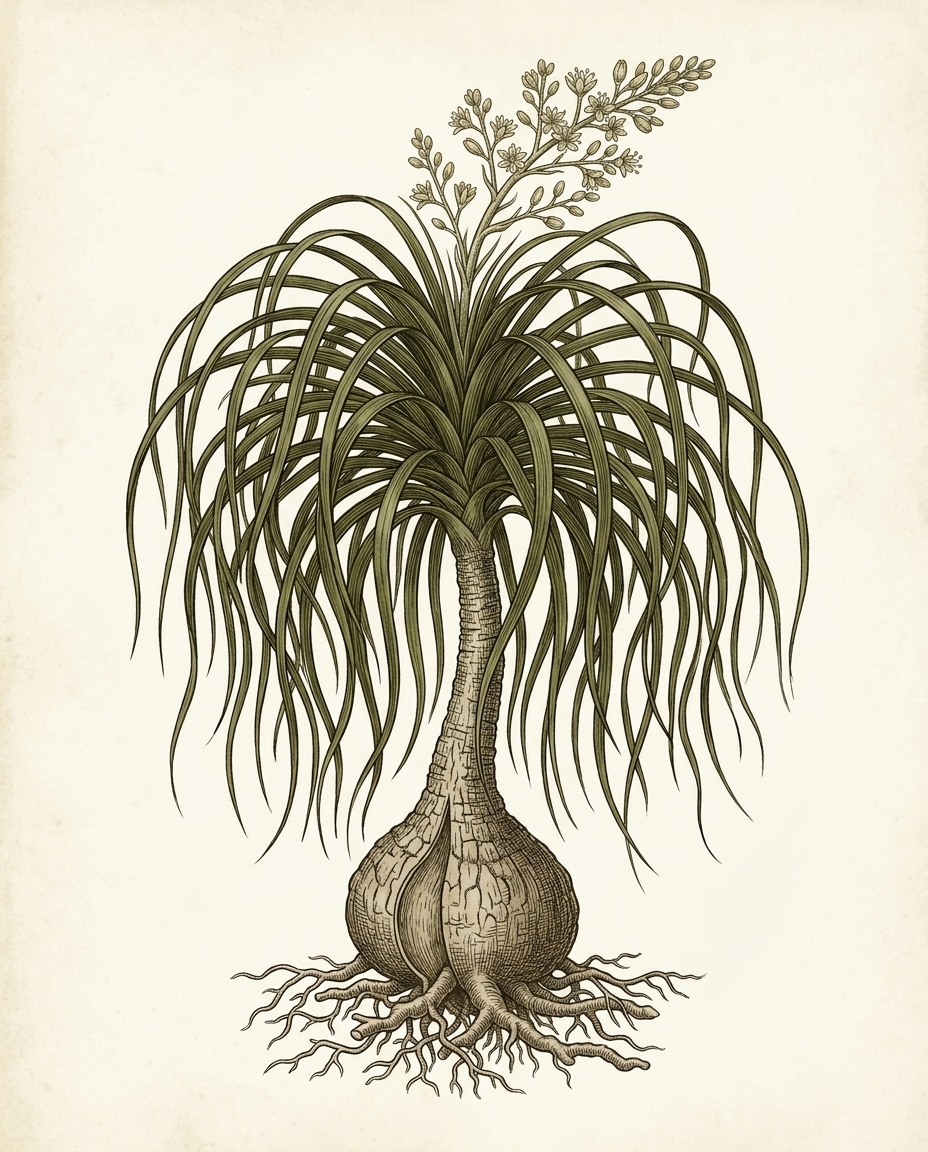
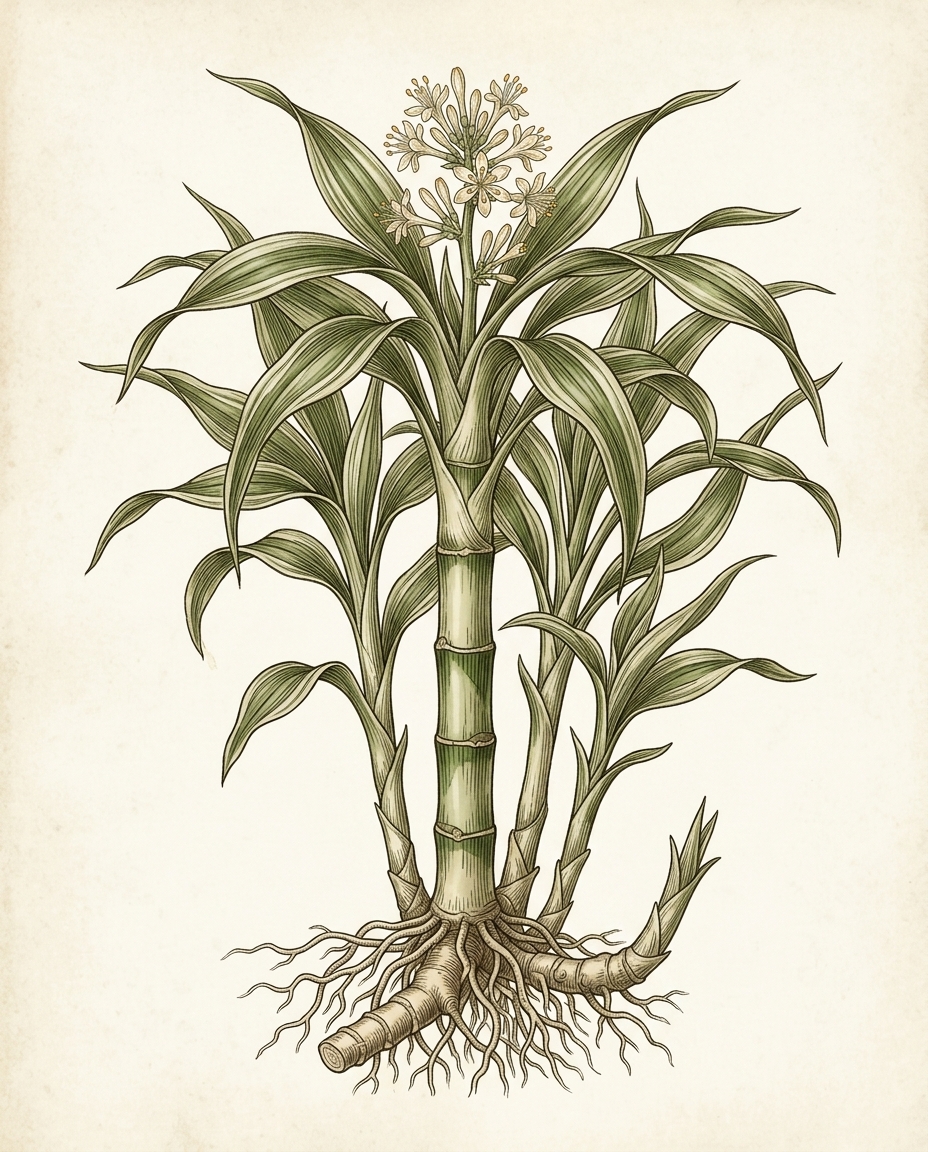
The areca keeps good company with other cat-safe palms — the parlor palm and ponytail palm — and with bamboo for upright greenery, all ASPCA non-toxic.
What we have actually seen.
No toxicity
The areca palm contains nothing poisonous to cats. A chewed frond is harmless.
Mild stomach upset
Eating a large amount of fibrous frond can cause vomiting — mechanical, not chemical.
Frond batting
Low, swaying fronds invite play. It does the cat no harm, though chewed tips brown and spoil the look.
Not the sago palm
The deadly sago "palm" (Cycas) is unrelated. The areca is a true, non-toxic palm — do not confuse them.
Four common varieties.
Golden Cane Palm (classic form)
The standard areca, named for the yellow-gold canes that show through the feathery fronds.
Dwarf Areca (tabletop)
Smaller, slower forms suited to a side table rather than the floor — same non-toxic profile.
Keeping the plant alive.
Bright, indirect
Wants plenty of filtered light. Too little and the fronds thin and yellow; harsh direct sun scorches.
Keep lightly moist
Water when the top inch dries; arecas dislike both drought and soggy roots. Use tepid water.
Free-draining mix
A peaty, well-drained potting mix. Sensitive to fluoride, so rainwater or filtered water keeps tips green.
Bright floor corner
A safe choice for filling a corner. Cats may bat at low fronds — harmless, though hard on the leaf tips.
- ASPCA Animal Poison Control Center. Toxic and Non-Toxic Plants: Areca Palm.Accessed May 2026 · aspca.org
- Pet Poison Helpline. Plants Non-Toxic to Cats.Reference list · 2024 ed.
If you liked this, also safe.