Bamboo
Phyllostachys aurea
Yes — true bamboo is safe for cats. The ASPCA lists bamboo (Phyllostachys aurea) as non-toxic. The catch is the name: "lucky bamboo" and "heavenly bamboo" are different, toxic plants.
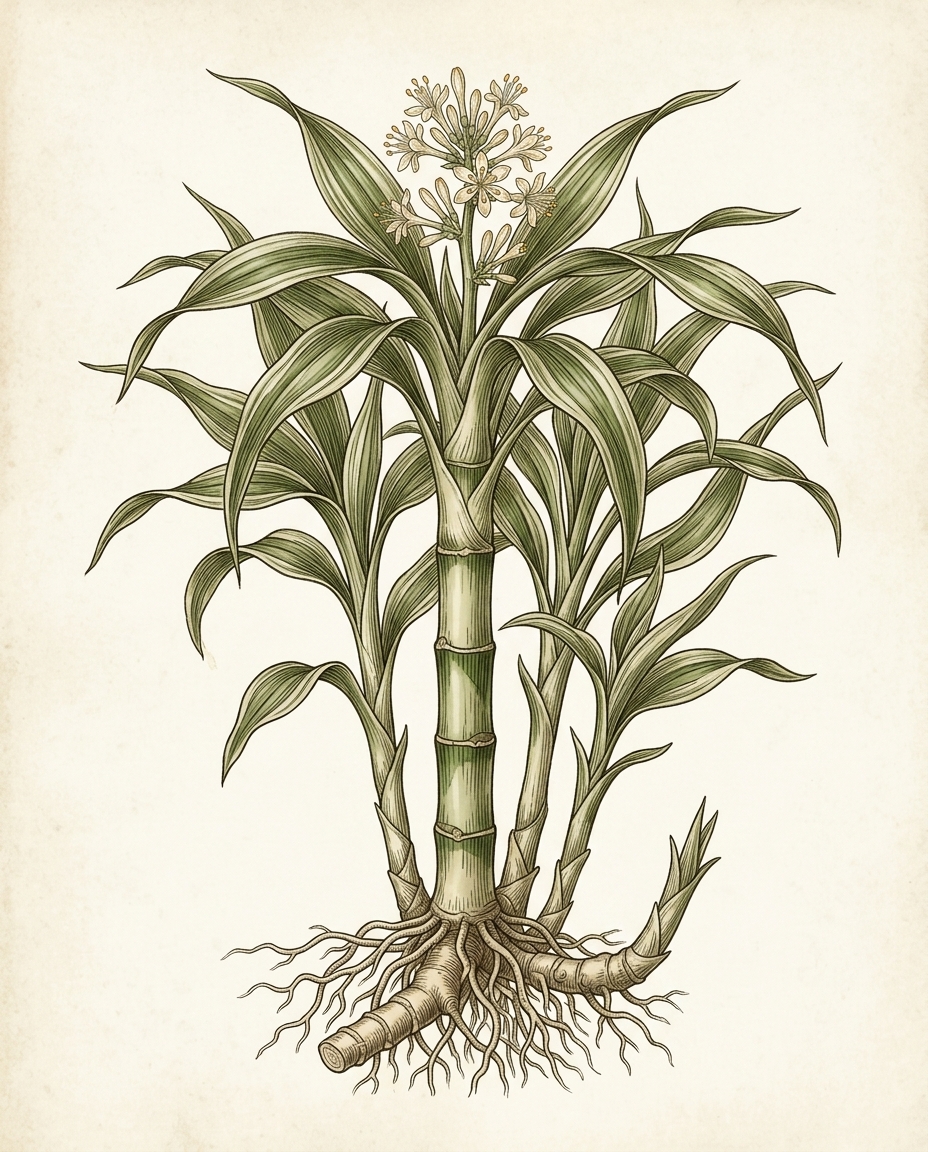
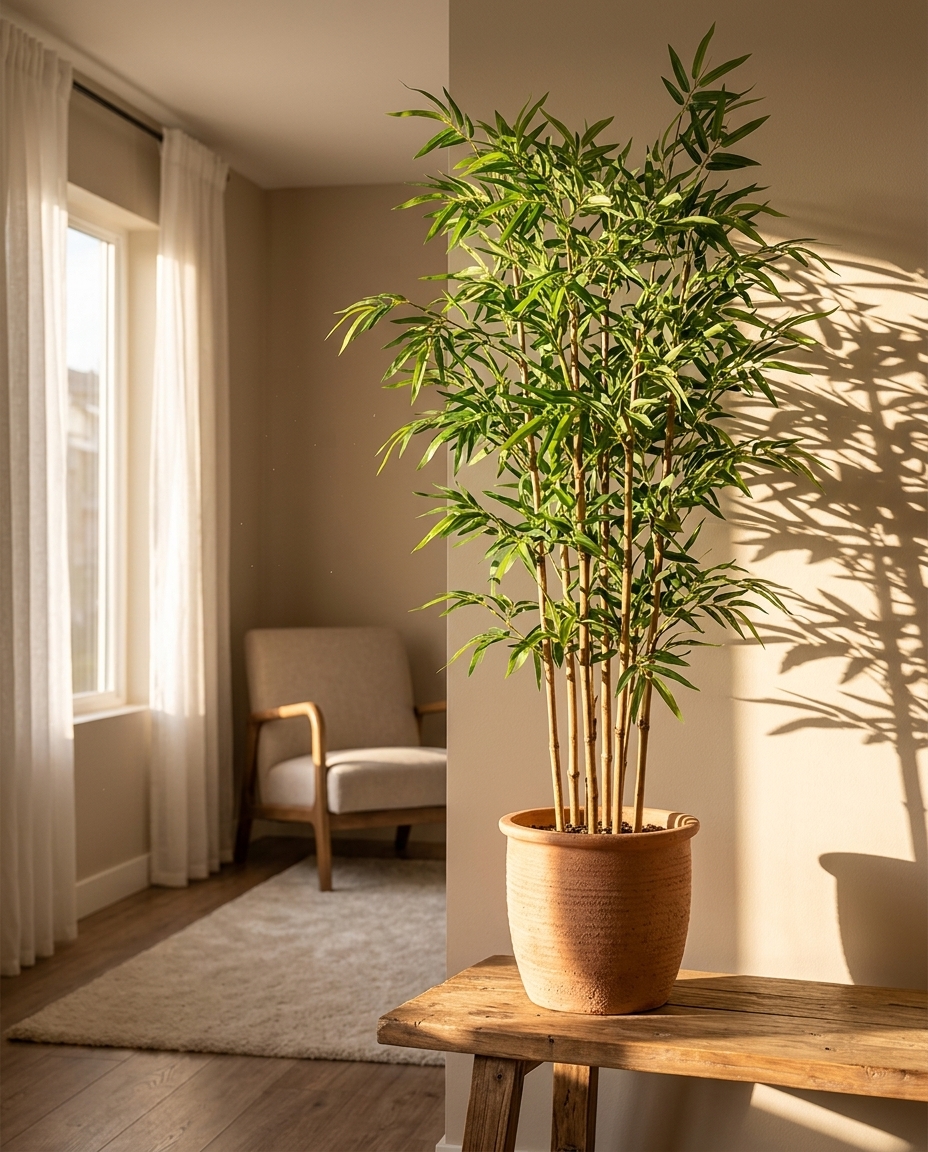
Plate IPhyllostachys aurea — golden or fishpole bamboo. A true grass and ASPCA non-toxic, unlike the toxic plants that borrow its name.
What happens if your cat eats it.
Nothing, if it is real bamboo. The ASPCA lists true bamboo (Phyllostachys aurea, golden or fishpole bamboo) as non-toxic to cats. As a genuine grass, it carries no toxin — a cat that nibbles a leaf or shoot risks only the mild, mechanical upset that comes from eating any fibrous plant.
The entire complication with bamboo is the name, which gets attached to two unrelated and toxic plants. Lucky bamboo, sold as twisted green stems in water, is not bamboo at all — it is a Dracaena (Dracaena sanderiana), and the ASPCA lists it as toxic. Heavenly bamboo (Nandina domestica) is another impostor, also toxic. The word "bamboo" on a label guarantees nothing.
How to be sure
True bamboo has hollow, jointed canes and grows as an upright grass; it is usually sold potted in soil. If your "bamboo" is a few thick stems standing in a vase of water and pebbles, it is almost certainly lucky bamboo — a Dracaena — and should be treated as toxic. When you cannot verify the identity, err toward caution.
Safe upright greenery
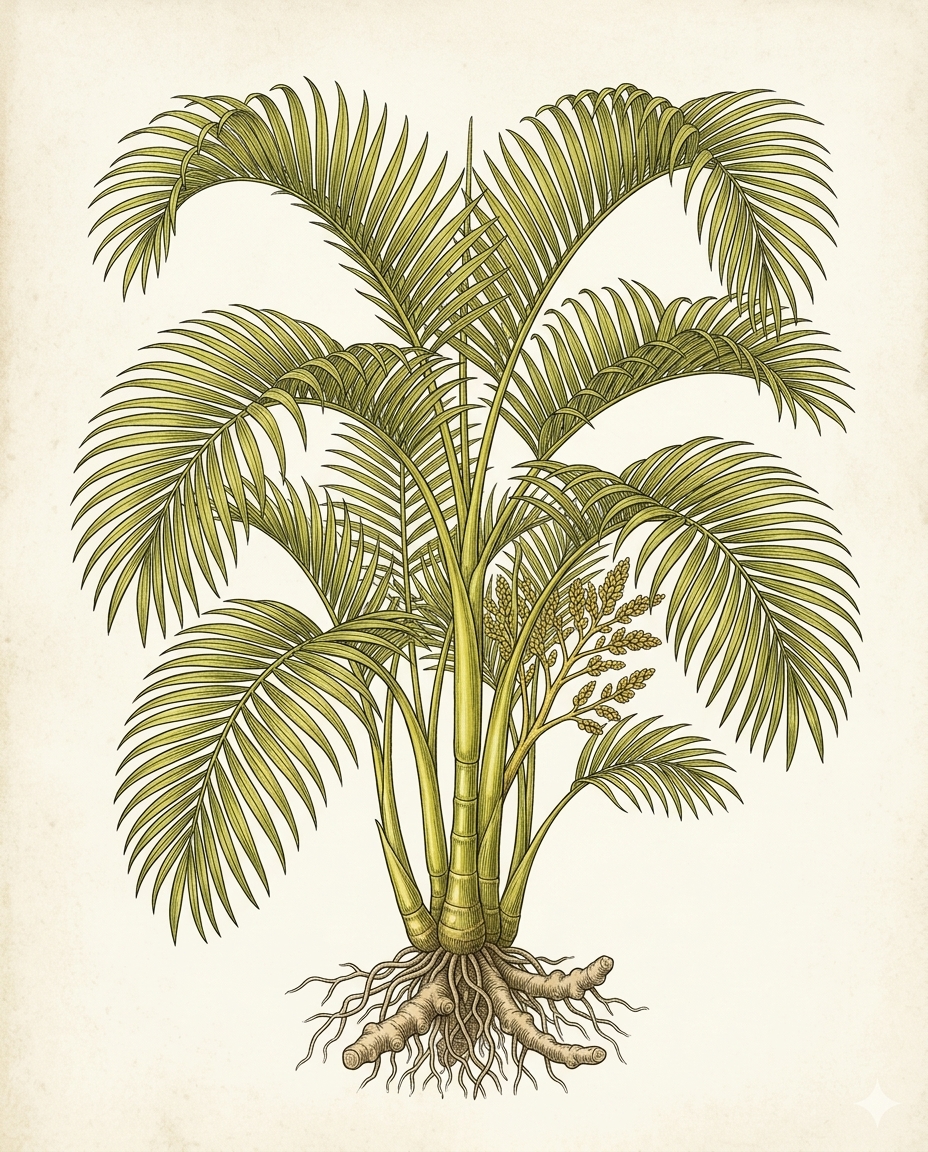
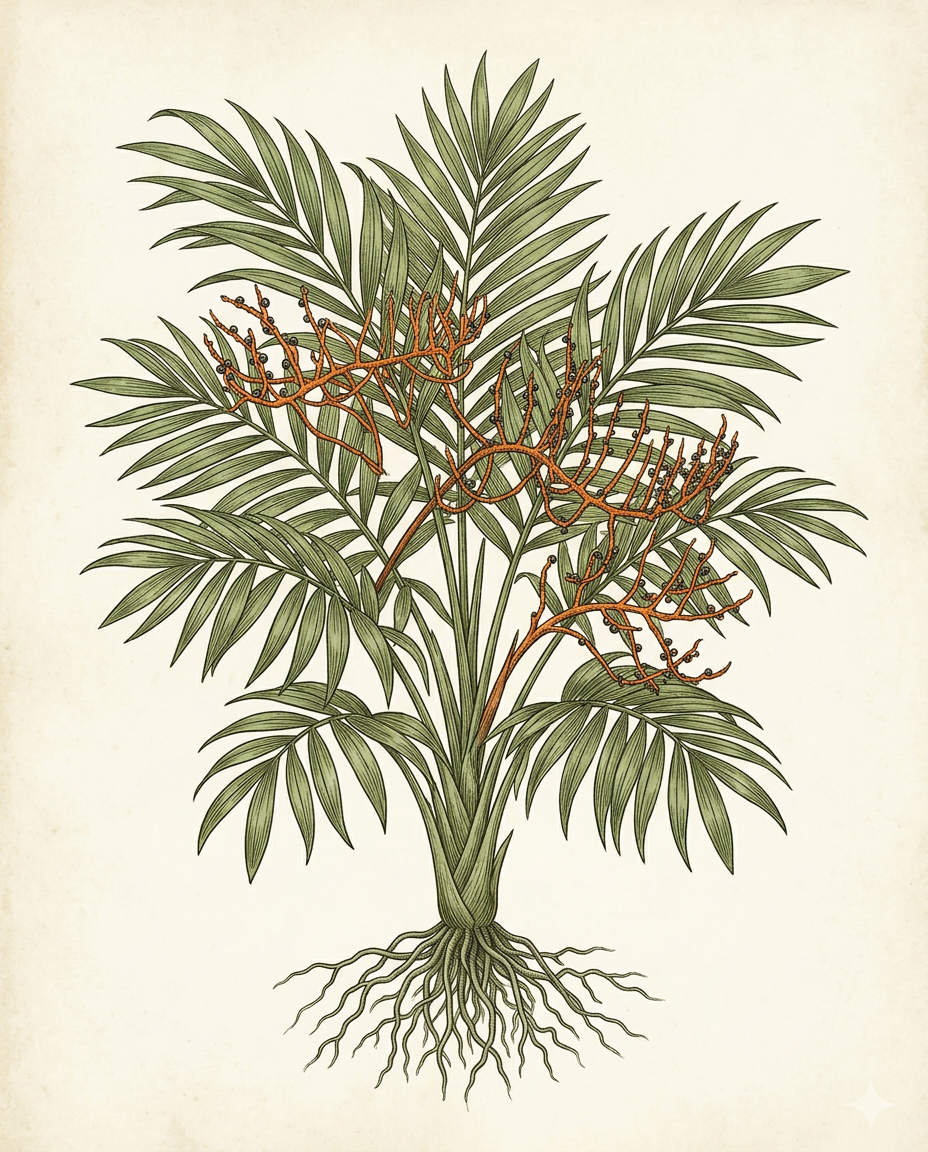
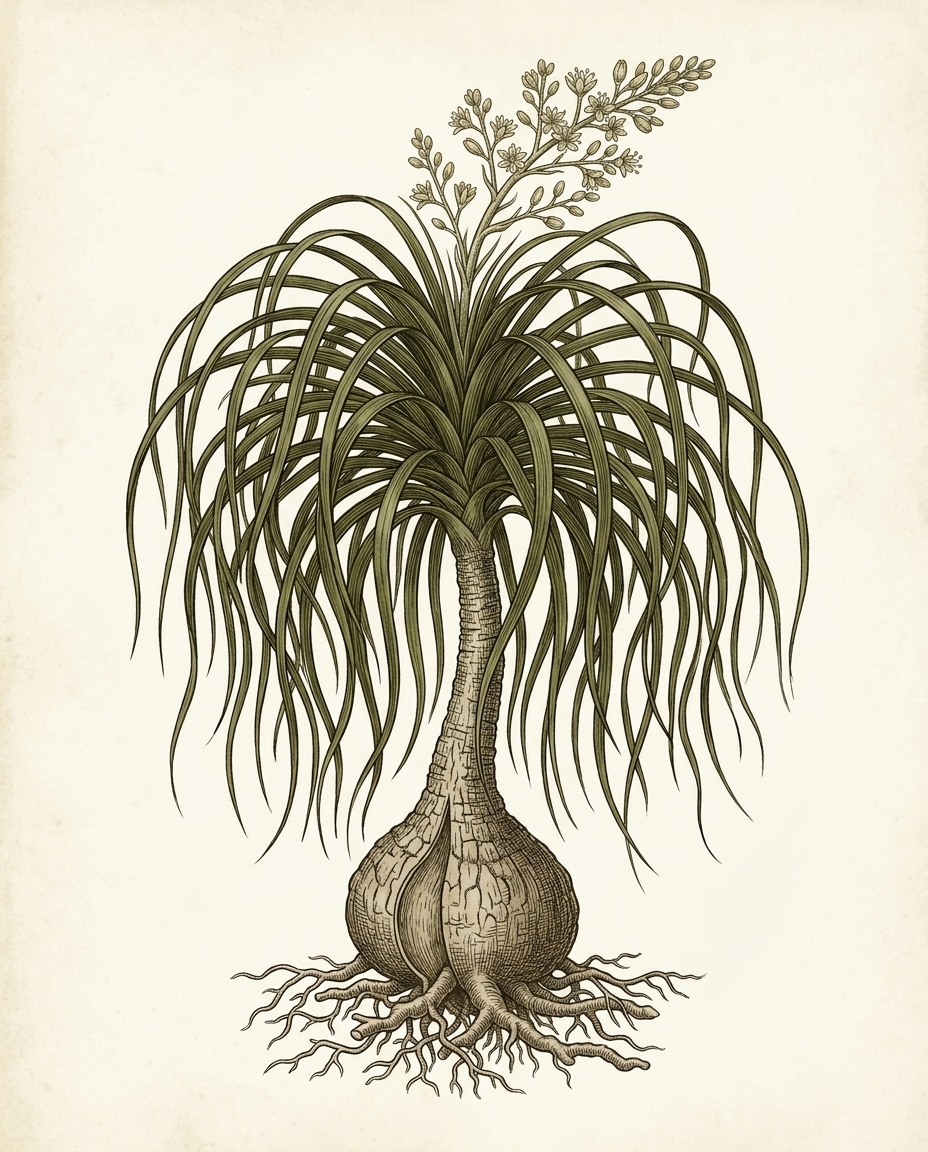
For confirmed cat-safe height and structure, true bamboo pairs well with the areca palm, parlor palm, and ponytail palm — all ASPCA non-toxic.
What we have actually seen.
No toxicity
True bamboo (Phyllostachys and relatives) contains nothing poisonous to cats. A chewed leaf is harmless.
Mild stomach upset
Eating a lot of the fibrous leaves or shoots can cause vomiting — mechanical, not chemical.
“Lucky bamboo” is not bamboo
Sold in water in twisted stems, lucky bamboo is actually a Dracaena — and toxic to cats. Check the label.
“Heavenly bamboo” is not bamboo
Heavenly or sacred bamboo (Nandina) is also unrelated and toxic. The word "bamboo" alone is not a safety guarantee.
Four common varieties.
Golden Bamboo (fishpole)
The classic upright cane bamboo used for indoor screens. A true, non-toxic bamboo.
Clumping Bamboo (well-behaved)
Non-invasive clumping true bamboos for pots. Same cat-safe status, tidier roots.
Keeping the plant alive.
Bright light
True bamboo wants plenty of light to stay dense and green. A bright window or conservatory suits it.
Keep moist
Bamboo is thirsty — water regularly and never let it dry out fully. Good drainage prevents rot.
Rich, free-draining
Fertile, moisture-retentive but well-drained mix. Container bamboo benefits from feeding in growth.
Bright corner or screen
Slim upright canes make a natural divider. Cats may nibble low leaves — harmless if it is true bamboo.
- ASPCA Animal Poison Control Center. Toxic and Non-Toxic Plants: Bamboo.Accessed May 2026 · aspca.org
- Pet Poison Helpline. Plants Non-Toxic to Cats.Reference list · 2024 ed.
If you liked this, also safe.