Hydrangea
Hydrangea arborescens
Hydrangeas are toxic to cats per the ASPCA. Leaves, flowers, and buds carry a cyanogenic glycoside; cats most often show vomiting, depression, and diarrhea rather than full cyanide poisoning.
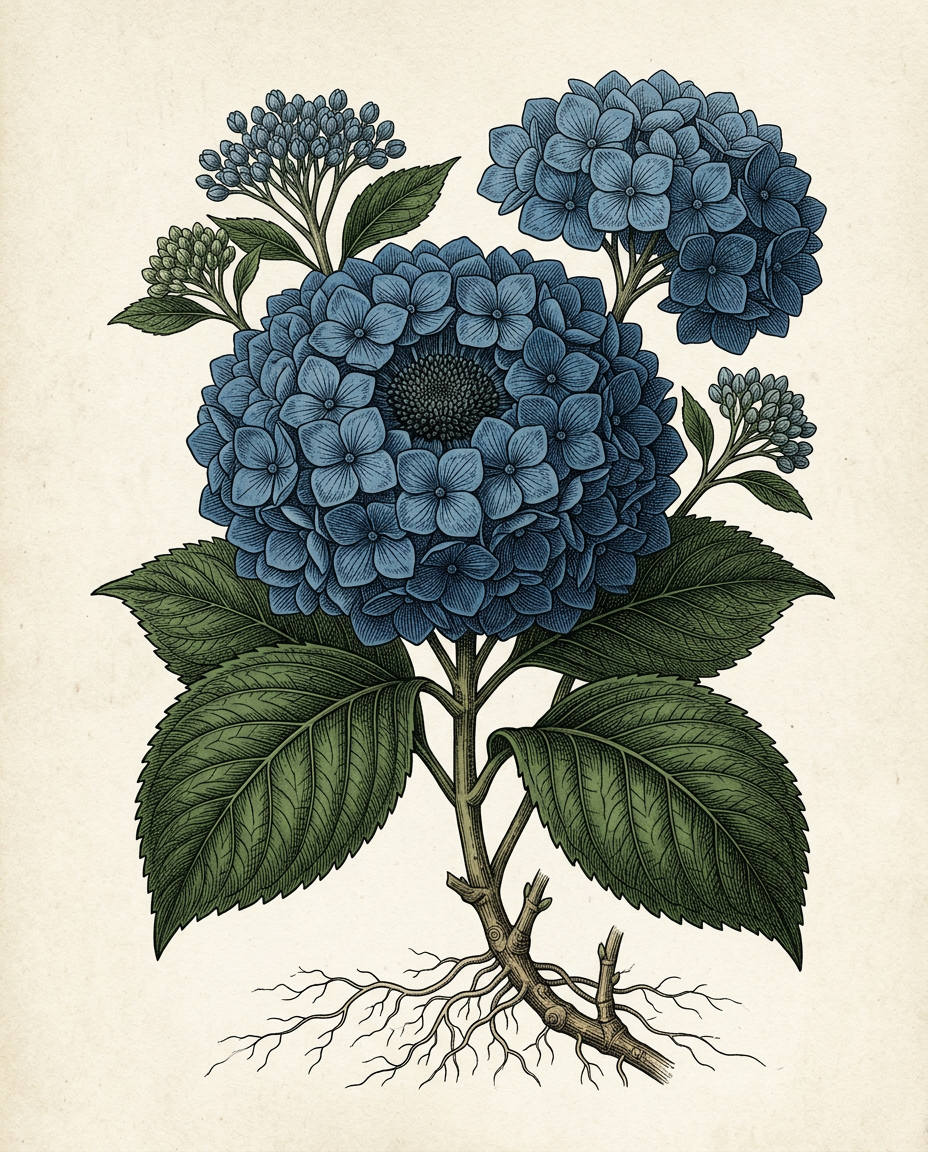
Plate IHydrangea arborescens — the classic mophead of cottage gardens. Leaves, buds, and flowers all carry the cyanogenic glycoside the ASPCA flags as the toxic principle.
Three plants that look the part, without the risk.
Lush, round-clustered blooms and cottage-garden shrubs without the cyanogenic glycoside — these three are ASPCA non-toxic alternatives for borders and cut-flower arrangements.

Rose
The cottage-garden classic. Same lush, layered bloom effect, ASPCA non-toxic to cats.
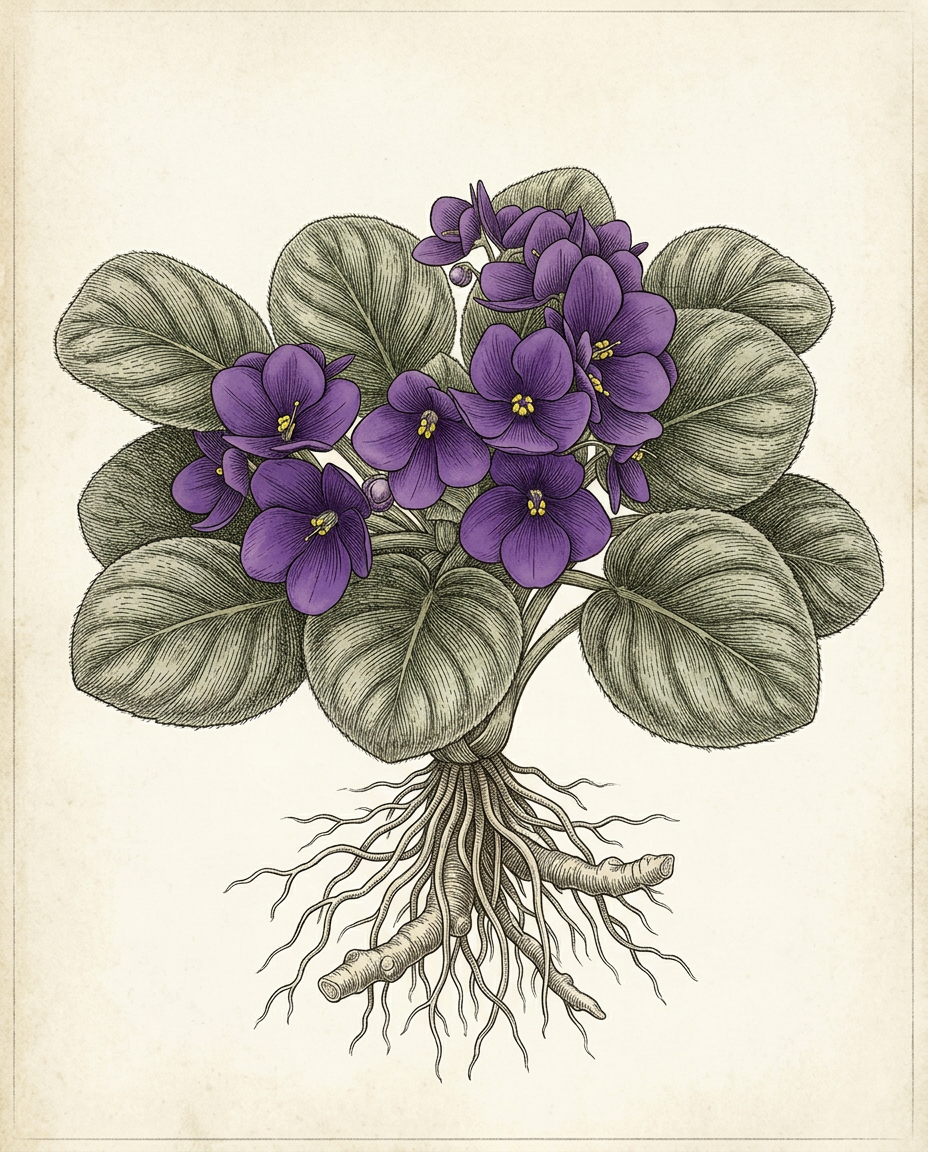
African Violet
For indoor clusters of soft colour — ASPCA non-toxic and compact for tabletops.
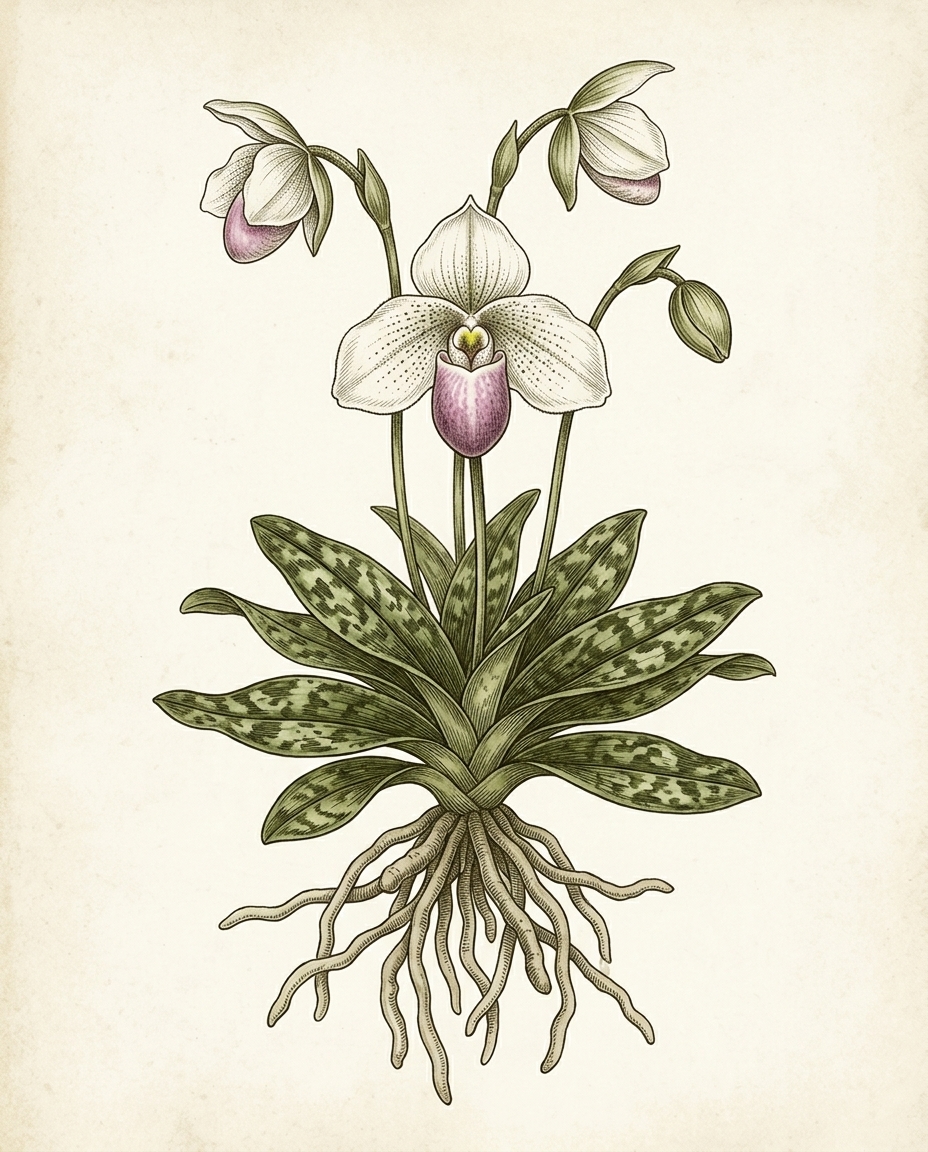
Orchid
Long-lasting indoor blooms without the toxic risk. ASPCA non-toxic.
What it does to a cat.
Yes — hydrangeas are toxic to cats. The ASPCA lists Hydrangea arborescens as toxic to cats, dogs, and horses. The toxic principle is a cyanogenic glycoside found in leaves, buds, and flowers. In practice, most poisoned cats show GI signs — vomiting, diarrhea, and depression — rather than the full cyanide syndrome.
Symptoms typically begin within 30 minutes to a few hours of ingestion and resolve within 24 hours with supportive care. The ASPCA notes that true cyanide intoxication is rare; it requires a much larger dose than a curious cat normally chews.
Where cats meet hydrangeas
Hydrangeas show up in two specific cat-risk settings. First, the garden mophead — cats grazing leaves or playing under the shrub. Second, the cut bouquet — hydrangea is a workhorse of florist arrangements because the blooms last so well. The vase water counts too: cyanogenic glycosides leach from cut stems and bruised tissue into the water, and a cat that drinks from the vase can develop GI signs without ever chewing a leaf.
Why GI signs, not full cyanide
Cyanogenic glycosides only release hydrogen cyanide when the plant tissue is crushed and the glycoside meets the enzyme that activates it. In a cat's stomach, most of the dose is metabolised before it ever reaches the systemic threshold for cyanide poisoning. That is why the real-world syndrome is vomiting, diarrhea, and lethargy — not the bright-red mucous membranes of textbook cyanide cases.
Safer cottage-garden options
For lush rounded blooms and the same cottage-border vibe, roses are the obvious ASPCA non-toxic substitute. Indoors, African violets and orchids offer long-lasting colour without the cyanogenic glycoside. See our azalea and oleander pages for the other two flowering shrubs cats should not be near.
If exposure has happened
Call your vet or ASPCA Animal Poison Control at (888) 426-4435. Most cats need only outpatient supportive care — anti-nausea drugs, subcutaneous fluids, and a quiet 24 hours. Escalate to the ER if vomiting persists beyond six hours, the cat becomes weak or unsteady, or you saw a large amount eaten (e.g. a stripped bouquet).
What we have actually seen.
Vomiting
The most common sign — usually within 30 minutes to a few hours. Often the only sign a cat shows after a small nibble.
Diarrhea
Loose or watery stools follow the vomiting phase. The cyanogenic glycoside acts mainly as a GI irritant in cats and dogs, rarely producing systemic cyanide effects.
Depression and lethargy
Affected cats become quiet, withdrawn, and uninterested in food. Most recover within 24 hours with supportive care.
Cyanide intoxication (rare)
The ASPCA notes that true cyanide poisoning — rapid breathing, bright red mucous membranes, collapse — is rare. It would require a very large ingestion.
- ASPCA Animal Poison Control Center. Toxic and Non-Toxic Plants: Hydrangea.Accessed June 2026 · aspca.org
- Pet Poison Helpline. Hydrangea Toxicity in Companion Animals.Clinical brief · 2024 ed.
- Knight AP. A Guide to Poisonous House and Garden Plants.Teton NewMedia · 2007