Heavenly
Bamboo.
Nandina domestica
Heavenly bamboo (Nandina domestica) is TOXIC to cats per the ASPCA — and it's NOT a true bamboo. Cyanogenic glycosides in the leaves and berries release hydrogen cyanide on chewing. Common landscape shrub; berries are the worst part.
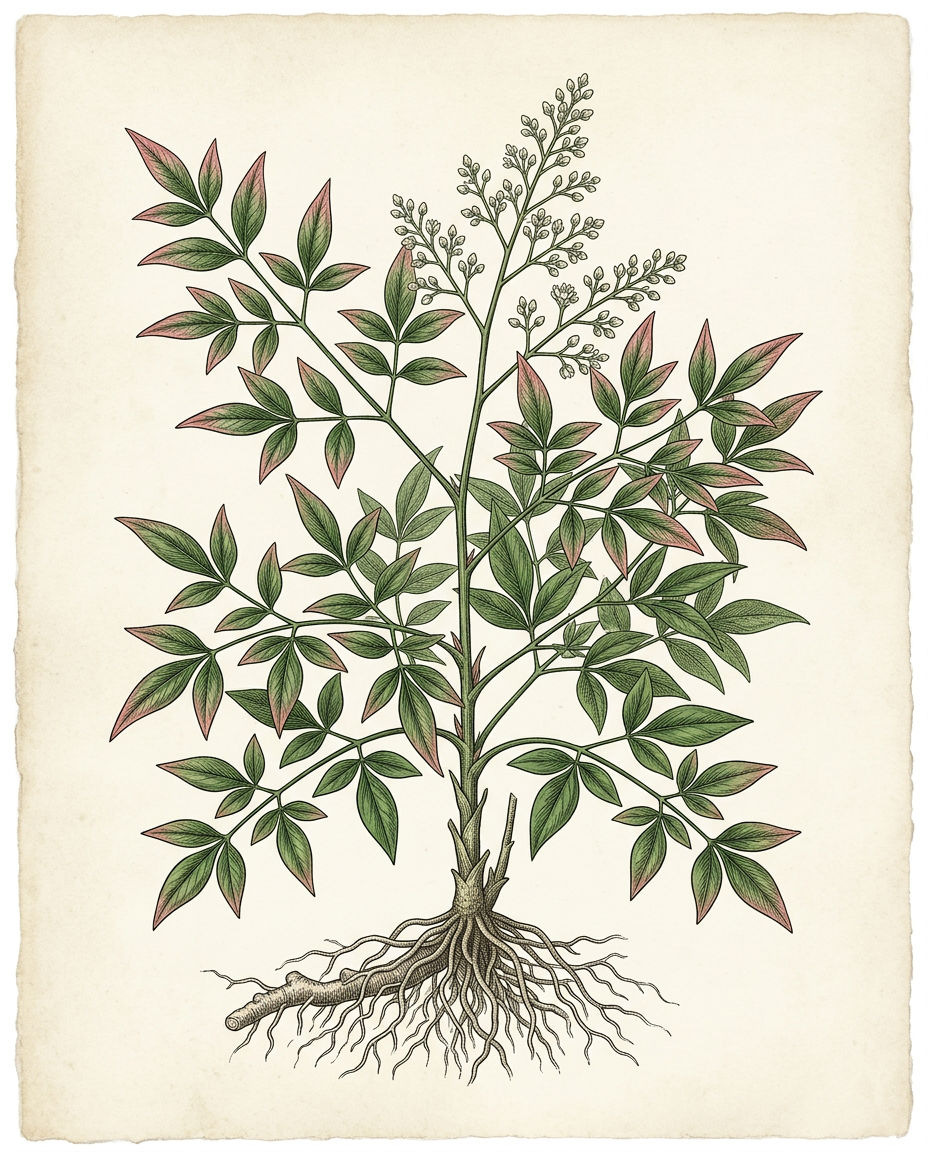
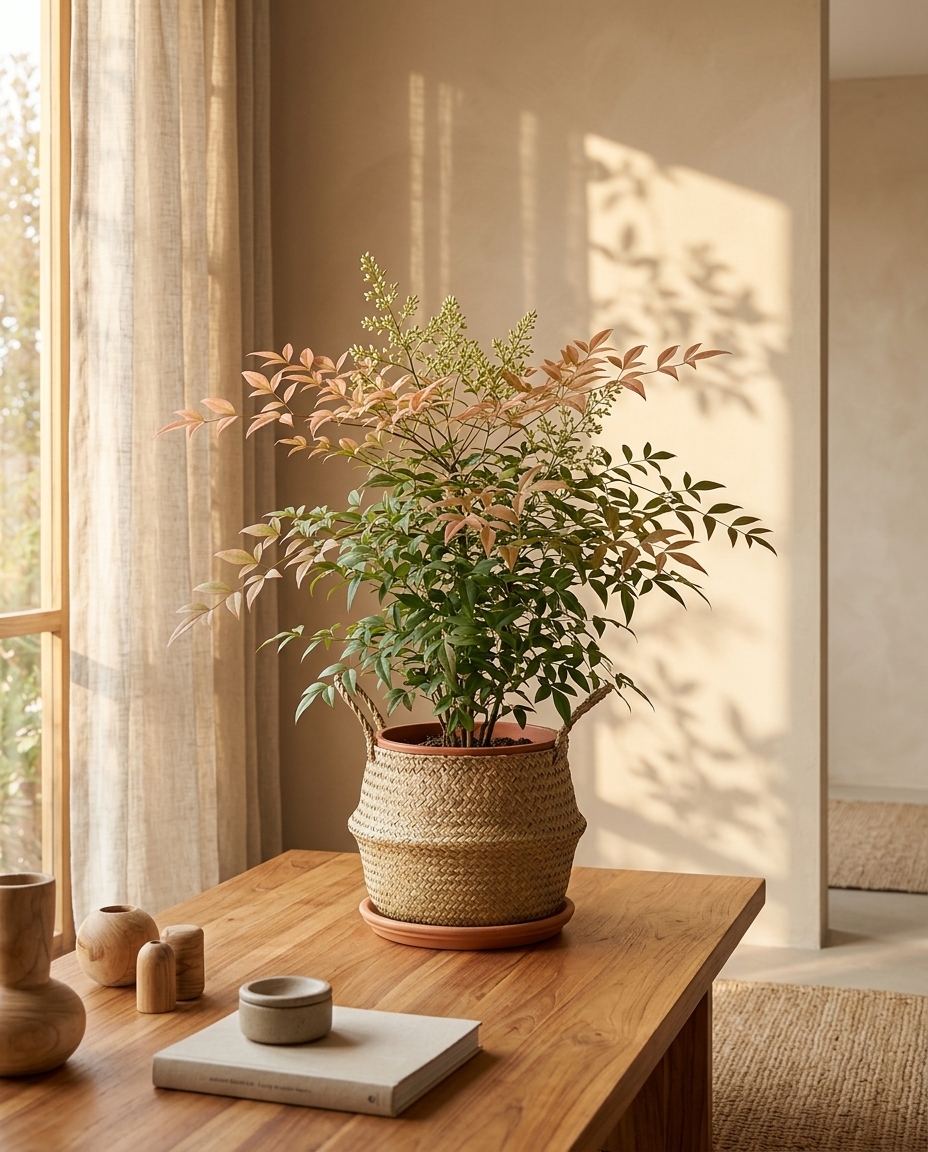
Plate INandina domestica — heavenly bamboo / sacred bamboo / nandina. Lacy compound leaves with red-tinted tips and clusters of bright red round berries on woody stems. NOT a true bamboo — Berberidaceae family. ASPCA toxic — cyanogenic glycosides in leaves and berries.
Three plants that look the part, without the risk.
Same airy-foliage / red-berry-shrub landscape role without the cyanogenic chemistry — these ASPCA-safe substitutes give heavenly bamboo's garden function safely.
True bamboo
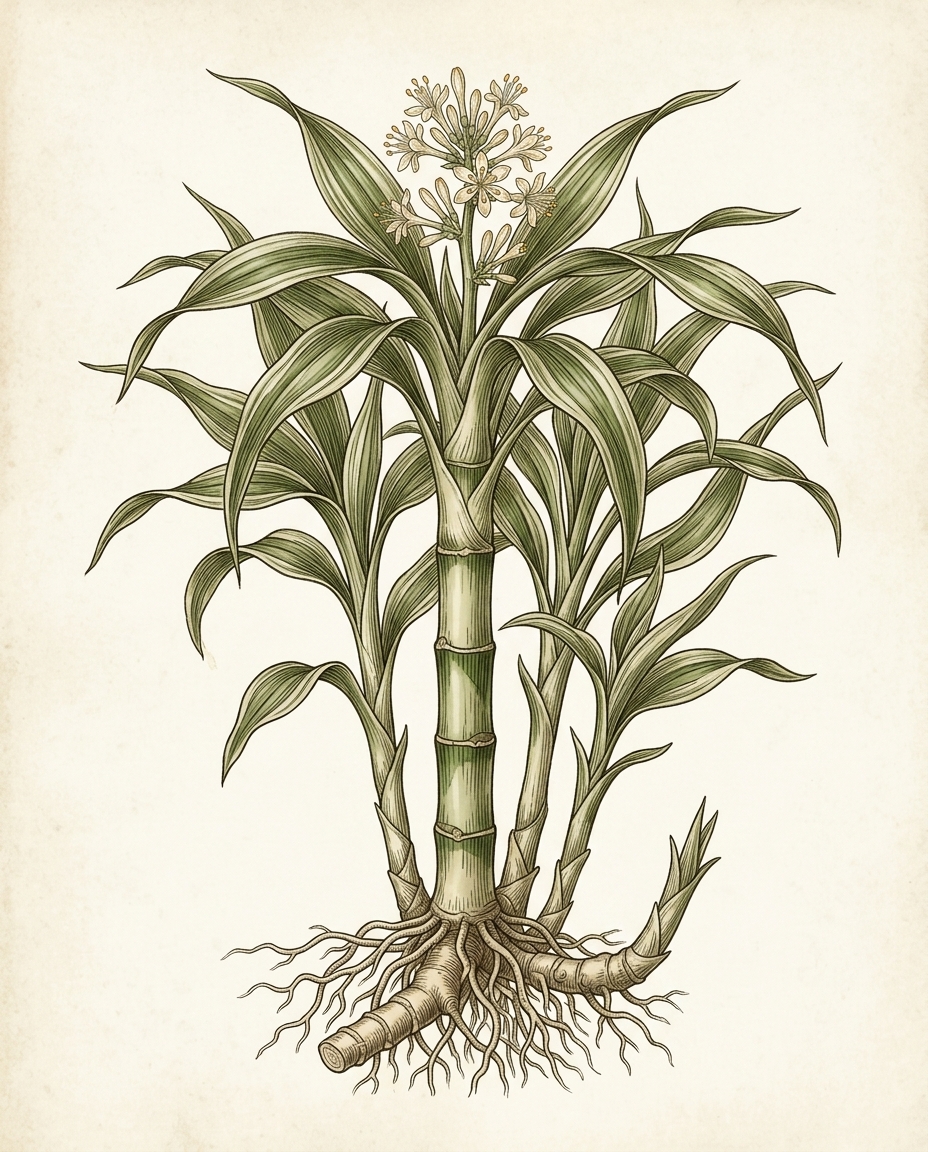
For an actual bamboo at ASPCA non-toxic. True bamboo (Poaceae, grasses) is the safe screening alternative — completely different family, completely different chemistry. This is the swap people think they're getting when they buy 'heavenly bamboo' and aren't.
Camellia
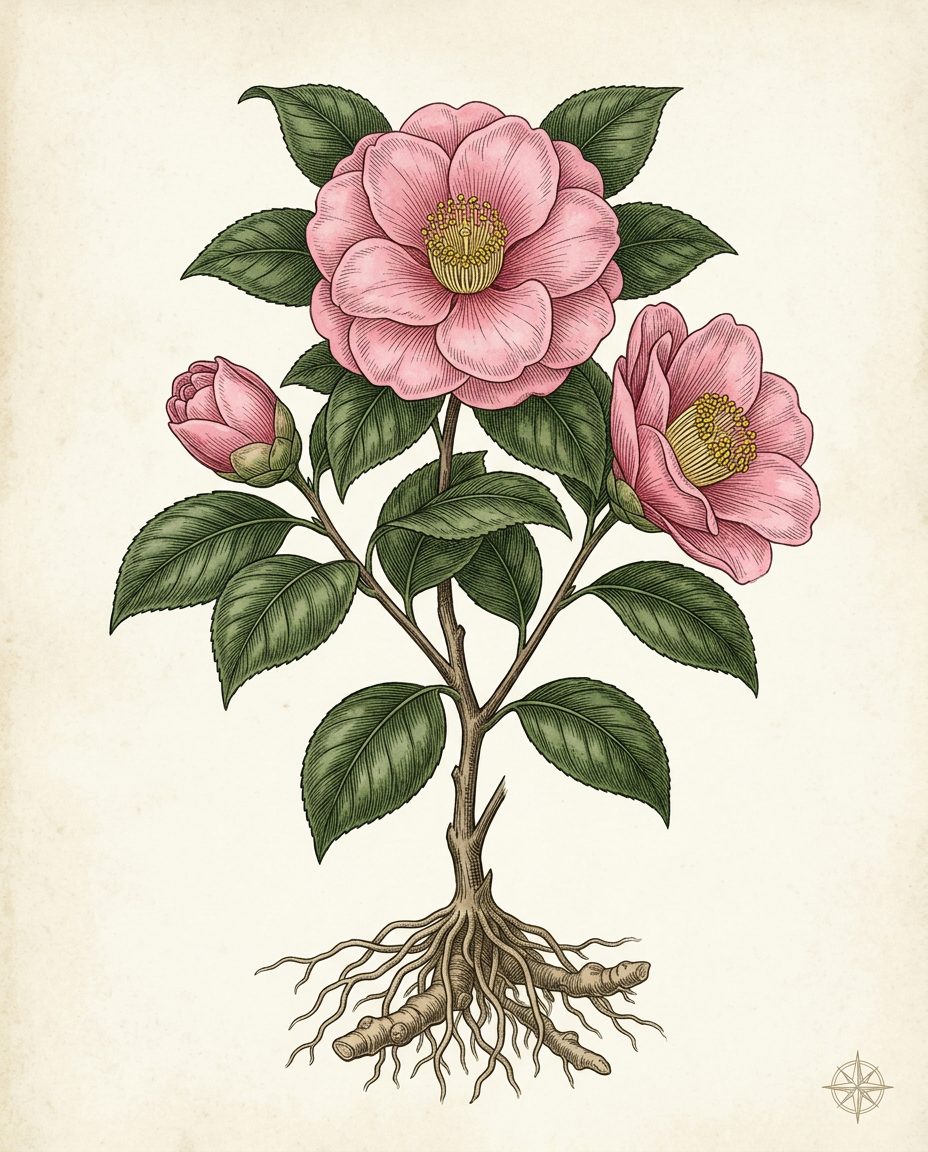
For an evergreen flowering landscape shrub at ASPCA non-toxic. Broadly similar height and garden role, with winter-spring blooms instead of berries.

Rose
For a flowering shrub with red-fruit interest (rose hips) at ASPCA non-toxic. Deciduous rather than evergreen but the same garden statement.
Why heavenly bamboo is the dangerous fake bamboo.
Yes — heavenly bamboo is toxic to cats per the ASPCA, and the name is the trap. Two ASPCA entries cover the same plant: Heavenly Bamboo and Nandina — both list Nandina domestica as toxic to cats, dogs, and horses. The toxic principle is cyanogenic glycosides.
The ASPCA verdict, verbatim: Toxicity: Toxic to Dogs, Toxic to Cats, Toxic to Horses · Toxic Principles: Cyanogenic glycosides · Clinical Signs: Weakness, incoordination, seizures, coma, respiratory failure, death (rare in pets).
The bamboo-name problem
This is the single most important thing to understand about heavenly bamboo: it is not a bamboo. The common name is misleading and the cat-safety verdict is the opposite of what the name implies.
- True bamboo (Phyllostachys, Bambusa, Fargesia, and other Poaceae genera) — giant grasses, ASPCA non-toxic, safe for cats. The clumping varieties (Fargesia) are popular cat-garden screening. See our bamboo page for the safe version.
- Heavenly bamboo / Nandina (Nandina domestica) — a woody flowering Berberidaceae shrub (barberry family), ASPCA toxic, cyanogenic glycosides. This page.
The plants are unrelated. They share the name because heavenly bamboo's compound leaves and upright cane-like stems give it a vaguely bamboo-like appearance, and 19th-century European plant traders applied the "bamboo" name when introducing the ornamental Asian shrub. The botany is completely separate.
If you're buying a "bamboo" for a cat-friendly garden, look at the label and the form:
- Tall hollow segmented green canes with leaf-on-stem grass-like foliage = true bamboo, safe.
- Compact woody shrub with lacy compound leaves and bright red berry clusters = Nandina, toxic.
Cyanogenic glycosides — how they hurt a cat
Cyanogenic glycosides are plant compounds that release hydrogen cyanide (HCN) when the cell walls are broken. They're widely distributed in the plant world — apple seeds, cherry pits, peach pits, almonds (the bitter kind), lemongrass, and cassava all contain them at varying concentrations. Heavenly bamboo carries a meaningful concentration, especially in the berries.
The mechanism, once HCN is released and absorbed:
- HCN binds cytochrome c oxidase — the terminal enzyme in the mitochondrial electron transport chain.
- Cellular oxygen use halts. Tissues across the body cannot extract oxygen from circulating blood, even though oxygen is present.
- The most oxygen-hungry tissues fail first — brain (incoordination, seizures, coma) and respiratory drive (the killing endpoint).
- Venous blood appears unusually red because oxygen isn't being extracted. A counterintuitive sign that helps emergency vets recognise cyanide poisoning.
The "rare in pets" clause in ASPCA's symptom list is honest — most household cat exposures don't reach lethal dose because cats don't typically eat large quantities of shrub foliage. But the mechanism is real and the worst-case is serious.
The berries are the worst part
Cyanogenic glycoside concentration in Nandina domestica is highest in the bright red autumn / winter berries. Documented bird mortality (notably cedar waxwings that gorge on the fruits in flocks) reflects this concentration. For cats:
- Leaves — moderate concentration, bitter taste limits intake.
- Stems / wood — lower concentration, unlikely to be eaten in quantity.
- Berries — highest concentration. The realistic high-risk exposure.
In US South landscaping, where Nandina is heavily planted as an evergreen ornamental, dropped berries on the ground in autumn and winter are the realistic exposure scenario for outdoor or indoor-outdoor cats.
What to do if your cat ate heavenly bamboo
This is one of the toxics where time matters. Cyanide-mediated toxicity is fast-onset.
- Call your vet or the ASPCA Animal Poison Control Center at 888-426-4435 ($95 consultation fee) immediately.
- Bring the plant name — heavenly bamboo, sacred bamboo, nandina, or Nandina domestica. The toxin class is well known to vet toxicologists.
- Treatment may include decontamination (induced emesis under vet supervision if very recent), oxygen support, and in significant exposures specific cyanide antidotes — sodium thiosulfate, sodium nitrite, or hydroxocobalamin (B12a) — that emergency veterinary hospitals may stock. Time is the deciding factor.
- Don't induce vomiting at home unless your vet directs. Aspiration risk is real in a cat that may already be neurologically affected.
- Bring a sample of the plant if you can — confirms the ID for the toxicology workup, especially helpful if berries were the source.
Heavenly bamboo in the wider toxic landscape
For severity context:
- Same tier — fast-onset systemic risk: heavenly bamboo (cyanogenic glycosides), oleander (cardiac glycosides), lily of the valley (cardiac glycosides), periwinkle (vinca alkaloids), rhododendron (grayanotoxin).
- Above this — kidney-failure tier: true lilies (Lilium / Hemerocallis). Any ingestion is emergency.
- Below this — irritant tier: buttercup, clematis, pothos, alocasia — painful, treatable, rarely systemic.
For the full toxic landscape see toxic plants for cats. For the safe true-bamboo alternative see bamboo. For broader garden alternatives see safe plants for cats.
What we have actually seen.
Weakness and incoordination
ASPCA explicitly lists weakness and incoordination. Cyanide blocks cellular oxygen use — the symptom pattern is rapid neurological depression as cells across the body fail to extract oxygen from the blood. Onset within minutes to hours after a meaningful ingestion.
Seizures
ASPCA's symptom list includes seizures. As cyanide-induced cellular hypoxia worsens, generalised tonic-clonic seizures can develop. Indicates a significant systemic dose.
Respiratory failure and death
The killing mechanism. Cyanide poisoning ultimately produces respiratory paralysis. ASPCA's symptom list ends 'respiratory failure, death (rare in pets)' — the 'rare in pets' clause is reassuring but the mechanism is real.
Bright red blood appearance
A classic but counterintuitive cyanide-poisoning sign — venous blood and mucous membranes can appear unusually red because cells aren't extracting oxygen. Vets familiar with cyanide toxicosis will recognise this. Don't rely on it as an at-home diagnostic.
- ASPCA Animal Poison Control Center. Toxic and Non-Toxic Plants: Heavenly Bamboo.Accessed June 2026 · aspca.org · Nandina domestica · Toxic to cats, dogs, horses · Toxic Principles: Cyanogenic glycosides · Clinical Signs: Weakness, incoordination, seizures, coma, respiratory failure, death (rare in pets)
- ASPCA Animal Poison Control Center. Toxic and Non-Toxic Plants: Nandina.Sibling ASPCA entry for the same Nandina domestica under the genus common name
- Pet Poison Helpline. Cyanogenic glycoside plant toxicosis in companion animals.Clinical reference · HCN mechanism, shared with apple seeds, cherry pits, lemongrass at lower concentrations