Periwinkle
Vinca rosea
Periwinkle is toxic to cats per the ASPCA. Vinca alkaloids cause vomiting, low blood pressure, tremors, seizures, coma, and death — the same compound class as the chemotherapy drug vincristine. Treat any ingestion as urgent.
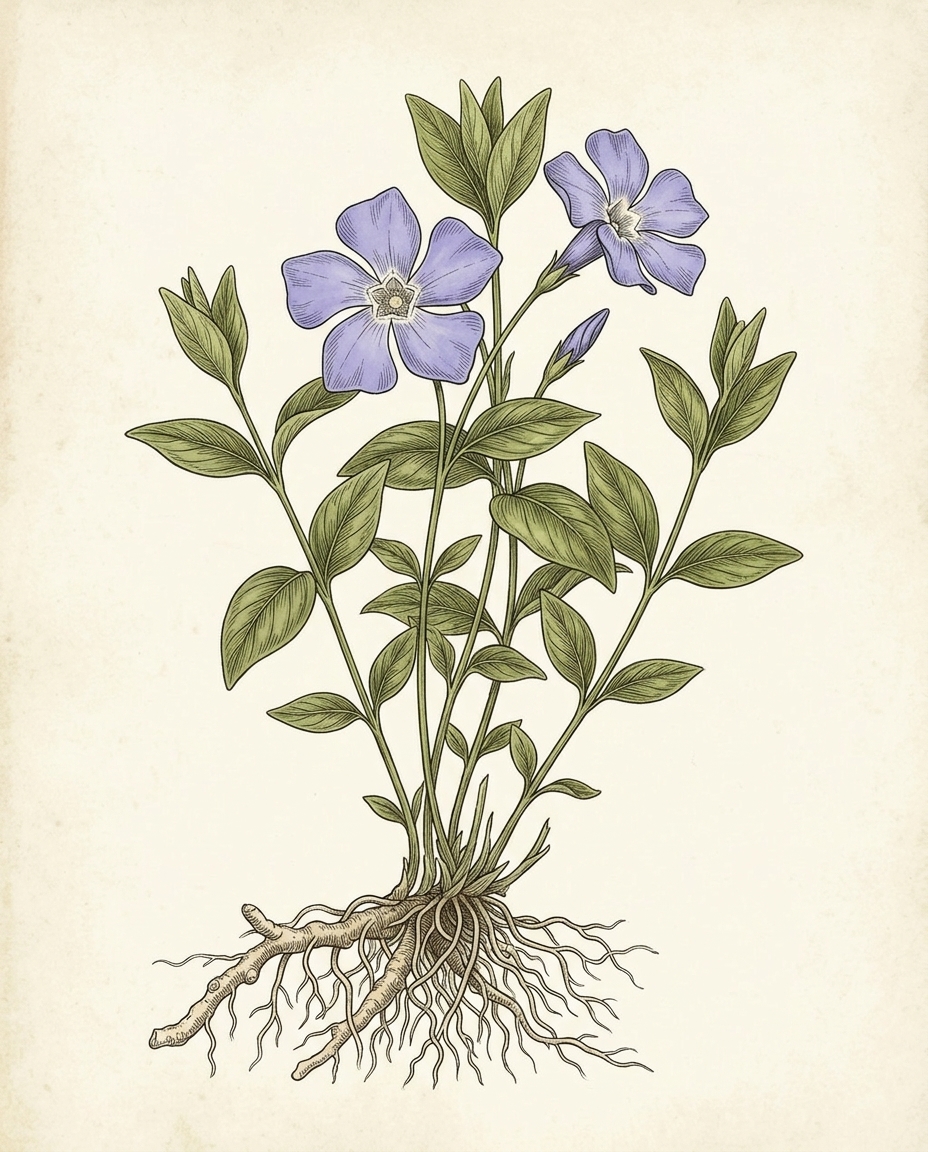

Plate IVinca rosea (now Catharanthus roseus) — common periwinkle. Glossy lance-shaped evergreen leaves and five-petalled lavender-blue or white flowers on creeping stems. ASPCA toxic — vinca alkaloids.
Three plants that look the part, without the risk.
Same low-spreading shaded groundcover look without the vinca alkaloid chemistry — these ASPCA-safe substitutes give periwinkle's evergreen carpet effect without the systemic risk.
Creeping thyme
For a low spreading mat-forming groundcover at ASPCA non-toxic. Aromatic, drought-tolerant, sun-loving (so different niche than shaded periwinkle but the same carpet effect).
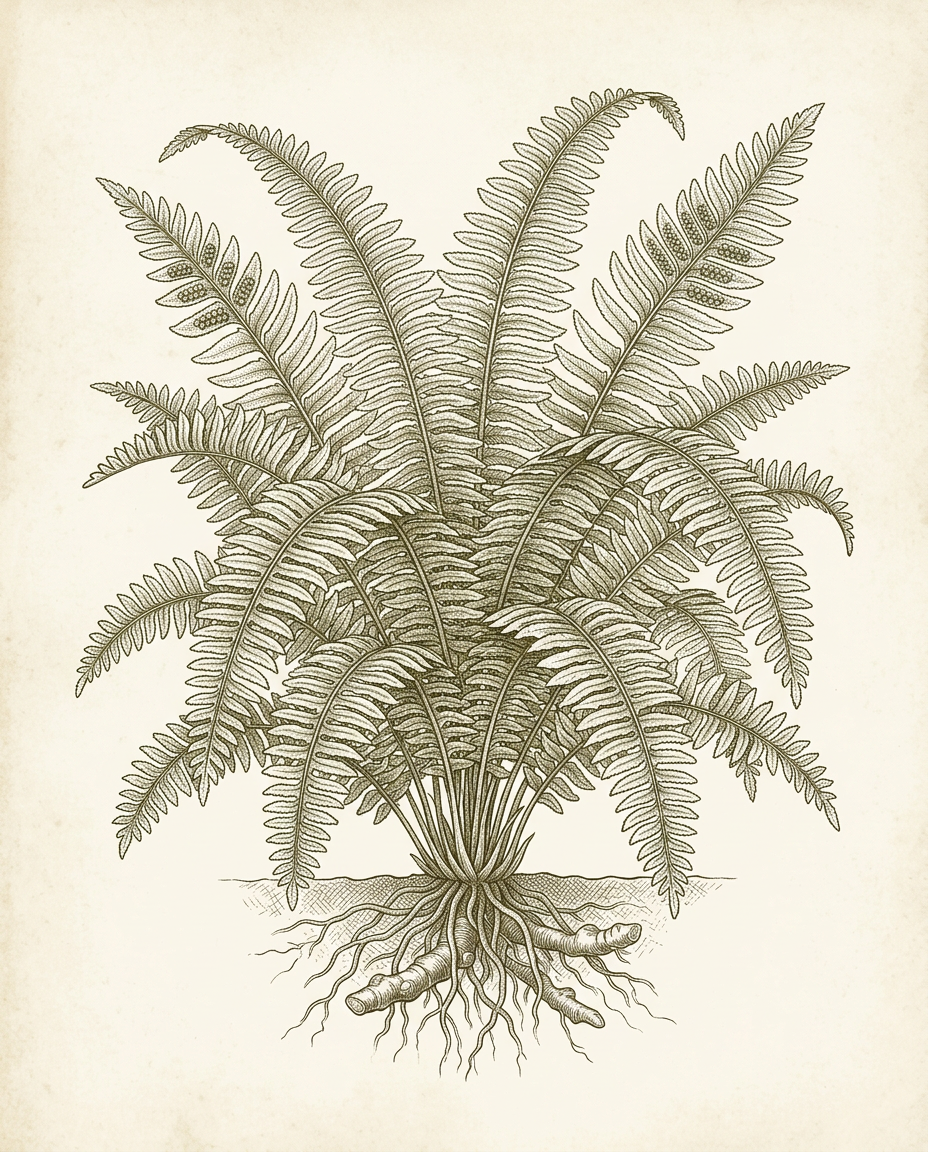
Boston fern
For shaded groundcover at ASPCA non-toxic — soft arching fronds rather than glossy leaves but a similar shade-loving role.
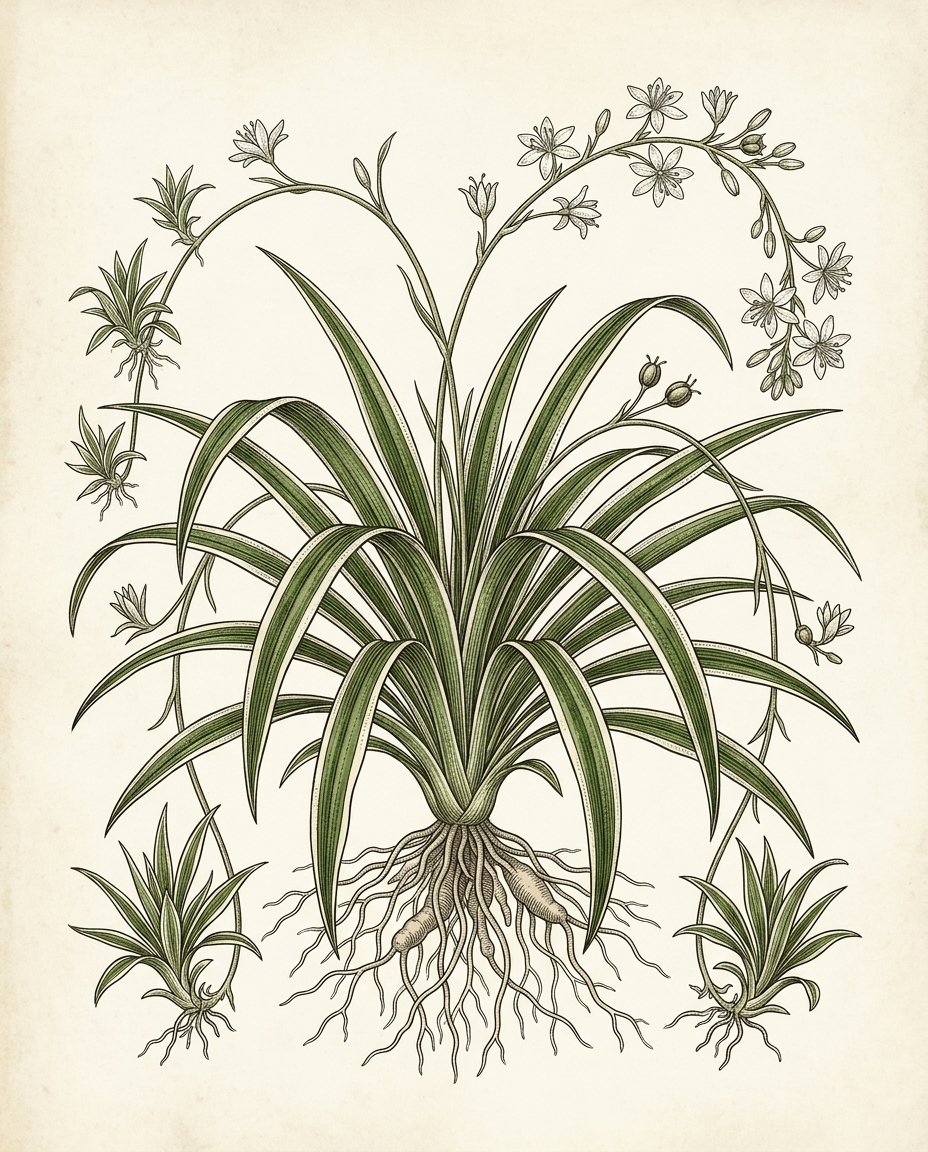
Spider plant
For a cascading evergreen groundcover at ASPCA non-toxic in shade. Pups make it self-spreading like periwinkle.
Why periwinkle is one of the more serious garden toxins.
Yes — periwinkle is toxic to cats per the ASPCA, and seriously so. The ASPCA lists Vinca rosea (also called Catharanthus roseus — the modern botanical name — periwinkle, running myrtle) as toxic to cats, dogs, and horses. The toxic principle is vinca alkaloids.
The ASPCA verdict, verbatim — and notice how far the symptom list goes: Toxicity: Toxic to Dogs, Toxic to Cats, Toxic to Horses · Toxic Principles: Vinca Alkaloids · Clinical Signs: Vomiting, diarrhea, low blood pressure, depression, tremors, seizures, coma, death.
This is the chemotherapy plant
Periwinkle is the genus from which the cancer drugs vincristine and vinblastine are isolated. These compounds were a transformative development in oncology — vincristine remains a backbone of childhood leukaemia protocols — precisely because they're powerful disruptors of dividing cells. In medical use they're administered in controlled milligram-per-square-metre doses with careful monitoring.
A cat chewing periwinkle in the garden is getting the same chemistry in an uncontrolled dose. That's why the ASPCA clinical-signs list runs all the way from "vomiting" through "tremors, seizures" and ends with coma and death.
This is not the same risk class as buttercup (irritant) or pothos (mechanical oxalate). This is systemic neurotoxicity.
A note on the botanical name
ASPCA lists Vinca rosea. Modern botany has reclassified the species into a separate genus as Catharanthus roseus (Madagascar periwinkle), while Vinca now strictly contains the temperate-climate periwinkles like Vinca minor and Vinca major. Both genera carry the same alkaloid chemistry and both are treated as toxic. If you see Vinca, Catharanthus, periwinkle, or running myrtle on a label, treat it as the same warning.
What the toxicity actually does
Vinca alkaloids bind a protein called tubulin and prevent it from polymerising into microtubules. Microtubules are the cell's internal scaffolding — required for cell division and for transporting cargo along nerve axons. Disrupting them produces two main effects:
- Antimitotic — cells that divide rapidly (bone marrow, GI lining, tumour cells) are hit hardest. This is the basis of the chemotherapy use.
- Neurotoxic — nerve cells depend on microtubule-based axonal transport. Disruption produces tremors, neuropathy, and ultimately seizures and depressed consciousness.
In a cat ingestion, the neurotoxic effects dominate. Signs progress over hours: GI upset first, then weakness and low blood pressure, then tremors, then seizures in heavy exposures.
Apocynaceae family — the dangerous neighbourhood
Periwinkle sits in Apocynaceae, the dogbane family. This family is consistently bad news for cats:
- Periwinkle (this page) — vinca alkaloids. ASPCA toxic.
- Oleander (Nerium oleander) — cardiac glycosides. Deadly at small doses.
- Mandevilla / Dipladenia — toxic, related alkaloids.
- Plumeria / frangipani — toxic, irritant sap with related chemistry.
- Adenium / desert rose — toxic.
If you're identifying an outdoor plant and it has the milky sap and five-petalled flowers typical of Apocynaceae, assume toxic and verify the species before deciding what to do.
What to do if your cat ate periwinkle
This is one of the toxics where fast response matters more than at-home triage. The window for effective decontamination (induced vomiting) is short, and neuro signs progress over hours.
- Call your vet or the ASPCA Animal Poison Control Center at 888-426-4435 ($95 consultation fee) immediately. Don't wait to see what happens.
- Bring the plant name to the call — periwinkle, Vinca, or Catharanthus roseus. The case manager will know the toxin class.
- Treatment is typically decontamination (induced emesis under vet supervision if recent), activated charcoal, IV fluids, and supportive care for any neuro signs that develop. There is no specific antidote — care is symptomatic.
- Don't induce vomiting at home unless your vet directs it. Aspiration is a real risk in a cat that's already neurologically affected.
- Bring a sample of the plant to the vet if you can — confirms the ID and helps the toxicology workup.
How periwinkle compares to other garden toxics
For a sense of severity:
- Lily of the valley, oleander, foxglove — same severity tier. Cardiac glycosides; any ingestion is a vet emergency.
- Periwinkle — same severity tier. Neurotoxic alkaloids.
- Clematis, buttercup — irritant tier. Painful but rarely systemic.
- Spider plant, catnip, creeping thyme — safe groundcover swaps.
For the full toxic landscape, see toxic plants for cats. For safe garden alternatives, see safe plants for cats.
What we have actually seen.
GI signs first
Vomiting and diarrhea within hours of ingestion. Often the first warning that anything is wrong. Owners who don't connect the chewed groundcover may miss the early signal.
Low blood pressure and depression
ASPCA explicitly lists low blood pressure (hypotension) as a clinical sign — vinca alkaloids interfere with smooth muscle and autonomic function. The cat looks weak, hides, doesn't respond normally.
Tremors and seizures
The defining serious sign. Vinca alkaloids disrupt microtubule formation in nerve cells; neurotoxicity develops over hours to a day. Tremors progress to outright seizures in heavy exposures.
Coma and death
ASPCA's symptom list ends with coma and death. Rare but documented in cats and dogs with large ingestions left untreated. The chemotherapy-grade alkaloids in this plant are real.
- ASPCA Animal Poison Control Center. Toxic and Non-Toxic Plants: Periwinkle.Accessed June 2026 · aspca.org · Vinca rosea (Catharanthus roseus) · Toxic to cats, dogs, horses · Toxic Principles: Vinca Alkaloids · Clinical Signs: Vomiting, diarrhea, low blood pressure, depression, tremors, seizures, coma, death
- Pet Poison Helpline. Vinca alkaloid toxicosis in companion animals.Clinical reference · vinca/vincristine pharmacology and treatment
- Merck Veterinary Manual. Neurotoxic plant ingestion in small animals.Standard veterinary toxicology reference