Clematis
Clematis spp.
Clematis is toxic to cats per the ASPCA. Protoanemonin — the same irritant in buttercup and hellebore — causes drooling, vomiting, and diarrhea. Fresh sap is the danger; dried plant material is largely inert.
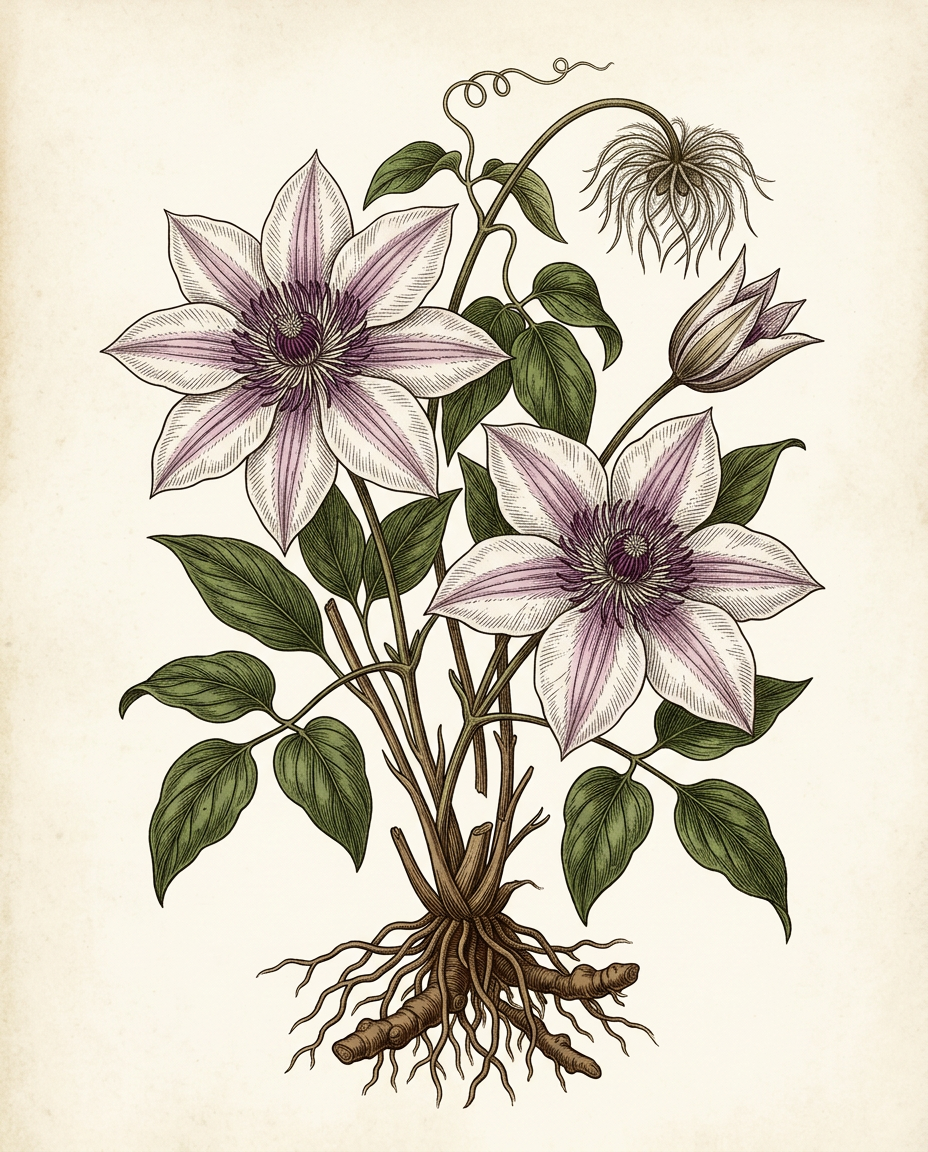
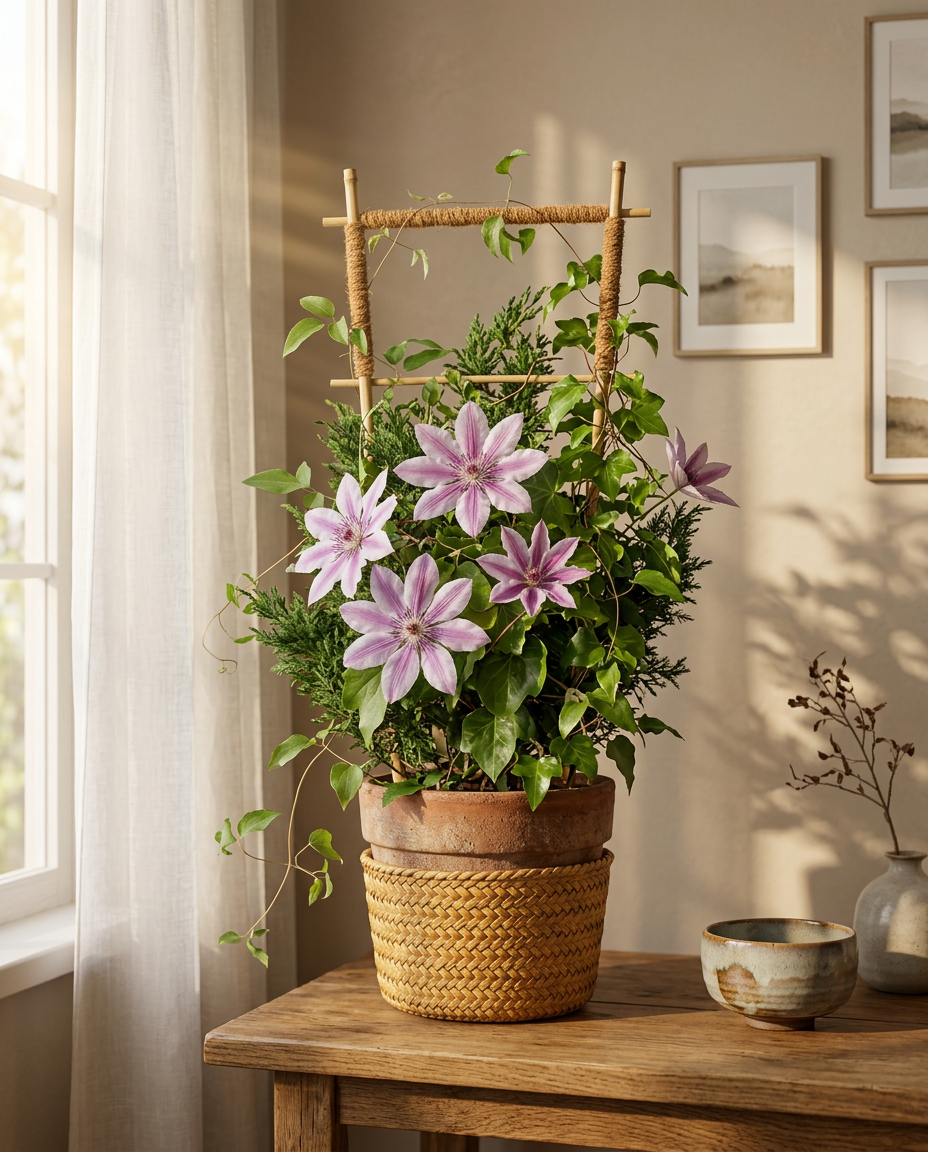
Plate IClematis spp. — virgin's bower. Large flat star-shaped purple or pink flowers with prominent yellow stamens, climbing on woody stems and tendril-petioles. ASPCA toxic — protoanemonin in the fresh sap.
Three plants that look the part, without the risk.
Same climbing-vine garden look without the protoanemonin chemistry — these ASPCA-safe substitutes give clematis's trellis effect without the irritant sap.
Climbing rose
For a trellis-climbing flowering vine at ASPCA non-toxic. Thorns are a separate issue but the chemistry is safe.
Honeysuckle (Lonicera japonica)
For a vigorous flowering climber at ASPCA non-toxic. Fragrant tubular flowers in summer; faster grower than clematis.
Passion flower
For an exotic-looking climbing flower at ASPCA non-toxic. Distinctive flower form, different from clematis but similarly statement-making.
How clematis poisons a cat — and how to react.
Yes — clematis is toxic to cats per the ASPCA. The ASPCA lists Clematis spp. (clematis, virgin's bower, leatherflower) as toxic to cats, dogs, and horses. The toxic principle is an irritant glycoside — protoanemonin — released from a stable precursor (ranunculin) when the plant is bruised or chewed.
The ASPCA verdict, verbatim: Toxicity: Toxic to Dogs, Toxic to Cats, Toxic to Horses · Toxic Principles: Irritant glycoside (Protoanemonin) · Clinical Signs: Salivation, vomiting, diarrhea.
The same toxin as buttercup — fresh sap only
Clematis sits in Ranunculaceae, the buttercup family, and shares the family's signature defence chemistry. Intact leaf and stem cells carry ranunculin, an inert glycoside. When the cell wall breaks — a cat's bite, secateurs cutting a vine, frost damage — enzymatic action converts ranunculin into protoanemonin, a small unstable molecule with sharp irritant effects on mucous membranes.
Two practical consequences:
- The damage is fast but local. A cat that chews a clematis stem experiences mouth burning within minutes. GI signs follow within hours.
- Dried plant material is much less of a hazard. Protoanemonin polymerises within hours of release into anemonin, an inert dimer. Dried clematis trimmings or composted material are largely benign compared to fresh sap.
The bitter, peppery taste of fresh protoanemonin is its own warning system — most cats stop after one or two bites, which limits the realistic dose. The serious documented exposures are usually outdoor-grazing herbivores (livestock in fields), not pet cats.
Where clematis encounters happen
Clematis is rarely a houseplant. The realistic risk scenarios are all outdoor:
- Trellis and fence climbers. The classic garden use — climbing wall-trained vines reach cat-jump height with leaves at face level.
- Wild Clematis species (Clematis vitalba — old man's beard / traveller's joy in the UK and US) sprawling over hedges in rural verges.
- Cut clematis in a vase. Less common than in formal florist bouquets but possible — and the cut stems still bleed fresh sap.
The houseplant clematis (e.g., container-grown Clematis florida 'Sieboldii') exists but is unusual; if you have one, treat it as you'd treat a pothos or any other reachable toxic indoor plant.
Same family, very different severity tiers
The Ranunculaceae chemistry is consistent but the severity spread within the family is enormous:
- Buttercup (Ranunculus spp.) — protoanemonin only. Moderate irritant tier.
- Clematis (this page) — protoanemonin only. Moderate irritant tier.
- Anemone — protoanemonin. Moderate irritant tier.
- Lenten rose / hellebore (Helleborus spp.) — protoanemonin plus bufadienolide cardiac glycosides. Much more serious.
- Delphinium / larkspur — diterpenoid alkaloids (different chemistry). Serious to severe.
- Monkshood (Aconitum) — aconitine. Deadly at low doses — historically a poisoning agent for humans.
Family membership tells you the irritant base. The serious entries in the family layer additional toxins on top. Always check the specific genus.
What to do if your cat ate clematis
For a typical chewed-leaf exposure, this is the manageable end of plant toxicity. The protocol:
- Rinse the mouth with cool water if the cat will tolerate it. A syringe or damp cloth works. Dilutes any sap still on the mucous membranes.
- Offer soft food and water. Most cats stop eating briefly because of mouth pain; once that subsides they recover quickly.
- Watch for GI signs over the next 24 hours — vomiting, diarrhea. Self-limiting in most cases.
- Call your vet if signs are severe, persistent, or if you suspect a large ingestion. The ASPCA Animal Poison Control Center at 888-426-4435 ($95 consultation fee) can grade severity.
- Compost cuttings out of cat reach. Fresh clippings still have active protoanemonin for several hours; a tidy pile of trimmings near a curious cat is the avoidable trap.
Safe trellis alternatives
If you want a climbing vine in a cat-accessible garden, the ASPCA-non-toxic swaps cover the role:
- Climbing roses (Rosa spp.) — non-toxic. Thorns are a separate consideration.
- Honeysuckle (Lonicera japonica) — non-toxic. Vigorous, fragrant.
- Passion flower (Passiflora caerulea) — non-toxic. Exotic flower form.
- Star jasmine (Trachelospermum jasminoides) — non-toxic. Fragrant white flowers.
For the wider safe-garden picture see safe plants for cats. For the rest of the Ranunculaceae and similar irritant-tier toxics see toxic plants for cats.
What we have actually seen.
Drooling and oral irritation
The first sign. Protoanemonin in the fresh sap irritates the mouth on contact — drooling, head-shaking, food refusal within minutes of chewing.
Vomiting and diarrhea
ASPCA's listed clinical signs. GI irritation follows the mouth contact once sap is swallowed. Usually self-limiting within 24 to 48 hours.
Self-limiting bitterness
Fresh protoanemonin tastes strongly acrid and irritant. Most cats stop chewing after one or two bites, which limits the realistic dose. The bitter taste is the plant's own protective signal.
Skin contact dermatitis
Less common in cats than in humans handling the cut stems, but reported — direct skin contact with cut sap can produce localised redness or blistering, especially on thinly-furred areas. Self-limiting once contact ends.
- ASPCA Animal Poison Control Center. Toxic and Non-Toxic Plants: Clematis.Accessed June 2026 · aspca.org · Clematis spp. (Virgin's Bower, Leatherflower) · Toxic to cats, dogs, horses · Toxic Principles: Irritant glycoside (Protoanemonin) · Clinical Signs: Salivation, vomiting, diarrhea
- ASPCA Animal Poison Control Center. Toxic and Non-Toxic Plants: Virgins Bower.Sibling ASPCA listing for the same Clematis genus under a common name
- Pet Poison Helpline. Ranunculaceae plant ingestion in cats.Clinical reference · protoanemonin mechanism and supportive care