Lenten
Rose.
Helleborus niger
Lenten rose (also called hellebore and Christmas rose) is TOXIC to cats per the ASPCA — bufadienolide cardiac glycosides plus protoanemonin. Same severity tier as oleander and lily of the valley. Popular winter-blooming perennial.
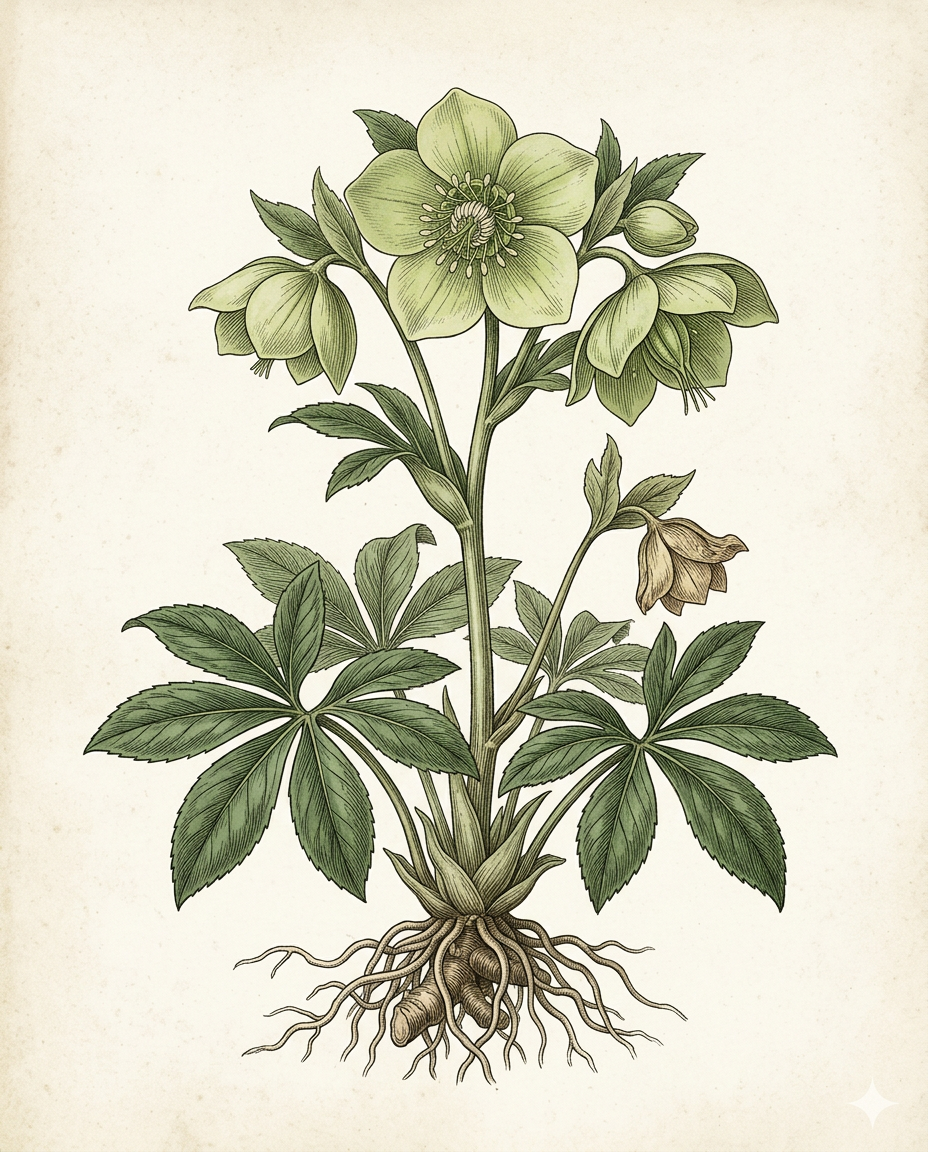

Plate IHelleborus niger — lenten rose / hellebore / Christmas rose. Nodding five-petalled cream-to-rose flowers above deeply divided dark green palmate leaves. ASPCA toxic — bufadienolide cardiac glycosides and protoanemonin.
Three plants that look the part, without the risk.
Same winter-flowering nodding-bloom aesthetic for a shaded border without the cardiac glycoside chemistry — these ASPCA-safe substitutes give the lenten-rose look without the serious-tier risk.

Camellia
For winter and early-spring flowers in shade at ASPCA non-toxic. Larger, more formal blooms than hellebore but the same season.
Pansy
For low cool-season colour at ASPCA non-toxic. Annual bedding, much smaller than hellebore but fills the same garden niche.
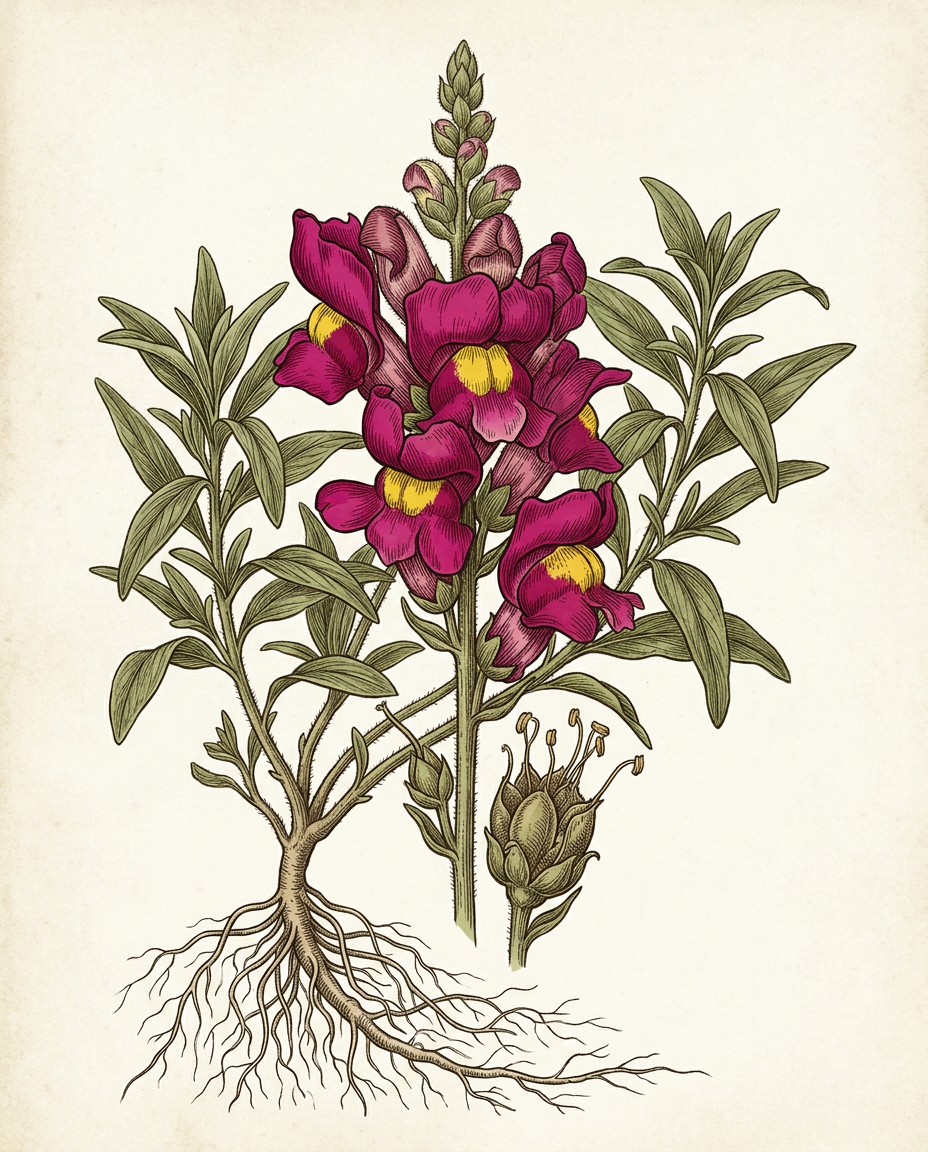
Snapdragon
For cool-season vertical colour at ASPCA non-toxic. Different form but a useful late-winter/early-spring bedder.
Why hellebore is more serious than its garden role suggests.
Yes — lenten rose (also called hellebore and Christmas rose) is toxic to cats per the ASPCA. Two ASPCA entries cover the same plant: Lenten Rose and Hellebore — both list Helleborus niger as toxic to cats, dogs, and horses. The toxic principles are bufadienolides, glycosides, veratrin, and protoanemonin.
The ASPCA verdict, verbatim (typo preserved): Toxicity: Toxic to Dogs, Toxic to Cats, Toxic to Horses · Toxic Principles: Bufadienolides, glycosides, veratrin and prtoanemonin [sic — should be 'protoanemonin'] · Clinical Signs: Drooling, abdominal pain and diarrhea, colic, depression.
One plant, three common names
Lenten rose, Christmas rose, and hellebore all refer to Helleborus niger and the closely related garden hybrids in the Helleborus genus. None of them is a true rose — they're Ranunculaceae (the buttercup family). The name confusion is common-language only; the botanical identity and the cat-safety verdict are the same.
- Lenten rose — the most-searched common name, named for the Easter-season bloom.
- Christmas rose — same plant, named for the winter-Christmas bloom.
- Hellebore — the genus-level common name; covers all Helleborus species.
If a label or a garden tag uses any of those, this page applies.
The toxin stack — why this is serious-tier
Hellebore is unusual in the Ranunculaceae for the layered toxin profile:
- Bufadienolides — the headline. These are cardiac glycosides — steroidal compounds that bind cardiac Na+/K+ ATPase. The same target hit by digitalis (foxglove), the cardenolides of oleander, and the cardiac glycosides of lily of the valley. In a meaningful dose they produce bradycardia, arrhythmia, and potentially fatal heart block.
- Veratrin — a steroidal alkaloid that affects nerve cell sodium channels. Adds neuro signs and contributes to the overall depression / weakness picture.
- Protoanemonin — the Ranunculaceae irritant family signature, released from ranunculin in fresh sap. Adds the oral and GI irritation that dominates the early symptom picture.
Compare to the related plants in the same family:
- Buttercup, clematis — protoanemonin only. Moderate irritant tier.
- Hellebore (this page) — protoanemonin + cardiac glycosides + veratrin. Serious tier.
- Monkshood (Aconitum) — aconitine. Deadly tier.
Family membership tells you the irritant base; the additional toxins set the actual severity.
How an exposure unfolds
In a typical hellebore ingestion you'd expect:
- Within minutes — drooling, head-shaking, food refusal. The protoanemonin layer doing direct mouth irritation.
- Within an hour or two — vomiting, diarrhea, abdominal pain (colic). GI signs from swallowed sap.
- Hours in — depression, weakness, sometimes ataxia. Combined effect of GI distress and the veratrin / bufadienolide systemic absorption.
- At larger doses — bradycardia, arrhythmia, cardiac signs. This is the mechanism that defines the serious-tier risk. May develop subtly — slow heart rate, weak pulse, collapse on exertion — and warrants ECG monitoring.
The cats most at risk are kittens (small dose threshold) and any cat that overcomes the bitter taste enough to ingest a substantial quantity.
What to do if your cat ate hellebore
This is one of the toxics where fast vet contact matters more than at-home triage.
- Call your vet or the ASPCA Animal Poison Control Center at 888-426-4435 ($95 consultation fee) immediately. Don't wait.
- Bring the plant name — hellebore, lenten rose, Christmas rose, or Helleborus. The toxin profile is well-known to vet toxicologists.
- Treatment is decontamination if recent (induced emesis under vet supervision), activated charcoal, IV fluids, ECG monitoring for cardiac signs, and supportive care. There's no specific antidote routinely used in vet practice; digoxin-Fab antibodies (used in human medicine for severe cardiac glycoside poisoning) have been reported off-label in serious veterinary cases.
- Don't induce vomiting at home unless your vet directs. Aspiration risk is real in a cat that may already be neurologically affected.
- Bring a sample of the plant if you can — confirms the ID for the toxicology workup.
Safe garden swaps for the winter-bloom niche
If you want winter and early-spring flowers in a cat-accessible garden, the ASPCA-non-toxic alternatives:
- Camellia (Camellia japonica) — winter / early spring bloom, evergreen, non-toxic.
- Pansy (Viola tricolor) — cool-season bedding, non-toxic.
- Snapdragon (Antirrhinum majus) — vertical colour, non-toxic. ASPCA verified.
- Roses (true Rosa) — non-toxic.
For the full winter-garden picture see safe plants for cats. For the broader cardiac-glycoside contrast see oleander and lily of the valley — the same severity-tier neighbours of hellebore.
What we have actually seen.
Drooling and GI distress
ASPCA lists drooling, abdominal pain, diarrhea, and colic. The first signs after ingestion — the irritant protoanemonin layer of the toxin mix produces fast oral and GI irritation within minutes.
Cardiac glycoside effects
The serious risk. Bufadienolides act like digitalis — they bind cardiac Na+/K+ ATPase and disrupt heart rhythm. Bradycardia, arrhythmia, sometimes heart block. ASPCA's headline symptom list doesn't emphasise this, but it's the mechanism that puts hellebore in the oleander severity tier.
Depression and weakness
ASPCA lists 'depression' as a clinical sign — combined effect of GI distress, cardiac compromise, and the veratrin alkaloid component. The cat looks unwell, hides, won't eat.
Self-limiting taste
Like other Ranunculaceae, the fresh sap is acrid and bitter — most cats stop chewing quickly. This limits the practical exposure dose in most household incidents, but doesn't eliminate the serious-case possibility.
- ASPCA Animal Poison Control Center. Toxic and Non-Toxic Plants: Lenten Rose.Accessed June 2026 · aspca.org · Helleborus niger · Toxic to cats, dogs, horses · Toxic Principles: Bufadienolides, glycosides, veratrin and prtoanemonin [sic] · Clinical Signs: Drooling, abdominal pain and diarrhea, colic, depression
- ASPCA Animal Poison Control Center. Toxic and Non-Toxic Plants: Hellebore.Sibling ASPCA entry for the same Helleborus niger under the bare common name
- Pet Poison Helpline. Cardiac glycoside plant toxicosis in companion animals.Clinical reference · bufadienolide mechanism shared with oleander, lily of the valley