Alocasia
Alocasia spp.
Alocasia is toxic to cats per the ASPCA. Every leaf carries insoluble calcium oxalate crystals — immediate mouth pain, drooling, and possible swelling. Polly, Frydek, Black Velvet, Zebrina — same chemistry, same verdict.
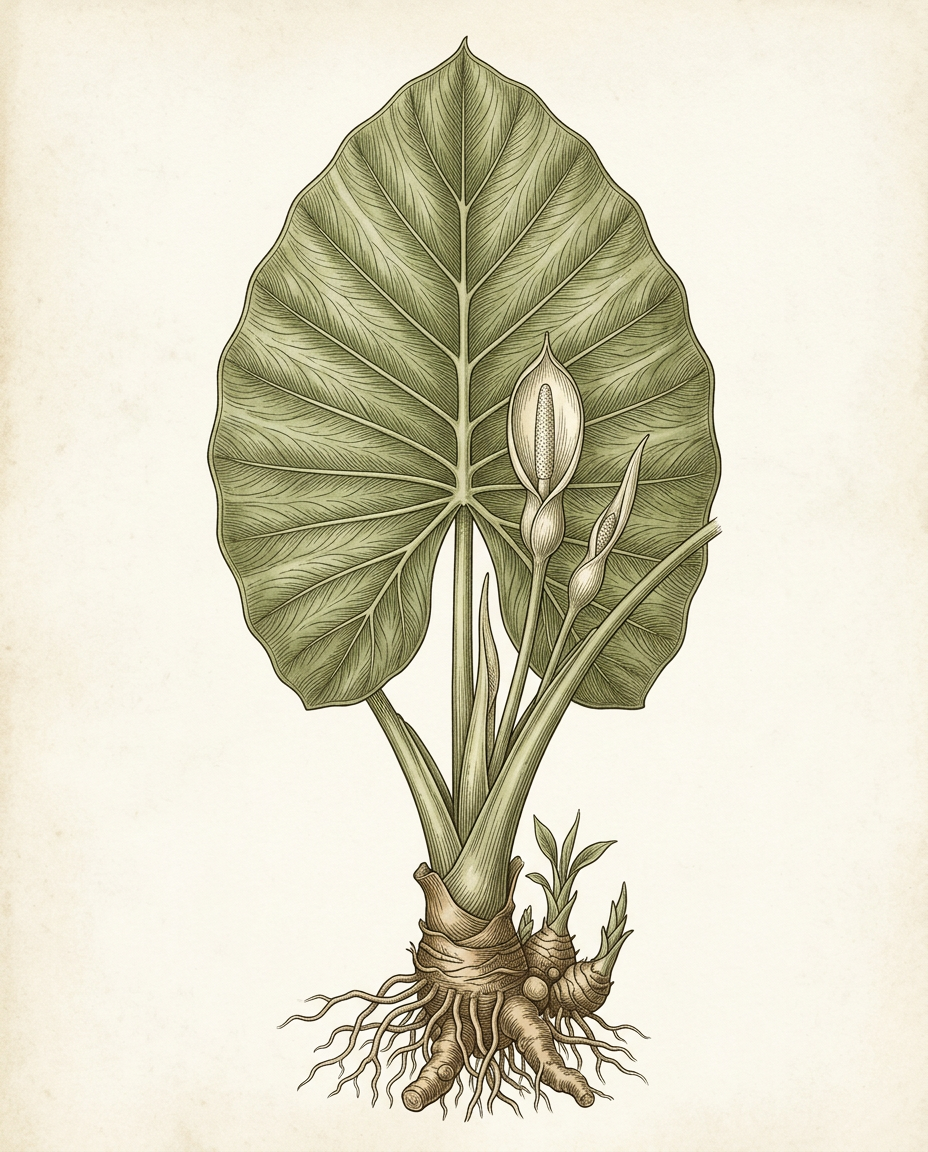
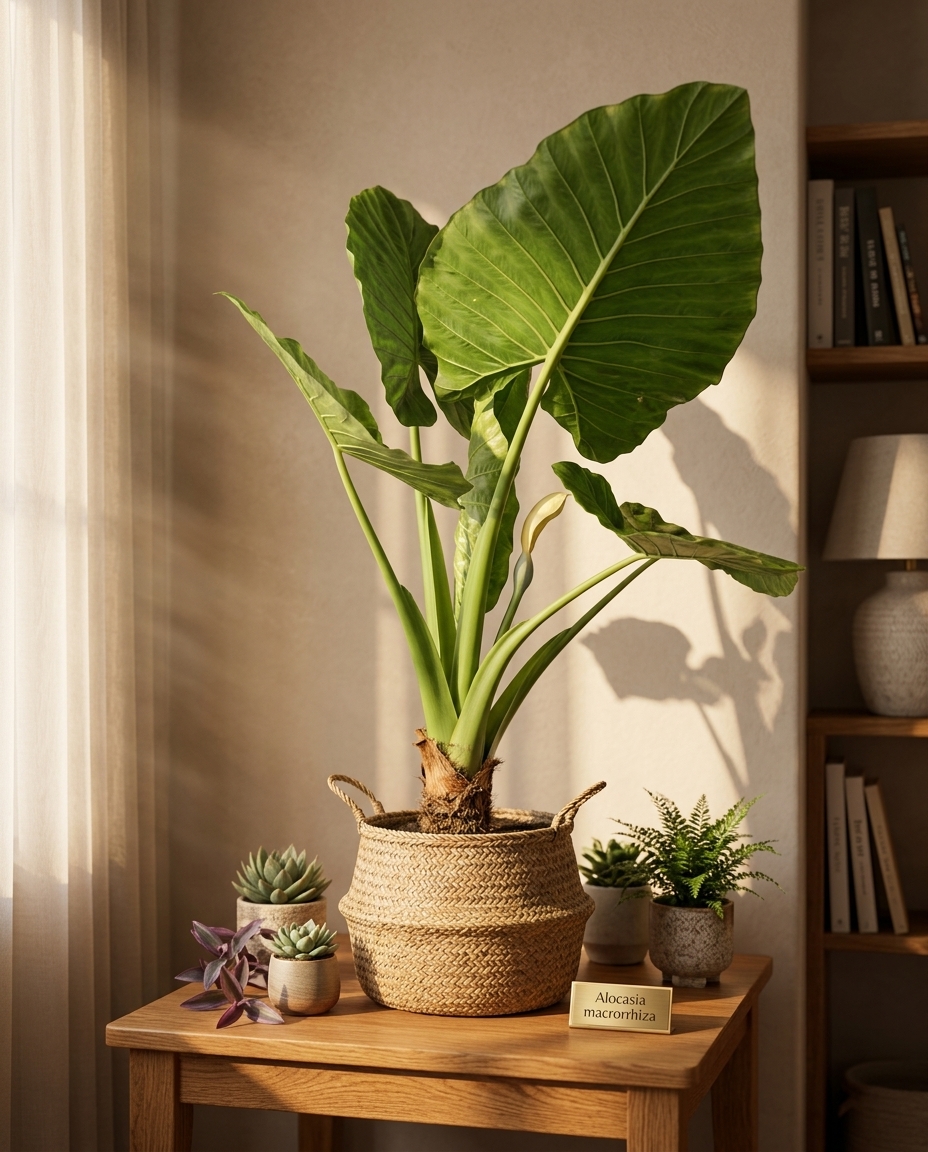
Plate IAlocasia spp. — elephant's ear. Large arrowhead-shaped glossy dark green leaves with striking pale veining on tall upright petioles. ASPCA toxic — insoluble calcium oxalate raphides.
Three plants that look the part, without the risk.
Same sculptural arrowhead-leaf drama for an interior without the calcium oxalate chemistry — these ASPCA-safe substitutes give Alocasia's bold-foliage feel at room scale.
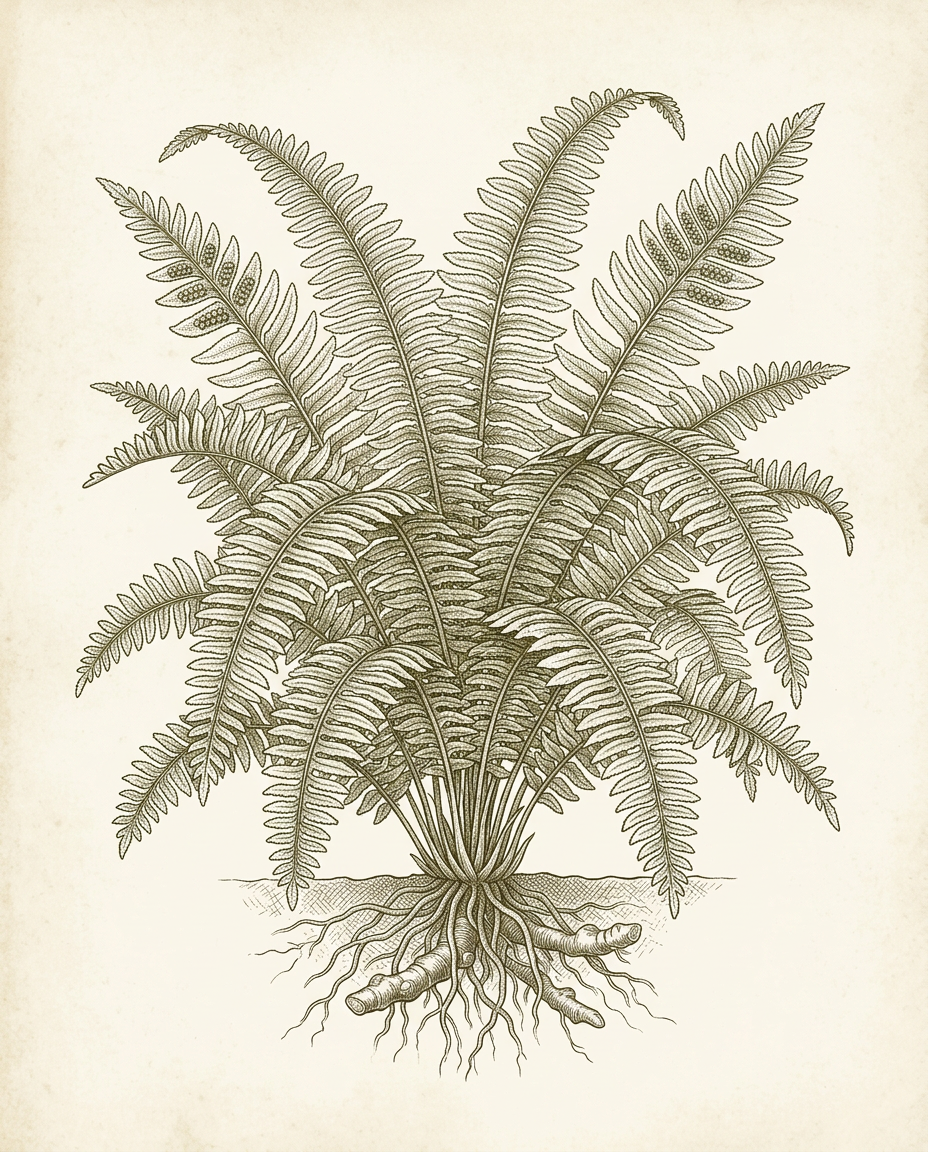
Boston fern
For an architectural large-leaf statement at ASPCA non-toxic. Soft fronds rather than arrowhead leaves, but the dramatic-foliage role is the same.
Parlour palm
For a tall structural houseplant at ASPCA non-toxic. Different shape (palm fronds vs arrowhead) but the same room-anchor role.
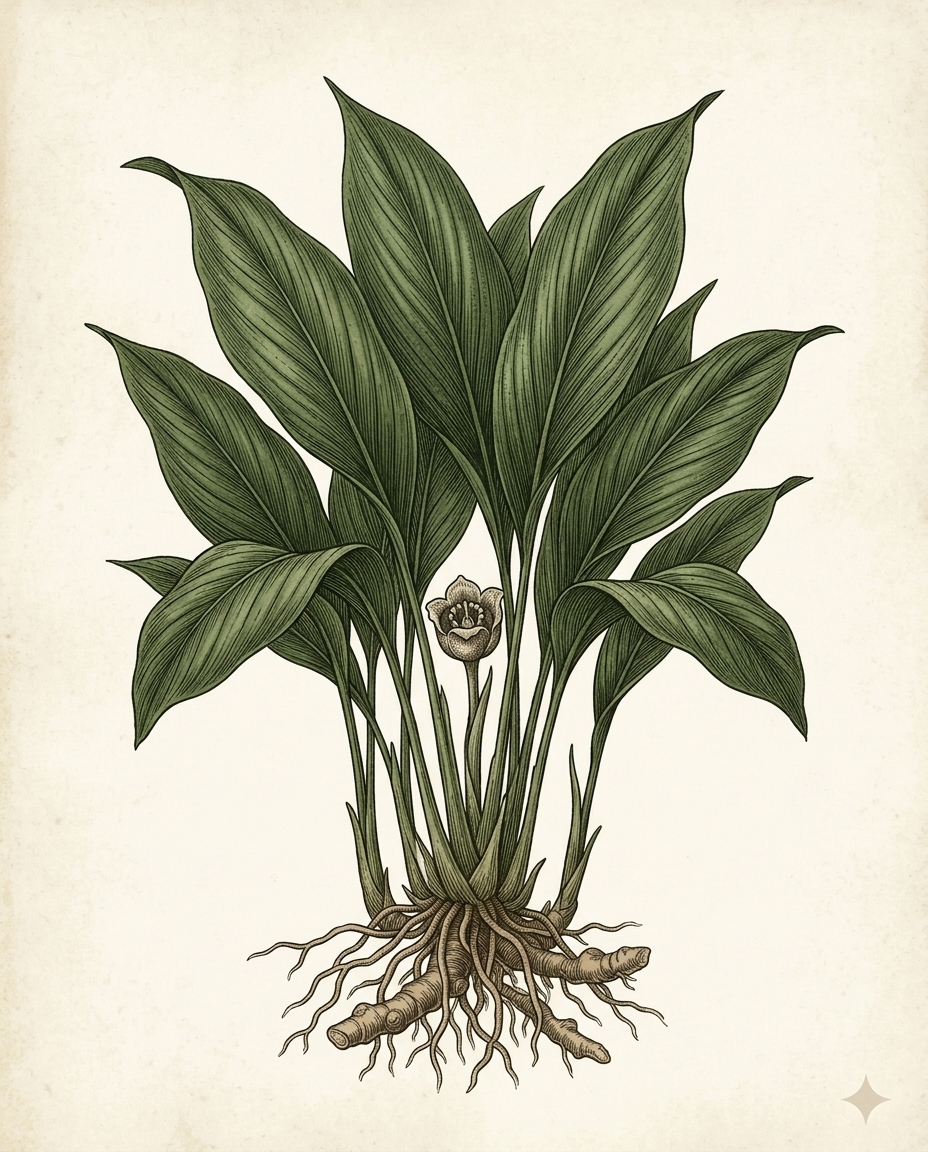
Cast iron plant
For broad upright leaves at ASPCA non-toxic. Tougher and slower-growing than Alocasia but visually similar in a corner.
What Alocasia does to a cat — and the cultivar map.
Yes — Alocasia is toxic to cats per the ASPCA. The ASPCA lists Alocasia spp. (Elephant's Ear) as toxic to cats, dogs, and horses. The toxic principle is insoluble calcium oxalates.
The ASPCA verdict, verbatim: Toxicity: Toxic to Dogs, Toxic to Cats, Toxic to Horses · Toxic Principles: Insoluble calcium oxalates · Clinical Signs: Oral irritation, pain and swelling of mouth, tongue and lips, excessive drooling, vomiting (not horses), difficulty swallowing.
Calcium oxalate raphides — mechanical injury, not poison
Alocasia, like most of the Araceae (arum family), carries needle-shaped crystal bundles called raphides in specialised storage cells (idioblasts) throughout its tissues. When a cat chews a leaf, those cells rupture and the crystals eject — like microscopic glass needles — into the surrounding mouth, tongue, and throat tissue.
The damage is mechanical, not chemical. The injury looks like:
- Acute burning pain within minutes of the first bite.
- Heavy drooling as the cat tries to flush the irritant.
- Pawing at the face, head-shaking, vocalising.
- Swelling of lips, tongue, and pharynx — usually mild, occasionally severe enough to threaten the airway.
- Vomiting as swallowed material continues to irritate.
Because the injury is local rather than systemic, recovery is usually fast (24 to 48 hours) with supportive care. The emergency case is significant pharyngeal swelling that compromises breathing — open-mouth breathing or loud stridor means go to the vet immediately.
The Alocasia cultivar map — all toxic
Alocasia has exploded as a trendy houseplant. The cultivars all share the same Araceae chemistry — there's no cat-safe Alocasia:
- Alocasia Polly (Alocasia x amazonica 'Polly') — the most common houseplant cultivar. Compact, glossy dark green leaves with white veining. Toxic.
- Alocasia Frydek (Alocasia micholitziana 'Frydek') — velvet-textured leaves with bright white veins. Toxic.
- Alocasia Black Velvet (Alocasia reginula) — small dwarf cultivar with near-black velvet leaves. Toxic.
- Alocasia Zebrina (Alocasia zebrina) — striking zebra-striped stems. Toxic.
- Alocasia Stingray (Alocasia macrorrhiza 'Stingray') — leaves shaped like a stingray's silhouette. Toxic.
- Alocasia 'Regal Shields', 'Dragon Scale', 'Bambino' — all toxic.
If the label says Alocasia, treat it as toxic to cats. ASPCA's listing covers the genus.
Same family as pothos, monstera, philodendron, peace lily
The calcium-oxalate Araceae cluster is large and consistent. Sibling toxic houseplants — all sharing the same raphide mechanism:
- Pothos (Epipremnum aureum) — toxic. The most common Araceae houseplant.
- Philodendron — toxic. Many trailing and upright cultivars.
- Monstera (Monstera deliciosa) — toxic. Swiss cheese plant.
- Peace lily (Spathiphyllum spp.) — toxic. Not a true lily, despite the name.
- Anthurium — toxic. Glossy heart-shaped flower spathes.
- Dieffenbachia — toxic. ("Dumb cane" — the only Araceae historically named for the speech-loss that follows chewing.)
- Caladium, Colocasia (also called elephant ear), arrowhead vine (Syngonium) — all toxic, all Araceae, all same mechanism.
If you collect statement-leaf houseplants, the practical move is to assume any aroid is toxic and verify only if you suspect an exception.
What to do if your cat chews an Alocasia leaf
- Rinse the mouth with cool water if the cat will tolerate it. A syringe or a damp cloth works. This dislodges loose crystal material.
- Offer cold water and soft food. A small amount of wet food smeared on a finger gives the cat a way to soothe the burning. Cold reduces swelling.
- Call your vet or the ASPCA Animal Poison Control Center at 888-426-4435 ($95 consultation fee). Bring the plant name to the call.
- Watch the airway. Open-mouth breathing, loud stridor, or visible tongue/pharyngeal swelling means go to the vet now. This is the rare emergency case but it's the one that matters.
- Remove the plant from cat-accessible spaces afterwards. Cats sometimes return to a chewed plant once the pain has subsided — the only durable fix is relocation or replacement.
For the broader cat-safe houseplant alternatives, see houseplants safe for cats. For the full toxic landscape, see toxic plants for cats.
What we have actually seen.
Oral pain and drooling
The defining first sign. Raphide crystals fire into mouth and tongue tissue on chewing, causing immediate burning pain. Heavy salivation, pawing at the face, head-shaking, and food refusal within minutes.
Vomiting
Almost always follows the oral injury once material is swallowed. Usually self-limiting once the plant is out of the system.
Difficulty swallowing
ASPCA lists 'difficulty swallowing' as a clinical sign — tongue and pharynx inflammation can make swallowing painful for hours. Soft food and water support recovery.
Tongue or throat swelling
Rare but the medical emergency case. Severe swelling can compromise the airway. Loud breathing, neck-stretching, or open-mouth panting — go to the vet immediately.
- ASPCA Animal Poison Control Center. Toxic and Non-Toxic Plants: Alocasia.Accessed June 2026 · aspca.org · Alocasia spp. (Elephant's Ear) · Toxic to cats, dogs, horses · Toxic Principles: Insoluble calcium oxalates · Clinical Signs: Oral irritation, pain and swelling of mouth, tongue and lips, excessive drooling, vomiting (not horses), difficulty swallowing
- ASPCA Animal Poison Control Center. Toxic and Non-Toxic Plants: Elephants Ear (Colocasia).Separate ASPCA entry for Colocasia — closely related but a different genus, also toxic
- Pet Poison Helpline. Insoluble calcium oxalate plants in companion animals.Clinical reference · raphide mechanism and supportive care