Tobacco
Nicotiana glauca
Tobacco (all Nicotiana species) is toxic to cats per the ASPCA — nicotine. The same toxin in commercial cigarettes, cigar wrappers, chewing tobacco, nicotine gum, nicotine patches, vape juice, and flowering garden Nicotiana. Cat lethal dose roughly 5 mg/kg.
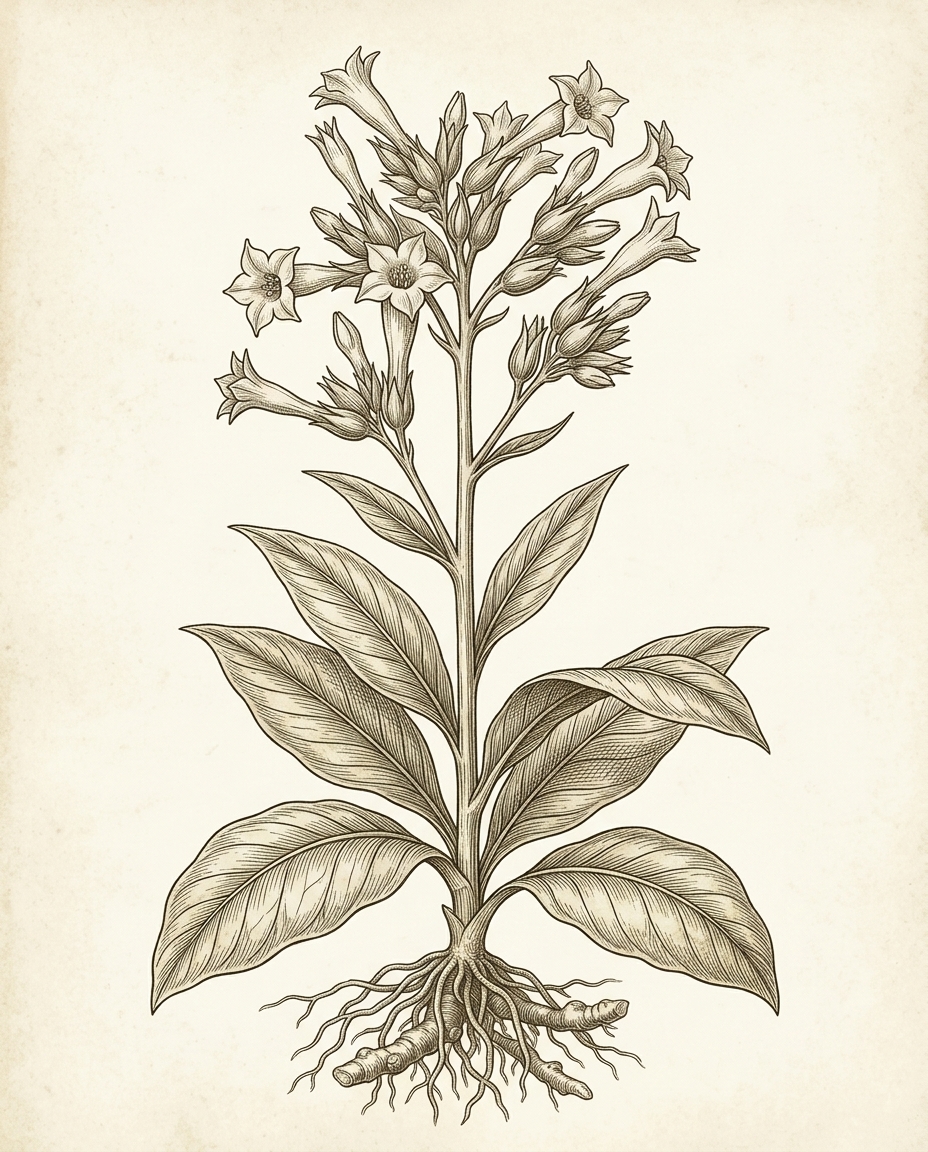
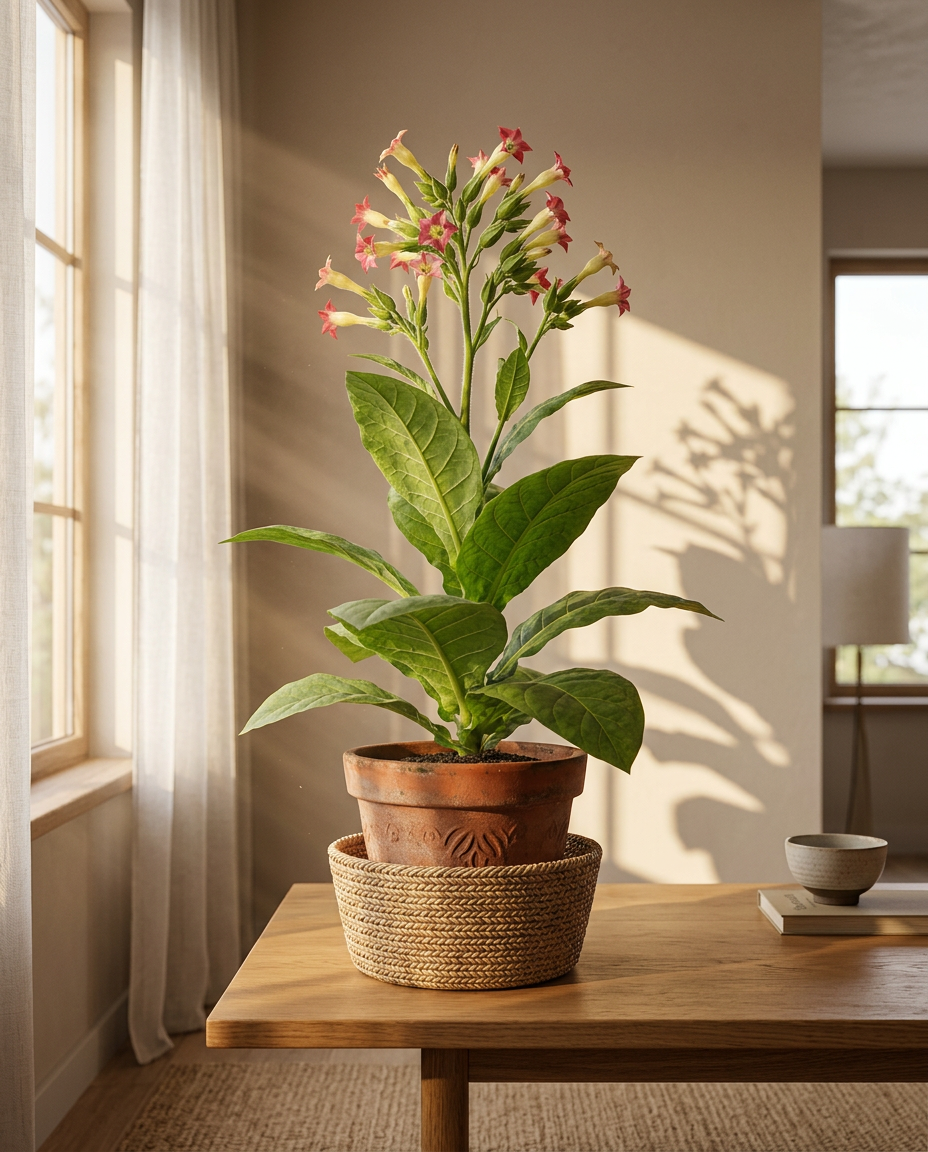
Plate INicotiana glauca — tree tobacco. Tall raceme of tubular yellow-green flowers above glaucous oval leaves. Solanaceae. ASPCA toxic — nicotine, identical across the genus.
Three plants that look the part, without the risk.
Garden flowers with the trumpet form of Nicotiana but ASPCA-safe — the cat-friendly alternatives if you wanted flowering tobacco (Nicotiana sylvestris, N. alata) without the nicotine.
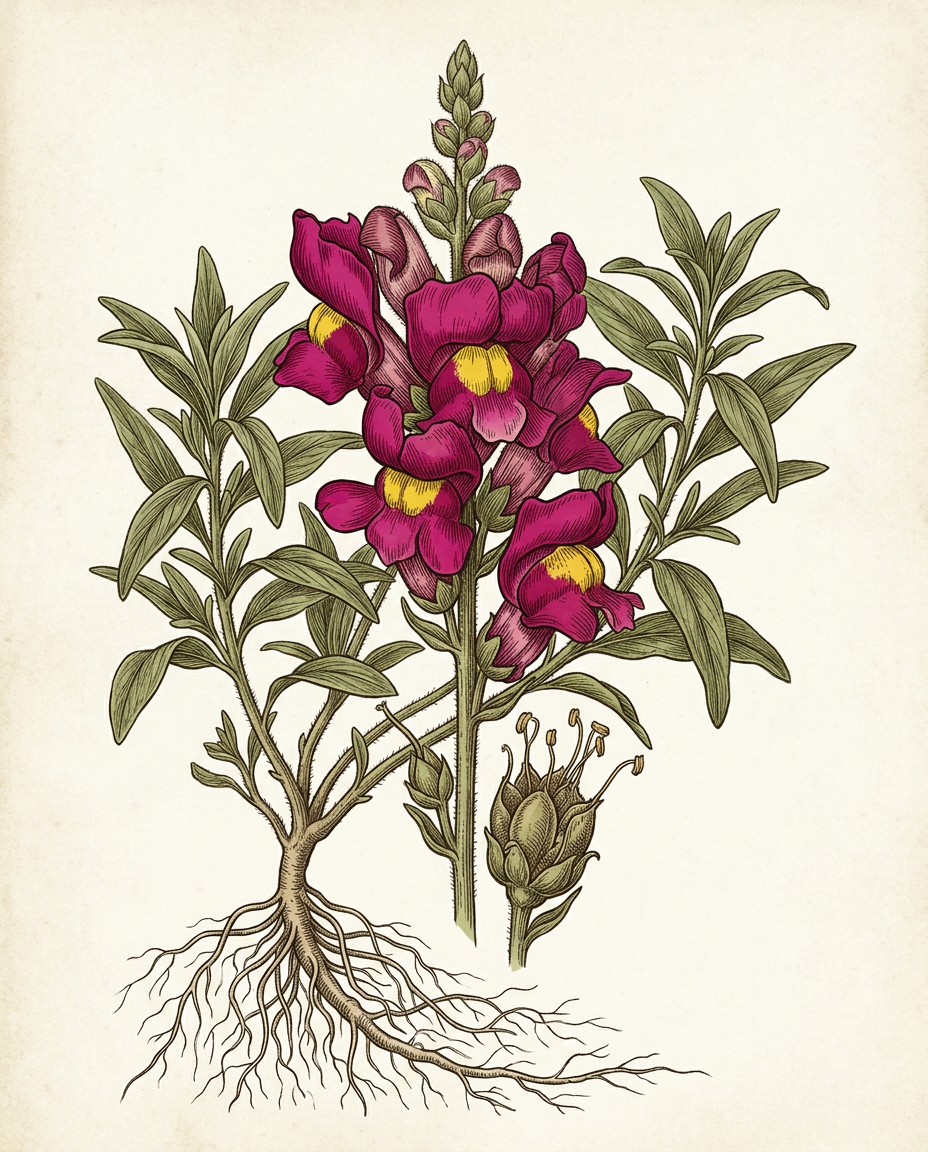
Snapdragon
For tall tubular flower-spike form at ASPCA non-toxic. Different family entirely, different palette but similar back-of-border vertical role.
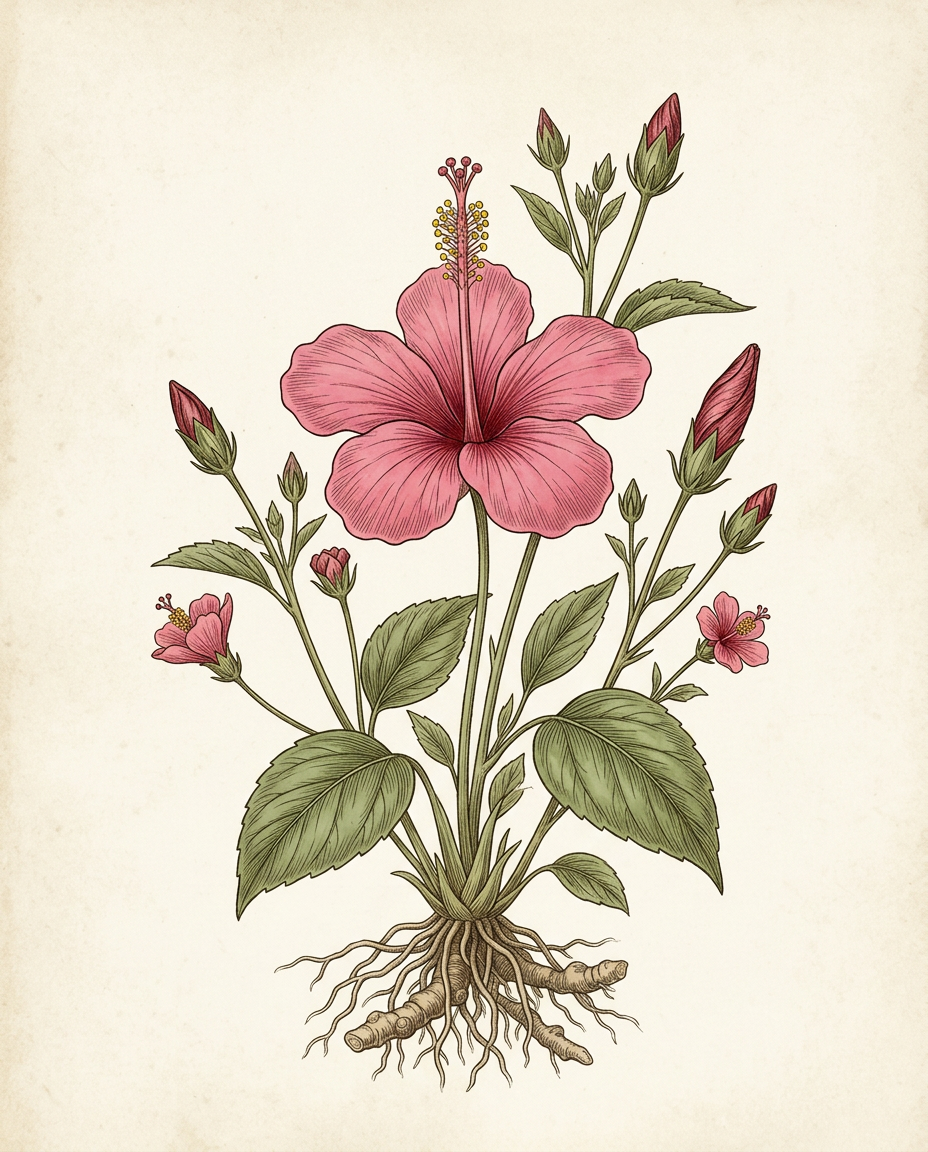
Hibiscus
For larger trumpet-form flowers at ASPCA non-toxic. Shrub-scale rather than annual, longer-flowering, equally striking.
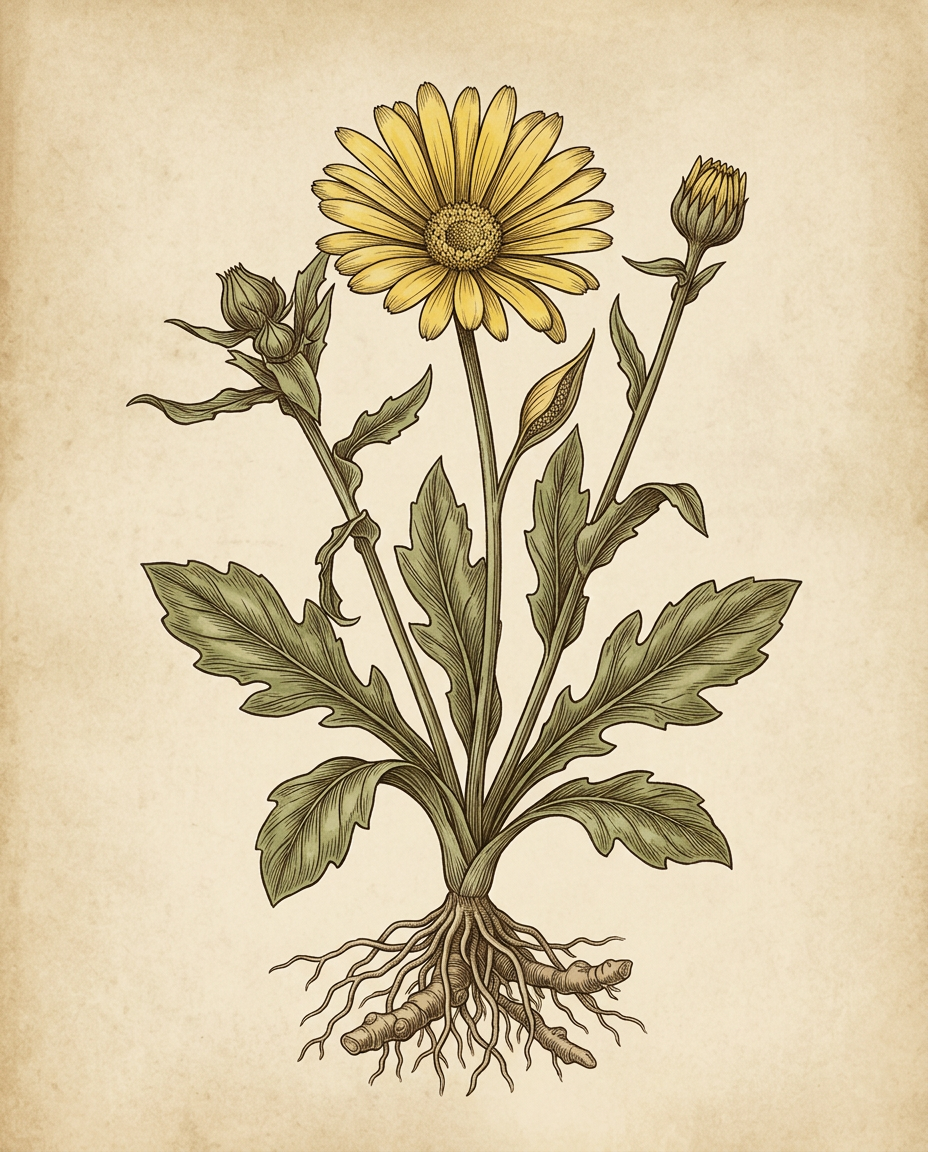
Marigold
For a sturdy summer annual at ASPCA non-toxic. Different flower form but the same garden-anchor role flowering tobacco fills.
Why tobacco covers more than the plant.
Yes — tobacco is toxic to cats. The ASPCA lists Nicotiana glauca (Tree Tobacco, Nicotiana, Mustard Tree) and by extension all Nicotiana species as toxic to dogs, toxic to cats, and toxic to horses. The toxic principle is nicotine. Clinical signs are hyperexcitability then depression, vomiting, incoordination, paralysis, and death is possible.
The ASPCA verdict, verbatim: Toxicity: Toxic to Dogs, Toxic to Cats, Toxic to Horses · Family: Solanaceae · Additional Common Names: Tree Tobacco, Nicotiana, Mustard Tree · Scientific Name: Nicotiana glauca · Toxic Principles: Nicotine · Clinical Signs: Hyperexcitability then depression, vomiting, incoordination, paralysis, death is possible.
Scope: this page is about more than the plant
ASPCA's database is plant-focused, so the named species is Nicotiana glauca. The toxin is nicotine, and nicotine is identical wherever it comes from. The realistic cat-poisoning scenarios involve:
- Commercial tobacco — Nicotiana tabacum, the species smoked and chewed worldwide. Same plant family, higher nicotine concentration.
- Cigarettes — 9 to 30 mg of nicotine per cigarette. Cigarette butts can concentrate nicotine in the unburnt residue.
- Cigars — 100 to 200 mg of nicotine per cigar.
- Chewing tobacco — 6 to 8 mg of nicotine per gram of loose tobacco.
- Nicotine replacement therapy — gum (2 to 4 mg per piece), lozenges (1 to 4 mg), patches (17.5 to 52.5 mg total).
- Vape and e-cigarette liquid — 6 to 50 mg of nicotine per millilitre. Spilled pods and leaked refill bottles are the highest-density exposure a cat can realistically encounter.
- Garden flowering tobacco — Nicotiana sylvestris, N. alata, N. langsdorffii. Same genus, same nicotine, same ASPCA verdict.
ASPCA's plant entry is the authoritative toxicology reference for nicotine across all of these sources.
The cat lethal dose — small numbers matter
Cat nicotine toxicity is dose-sensitive in a way most plant toxicities are not. Approximate numbers (Pet Poison Helpline and veterinary literature):
- Lethal dose: approximately 5 mg of nicotine per kg of body weight for cats.
- Average 4 to 5 kg cat: lethal dose is around 20 to 25 mg.
- One cigarette: 9 to 30 mg of nicotine. A single cigarette can be lethal to a small cat.
- One cigarette butt: similar or higher nicotine concentration due to unburnt residue.
- One vape pod: typically 1.7 to 5 mg of nicotine per pod; concentrated refill liquid is 6 to 50 mg per mL.
These numbers mean that the difference between mild toxicity and fatal toxicity in a cat may be a single cigarette butt. There is no nibble-and-watch tier.
Why vape liquid is the worst-case scenario
Modern vape devices concentrate nicotine in a thin, watery, often flavoured liquid that cats can absorb through licking spills or through skin contact. A spilled refill bottle (typically 10 to 30 mL) delivers hundreds of milligrams of nicotine — many times the lethal cat dose, in a form the cat will investigate because the flavourings are often sweet or fruity. Treat any vape liquid spill as a cat emergency.
If you vape and have cats:
- Keep all vape devices, pods, and refill liquid in a closed cabinet — never on a coffee table, side table, or pocket of a draped jacket.
- Clean any spilled liquid immediately and thoroughly.
- Dispose of empty pods in a sealed bin.
How nicotine works in cats
Nicotine binds nicotinic acetylcholine receptors (nAChR) — a receptor family present in:
- The autonomic nervous system (controlling GI, salivation, heart rate)
- The central nervous system (brain — excitement, then depression)
- Skeletal muscle (movement — tremors, then weakness, then paralysis)
- Cardiac muscle (heart rate and rhythm)
Phase one is stimulation — receptors fire, producing excitement, vomiting, salivation, rapid heart rate, tremors. Phase two is desensitisation and depression — receptors stop responding, producing weakness, paralysis, slowed heart rate, and ultimately respiratory failure. The respiratory failure is the lethal endpoint.
This is the same mechanism as lobeline (lobelia page), which is why lobelia and tobacco share clinical pictures despite being in completely different botanical families. The plants that hit nicotinic receptors all produce broadly similar GI-then-neurological-then-cardiac progressions.
Severity framing — what to do
- Any cigarette, butt, vape, gum, or patch ingestion — call your vet or the ASPCA Animal Poison Control Center at 888-426-4435 (95 dollar consultation) immediately. Do not wait for symptoms. Nicotine is rapidly absorbed and clinical signs can appear within 15 to 60 minutes.
- Vape liquid spill or pod ingestion — emergency, vet visit.
- Inducing vomiting is sometimes useful in the first hour but cats often vomit spontaneously from the nicotine itself. Activated charcoal may be given by the vet.
- Supportive treatment — IV fluids, anti-emetics, respiratory monitoring, occasionally mechanical ventilation in severe cases. Prognosis is good if treatment is started before respiratory depression.
Cat-safe alternatives for flowering tobacco
If you grow ornamental Nicotiana for the evening-fragrance role and want a safer swap:
- Hibiscus — ASPCA non-toxic, larger trumpet flowers, evening-fragrant in some varieties.
- Snapdragon — non-toxic tall flower spike with the back-of-border vertical role.
- Marigold — non-toxic summer annual anchor.
- Sweet alyssum — non-toxic for fragrance at the edge of borders.
Avoid mixing Nicotiana with foxglove, oleander, larkspur, lobelia, or morning glory on cat-accessible property. For the full toxic landscape see toxic plants for cats and for safer flowering options cat-safe plants.
What we have actually seen.
Hyperexcitability then depression
ASPCA's clinical signs lead with a biphasic pattern — initial nicotinic-receptor stimulation produces excitement, agitation, tremors; then depression follows as receptors desensitise. The transition is the dangerous phase.
GI signs
Vomiting follows nicotine ingestion within minutes. Drooling and abdominal discomfort common. Vomiting is partly self-protective (clears stomach contents) but it does not protect against the rapidly-absorbed nicotine.
Incoordination and paralysis
ASPCA lists incoordination and paralysis. Higher doses produce respiratory muscle weakness; this is the lethal mechanism — failure to breathe. Death is possible from a single cigarette in a small cat.
Vape liquid is worst case
Concentrated nicotine in vape and e-cigarette liquid is the highest-density exposure a cat is likely to encounter. A spilled vape pod or a leaked refill bottle delivers many times the lethal dose in a small volume. Emergency vet contact required for any vape-liquid exposure.
- ASPCA Animal Poison Control Center. Toxic and Non-Toxic Plants: Tobacco.Accessed June 2026 · aspca.org · Nicotiana glauca (Tree Tobacco, Nicotiana, Mustard Tree) · Toxic to Dogs, Toxic to Cats, Toxic to Horses · Family Solanaceae · Toxic Principles: Nicotine · Clinical Signs: Hyperexcitability then depression, vomiting, incoordination, paralysis, death is possible.
- Pet Poison Helpline. Nicotine toxicosis in cats and dogs.Clinical reference — lethal dose around 5 mg per kg in cats. One cigarette contains 9 to 30 mg of nicotine (more in butts after partial smoking — concentrated in unburnt residue). Vape liquid contains 6 to 50 mg per mL