Lemon
Grass.
Cymbopogon citratus
Lemongrass (Cymbopogon citratus) is TOXIC to cats per the ASPCA — essential oils + cyanogenic glycosides. Despite the 'it's just a grass' assumption, this is NOT the safe cat grass (which is wheat/oat/barley). Don't confuse them.
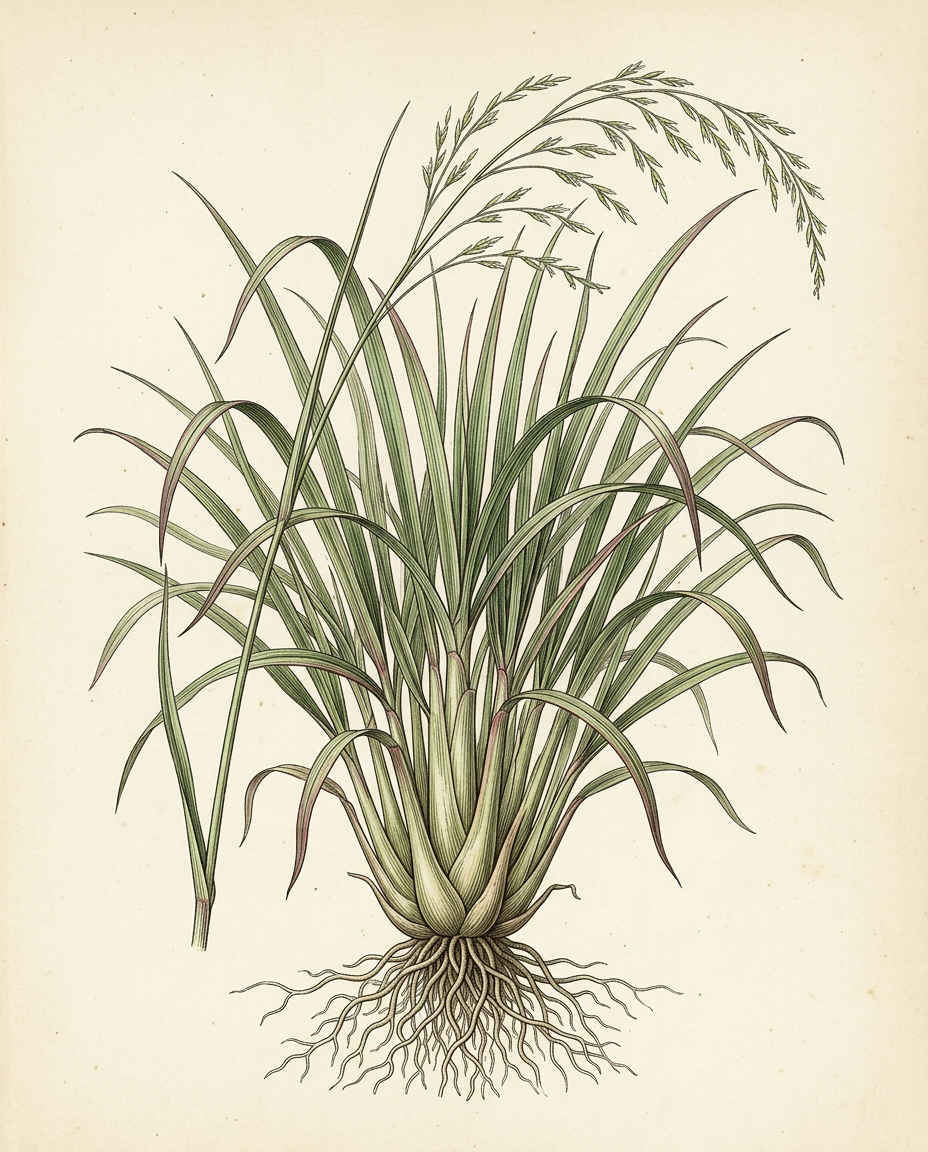

Plate ICymbopogon citratus — lemon grass / oil grass. Dense clump of tall arching pale-green strap-like leaves rising from a swollen pale base. NOT the same as wheat/oat 'cat grass'. ASPCA toxic — essential oils and cyanogenic glycosides.
Three plants that look the part, without the risk.
Same fresh-grass-blade nibbling experience without the citral / cyanogenic glycoside chemistry — these ASPCA-safe substitutes are the actual cat-grass options that lemongrass is often confused with.
Wheatgrass (cat grass)
For an actual cat-safe nibbling grass at ASPCA non-toxic. This is the 'cat grass' lemongrass gets confused with. Trays of wheatgrass are the standard cat-enrichment grass.
Oat grass
Another ASPCA non-toxic 'cat grass' variant. Slightly chunkier blade than wheatgrass, same safety profile.
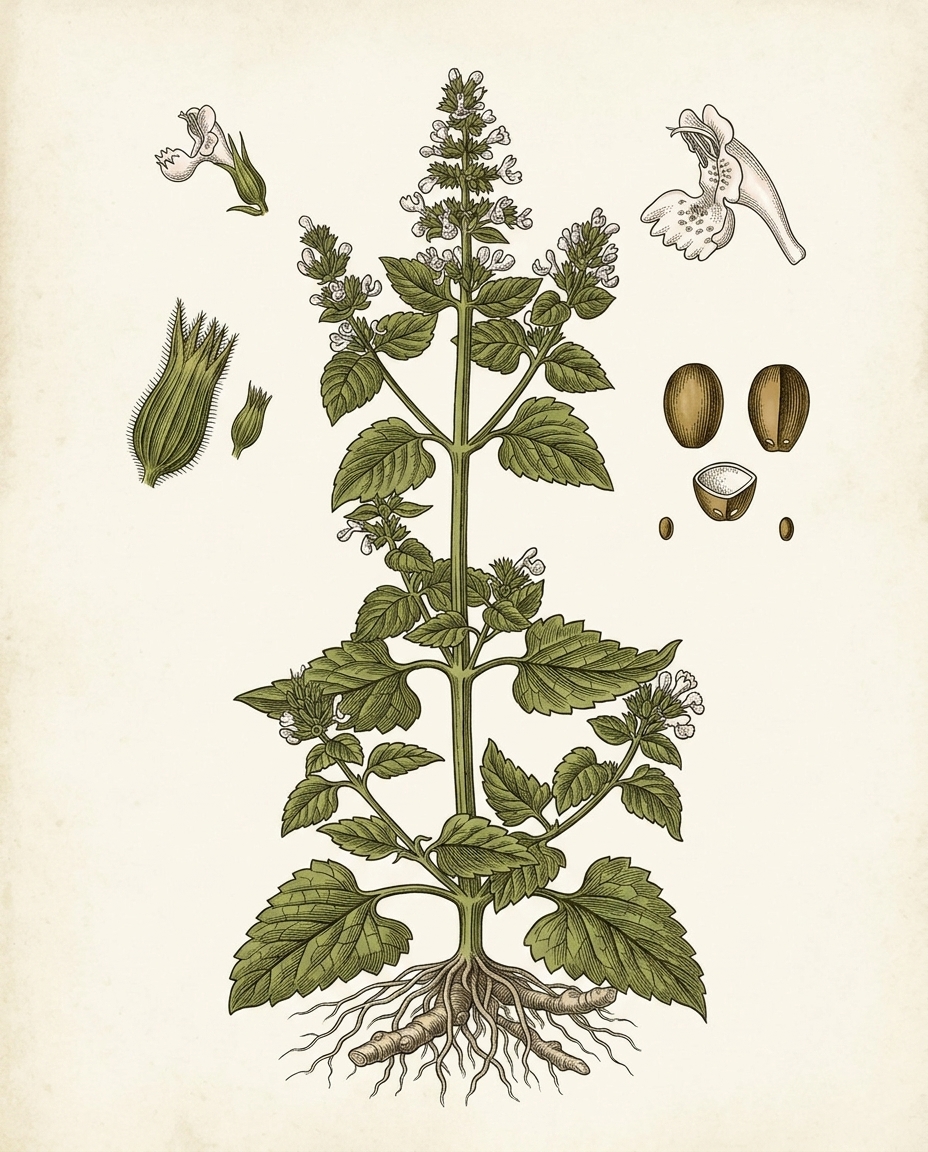
Catnip
For a behaviourally engaging cat-positive herb at ASPCA non-toxic. Not a grass but the obvious feline-enrichment plant.
Why lemongrass is NOT the safe cat grass.
No — lemongrass is not safe for cats. The ASPCA lists Cymbopogon citratus (lemon grass, oil grass) as toxic to cats, dogs, and horses. The toxic principles are essential oils and cyanogenic glycosides.
The ASPCA verdict, verbatim: Toxicity: Toxic to Dogs, Toxic to Cats, Toxic to Horses · Toxic Principles: Essential oils, cyanogenic glycosides · Clinical Signs: Dogs, cats — Stomach upset; Horses — difficulty breathing, weakness, death (rare).
The "cat grass" disambiguation — this is the important one
The single most useful thing this page can do is clear up the lemongrass / cat grass confusion. Many blogs, even some pet stores, recommend lemongrass as a "natural cat grass" because cats sometimes nibble it. The ASPCA listing directly contradicts this.
The confusion comes from the word "grass":
- "Cat grass" is a marketing name covering several ASPCA non-toxic Poaceae grasses sold in trays and kits for cat nibbling:
- Wheatgrass (Triticum aestivum) — the most common cat-grass.
- Oat grass (Avena sativa) — slightly thicker blade, same safety.
- Barley grass (Hordeum vulgare) — also safe.
- Rye grass (Lolium) — also safe.
- Lemongrass (Cymbopogon citratus) — also Poaceae family, but ASPCA toxic. Different chemistry (citral, geraniol, cyanogenic glycosides) that wheat / oat / barley don't carry.
Family membership doesn't predict cat-toxicity in Poaceae any more than it does in Apiaceae. Check the genus, not the family. If you want a safe nibbling grass for your cat, buy a labelled wheatgrass or oatgrass kit. Skip the lemongrass.
Why lemongrass is on the toxic list
The ASPCA classification combines two mechanisms:
-
Essential oils — lemongrass is one of the most aromatic plants in the kitchen world precisely because it carries a high concentration of essential oils (citral, geraniol, citronellal, myrcene). These are the source of the lemon scent and flavour. They're also terpene compounds that cats can't metabolise efficiently because cats lack the UGT1A6 glucuronidation enzyme that humans use to clear terpenes. The live plant carries a moderate dose; concentrated essential oil carries a severe dose.
-
Cyanogenic glycosides — lemongrass also contains low concentrations of cyanide-releasing glycosides (the same chemistry as heavenly bamboo at much higher concentrations, and apple seeds / cherry pits at similar concentrations). Trace amounts contribute to GI irritation but rarely produce systemic cyanide signs at live-plant doses in cats.
Together they produce the moderate GI irritation profile that ASPCA lists. The serious concern is concentrated essential oil exposure.
Live plant vs essential oil — different risk tiers
This distinction is critical and worth its own section:
-
Live lemongrass plant in your kitchen or garden: Moderate risk. A cat that nibbles a blade typically gets stomach upset; bitter taste limits further chewing. ASPCA's "stomach upset" symptom entry for cats fits this exposure. Most cases are vet-call-not-emergency.
-
Lemongrass essential oil (diffused, topical, ingested): Severe risk. Concentrated terpenes overwhelm what limited metabolic capacity cats have. Diffused oils accumulate in indoor air and on fur (where cats then groom them). Topical application is direct dosing. Reported effects in cats include drooling, vomiting, ataxia, tremors, and in severe cases hepatotoxicity. Never apply lemongrass oil to cats; don't diffuse it in cat-occupied spaces; don't use lemongrass-based "natural" flea repellents.
The same distinction applies to many "safe" herbs — basil, rosemary, dill, fennel are all ASPCA non-toxic as live plants but their concentrated essential oils carry the same UGT1A6-deficiency risk in cats. Lemongrass is unusual in that the live plant itself is also toxic-listed.
Citronella — close cousin, same precautions
A related Cymbopogon species worth a note: citronella grass is Cymbopogon nardus or Cymbopogon winterianus — the source of citronella oil sold as a natural insect repellent. Same genus as lemongrass, same chemistry family, same cat-safety precautions. Citronella candles, sprays, and oil-based pet products are all in the do-not-use-around-cats category. The "natural" marketing doesn't translate to cat-safe.
What to do if your cat ate lemongrass
For a typical live-plant chew:
- Single blade nibble — watch the cat for the next 12 to 24 hours. Mild stomach upset is the expected outcome. Most cases resolve on their own.
- Multiple blades or sustained chewing — call your vet. Persistent vomiting or any signs beyond mild GI warrant a check. The ASPCA Animal Poison Control Center at 888-426-4435 ($95 consultation fee) can grade severity.
- Essential oil exposure — emergency. Concentrated lemongrass oil ingestion, sustained diffusion exposure, or topical application all warrant immediate vet contact.
Cat-safe alternatives for the nibbling-grass role
If you bought lemongrass thinking it was cat-safe and want to swap to the real thing:
- Wheatgrass kit — the most common cat grass. Trays grow in 7 to 10 days from seed; the cat nibbles the blades for fibre and entertainment. ASPCA non-toxic.
- Oat grass / barley grass — same role, slightly different blade thickness. All ASPCA non-toxic.
- Catnip — different chemistry (nepetalactone) and behavioural effect (gentle euphoria) but the cat-positive plant of choice. ASPCA non-toxic.
- Silver vine (Actinidia polygama) — another cat-positive non-toxic option, often works on cats indifferent to catnip.
For the safe-herb cluster see basil, rosemary, thyme, sage, dill, cilantro, and fennel — all ASPCA non-toxic as live plants. For the full toxic landscape see toxic plants for cats.
What we have actually seen.
GI signs (stomach upset)
ASPCA's clinical-signs list for cats and dogs is just 'stomach upset' — vomiting, possibly diarrhea, food refusal within hours of meaningful ingestion. The cyanogenic glycoside concentration in Cymbopogon citratus is low enough that the cyanide-mediated systemic effects ASPCA flags for horses (difficulty breathing, weakness, rare death) are not typical in cats.
Pawing at mouth
The essential-oil load (citral, geraniol) is an oral irritant at the doses a cat might encounter chewing the live plant. Drooling, head-shaking, face-pawing within minutes of biting a blade.
Most casual chews — mild
A cat that nibbles a single blade of lemongrass usually doesn't develop more than mild signs. The bitter / citrus-sharp taste typically deters further chewing. The realistic exposure is mild stomach upset, not life-threatening toxicity.
Concentrated essential oil — much worse
Lemongrass essential oil is in a completely different risk category from the live plant. Cats lack UGT1A6 glucuronidation and can't clear concentrated terpenes; diffused or topical lemongrass oil exposure can produce toxicity over time. Never apply lemongrass oil to cats or diffuse it in cat-occupied spaces.
- ASPCA Animal Poison Control Center. Toxic and Non-Toxic Plants: Lemon Grass.Accessed June 2026 · aspca.org · Cymbopogon citratus (Oil Grass) · Toxic to cats, dogs, horses · Toxic Principles: Essential oils, cyanogenic glycosides · Clinical Signs: Dogs, cats — Stomach upset; Horses — difficulty breathing, weakness, death (rare)
- Pet Poison Helpline. Cymbopogon and essential oil toxicosis in cats.Clinical reference · citral and geraniol mechanism, UGT1A6 deficiency in cats
- ASPCA Animal Poison Control Center. Toxic and Non-Toxic Plants: Wheat Grass.ASPCA's safe-grass reference — for context comparison; wheatgrass is the safe cat grass that lemongrass is confused with