Painted
Lady.
Echeveria multicaulis
Painted Lady (Echeveria multicaulis — also called Copper Rose) is non-toxic to cats per the ASPCA. The succulent rosette form. Note — a Geranium / Pelargonium cultivar also goes by 'Painted Lady' and that one is toxic to cats. Confirm which plant you have.
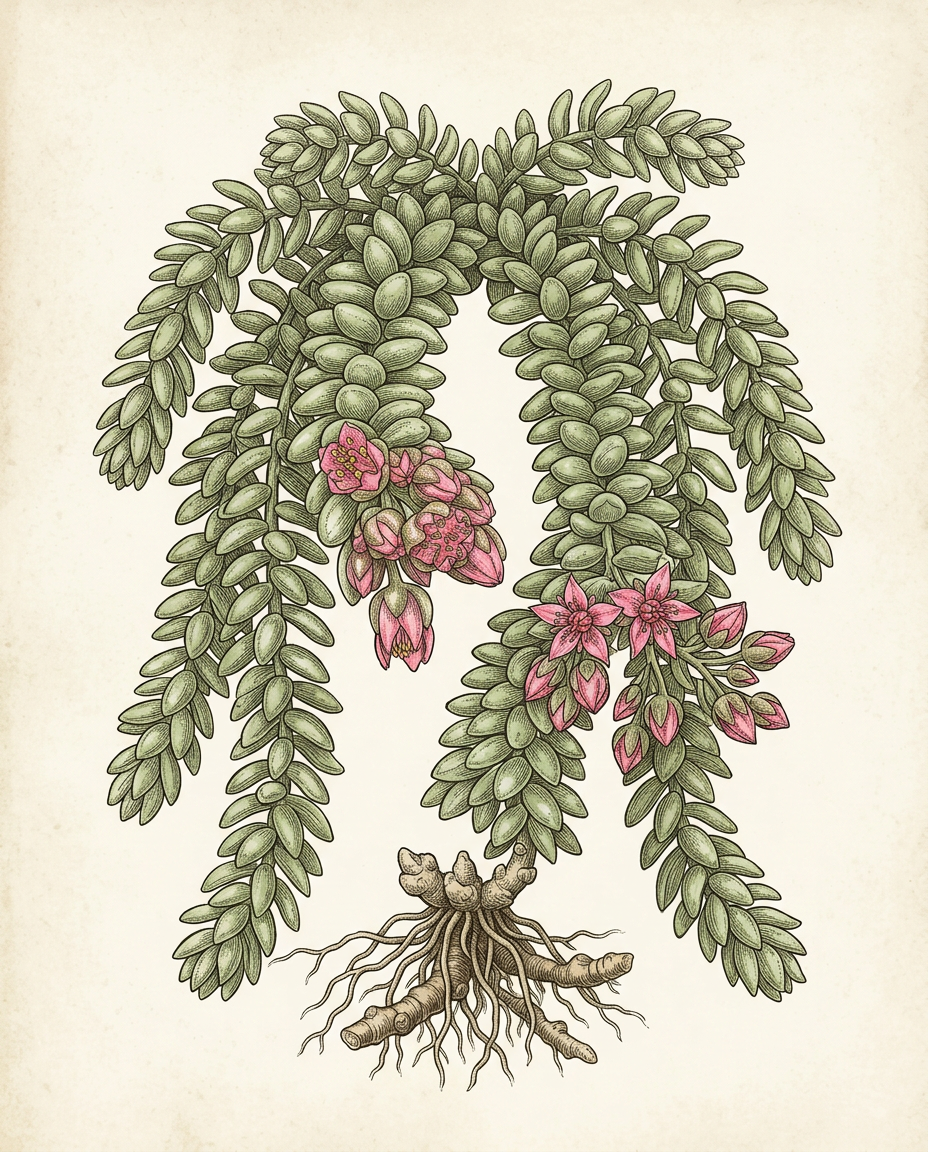
Plate IEcheveria multicaulis — Painted Lady. Copper-tinted rosette of fleshy spoon-shaped leaves. Crassulaceae. ASPCA non-toxic.
Why painted lady is a safe windowsill choice.
The Echeveria called Painted Lady is safe for cats. The ASPCA lists Echeveria multicaulis (also known as Copper Rose) as non-toxic to dogs and non-toxic to cats. It is a small succulent rosette with fleshy spoon-shaped leaves in copper-green tones — a classic windowsill Echeveria.
Important naming check first. "Painted Lady" is a common-name collision. The Echeveria on this page is safe. A Pelargonium (commonly sold as "geranium") cultivar called "Painted Lady" is also widely grown and is toxic to cats per ASPCA. Confirm which plant you have before reading on:
- Safe — this page — succulent rosette, fleshy spoon-shaped copper-and-green leaves, no flowers most of the year. Echeveria multicaulis.
- Toxic — see geranium — soft hairy aromatic leaves, clusters of bicolour red-and-white flowers. Pelargonium 'Painted Lady'.
They look nothing alike in person. The shared trade name is a naming-trade accident.
The ASPCA verdict for the Echeveria, verbatim: Non-Toxic to Dogs, Non-Toxic to Cats · Family: Crassulaceae · Additional Common Names: Copper Rose · Scientific Name: Echeveria multicaulis.
Part of the safe Echeveria cluster
Painted Lady is one species in the genus Echeveria, which is broadly non-toxic per ASPCA. The other safe Echeverias in our catalogue include the genus page (covering the wider cluster), Plush Plant (Echeveria pul-oliver), and the related Burro's Tail (Sedum morganianum, same Crassulaceae family). If you have any Echeveria succulent and a cat, you are in the safe zone.
The wider Crassulaceae family has two notable outliers worth knowing about: Jade Plant (mildly toxic) and Devil's Backbone / Kalanchoe (bufadienolide cardiac glycosides). Crassulaceae is mostly safe but not uniformly safe — check the specific species.
The bigger risk is the pot, not the plant
A cat that bats at a Painted Lady is more likely to topple the pot than to be poisoned. Echeverias have shallow root systems and are usually potted in small terracotta or ceramic pots. Soil ends up on the floor and the rosette ends up bare-rooted. Site on a stable surface away from cat-jumping zones. The plant itself will tolerate occasional leaf-chewing without lasting damage — Echeverias regenerate from damaged leaves remarkably well.
Care notes
- Light — Bright direct sun is required for the copper colour. Insufficient light produces pale green washed-out leaves and leggy stretching.
- Water — Deep, infrequent. Soak the pot, then let the soil dry completely before the next water. Over-watering is the usual cause of death.
- Soil — Gritty cactus-and-succulent mix with extra perlite or coarse sand.
- Placement — Stable windowsill. The pot is the cat risk, not the plant.
Pair Painted Lady with other safe succulents
For a cat-friendly succulent windowsill collection:
- Echeveria — the wider safe genus.
- Burro's Tail — trailing succulent for the same shelf.
- Plush Plant — sibling Echeveria with velvety leaves.
- Hens and Chicks — for the outdoor rockery version of the rosette form.
- Christmas Cactus — actually a cactus, flowers in winter, ASPCA non-toxic.
Avoid: Jade Plant (mildly toxic Crassulaceae outlier), Kalanchoe and Devil's Backbone (bufadienolides), and any Euphorbia that looks succulent (pencil cactus, crown of thorns).
What we have actually seen.
Rosette nibbling
Cats sometimes sample the fleshy leaves. ASPCA non-toxic — no records of toxic ingestion. A chewed leaf will heal over and the rosette will continue.
Knocked-over pot
The bigger practical risk is the pot itself. Echeverias are fragile and shallow-rooted; a curious cat can topple a small terracotta pot. Site on a stable surface.
No clinical signs reported
ASPCA marks Painted Lady non-toxic with no clinical signs entry. There is no toxin to flag.
Pelargonium naming collision
A separate plant (Pelargonium / Geranium 'Painted Lady' cultivar) shares the common name and is toxic to cats — same ASPCA database, different entry. If your plant has soft fuzzy leaves and small clustered flowers, you have a Pelargonium, not this Echeveria. See the disambig block above.
Four common varieties.
Multicaulis (classic)
The standard species — copper-bronze leaf edges, green centre. ASPCA non-toxic.
Copper Rose (trade name)
The marketing name used by many garden centres. Same Echeveria multicaulis, same safety profile.
Keeping the plant alive.
Bright direct
Echeverias colour best with several hours of direct sun. South-facing windowsill ideal. Insufficient light produces leggy stretching and washed-out colour.
Deep, infrequent
Standard succulent watering — soak the pot thoroughly, then let the soil dry completely before the next water. Over-watering is the usual cause of death.
Gritty, free-draining
Cactus and succulent mix with extra perlite or coarse sand. Avoid standard houseplant compost which retains too much water.
Stable windowsill
Site on a stable surface — the pot is the cat risk more than the plant. Avoid edges where a curious cat can topple it.
- ASPCA Animal Poison Control Center. Toxic and Non-Toxic Plants: Painted Lady.Accessed June 2026 · aspca.org · Echeveria multicaulis · Non-Toxic to Dogs, Non-Toxic to Cats · Family Crassulaceae · Additional Common Names: Copper Rose
- ASPCA Animal Poison Control Center. Toxic and Non-Toxic Plants: Geranium.For the naming-collision warning — Pelargonium 'Painted Lady' is a different plant and is toxic to cats
If you liked this, also safe.