Burro's
Tail.
Sedum morganianum
Burro's Tail (Sedum morganianum — Donkey's Tail, Horse's Tail, Lamb's Tail) is non-toxic to cats per the ASPCA. The chunky trailing succulent for hanging baskets. Not to be confused with String of Pearls (a toxic lookalike).
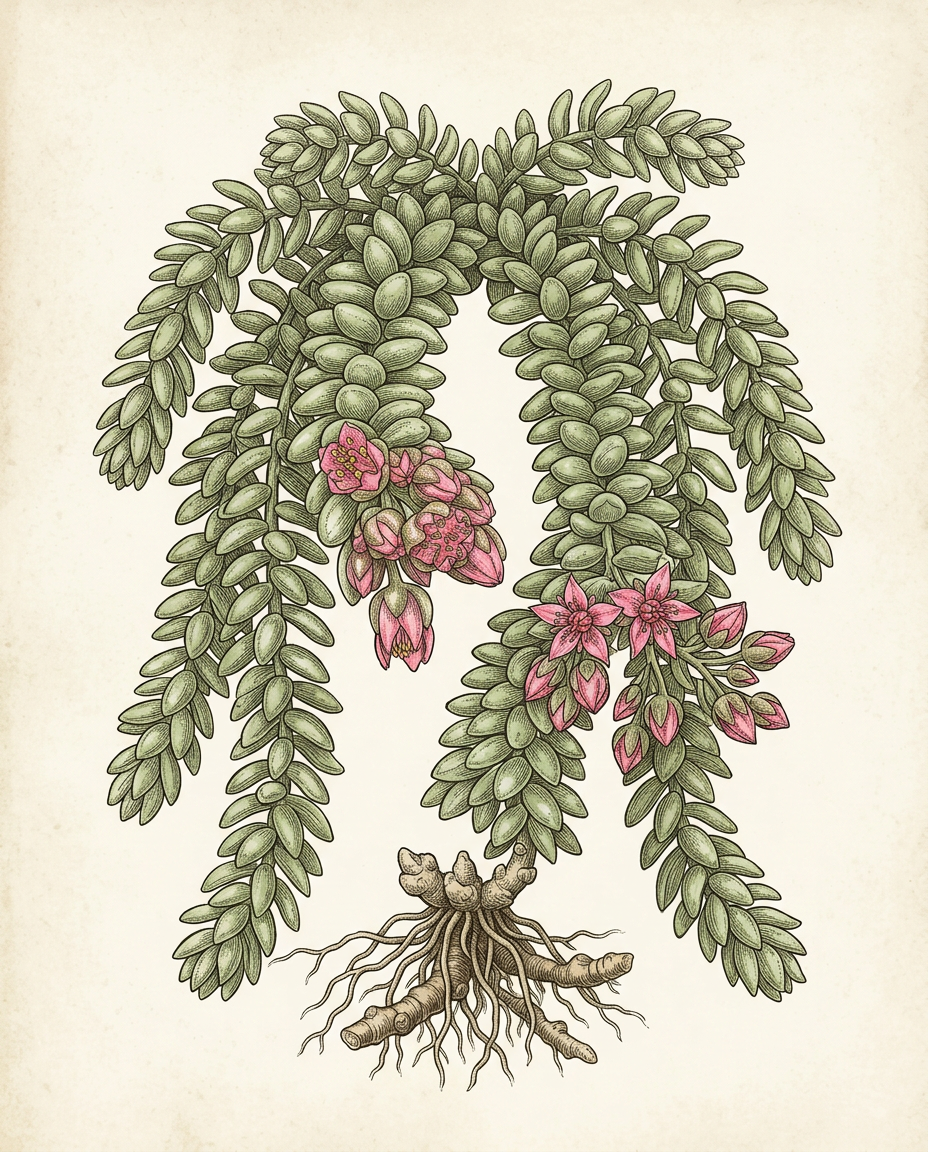
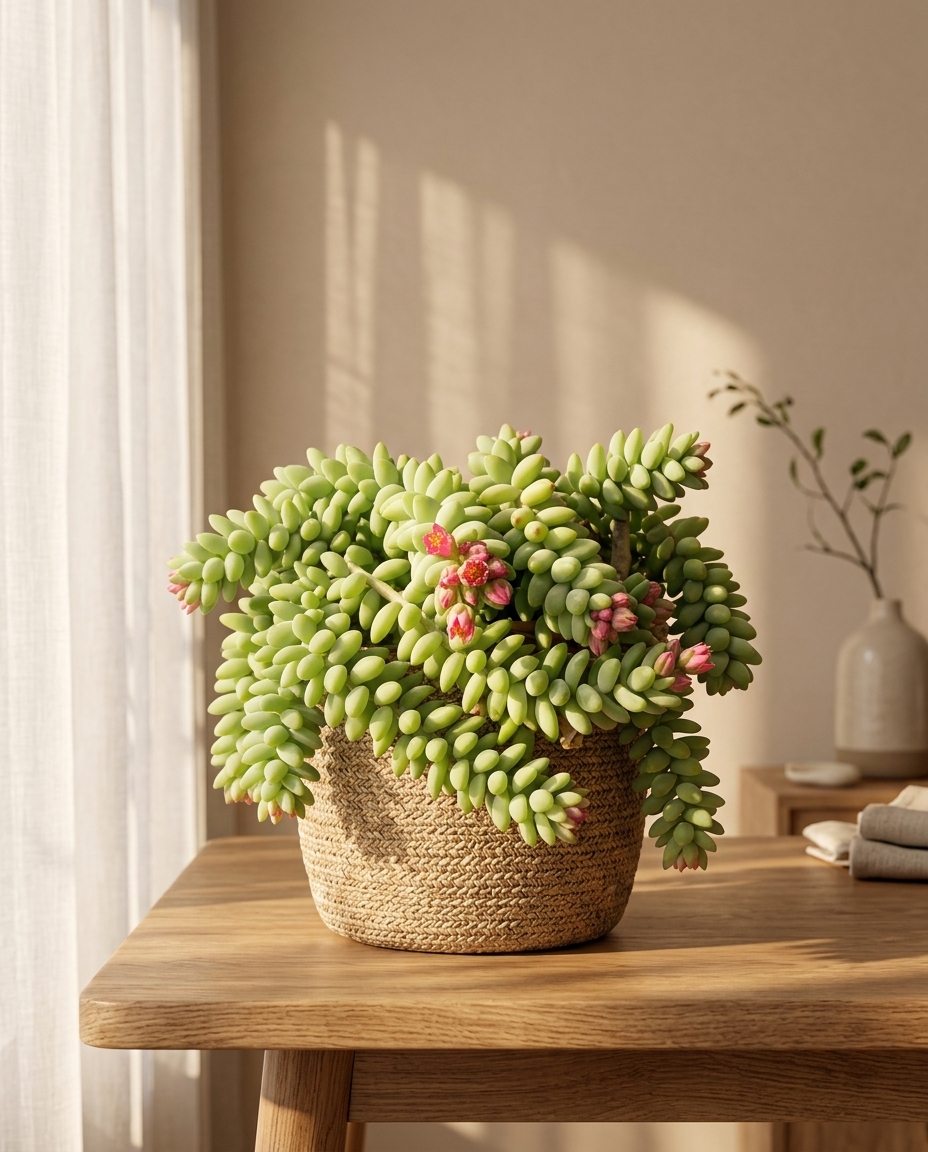
Plate ISedum morganianum — Burro's Tail. Long trailing stems densely packed with plump overlapping blue-green leaves. Crassulaceae. ASPCA non-toxic.
Why burro's tail is a safe hanging-basket choice.
Yes — Burro's Tail is safe for cats. The ASPCA lists Sedum morganianum (also called Donkey's Tail, Horse's Tail, and Lamb's Tail) as non-toxic to dogs, non-toxic to cats, and non-toxic to horses. It is the plump overlapping-leaf trailing succulent that fills cat-friendly hanging baskets.
The ASPCA verdict, verbatim: Non-Toxic to Dogs, Non-Toxic to Cats, Non-Toxic to Horses · Family: Crassulaceae · Additional Common Names: Horse's Tail, Donkey's Tail, Lamb's Tail · Scientific Name: Sedum morganianum.
Critical disambig — not String of Pearls
This is the single most important point on this page. Burro's Tail and String of Pearls are both trailing succulents for hanging baskets, both popular Instagram houseplants, and both frequently confused — but they are completely different plants with different cat-safety status.
- Burro's Tail (this page) — Sedum morganianum. Plump overlapping blue-green leaves like tightly packed grapes along the stem. ASPCA non-toxic.
- String of Pearls — Senecio rowleyanus. Perfectly spherical pea-sized green beads spaced along thin stems. ASPCA toxic to cats.
They look genuinely different in person — Burro's Tail looks like a chubby braid, String of Pearls looks like a green-bead necklace. But online plant-care content sometimes confuses them, and big-box garden centres occasionally mislabel. If you are not sure which one you have, photograph the plant against both pages before letting cats near.
The classic safe hanging-basket succulent
Burro's Tail is the single best-known cat-safe trailing succulent. It tolerates extreme drought, propagates from any dropped leaf, and grows long pendulous stems (a mature plant can trail 60 cm). The ASPCA non-toxic verdict covers leaves, stems, and the rare bloom — no toxic principles documented anywhere in the plant.
The practical risk in a cat home is not toxicity but leaf drop. Sedum morganianum leaves are notoriously loosely attached — they detach at the slightest touch. A cat batting at the trailing stems will scatter leaves on the floor. None of this is dangerous (the leaves remain non-toxic on the floor), but the plant's silhouette degrades fast. Hang above cat-jumping height to preserve the visual.
The dropped leaves root themselves
The leaf-drop trait has a silver lining: every dropped leaf is a viable propagation cutting. Lay any dropped leaf on top of dry cactus soil and leave it undisturbed for a few weeks — a new plantlet will form at the base. This makes Burro's Tail one of the easiest succulents in the world to propagate. If your cat is regularly knocking leaves off, you have an unending supply of free plants.
Care notes
- Light — Bright direct sun. Insufficient light stretches the stems and produces sparse pale leaves.
- Water — Deep, very infrequent. The plant tolerates extreme drought. Over-watering is the only common cause of death (stem rot).
- Soil — Gritty cactus-and-succulent mix with extra perlite.
- Placement — Hanging basket above cat-jumping height. The plant is safe; the silhouette is fragile.
Pair with other safe trailing or succulent plants
For a cat-friendly hanging-basket or succulent collection:
- Spider Plant — the easiest safe trailing plant for a hanging basket.
- Swedish Ivy — soft cascading vine for the same hanging-pot role.
- Wax Plant — Hoya carnosa with porcelain flowers, ASPCA non-toxic.
- Echeveria and Painted Lady — rosette succulents for windowsills.
- Plush Plant — sibling safe Echeveria with velvety leaves.
Avoid in a cat-safe hanging-basket arrangement: String of Pearls (the toxic lookalike), Pothos and Satin Pothos (oxalate-toxic trailing Araceae), Philodendron, and English Ivy (saponin-toxic vines).
What we have actually seen.
Leaves drop easily on contact
Burro's Tail leaves are loosely attached and drop at the slightest touch — a cat batting at the trailing stems will scatter leaves on the floor. Non-toxic but messy.
Dropped leaves root readily
Every dropped leaf is a viable propagation cutting. If you let leaves sit in soil they will start new plants. This is the easiest succulent to propagate.
No toxic ingestion records
ASPCA marks Burro's Tail non-toxic with no clinical signs entry. A cat chewing dropped leaves faces no toxic risk.
String of Pearls confusion
Burro's Tail and String of Pearls are both trailing succulents but are completely different plants. String of Pearls (Senecio rowleyanus) is toxic to cats. The leaves of Burro's Tail are plump and overlapping; String of Pearls leaves are spherical beads. See the disambig block.
Four common varieties.
Morganianum (classic)
The standard species — plump overlapping blue-green leaves on long pendulous stems.
Burrito (rounder leaves)
A shorter rounder-leaved selection sometimes sold as Sedum 'Burrito' or Sedum burrito. Same safety profile, more compact form.
Keeping the plant alive.
Bright direct
Several hours of direct sun maintains the compact form and blue-green colour. Insufficient light stretches the stems and produces sparse leaves.
Deep, very infrequent
Soak the pot, then let the soil dry completely. Burro's Tail tolerates extreme drought; over-watering and stem rot are the only common deaths.
Gritty, free-draining
Cactus and succulent mix with extra perlite. Standard houseplant compost holds too much water for a hanging Sedum.
Hanging basket
Hang above cat-jumping height. The plant is non-toxic but the trailing stems are fragile — cats batting at them will dislodge leaves and detach whole stems over time.
- ASPCA Animal Poison Control Center. Toxic and Non-Toxic Plants: Burro's Tail.Accessed June 2026 · aspca.org · Sedum morganianum · Non-Toxic to Dogs, Non-Toxic to Cats, Non-Toxic to Horses · Family Crassulaceae · Additional Common Names: Horse's Tail, Donkey's Tail, Lamb's Tail
- ASPCA Animal Poison Control Center. Toxic and Non-Toxic Plants: String of Pearls.For the toxic-lookalike contrast — Senecio rowleyanus is on the toxic list
If you liked this, also safe.