String of
Pearls.
Senecio rowleyanus
String of pearls is toxic to cats. The ASPCA documents it in their succulents-and-pets guidance as causing vomiting, diarrhea, drooling and lethargy on ingestion, and skin irritation on contact.
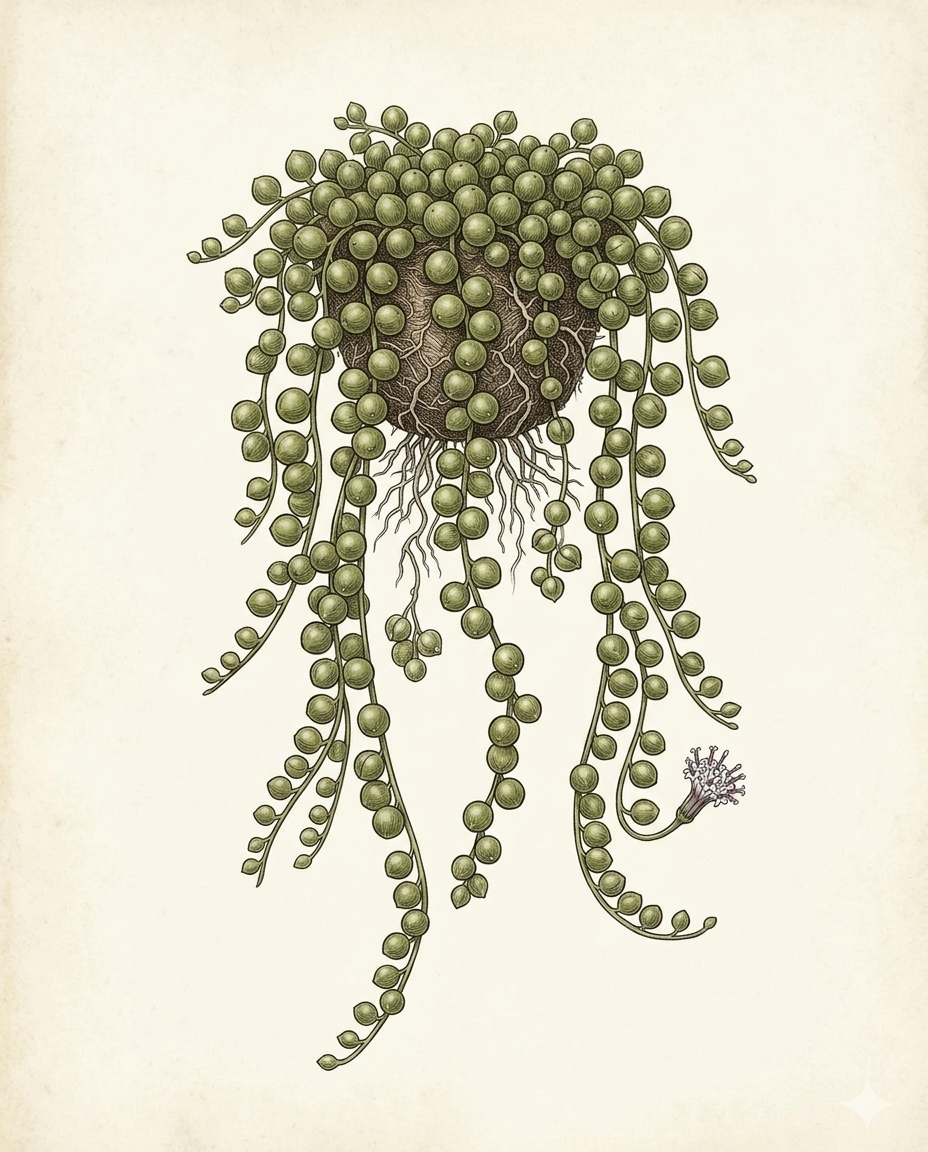
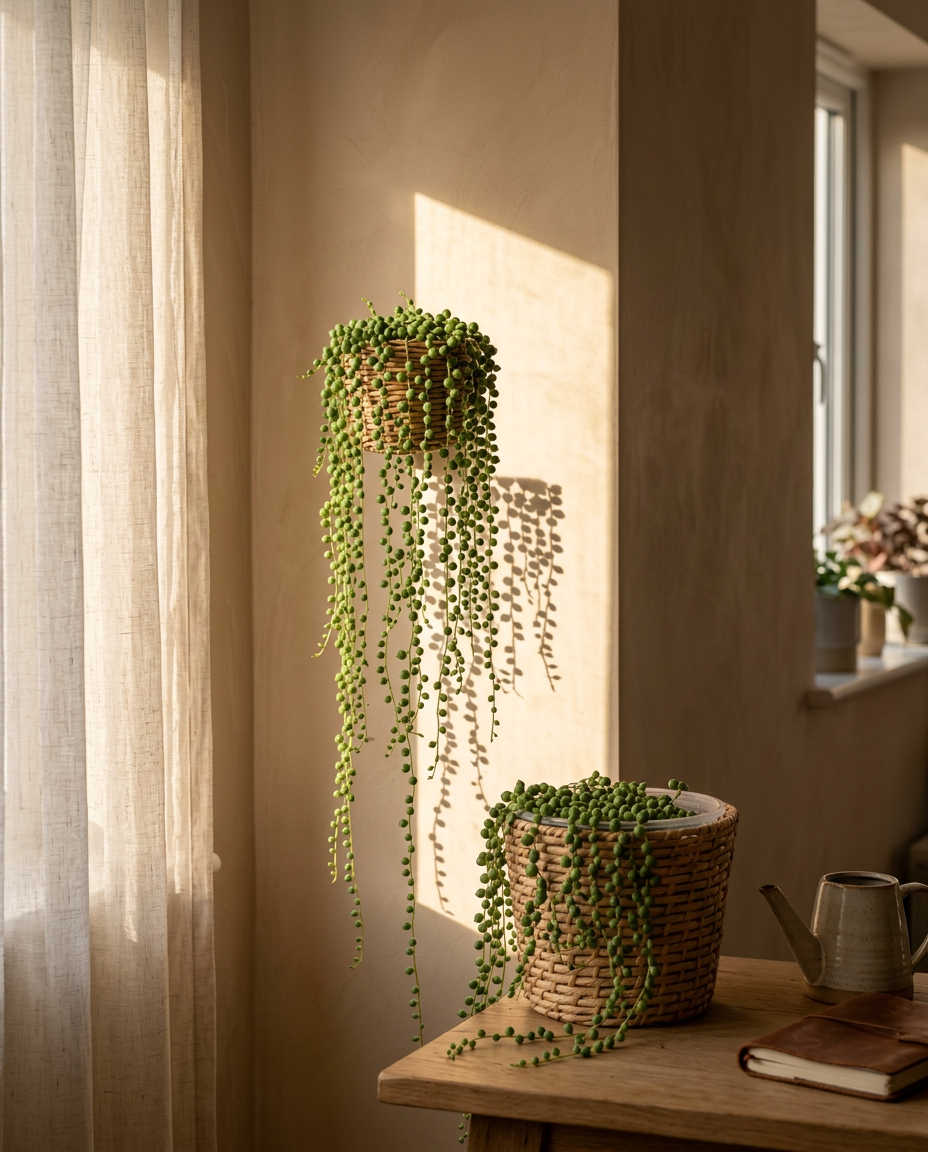
Plate ISenecio rowleyanus — the trailing succulent with pea-sized leaves. Compounds across the Senecio genus make every pearl mildly toxic to the feline gut and skin.
Three plants that look the part, without the risk.
Trailing, cascading plants for hanging baskets without the Senecio alkaloids — these three are ASPCA non-toxic and deliver the same Instagram-bait silhouette.
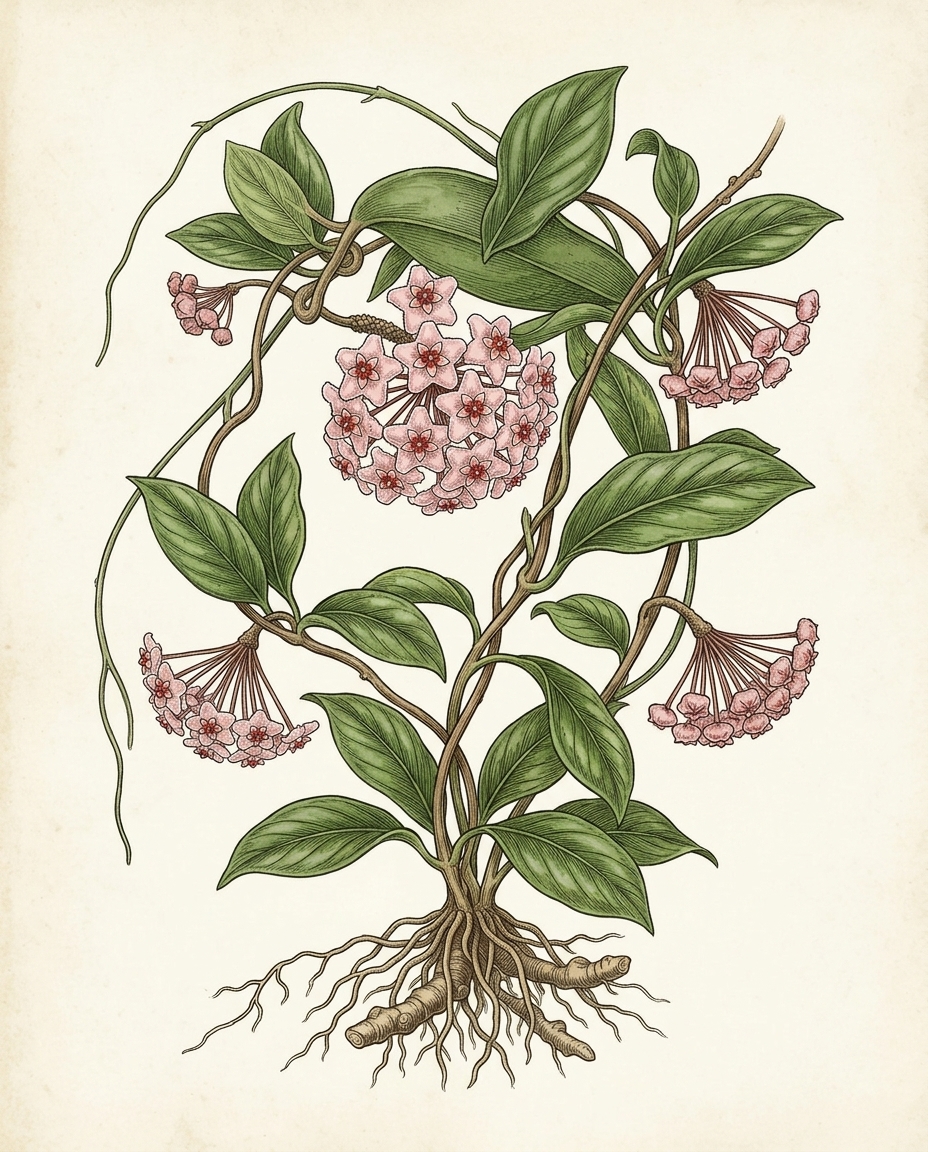
Wax Plant (Hoya)
The classic cat-safe trailer. Thick waxy leaves, occasional clusters of star-shaped flowers, ASPCA non-toxic.
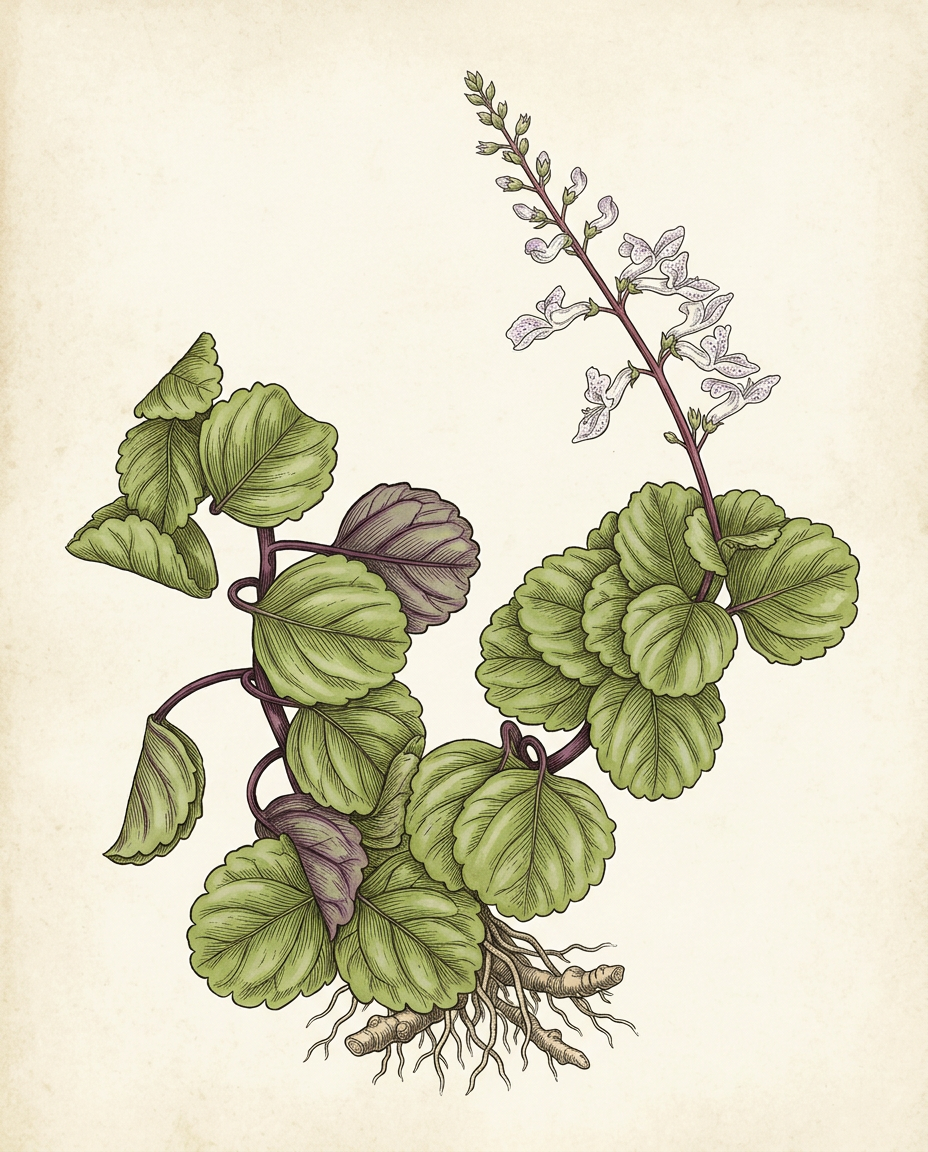
Swedish Ivy
Cascading scalloped leaves for a hanging basket. ASPCA non-toxic and fast-growing.
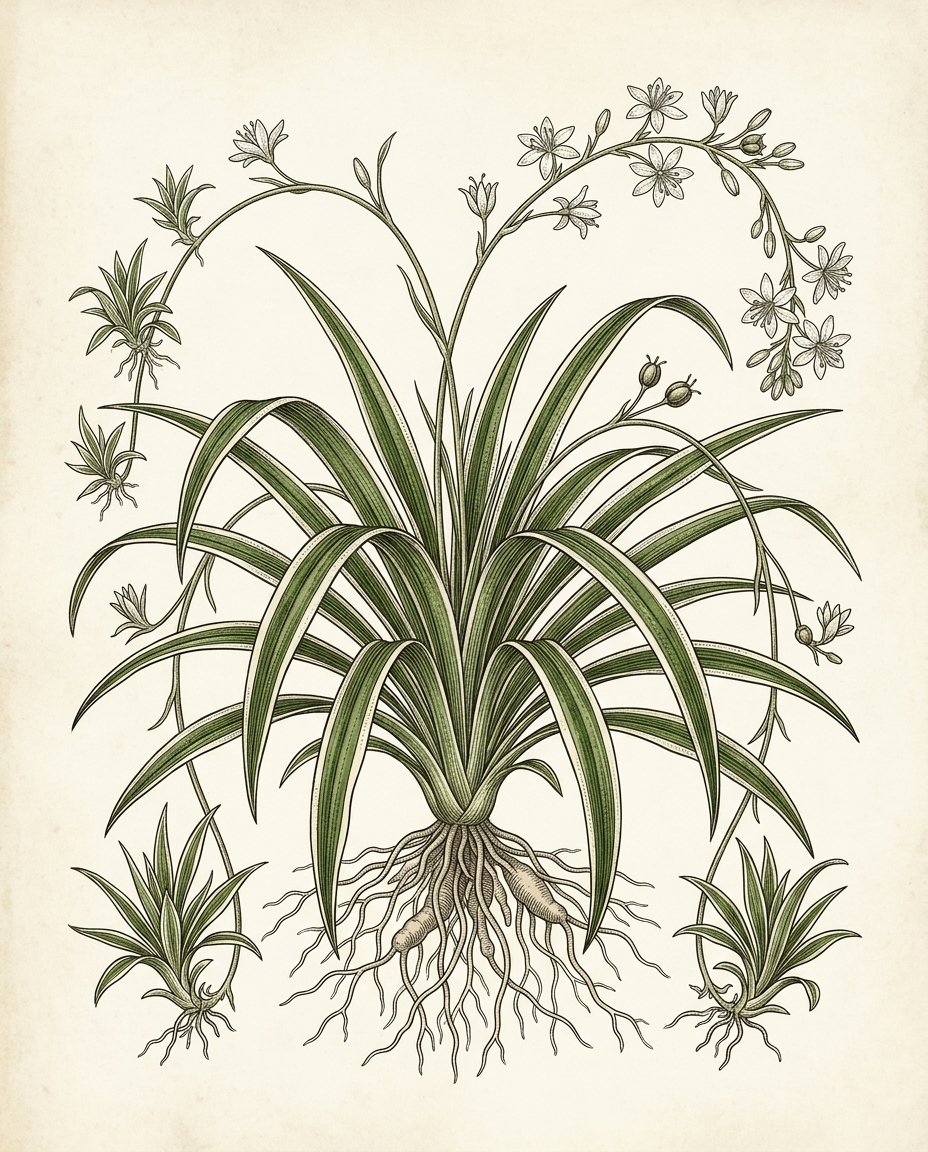
Spider Plant
Arching striped leaves and trailing pups. ASPCA non-toxic and famously forgiving.
What it does to a cat.
Yes — string of pearls is toxic to cats. The ASPCA explicitly names string of pearls (Senecio rowleyanus) in its succulents-and-pets guidance as causing vomiting, diarrhea, drooling, and lethargy on ingestion, with skin irritation on contact. The toxic principles are alkaloids and irritant compounds found across the Senecio genus.
Most cats recover on their own within a day or two. Vomiting and drooling appear within hours, diarrhea may follow, and the cat is usually flat and uninterested in food for the duration. Severe cases are uncommon but worth a vet call when they happen.
Why every "string of" succulent is a problem
The internet has made trailing Senecios into a category — string of pearls, string of bananas (Senecio radicans), string of dolphins (Senecio peregrinus), string of fishhooks (Senecio radicans "fishhooks"). They are all Senecios. They all carry the same alkaloid family. Treat them all as toxic; the only one with a clean ASPCA non-toxic listing is none of them.
Hanging is not a safe storage strategy
The natural instinct is to hang it high. The problem is that cats are climbers and the strands hang down into batting range. A bookshelf cat can swat a single pearl off and chew it before the owner notices. Genuinely cat-safe placement means a different plant, not a different hook.
Safer trailing alternatives
For the cascading aesthetic, wax plant (Hoya carnosa) is the closest cat-safe substitute — thick waxy leaves, trailing habit, occasional clusters of fragrant star-shaped flowers, ASPCA non-toxic. Swedish ivy and spider plant also fill the hanging-basket role without the Senecio chemistry. For other safe succulents, haworthia is the standout.
If your cat has eaten some
Most cases self-resolve. Withhold food briefly, monitor for vomiting and stool changes over 24 to 48 hours, and call ASPCA Animal Poison Control at (888) 426-4435 if you see severe or persistent signs. Bring a strand or a clear photo to the vet for identification.
What we have actually seen.
Vomiting
The most common sign. Onset is usually within a few hours of ingestion as the GI tract responds to the irritant compounds.
Drooling and oral irritation
Cats often drool heavily before vomiting. The sap is bitter and irritating to the mouth and tongue.
Diarrhea and lethargy
GI upset can extend over 24 to 48 hours. Affected cats are usually flat and uninterested in food during that window.
Contact dermatitis
Sap from broken pearls or stems can cause redness or itchiness on skin and around the muzzle where the cat chewed.
- ASPCA. Are Succulents Safe to Have Around Pets?ASPCA news — explicitly lists string of pearls as toxic
- Pet Poison Helpline. Senecio species toxicity in companion animals.Clinical reference · 2024