Geranium
Pelargonium spp.
The plant commonly sold as "geranium" is Pelargonium, and the ASPCA lists it as toxic to cats. The essential oils geraniol and linalool cause vomiting, loss of appetite, depression, and contact dermatitis.
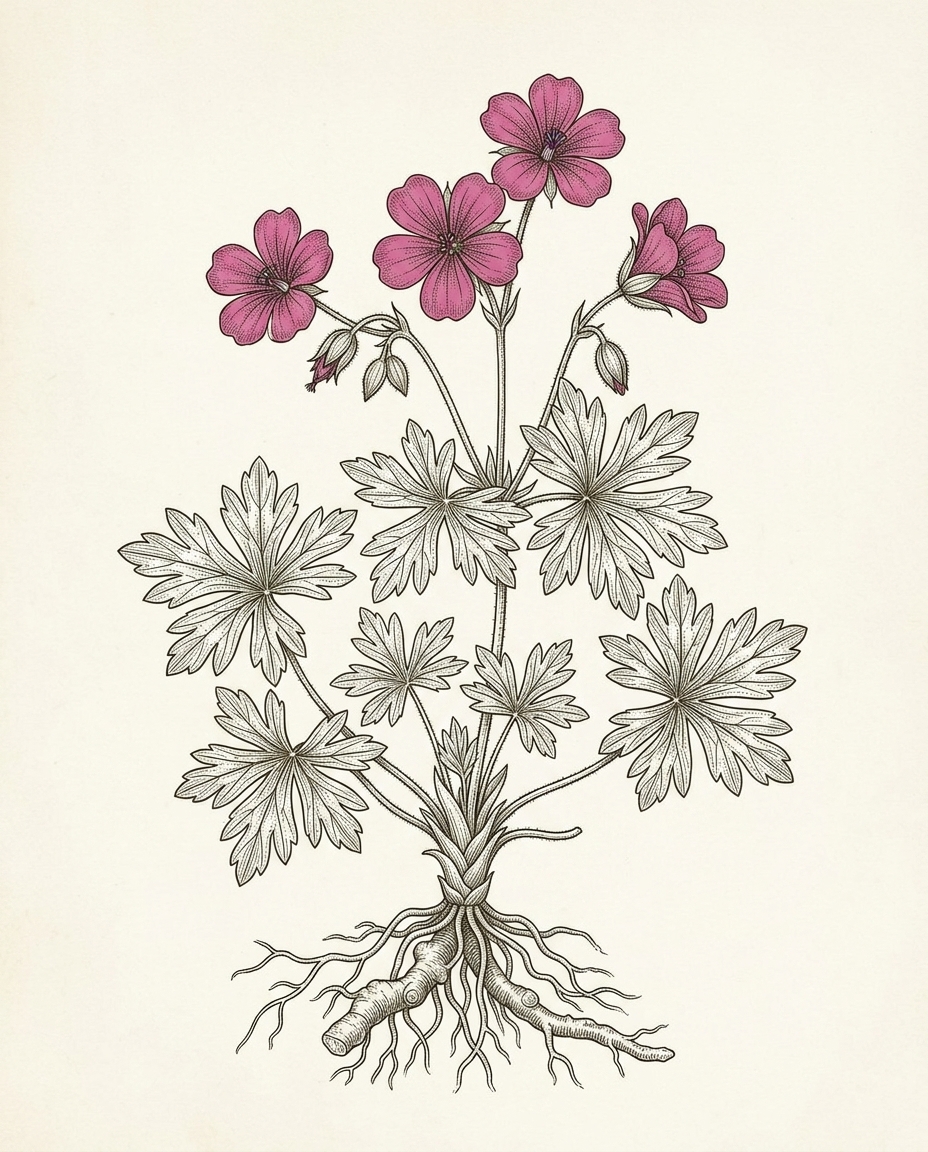

Plate IPelargonium species — the cottage and windowbox staple sold everywhere as "geranium". Not the same plant as hardy true geraniums (cranesbills), which are not listed by the ASPCA.
Three plants that look the part, without the risk.
Cheerful windowsill flowers without geraniol — these three give the same bright cottage look on a cat-safe sill.
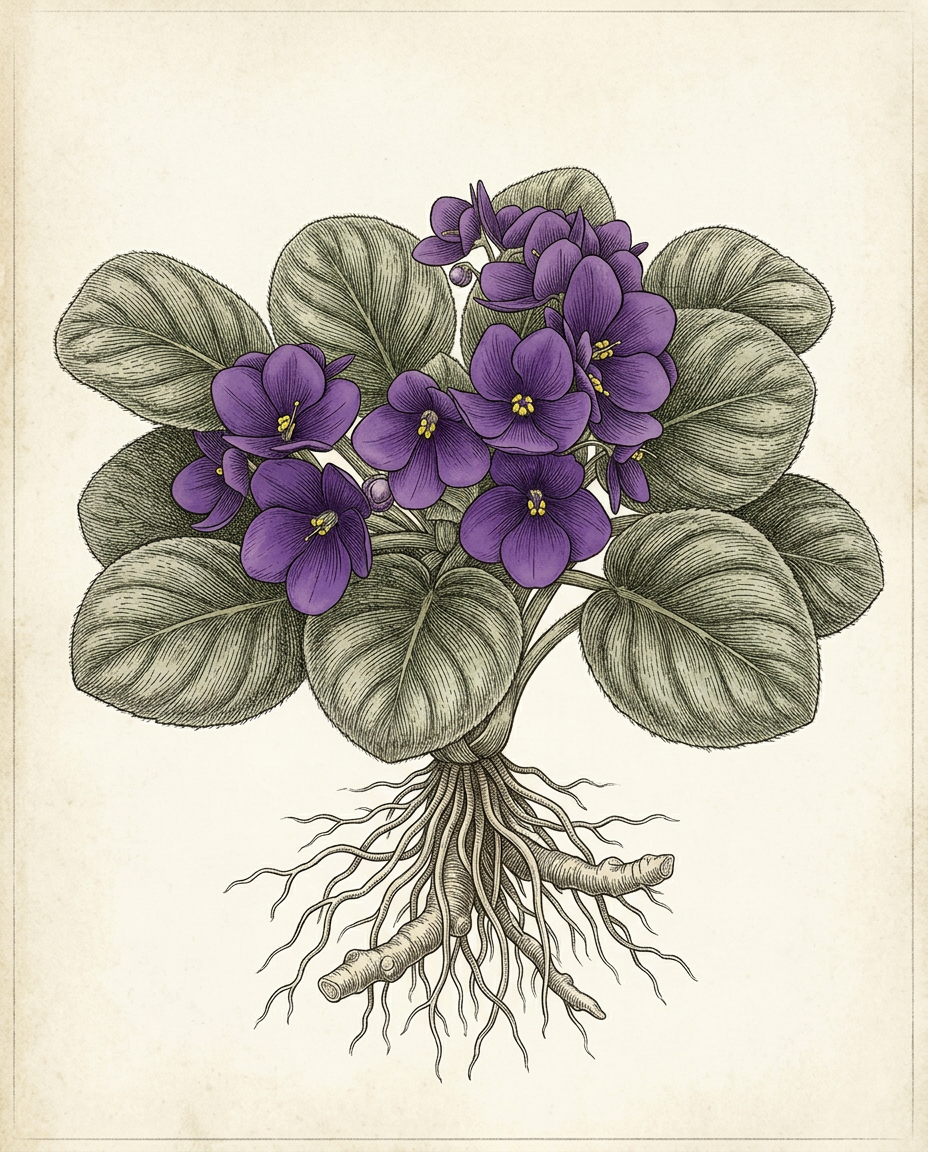
African Violet
Compact, bright blooms in pink, purple, and red. ASPCA non-toxic and tolerates the same indirect light.
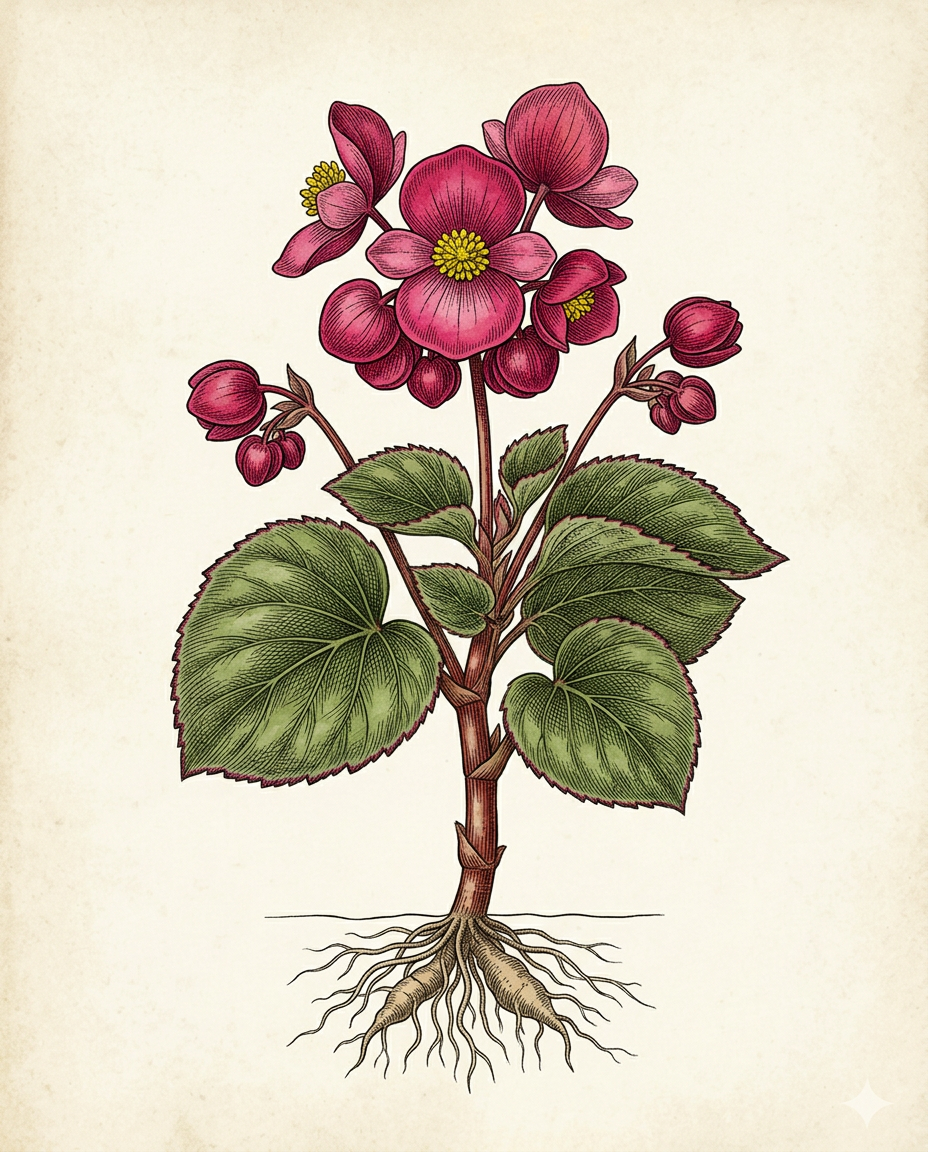
Begonia
Bright flowers and patterned leaves for the same windowsill role. ASPCA non-toxic species (wax begonia, Rieger) — check the species before buying.
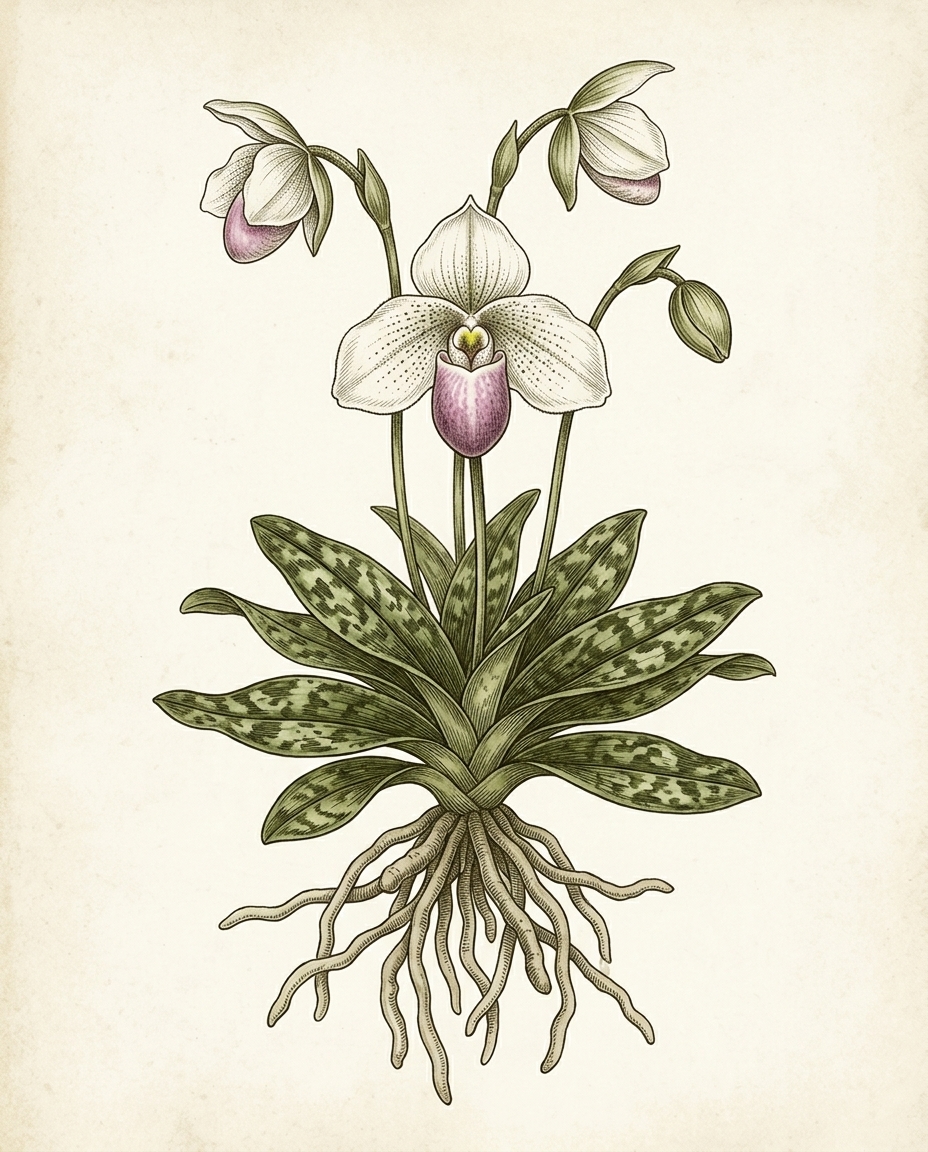
Orchid
Long-lasting bright blooms with no irritant oils. ASPCA non-toxic.
What it does to a cat.
Yes — the plant most people call "geranium" is toxic to cats. The ASPCA lists Pelargonium species — the bedding, windowbox, and cottage-garden flower — as toxic to cats, dogs, and horses. The toxic principles are geraniol and linalool, two essential oils that irritate the GI tract and skin.
Toxicity is mild. The plant rarely causes serious illness on its own. What matters more is the disambiguation problem (Pelargonium vs hardy Geranium) and the much higher risk of the essential oils extracted from the plant.
Pelargonium versus true Geranium
The common name "geranium" is used for two completely different genera. The cottage-garden bedding plant — bright red, pink, salmon, or white clustered flowers on a stocky stem — is Pelargonium. It came from southern Africa and is the plant the ASPCA lists as toxic.
True Geranium (also called cranesbill) is a hardy perennial native to Europe and North America. It is a different genus, in the same family, and the ASPCA does not list it as toxic to cats. The two are often sold under the same name. Always check the Latin binomial: Pelargonium — toxic per ASPCA; Geranium — not listed.
Why the essential oil matters more than the plant
A cat that nibbles a leaf gets a sore mouth and a brief upset stomach. A cat exposed to concentrated geranium essential oil — by ingestion, by diffuser, by topical "natural" flea repellent — can develop serious neurological signs. Cats lack the liver enzyme (glucuronyl transferase) that mammals use to metabolise many essential oils. Geraniol and linalool accumulate and can cause weakness, tremors, and liver injury.
Treat the live plant as mildly toxic. Treat anything labelled "geranium oil" as a much bigger problem and keep it out of the house.
What to do if your cat ate geranium
Most cases self-resolve within 24 to 48 hours. Withhold food briefly, then offer water. Check the paws and mouth for redness. Call a vet if vomiting persists or appetite does not return within a day. ASPCA Animal Poison Control is available 24/7 at (888) 426-4435.
Cat-safe substitutes
For the same compact, bright-bloomed windowsill role, African violet is the closest match — ASPCA non-toxic and tolerant of similar light. Begonia (the wax and Rieger types) and orchids cover the bright-colour palette without the essential oils.
For the related essential-oil hazard, see our lavender and eucalyptus pages.
What we have actually seen.
Vomiting and loss of appetite
Most common sign within hours of eating leaf or flower. Essential oils irritate the GI tract.
Drooling
Geraniol and linalool are intensely aromatic. Many cats salivate heavily before swallowing — a useful aversion signal.
Depression and lethargy
Brief reduced energy and appetite. Most cats return to baseline within 24 to 48 hours.
Contact dermatitis
Sap on skin or paws can produce redness and irritation. Geraniol is a known sensitiser in cats with repeated contact.
- ASPCA Animal Poison Control Center. Toxic and Non-Toxic Plants: Geranium.Accessed June 2026 · aspca.org · Toxic Principles geraniol, linalool · Pelargonium species
- Pet Poison Helpline. Essential oil toxicity in cats.Clinical reference · 2024
- Merck Veterinary Manual. Essential oil and aromatic plant toxicosis in companion animals.Standard small-animal toxicology reference