Hens and
Chickens.
Echeveria elegans
Yes — hens and chickens (Echeveria elegans) are safe for cats. The ASPCA lists them as non-toxic. CRITICAL: There is a different plant with nearly identical common names — Sempervivum tectorum (alpine hens and chicks) is also likely safe but NOT ASPCA-verified. Know the genus.
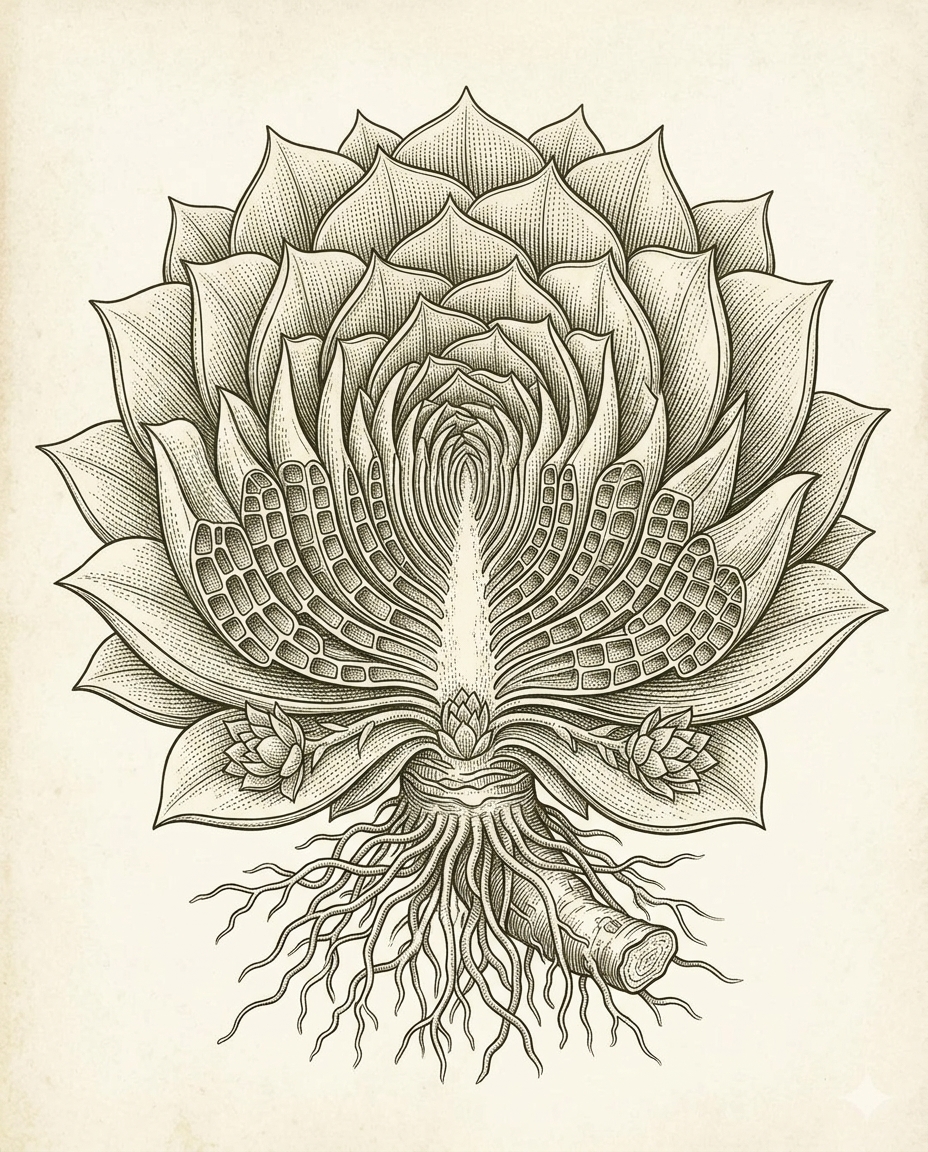
Plate IHens and chickens (Echeveria elegans) — a succulent rosette with mother plant surrounded by baby offsets. Completely non-toxic to cats per ASPCA.
Hens and chickens are— safe and endlessly propagating.
Yes — hens and chickens are safe for cats. The ASPCA lists them as non-toxic to cats.
But here's a naming confusion: There are two plants called "hens and chickens" (or "hens and chicks"). This page covers Echeveria elegans, which is ASPCA safe. There's also Sempervivum tectorum (alpine hens and chicks), which is a different plant — outdoor, hardy, and NOT ASPCA-verified (though likely safe). When shopping, verify the genus.
ASPCA Data
According to the ASPCA:
Toxic Principles: Non-toxic. (Listed under Plants Non-Toxic to Cats.)
Echeveria elegans is completely safe for homes with cats.
The Naming Trap: Echeveria vs Sempervivum
| Common Names | Latin Name | Family | Toxicity | Habitat | |---|---|---|---|---| | Hens and Chickens, Hens and Chicks | Echeveria elegans | Crassulaceae | ASPCA Safe | Houseplant, tender | | Alpine Hens and Chicks, Alpine Hens and Chickens | Sempervivum tectorum | Crassulaceae | Unverified (likely safe) | Outdoor, hardy, mountain |
Both are Crassulaceae succulents. Both produce "chicks" (offsets). Both look similar. But they're different genera with different ASPCA verdicts.
How to tell them apart:
- Echeveria: Tender houseplant, grows indoors year-round, blue-grey or pink leaves, smaller offsets
- Sempervivum: Hardy alpine, outdoors, survives freezing winters, thicker leaves, larger rosettes
When you buy, ask: "Is this Echeveria elegans or Sempervivum tectorum?" ASPCA only lists Echeveria as safe; Sempervivum is unverified.
What You're Growing
Hens and chickens (Echeveria elegans) feature:
- Mother rosette — Tight, symmetrical rosette of fleshy blue-grey or pink leaves
- Baby offsets — Small "chick" rosettes cluster around the mother plant's base
- Prolific reproduction — The mother plant constantly produces babies; one becomes dozens
- Spring flowers — Pink or red flowers on tall stalks (but the plant dies after flowering; remove flower stalks to prevent this)
- Nearly indestructible — Thrives on neglect and sparse water
It's the gateway succulent — easy, beautiful, and nearly impossible to kill.
Growing Hens and Chickens
Light: Bright, direct sunlight is essential. South or west-facing window. Low light causes the rosette to stretch and become weak and pale. No "bright indirect" — these plants need intensity.
Water: Water very sparingly. Only when the soil is completely dry — typically every 2–3 weeks in summer, zero in winter. Succulents store water in leaves. Overwatering is the #1 killer.
Soil: Use gritty, extremely well-draining soil. Mix 60% potting soil with 40% perlite or coarse sand. Standard soil retains too much moisture and causes root rot.
Propagation: Echeveria are prolific. Baby offsets ("chicks") form constantly around the mother rosette. Pinch them off and place on dry soil. Roots emerge in 1–2 weeks without watering. One of the easiest plants to propagate — almost impossible to fail.
The "Chicks" Keep Coming
Within a year, one Echeveria elegans plant spawns dozens of offset chicks. You can:
- Leave them attached — They cluster around the mother, creating a fuller plant
- Pinch them off — Remove at any size and propagate into new pots (they root quickly)
- Share them — Give them to friends; everyone loves free plants
This prolific nature is why hens and chickens are so popular and so cheap.
Blooming & Death
Echeveria bloom in spring with pink or red flowers on tall stalks. The plant produces one flower stalk and typically dies after flowering. To prevent this and keep the mother plant alive indefinitely, remove the flower stalk as soon as it appears. The plant will continue producing offset chicks even without flowering.
Safe for Cats
Your cat can brush against the rosettes, chew the leaves (which taste bad and will deter most cats), or knock over the pot without any toxin risk. Echeveria are tough and handle accidental cat interactions well.
The main risk: a knocked-over pot could break the rosette — but that's about plant durability, not cat safety.
Important: Verify the Genus
When buying, make sure you're getting Echeveria elegans (ASPCA safe), not Sempervivum tectorum (alpine, outdoor, unverified). Check the label or ask the seller. If unsure, assume it's the wrong one and don't buy it.
The Bottom Line
Hens and chickens (Echeveria elegans) are safe, prolific, nearly unkillable succulents. They bloom, produce dozens of offset chicks, and thrive on neglect. Grow them freely around cats with no toxin concern.
All parts of Echeveria elegans are non-toxic — leaves, stems, roots, and flowers.
What we have actually seen.
Prolific offset production
Mother plant spawns dozens of baby 'chicks' constantly. One plant becomes an entire colony within a year. Endlessly shareable.
Fleshy, attractive leaves
Blue-grey or pink rosettes are visually striking. Symmetrical, compact growth; fits any style.
Spring blooms before death
Pink or red flowers in spring, followed by mother plant death. Remove flower stalks to prevent death and keep mother plant alive indefinitely.
Nearly unkillable
Tolerates neglect, sparse water, and accidental damage. One of the easiest succulents. Perfect for beginners and busy gardeners.
Four common varieties.
Echeveria elegans (Blue-grey form)
Classic form with blue-grey rosettes. Mother plant produces offset "chicks" around the base. Easy, prolific propagation.
Echeveria elegans Metallica (Metallic-tinged form)
Similar to standard but with metallic/copper tones. Same care, slightly more dramatic appearance.
Keeping the plant alive.
Bright, direct sunlight
Full sun on south or west-facing window. Echeveria need intense light. Low light causes rosettes to stretch and weaken.
Water sparingly, infrequently
Water only when soil is completely dry. Succulents store water in leaves; overwatering kills them. Weekly watering in summer, zero in winter.
Gritty, very well-draining
Use 60% potting soil + 40% perlite or coarse sand. Standard soil retains too much moisture.
Offsets self-propagate
Pinch off baby rosettes ("chicks") and place on dry soil. Roots emerge in 1–2 weeks. Nearly foolproof.
- ASPCA Animal Poison Control Center. Toxic and Non-Toxic Plants: Hens and Chickens.Accessed June 2026 · aspca.org
If you liked this, also safe.