Devil's
Backbone.
Kalanchoe tubiflora
Devil's Backbone (Kalanchoe tubiflora — Mother of Millions, Chandelier Plant) is toxic to cats per the ASPCA. Bufadienolide cardiac glycosides cause vomiting, diarrhea, and (rarely) abnormal heart rhythm. Same toxin class as the related Kalanchoe blossfeldiana.
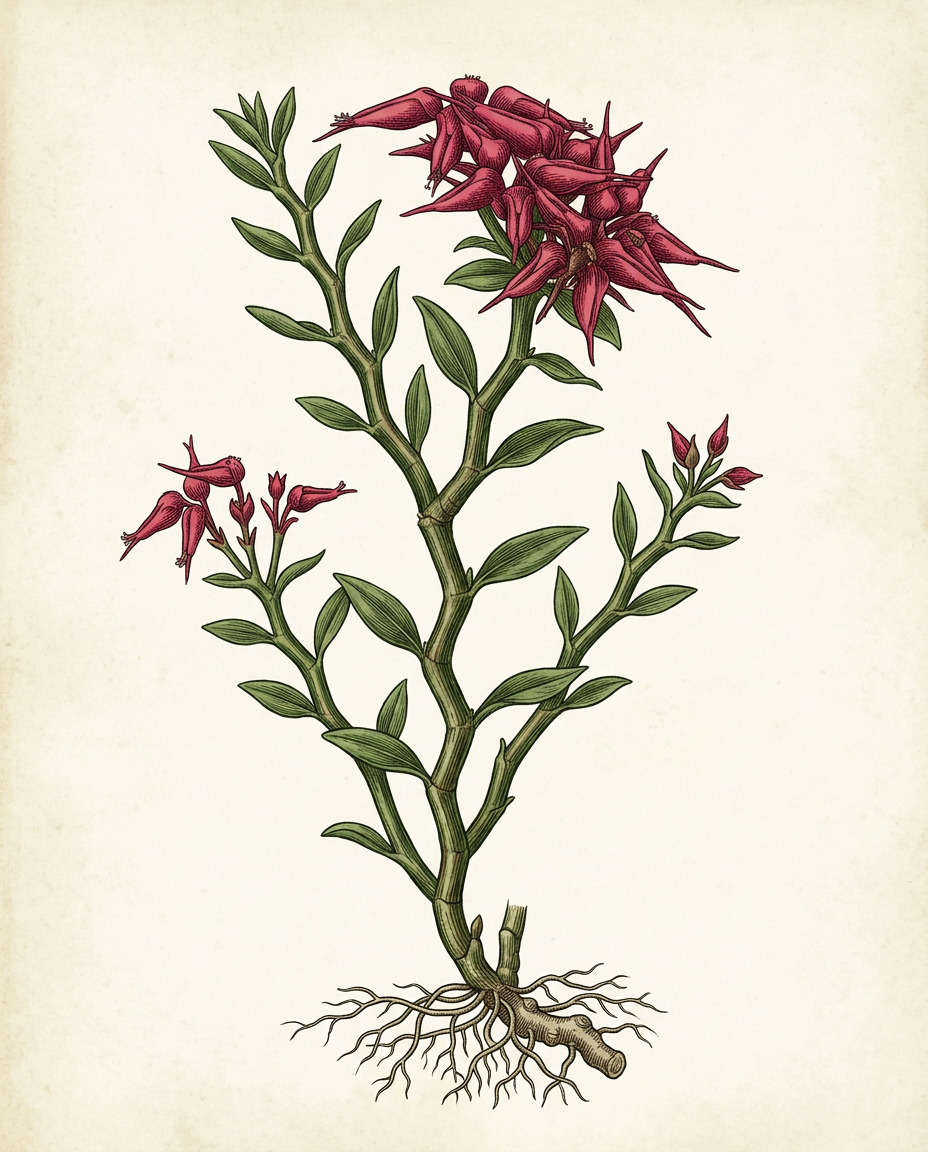
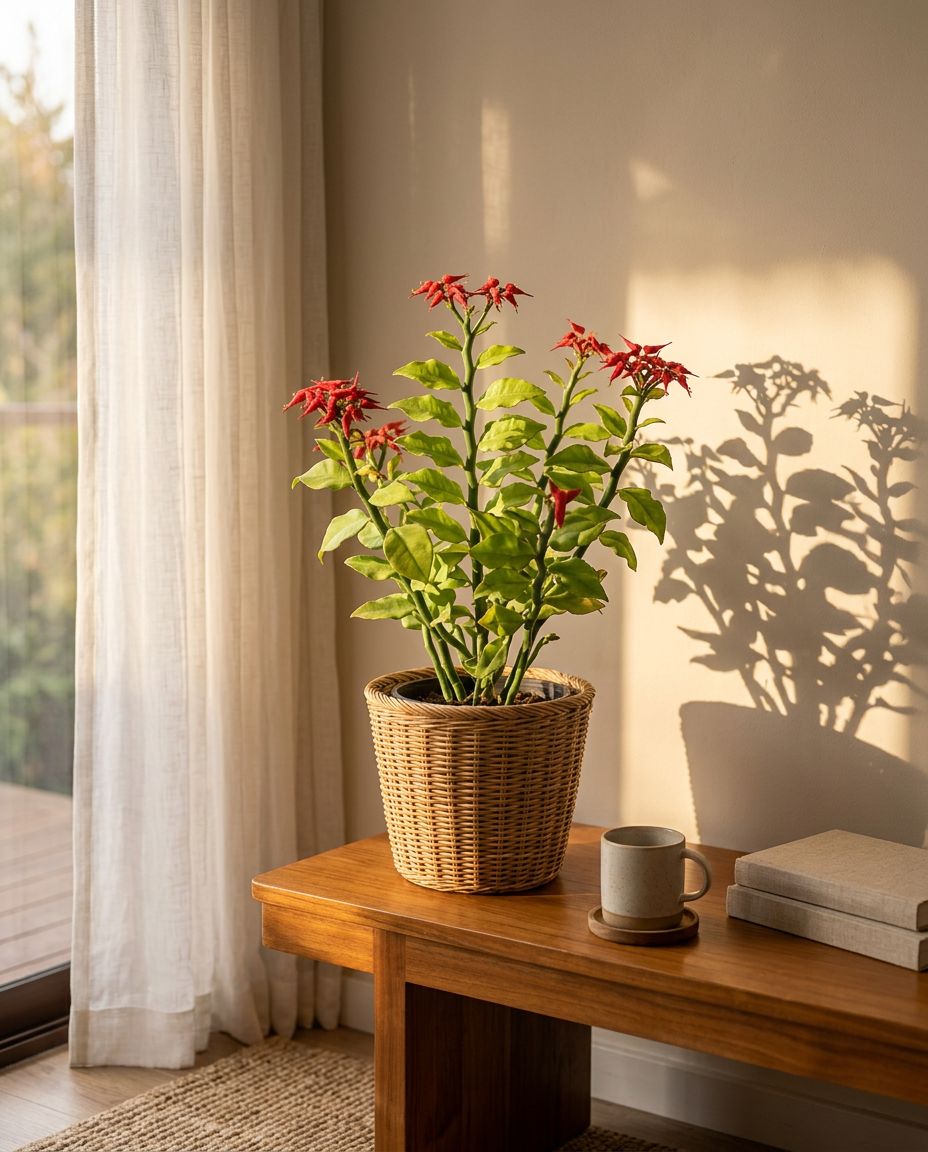
Plate IKalanchoe tubiflora — Mother of Millions. Tall narrow tubular leaves edged with rows of tiny plantlets. ASPCA toxic — bufadienolide cardiac glycosides.
Three plants that look the part, without the risk.
Trailing or upright succulents that are ASPCA non-toxic — the cat-safe alternatives for the same architectural look.
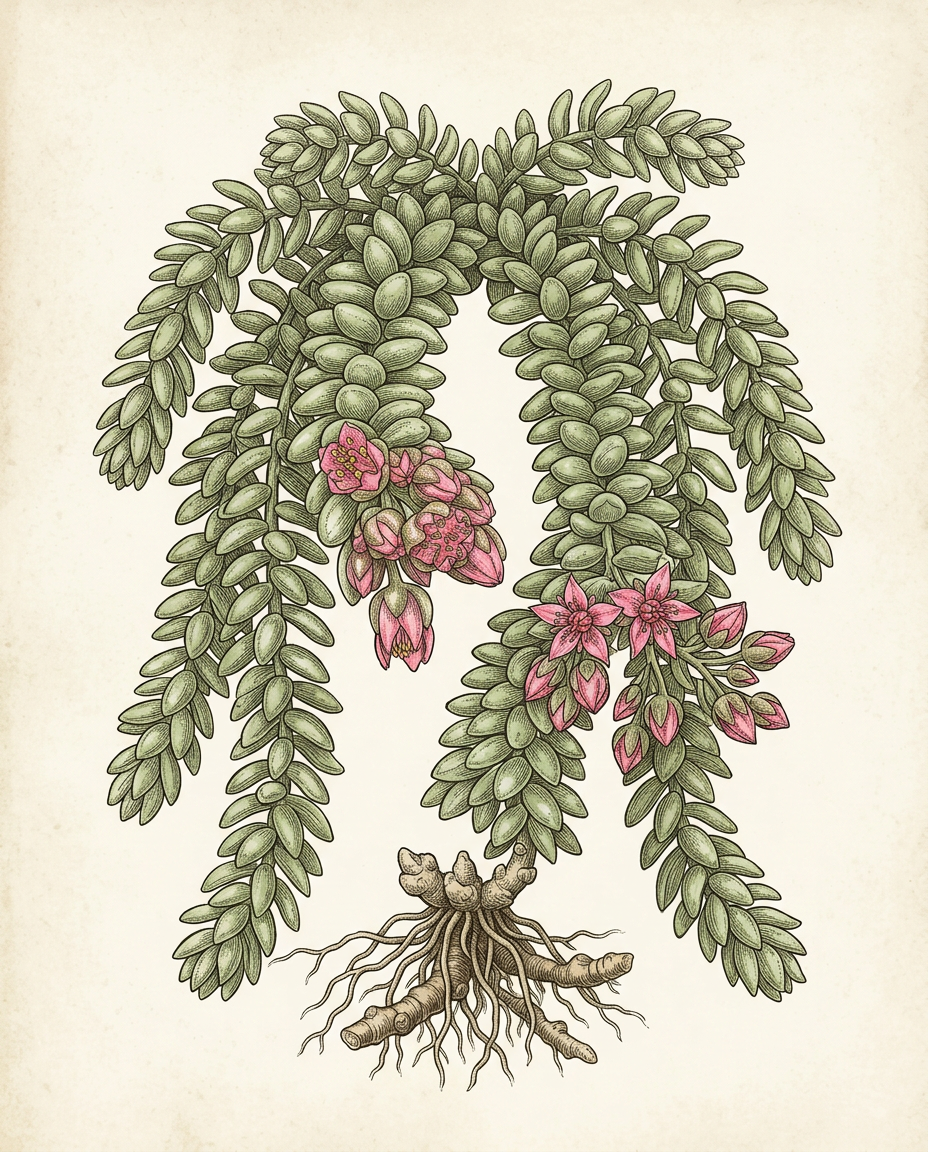
Burro's Tail
Trailing succulent for the same shelf or hanging-pot role. ASPCA non-toxic — Crassulaceae family without the bufadienolides.
Echeveria
Rosette succulent in a similar style. ASPCA non-toxic across the genus. The cat-safe Crassulaceae alternative.
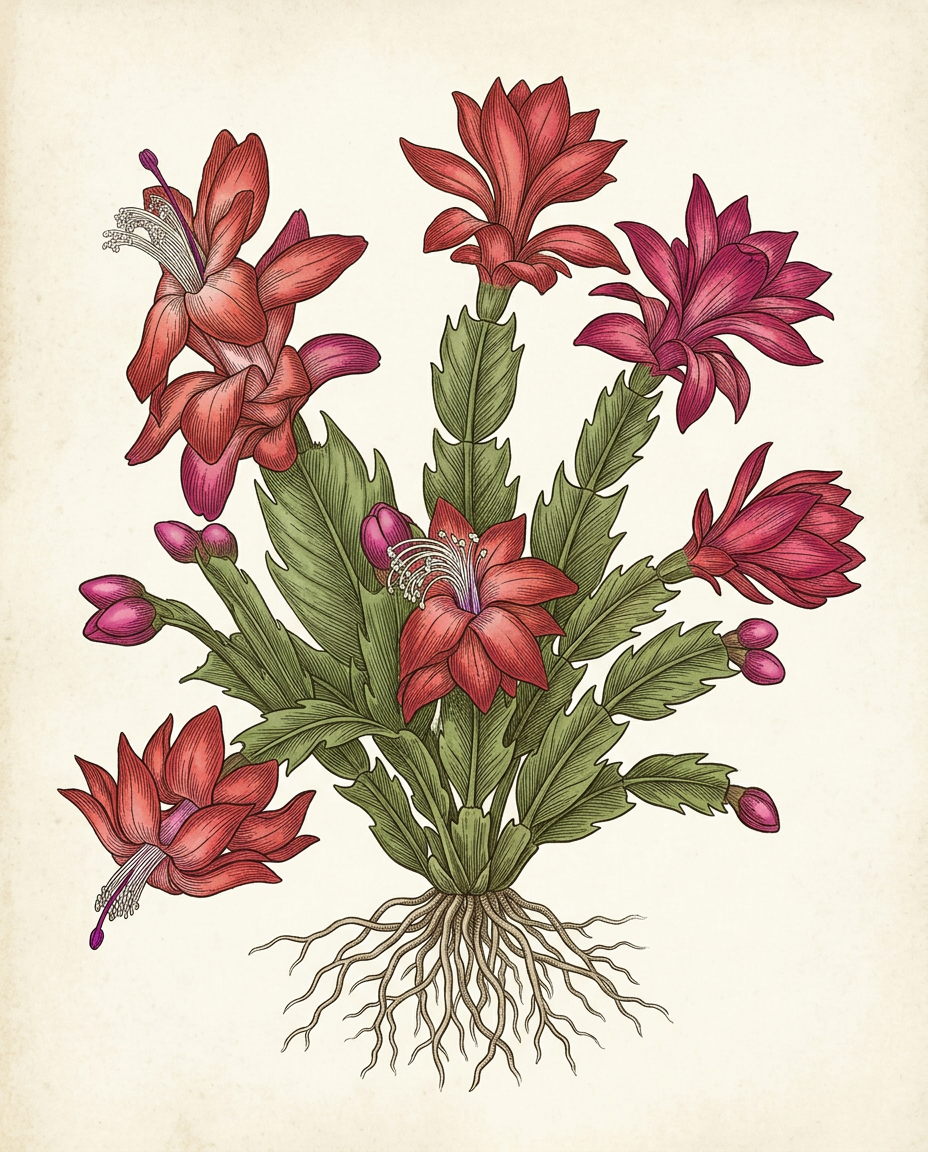
Christmas Cactus
Different family but similar low-maintenance houseplant profile. ASPCA non-toxic with bright winter flowers.
What it does to a cat.
Yes — Devil's Backbone is toxic to cats. The ASPCA lists Kalanchoe tubiflora (also called Mother of Millions, Chandelier Plant, and Mother-In-Law-Plant) as toxic to dogs and cats. The toxic principle is bufadienolides, a cardiac glycoside class. The clinical picture is mostly GI — vomiting and diarrhea — with rare cases of abnormal heart rhythm at high doses.
The ASPCA verdict, verbatim: Toxic to Dogs, Toxic to Cats · Family: Crassulaceae · Additional Common Names: Mother-In-Law-Plant, Kalanchoe, Chandelier Plant, Mother of Millions · Scientific Name: Kalanchoe tubiflora · Toxic Principles: Bufodienolides · Clinical Signs: Vomiting, diarrhea, abnormal heart rhythm (rare).
Sister species to the florist Kalanchoe
Devil's Backbone and the popular florist kalanchoe (Kalanchoe blossfeldiana — bright clusters of small flowers) are different species in the same genus. They both contain bufadienolide cardiac glycosides and they both appear on the ASPCA toxic list. From a cat-household perspective they are interchangeable — same toxin, same clinical picture, same advice.
The genus tag "Kalanchoe" is the practical handle. Anything from this genus deserves the same caution.
The Mother of Millions naming problem
The common name "Devil's Backbone" is shared between two completely different plants:
- Kalanchoe tubiflora (this page) — Crassulaceae succulent with tall narrow tubular grey-green leaves edged with tiny plantlets. Bufadienolide toxin.
- Pedilanthus tithymaloides — Euphorbiaceae succulent with zig-zag stems and small red shoe-shaped flowers. Latex sap toxin (same toxin family as our pencil cactus page).
If your "Devil's Backbone" has tubular leaves with rows of plantlets along the edges, you are on the right page. If yours has zig-zag stems with no plantlets, you have Pedilanthus, also toxic but a different toxin.
The most common name for K. tubiflora in the trade and in the search data is actually Mother of Millions, because of the trademark biology: hundreds of tiny pre-formed plantlets line the leaf edges, drop off, and root anywhere they land. Outdoors in warm climates (Florida, Hawaii, Texas, California, Australia) the plant is a serious invasive. Outdoor cats grazing the patch are at repeated exposure risk.
Cardiac glycosides — but at a much lower dose than oleander
Bufadienolides are pharmacologically similar to the digoxin in foxglove and the oleandrin in oleander. They all bind to the sodium-potassium pump in heart muscle and at high doses disrupt cardiac rhythm. The difference is concentration — Kalanchoe tubiflora contains them at much lower levels than oleander, which is why ASPCA flags the cardiac sign as "rare" rather than as the primary concern. Most household-pot exposures present as GI only.
That said: the cardiac fingerprint is what puts Kalanchoe on the take-seriously list. A cat showing lethargy, weakness, or any sign of an irregular pulse after eating a Kalanchoe needs vet contact promptly. Do not wait for full rhythm collapse.
Safe Crassulaceae alternatives
For the same succulent look without the bufadienolides:
- Burro's Tail — trailing succulent for the same shelf role. ASPCA non-toxic.
- Echeveria — rosette succulents across many cultivars. ASPCA non-toxic across the genus.
- Christmas cactus — different family, same easy-houseplant role, non-toxic.
Avoid: the rest of the Kalanchoe genus, jade plant (also mildly toxic — Crassulaceae but different toxin), and oleander/foxglove (cardiac glycosides at much higher concentration).
What we have actually seen.
Vomiting first
ASPCA clinical signs lead with vomiting. Onset within a few hours of ingestion. Standard GI pattern for the Kalanchoe genus.
Diarrhea
Often follows the vomiting. Self-limiting in casual ingestions; persistent or bloody diarrhea warrants vet contact.
Abnormal heart rhythm (rare)
ASPCA flags abnormal heart rhythm in parentheses as a rare clinical sign. This is the cardiac-glycoside fingerprint of the bufadienolides — at high doses they affect heart muscle in the same way digoxin or oleandrin do. Rare at typical household exposure but serious when it occurs.
Mother of Millions invasive risk
The plant's signature trait — hundreds of tiny plantlets along each leaf edge that drop and root anywhere. In warm climates (Florida, Hawaii, Texas, California, Australia) it is a noxious invasive outdoor. Outdoor cats grazing the patch risk repeated exposure.
- ASPCA Animal Poison Control Center. Toxic and Non-Toxic Plants: Devil's Backbone.Accessed June 2026 · aspca.org · Kalanchoe tubiflora · Toxic to Dogs, Toxic to Cats · Family Crassulaceae · Additional Common Names: Mother-In-Law-Plant, Kalanchoe, Chandelier Plant, Mother of Millions · Toxic Principles: Bufodienolides · Clinical Signs: Vomiting, diarrhea, abnormal heart rhythm (rare)
- ASPCA Animal Poison Control Center. Toxic and Non-Toxic Plants: Kalanchoe.For the sister species (Kalanchoe blossfeldiana) — same bufadienolide toxin class