Castor Bean
Plant.
Ricinus communis
Castor bean plant (Ricinus communis) is among the most dangerous plants in the ASPCA database — ricin inhibits protein synthesis, and one ounce of seeds can be lethal. Signs are delayed 12 to 48 hours. Speckled-bead jewellery is a real cat-poisoning vector.
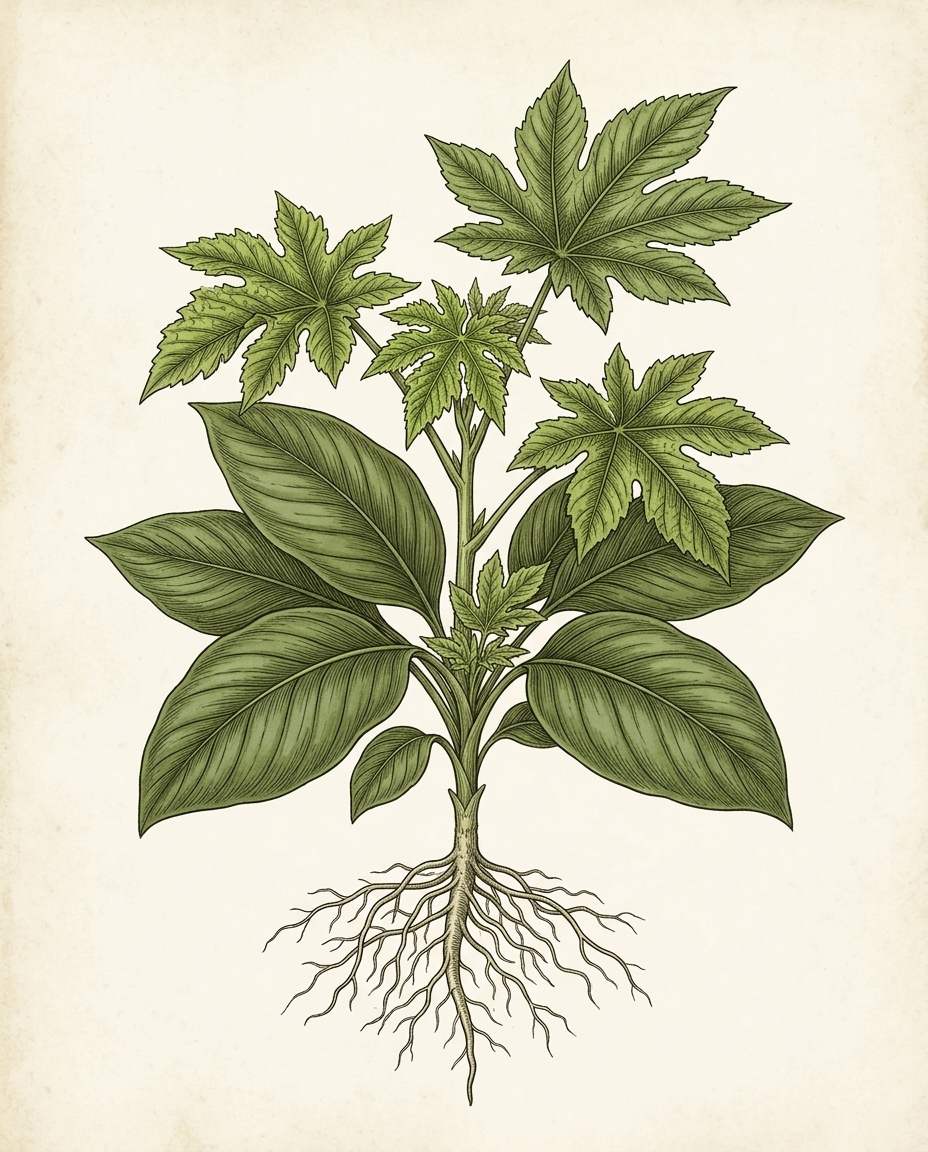
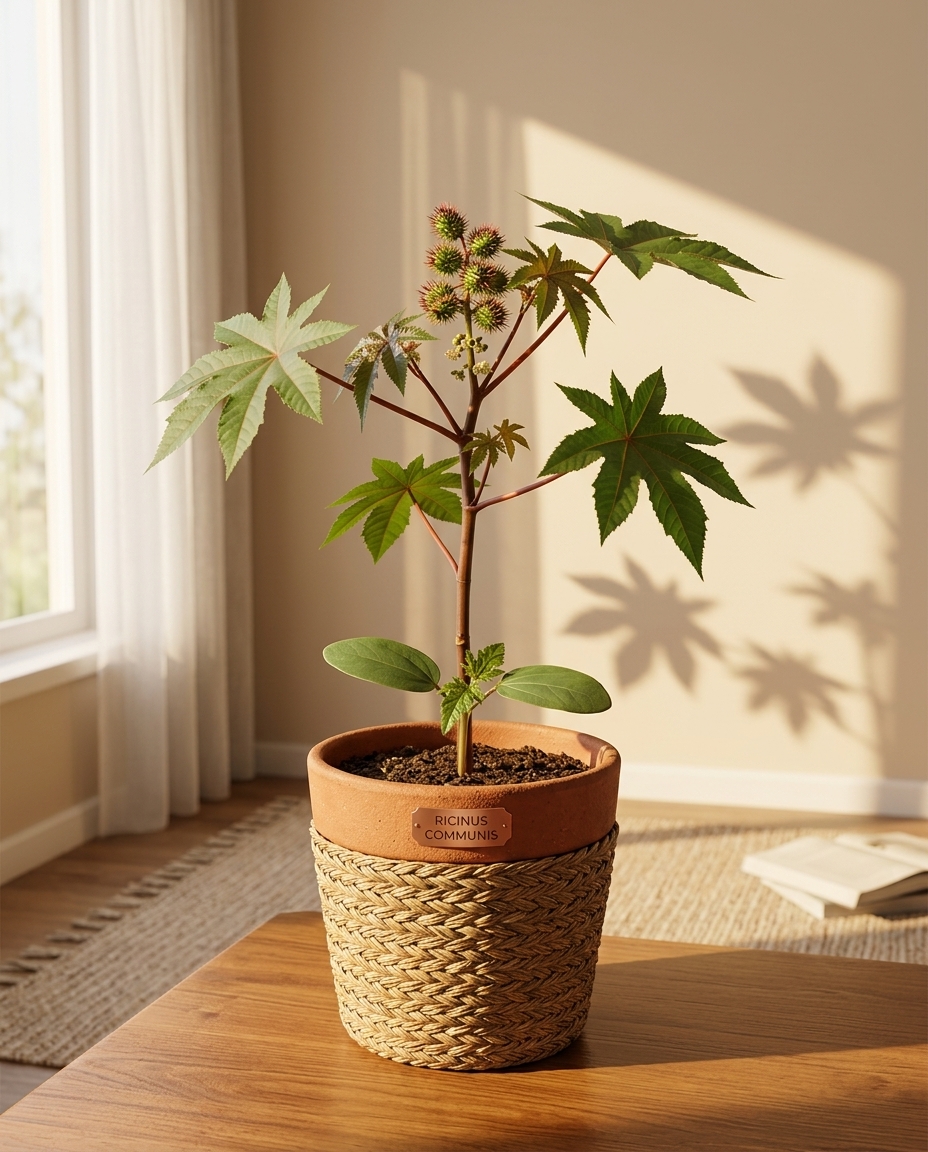
Plate IRicinus communis — castor bean plant, castor oil plant, African wonder tree. Large palmate leaves, spiny capsules, speckled seeds. ASPCA toxic — ricin, lethal.
Three plants that look the part, without the risk.
Ornamental plants with similar bold-foliage architecture that are ASPCA-safe — the cat-friendly alternatives if you wanted the dramatic palmate-leaf form of castor bean without the ricin.
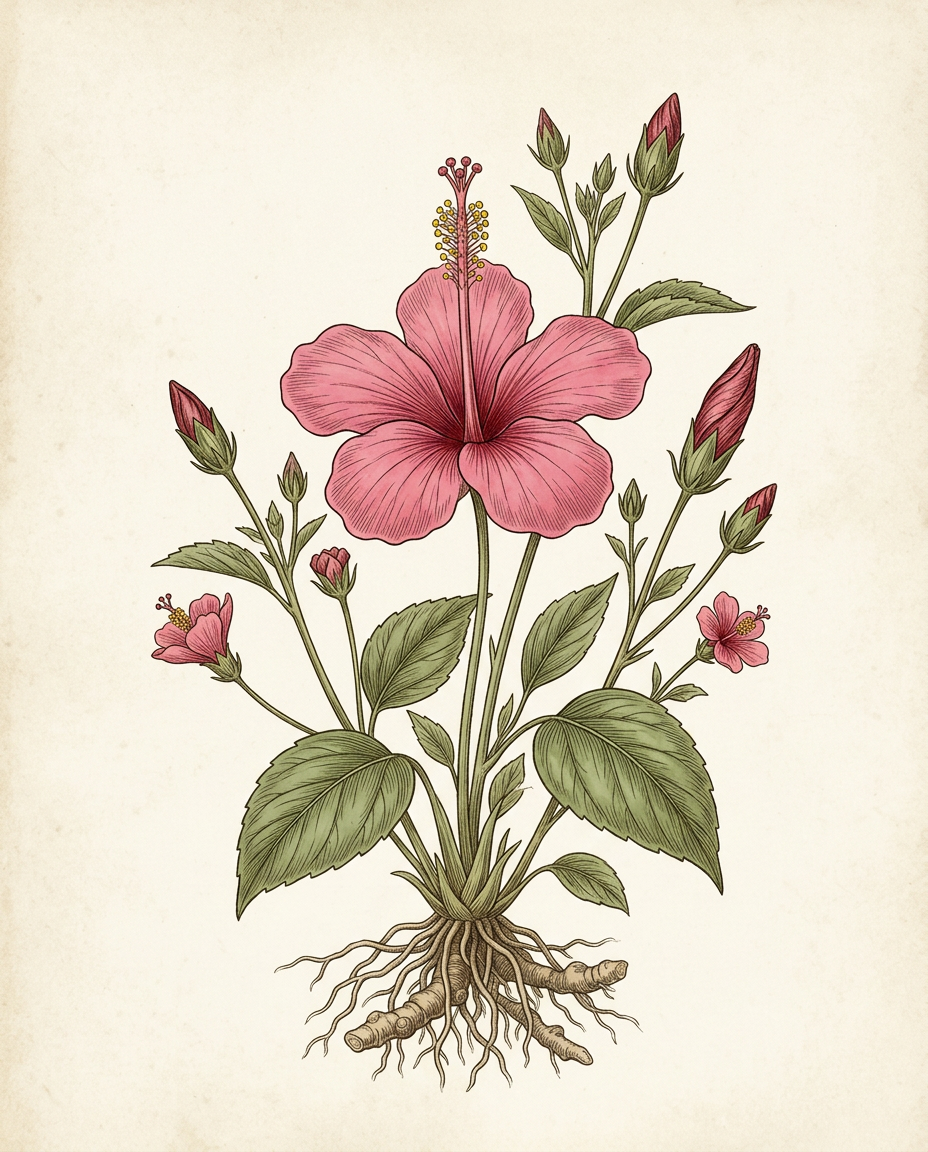
Hibiscus
For a tall flowering shrub with bold foliage at ASPCA non-toxic. Different leaf shape but similar architectural presence.
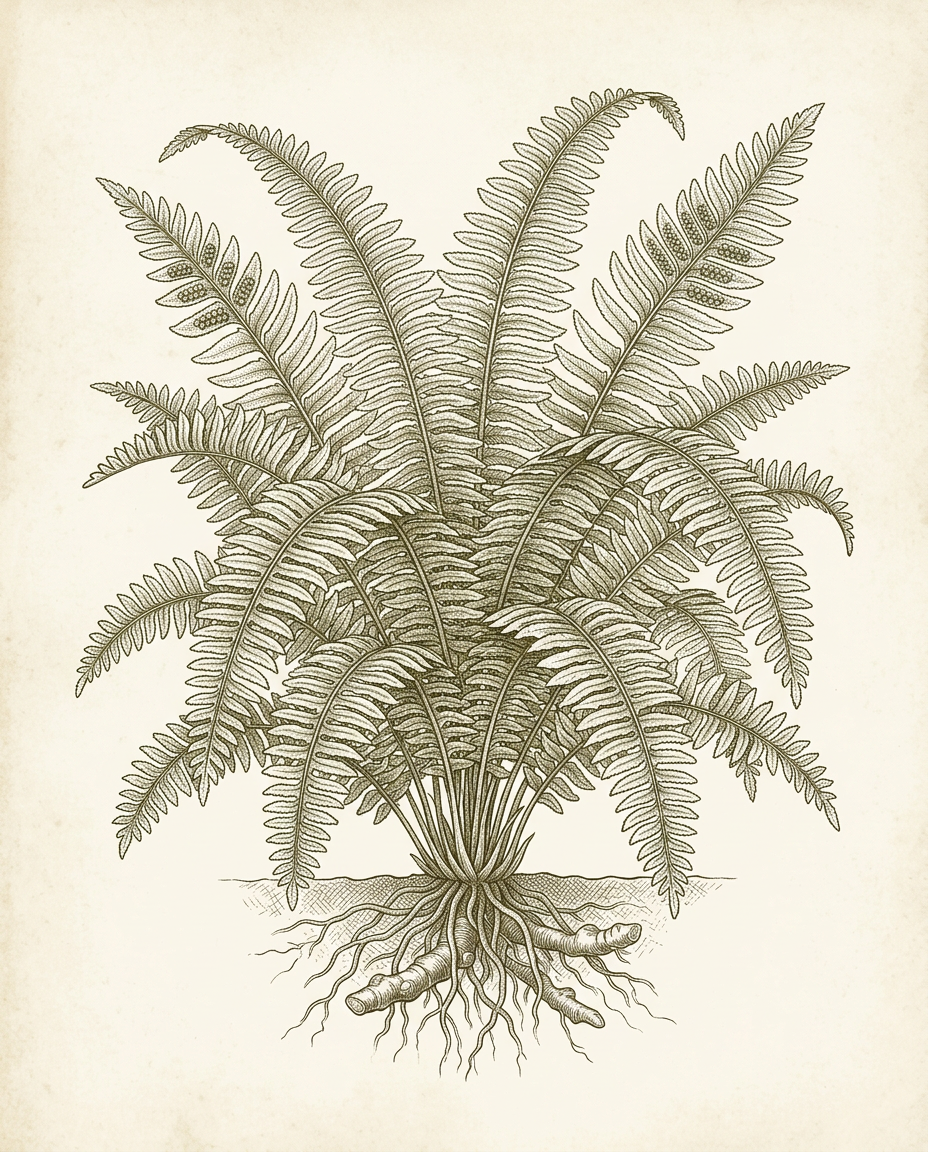
Boston fern
For lush layered foliage at ASPCA non-toxic. Smaller scale than castor bean but the same fill-the-corner role in a cat-safe interior.
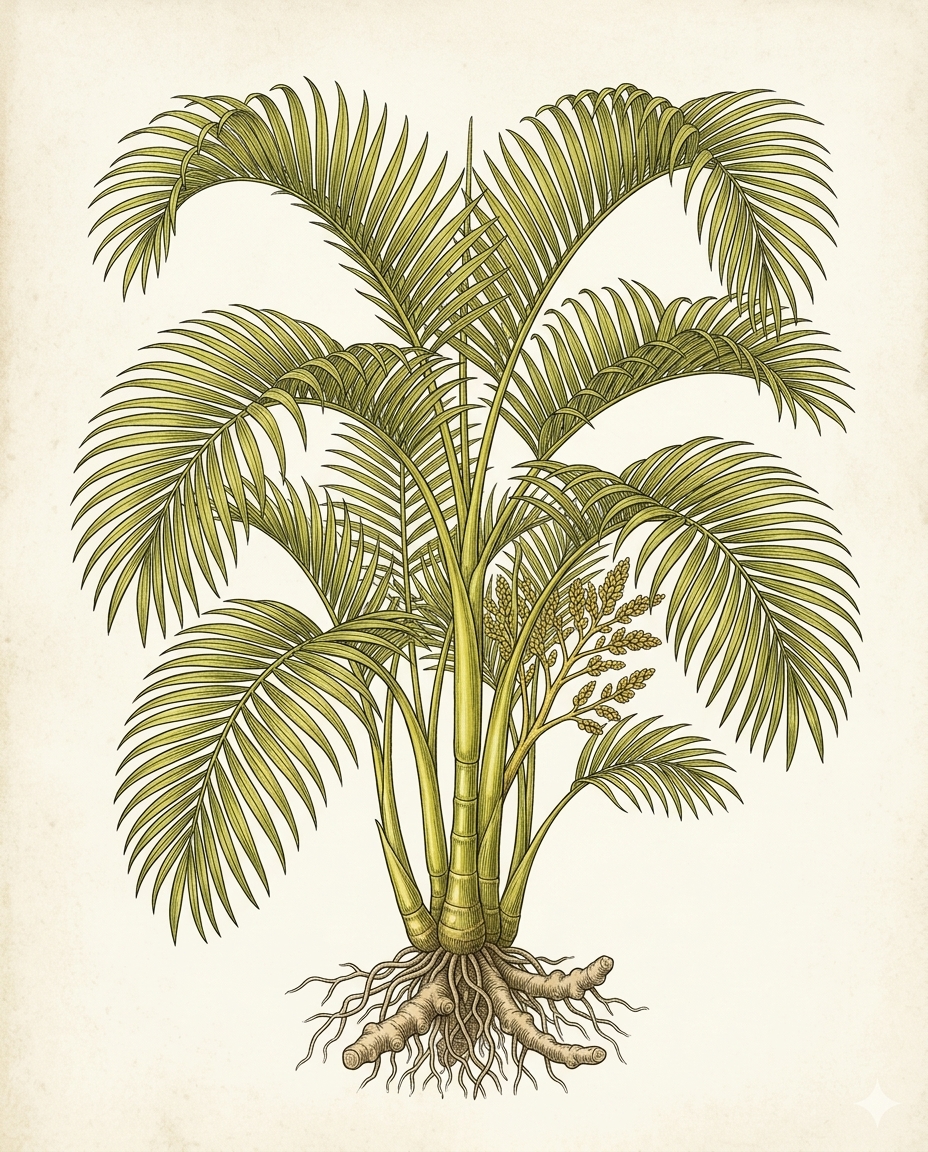
Areca palm
For tropical bold-foliage form at ASPCA non-toxic. Feathery rather than palmate but similar garden-anchor role.
Why castor bean is a maximum-tier emergency.
Yes — castor bean plants are among the most dangerous plants for cats. The ASPCA lists Ricinus communis (Castor Oil Plant, Mole Bean Plant, African Wonder Tree, Castor Bean) as toxic to dogs, toxic to cats, and toxic to horses. The toxic principle is ricin, a ribosome-inactivating protein that permanently halts protein synthesis in affected cells. ASPCA states directly that as little as one ounce of seeds can be lethal, and signs typically develop 12 to 48 hours after ingestion — a delayed onset that catches owners and vets off-guard.
The ASPCA verdict, verbatim: Toxicity: Toxic to Dogs, Toxic to Cats, Toxic to Horses · Family: Euphorbiaceae · Additional Common Names: Castor Oil Plant, Mole Bean Plant, African Wonder Tree, Castor Bean · Scientific Name: Ricinus communis · Toxic Principles: Ricin · Clinical Signs: Beans are very toxic: oral irritation, burning of mouth and throat, increase in thirst, vomiting, diarrhea, kidney failure, convulsions. Access to ornamental plants or pruned foliage most common in poisonings. Ricin is a highly toxic component that inhibits protein synthesis; ingestion of as little as one ounce of seeds can be lethal. Signs typically develop 12 to 48 hours after ingestion, and include loss of appetite, excessive thirst, weakness, colic, trembling, sweating, loss of coordination, difficulty breathing, progressive central nervous system depression, and fever. As syndrome progresses, bloody diarrhea may occur, and convulsions and coma can precede death.
That clinical-signs paragraph is one of the longest in the ASPCA database. The length is the message: castor bean is in the maximum-severity tier alongside oleander, sago palm, and lily-of-the-valley.
The 12 to 48 hour delayed onset — the clinical trap
The single most important fact for any owner whose cat may have ingested castor bean is the delay. A cat that chews a seed and seems fine an hour later is not safe. Ricin works at the cellular level by inhibiting the 60S ribosomal subunit and halting protein synthesis — that biology takes hours to translate into visible symptoms. By the time clinical signs appear (typically 12 to 48 hours after ingestion), the damage is well established and treatment is much harder.
The implication: do not wait for symptoms. Any suspected castor bean ingestion is an immediate vet emergency. Phone consult with the ASPCA Animal Poison Control Center at 888-426-4435 (95 dollar consultation) is appropriate as a parallel step but should not delay the vet trip. Decontamination (induced vomiting, activated charcoal) is most effective in the first hour or two — early action matters even though symptoms have not yet appeared.
How ricin works
Ricin is a two-chain protein (RTA and RTB) that enters cells by binding to glycoprotein receptors on the cell surface. Once inside, the catalytic chain (RTA) reaches the cytoplasm and permanently inactivates ribosomes by depurinating an adenine base in the 28S rRNA of the 60S subunit. Each ricin molecule can inactivate roughly 1,500 ribosomes per minute. Affected cells lose the ability to make new protein and die.
The cells that die first are the ones with the highest protein turnover — intestinal epithelium (producing the severe GI signs), kidney tubules (producing the kidney failure), and liver hepatocytes. The cascade of multi-organ failure produces the clinical signs ASPCA describes. There is no specific antidote for ricin; treatment is supportive (IV fluids, anti-emetics, anti-convulsants, dialysis in severe cases).
This is the same ricin molecule used in chemical-warfare poisonings. The biology is identical.
The bead-jewellery exposure vector
A documented and under-appreciated castor bean exposure scenario in cats and small dogs is bead jewellery. The speckled brown castor bean seeds are sometimes drilled and strung into:
- Beaded bracelets and necklaces (craft markets, ethnic-art shops)
- Religious rosaries — though the rosary pea name traditionally refers to Abrus precatorius, a different and even more toxic bean
- Decorative seed-mosaic art
A cat batting a loose bead under furniture, or chewing a bracelet left on a bedside table, has the same ricin exposure as eating a fresh seed. Any speckled-brown-bean bead in a household with cats should be removed or stored in a closed container. This is a real veterinary case pattern, not a theoretical risk.
Severity framing — what to do
There is no nibble-and-watch tier for castor bean. The protocol is:
- Any suspected ingestion — call your vet immediately. Do not wait for symptoms. The 12 to 48 hour delay means waiting until the cat looks sick is waiting until the damage is well established.
- Within 1 to 2 hours of ingestion — decontamination (induced vomiting, activated charcoal) is most effective. Earlier is better.
- Symptomatic care — IV fluids for shock and kidney protection, anti-emetics, anti-convulsants. Dialysis is sometimes used in severe cases.
- Bead exposure — same protocol. A chewed bead delivers concentrated ricin.
Cat-safe alternatives for the bold-foliage role
Castor bean is grown ornamentally for its dramatic palmate red-tinged foliage. If you have been considering or growing castor bean and want a safer alternative:
- Hibiscus — ASPCA non-toxic flowering shrub with bold foliage.
- Banana plant — non-toxic, even larger leaves, tropical statement plant.
- Areca palm — non-toxic feathery palm with similar architectural presence.
- Bird of paradise — non-toxic Strelitzia with bold paddle-shaped leaves.
Avoid planting castor bean, oleander, sago palm, or foxglove on cat-accessible property. These are the maximum-severity garden warnings — first-line plants to remove if you are setting up a cat-safe garden. For the full toxic landscape see toxic plants for cats and for safer ornamental options cat-safe plants.
What we have actually seen.
Delayed onset 12 to 48 hours
ASPCA's most clinically important detail on castor bean is the delay. Symptoms do not appear immediately after ingestion. A cat that seems fine immediately after chewing a seed may develop the full clinical picture half a day to two days later. The delay catches owners and even vets off-guard. Treat any suspected ingestion as an emergency regardless of how well the cat looks.
Severe GI then systemic
ASPCA lists oral irritation and burning, increased thirst, vomiting, diarrhea (often bloody as syndrome progresses), kidney failure, and convulsions. Onset hours to days after ingestion, escalating progressively. Loss of appetite, weakness, colic, trembling, sweating, loss of coordination, difficulty breathing, central nervous system depression, fever.
Convulsions and coma can precede death
ASPCA states this directly. Castor bean is in the same severity tier as oleander and sago palm — the plants whose ASPCA Clinical Signs entries literally end with the word death.
Bead jewellery vector
The speckled brown seeds are sometimes drilled and strung into beaded jewellery or rosaries. A cat chewing a bracelet or fallen bead is a documented poisoning vector in veterinary case reports. Treat any speckled-brown-bean bead as a ricin source.
- ASPCA Animal Poison Control Center. Toxic and Non-Toxic Plants: Castor Bean Plant.Accessed June 2026 · aspca.org · Ricinus communis (Castor Oil Plant, Mole Bean Plant, African Wonder Tree, Castor Bean) · Toxic to Dogs, Toxic to Cats, Toxic to Horses · Family Euphorbiaceae · Toxic Principles: Ricin · Clinical Signs: Beans are very toxic; oral irritation, burning of mouth and throat, increase in thirst, vomiting, diarrhea, kidney failure, convulsions. Signs typically develop 12 to 48 hours after ingestion. Ingestion of as little as one ounce of seeds can be lethal. Bloody diarrhea, convulsions, and coma can precede death.
- Pet Poison Helpline. Ricin toxicosis in companion animals.Clinical reference — ricin inhibits protein synthesis by deactivating the 60S ribosomal subunit. No specific antidote; treatment is decontamination plus aggressive supportive care