Banana
Musa acuminata
Yes — the banana plant is safe for cats. The ASPCA lists Musa as non-toxic to cats, dogs, and horses. The plant and the fruit are harmless — though a banana is a treat at most. Don't confuse the banana plant with the unrelated lawn weed "plantain" (Plantago).
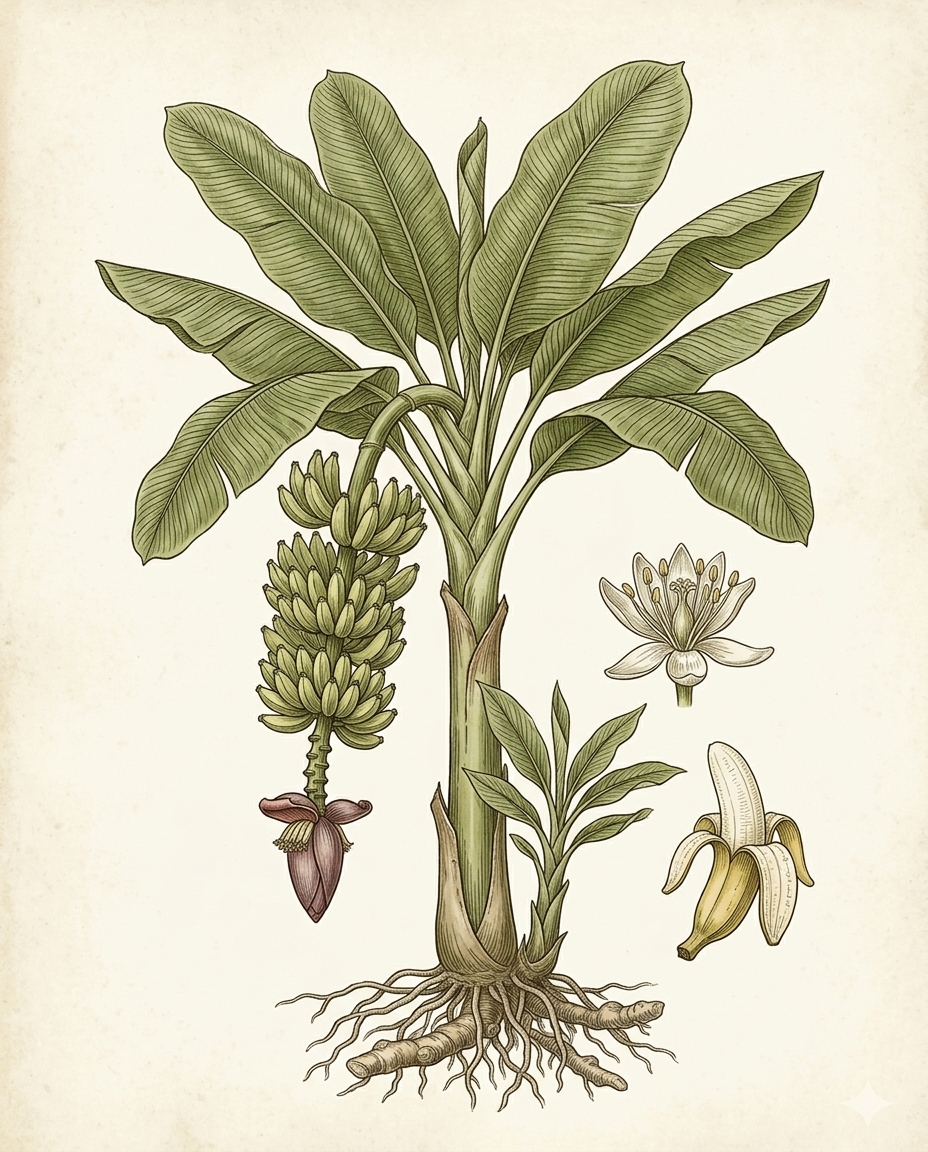
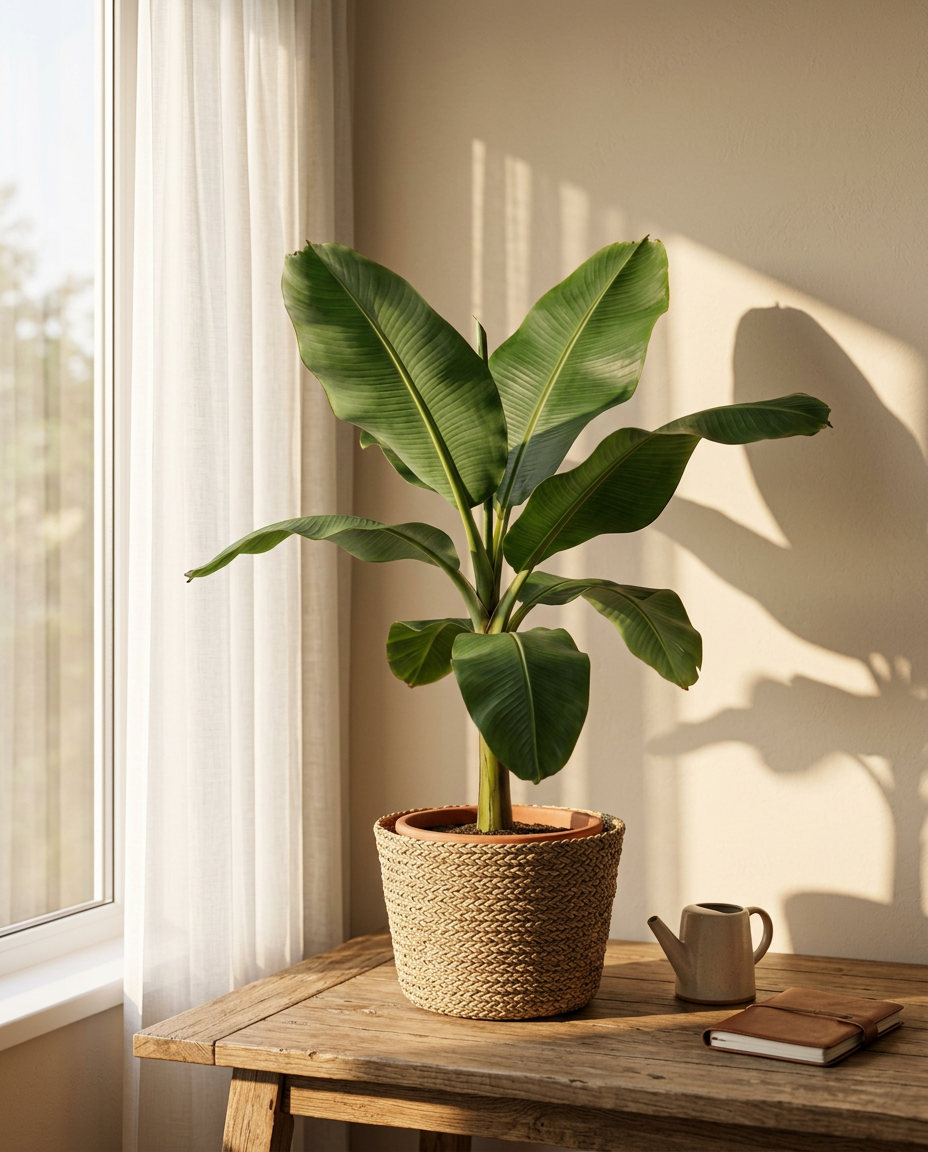
Plate IMusa acuminata — the banana plant. Broad leaves and fruit are non-toxic to cats per the ASPCA.
The banana plant is safe— fruit and foliage alike.
Yes — the banana plant is safe for cats. The ASPCA lists it as "Non-Toxic to Dogs, Non-Toxic to Cats, Non-Toxic to Horses." Both the plant and the fruit are non-toxic.
Banana (Musa acuminata) is a large tropical herb in the family Musaceae — despite its tree-like size, it is technically a giant herbaceous plant, not a tree. As a houseplant or garden specimen, its broad paddle-shaped leaves may tempt a curious cat, but they pose no poisoning risk.
ASPCA Data
According to the ASPCA, banana is listed under plants non-toxic to cats:
Non-Toxic to Dogs, Non-Toxic to Cats, Non-Toxic to Horses.
There are no toxic principles. The plant is completely safe around cats.
Plantain disambiguation — two very different plants
The word "plantain" causes real confusion, so let's be precise:
- Banana plant / cooking-banana "plantain" — this is Musa, the same genus as the dessert banana. It is the plant the ASPCA lists as non-toxic. The starchy cooking banana sold as "plantain" comes from this group.
- Lawn-weed "plantain" — this is Plantago (for example Plantago major), a low broadleaf weed found in lawns and verges. It is an entirely unrelated plant in a different family.
When people ask "is plantain safe for cats?", the answer depends on which plant they mean. This page is about the banana plant (Musa), which is safe. Plantago is a separate question and a separate plant.
Feeding banana to a cat
Banana is a fine occasional treat but not a food:
- Tiny portions. Banana is high in sugar and starch — offer a small mashed or sliced piece, not a chunk.
- No nutritional need. Cats are obligate carnivores; they need meat protein, not fruit. A banana provides nothing essential their diet lacks.
- Watch digestion. Too much can cause loose stool or constipation from the sugar and starch, even though the plant is non-toxic.
Growing a banana plant around cats
Banana plants want bright light, plenty of water in the growing season, rich free-draining soil, and warmth above 15°C. The dramatic leaves make a striking houseplant. Because the plant is non-toxic, there is no safety reason to fence it off — though you may want to discourage chewing simply to protect the foliage.
The bottom line
The banana plant is safe for cats — leaves, stem, and fruit alike — and a banana is a harmless sugary treat in tiny amounts. Just keep the names straight: the safe plant is Musa, not the unrelated weed Plantago. For other safe, cat-friendly greenery, see bromeliad, ponytail palm, and parlor palm.
What we have actually seen.
Non-toxic plant and fruit
The banana plant — leaves, stem, and the fruit — is non-toxic to cats. A cat that chews a leaf or eats a bit of banana faces no poisoning risk.
A treat, not a food
Banana is high in sugar and starch. Cats are obligate carnivores with no need for fruit; offer only a tiny piece occasionally, if at all.
Big leaves invite chewing
As a houseplant, the broad paddle-shaped leaves can attract a bored cat. Chewing is harmless to the cat, though it can shred the foliage.
Digestive upset if overfed
Too much banana can cause loose stool or constipation from the sugar and starch — not from any toxin. Moderation matters.
Four common varieties.
Musa acuminata (Common houseplant and fruit species)
The species behind most edible bananas and popular dwarf houseplant varieties (such as 'Dwarf Cavendish'). Non-toxic to cats.
Musa basjoo (Ornamental, cold-tolerant)
A hardy ornamental banana grown outdoors in temperate gardens for its tropical foliage. Also non-toxic.
Keeping the plant alive.
Bright, direct
Banana plants love light — give them the brightest spot you have, ideally several hours of direct sun.
Plentiful in growth
Thirsty in the growing season; keep soil moist but not waterlogged. Reduce in winter.
Rich, free-draining
Fertile, organic, well-draining mix. Feed regularly while actively growing.
Warm, draught-free
Keep above 15°C and away from cold draughts. Large leaves bruise easily, so give them room.
- ASPCA Animal Poison Control Center. Toxic and Non-Toxic Plants: Banana.Accessed June 2026 · aspca.org
If you liked this, also safe.