Bromeliad
Bromeliaceae
Yes — bromeliads are safe for cats. The ASPCA lists bromeliads as non-toxic. The whole family — Guzmania, Neoregelia, Aechmea, Tillandsia — is cat-safe, with only mild upset if a cat eats a lot.
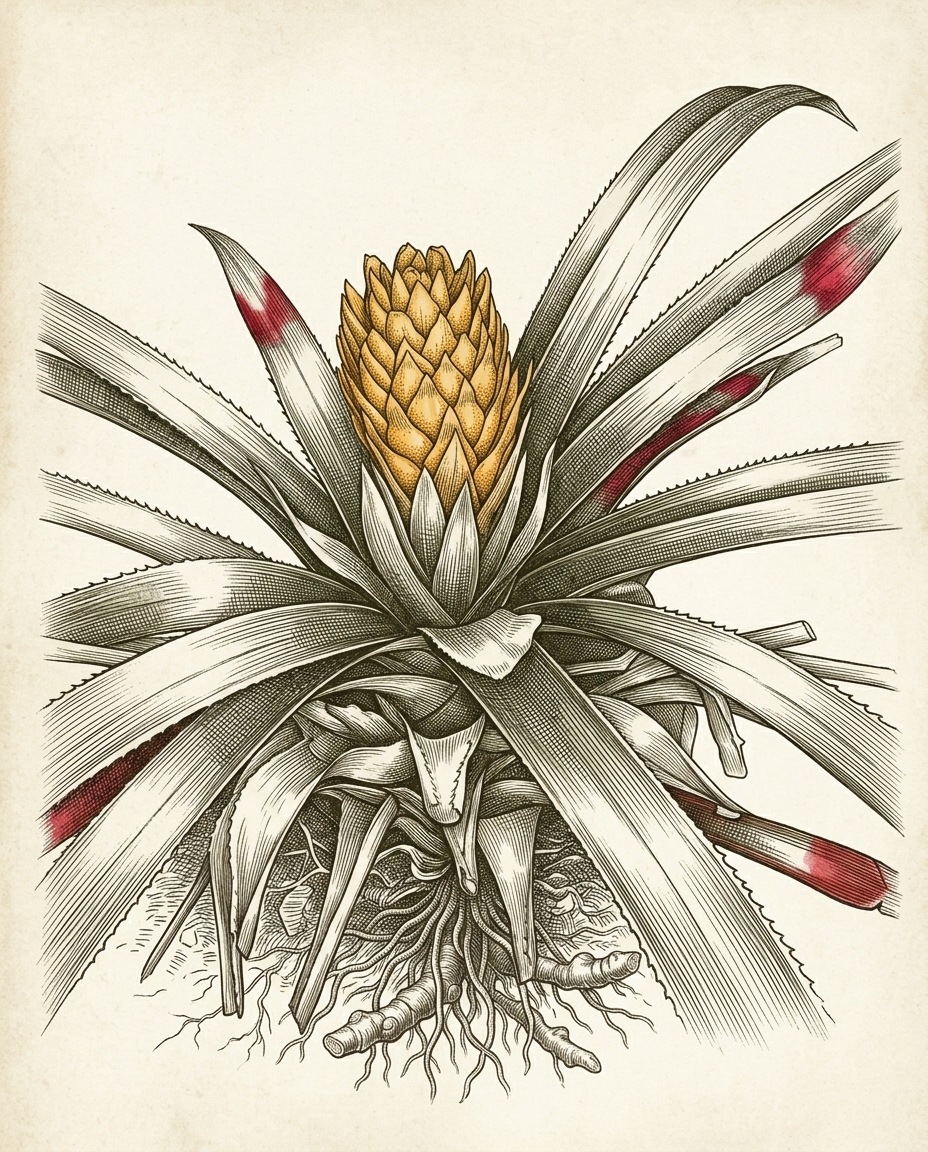
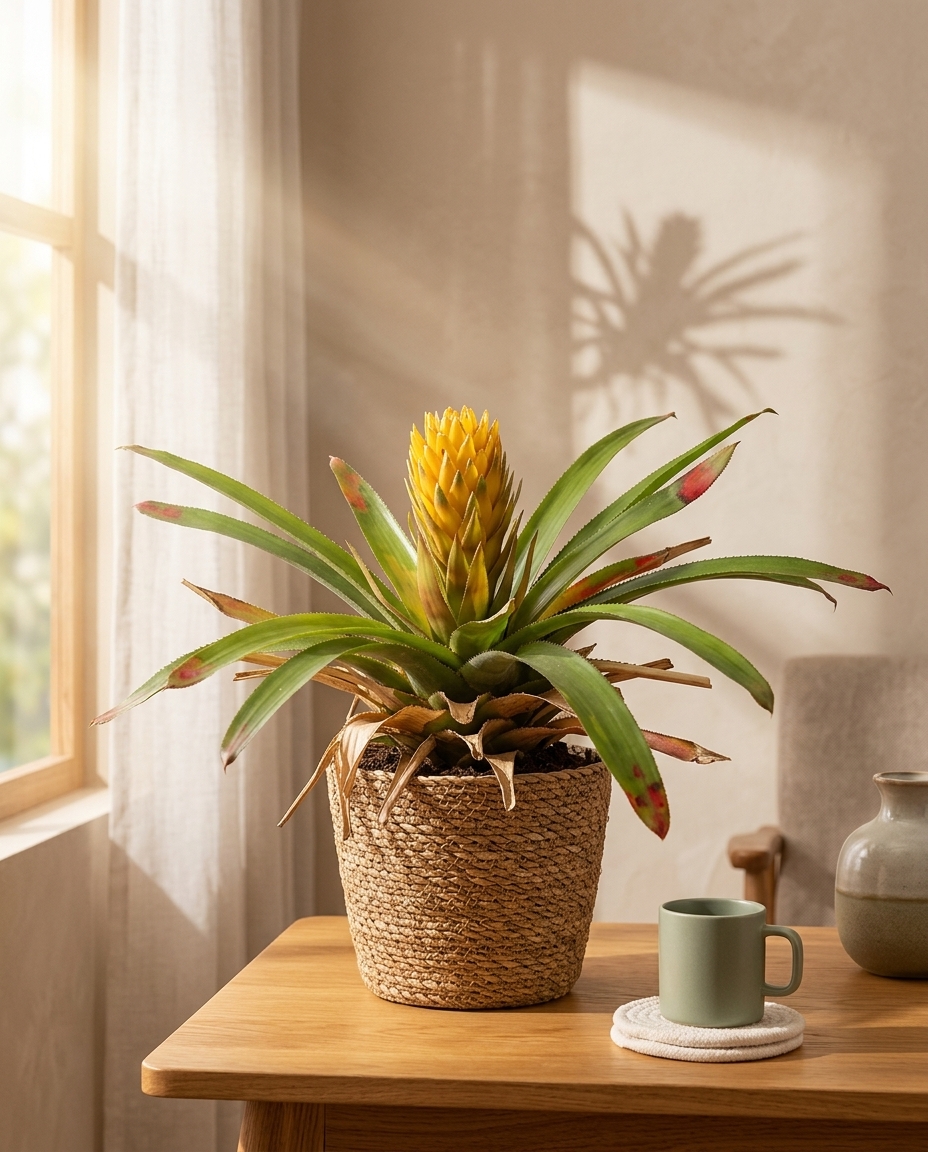
Plate IBromeliaceae — the bromeliad family. A rosette of strappy leaves around a long-lasting colourful bract; non-toxic to cats throughout.
What happens if your cat eats it.
Nothing of consequence. The ASPCA lists bromeliads as non-toxic to cats, and the reassurance extends across the entire family. A cat that chews a strappy leaf or bats at the bright central bract will be fine, with at most the mild stomach upset that comes from eating a lot of any fibrous plant.
That family-wide safety is unusually convenient. Many plant groups mix safe and toxic members, forcing you to check each species — but with bromeliads you can choose on looks alone. Guzmania torches, Neoregelia rosettes, Aechmea and Vriesea spikes, and Tillandsia air plants are all on the non-toxic list.
A rare bit of low-maintenance colour
Bromeliads hold a single colourful display for months, far longer than most flowers, and ask little in return: bright indirect light and water poured into the central cup. Keep that cup free of fertiliser or pesticide so a curious sip does no harm.
A safe stand-in for toxic tropicals
If you were drawn to the lacquered drama of an anthurium or the colour of a kalanchoe — both toxic — a bromeliad delivers the same tropical punch safely. Pair it with an orchid or Christmas cactus for more cat-safe colour.
What we have actually seen.
No toxicity
Bromeliads contain nothing poisonous to cats. A chewed leaf or bract is harmless.
Mild stomach upset
Eating a large amount of the fibrous, strappy leaves may cause vomiting — mechanical, not chemical.
The whole family qualifies
Guzmania, Neoregelia, Aechmea, Vriesea, and Tillandsia air plants are all on the non-toxic list.
Cup water
Keep the central cup free of fertiliser or pesticide so a curious drink does no harm.
Four common varieties.
Guzmania (torch bract)
The florist's bromeliad — a glossy red, orange, or yellow flower spike over soft green leaves.
Neoregelia (blushing centre)
Grown for foliage that flushes crimson at the heart rather than a tall spike. Compact and colourful.
Air Plant (soilless)
Rootless bromeliads that live on humidity and light alone. Equally cat-safe and ideal out of reach.
Keeping the plant alive.
Bright, indirect
Wants good light without harsh midday sun. Too little light dulls the colour of the bract.
Fill the central cup
Water into the central rosette and keep it topped up; let the soil stay only lightly moist.
Open, airy mix
A loose orchid or bromeliad mix. Roots are mainly for anchoring, so drainage matters most.
Bright shelf
Long-lasting colour for a coffee table or shelf. Air plants suit hanging displays out of paw reach.
- ASPCA Animal Poison Control Center. Toxic and Non-Toxic Plants: Blushing Bromeliad.Accessed May 2026 · aspca.org
- Pet Poison Helpline. Plants Non-Toxic to Cats.Reference list · 2024 ed.
If you liked this, also safe.