Kalanchoe
Kalanchoe spp.
Yes — kalanchoe is toxic to cats. The ASPCA attributes it to bufadienolide cardiac glycosides. Most cases are vomiting and drooling, but large ingestions can affect heart rhythm.
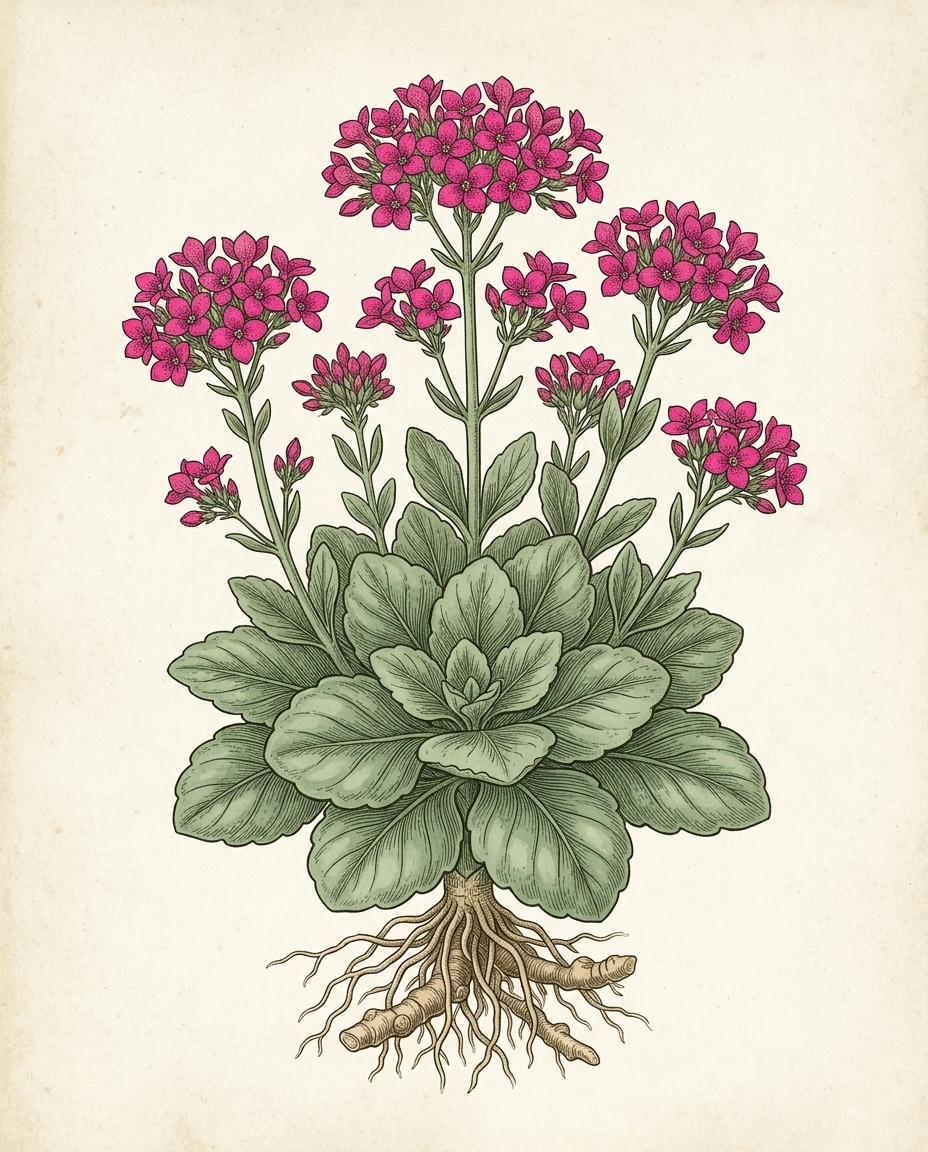
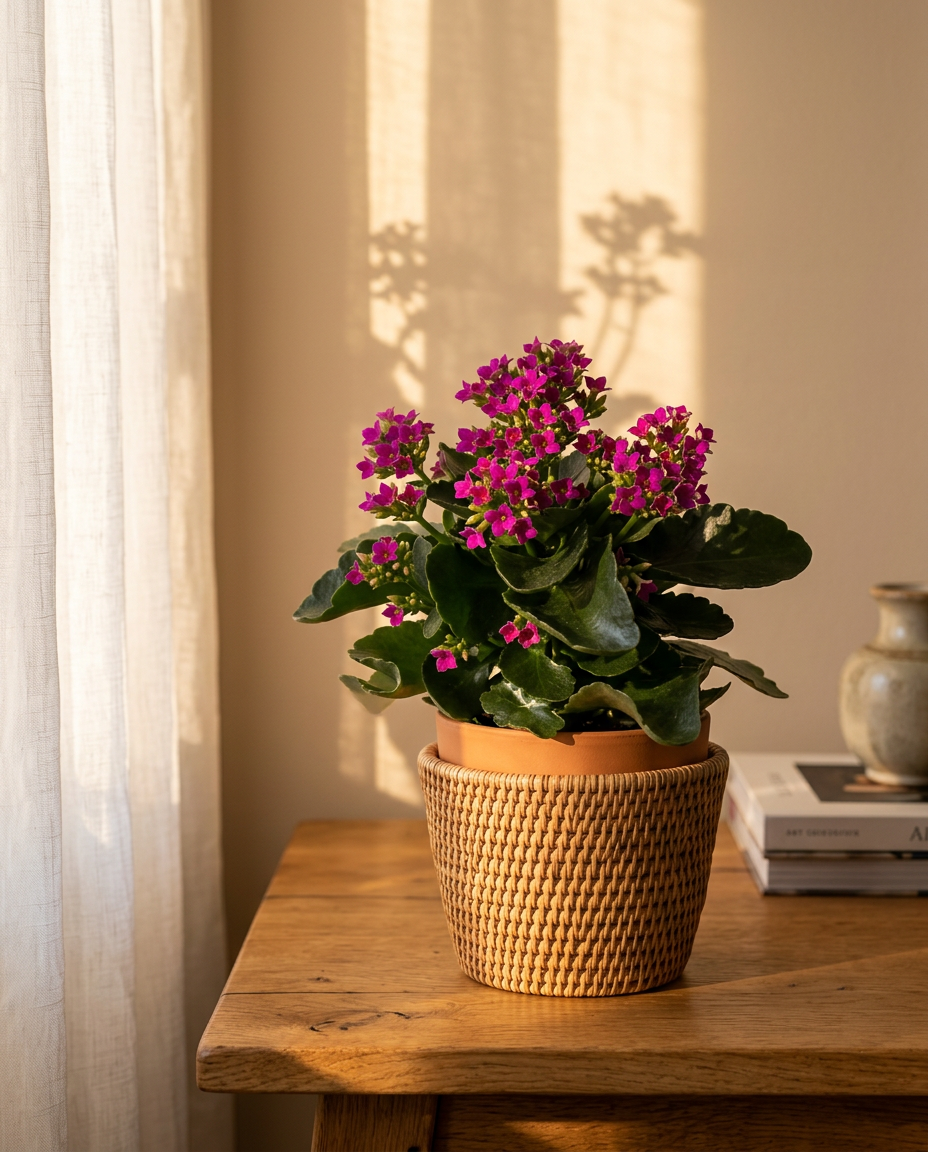
Plate IKalanchoe spp. — the flowering succulent (florist kalanchoe, mother of millions). Contains heart-active bufadienolide glycosides.
Three plants that look the part, without the risk.
Long-flowering, low-care plants for colour without the heart risk — all ASPCA non-toxic.
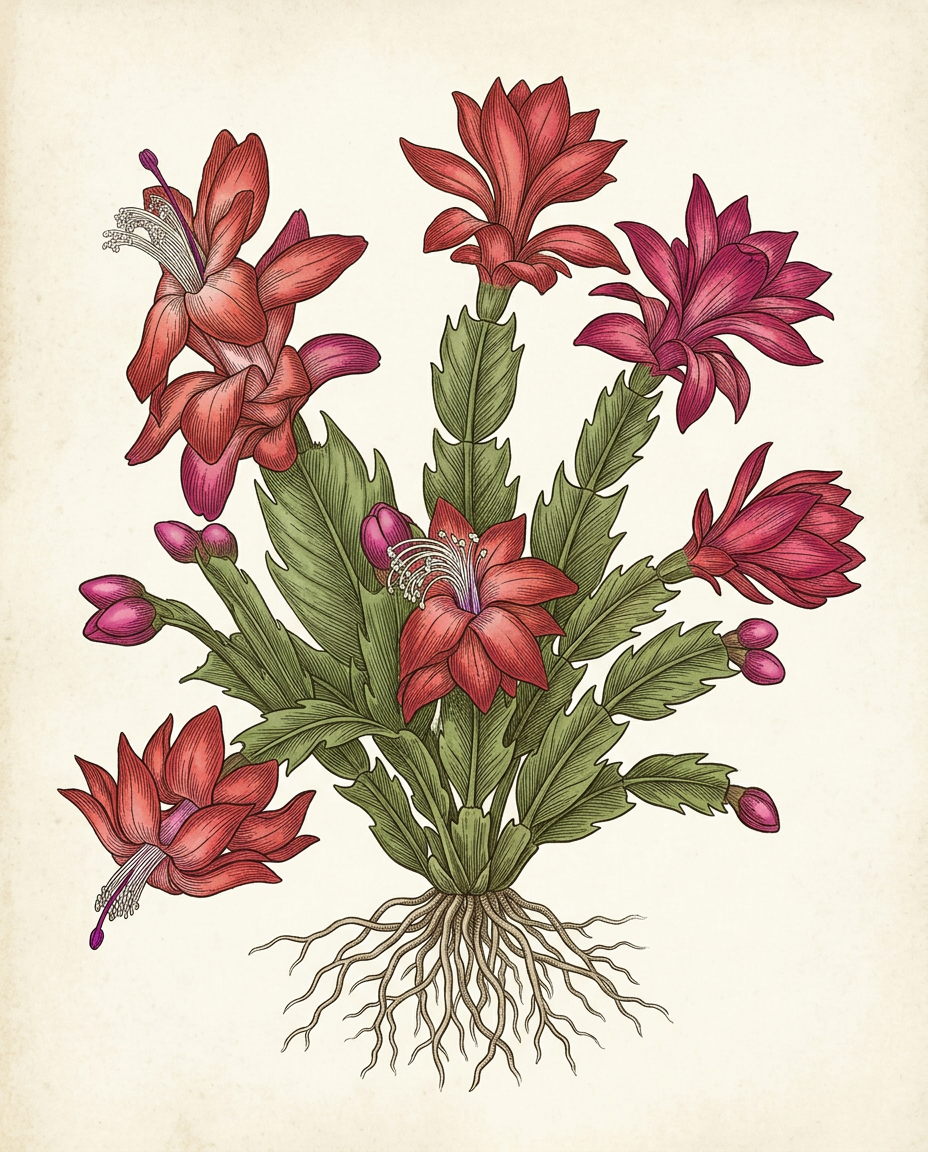
Christmas Cactus
A forgiving succulent-like plant with bright seasonal flowers. Safe for cats.
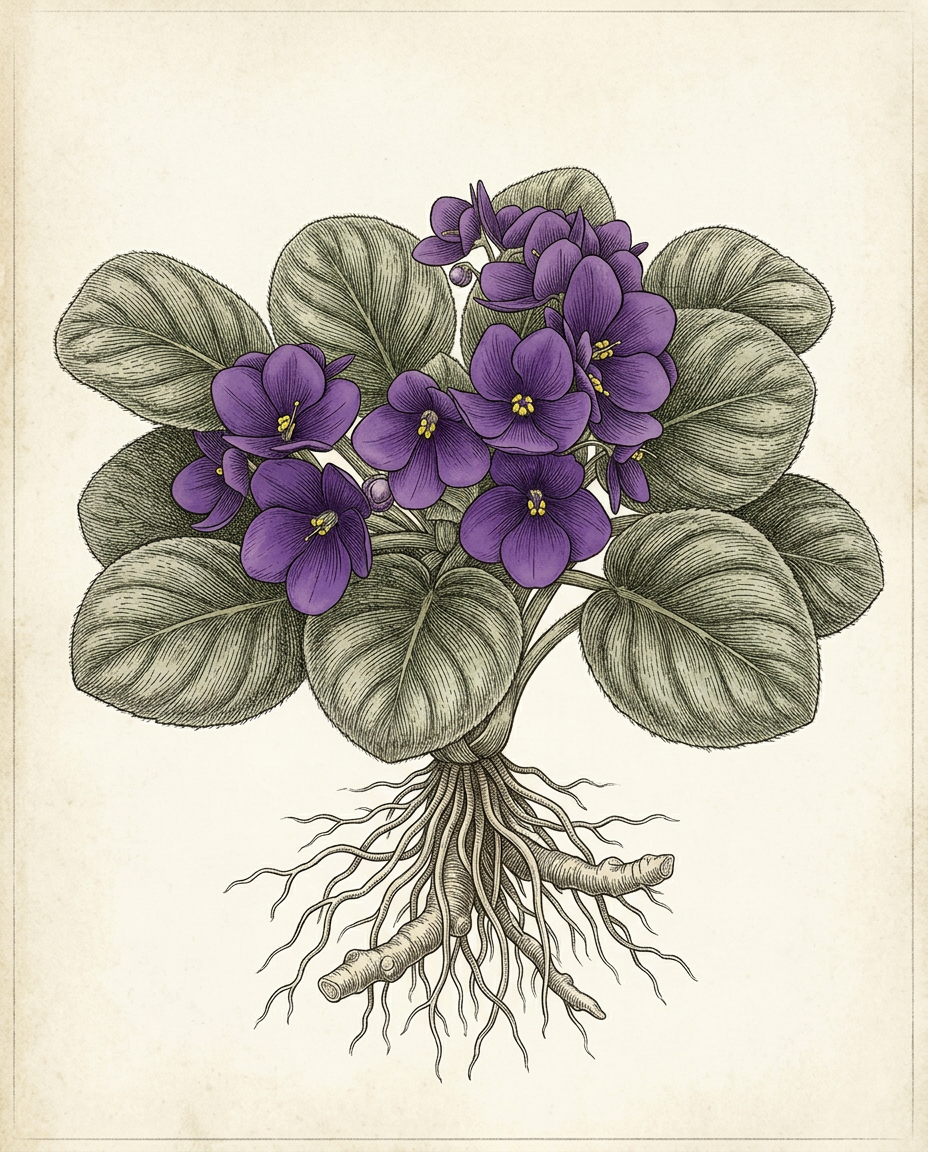
African Violet
Compact, near-constant colour on a windowsill, entirely cat-safe.
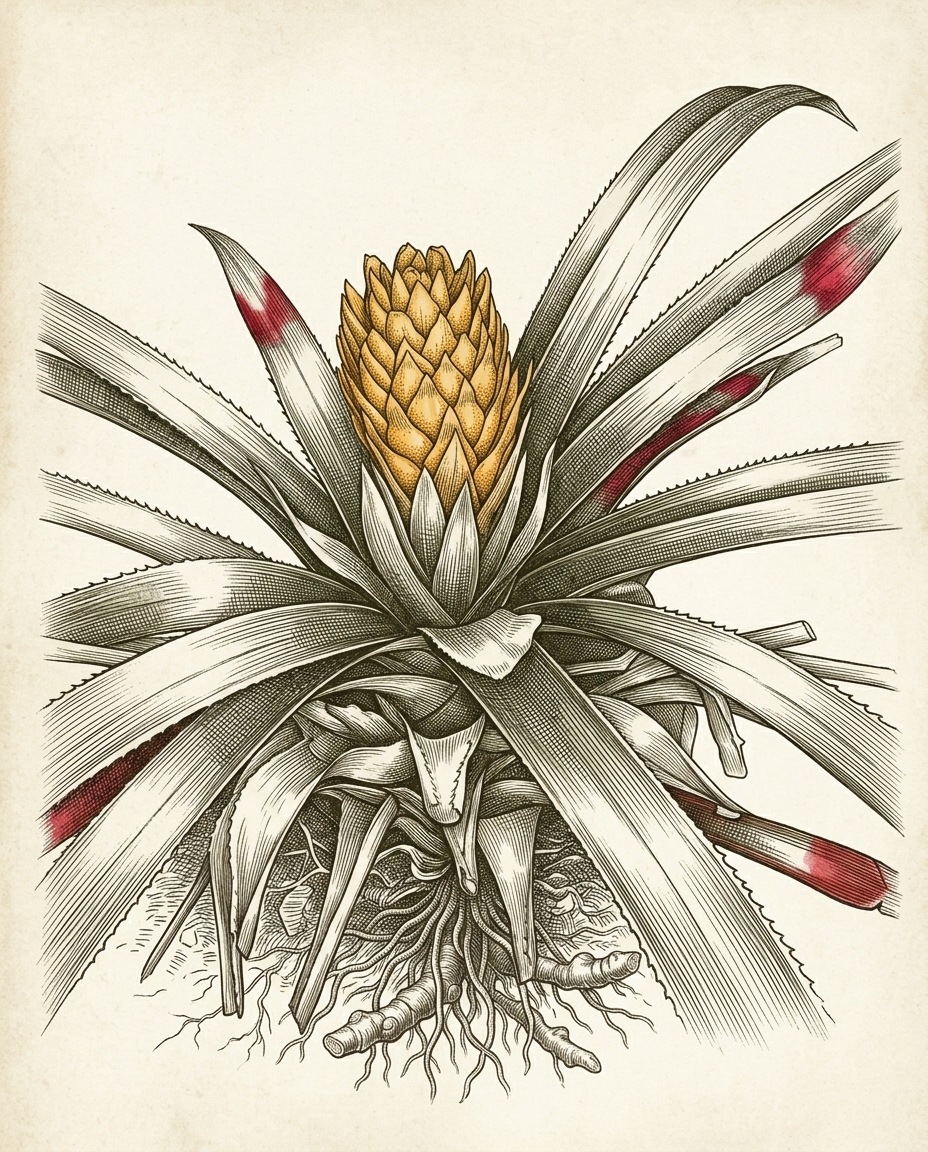
Bromeliad
Bold, long-lasting colour that holds for months. ASPCA non-toxic.
What it does to a cat.
Yes — kalanchoe is toxic to cats. The ASPCA lists it as toxic, and unlike most flowering succulents its toxin is genuinely worth respecting: bufadienolide cardiac glycosides, compounds that act on the heart. The everyday reality is milder — vomiting, drooling, and diarrhoea — but large ingestions, especially of the flowers, can disturb heart rhythm.
That two-tier risk is the key thing to understand. A cat that nibbles a leaf will most likely just be sick. A cat that works through a flower head has eaten the most concentrated part and deserves a prompt call to the vet, watching for weakness, collapse, or an irregular pulse.
A toxic-succulent family
Kalanchoe sits beside the jade plant in the Crassulaceae, and like aloe vera it is one of the "harmless-looking succulent" traps. The flowering varieties — florist kalanchoe, mother of millions — are the ones most often brought indoors for colour.
Safe swaps
For long-lasting flowers without the heart risk, Christmas cactus, African violet, and bromeliad are all ASPCA non-toxic and just as cheerful.
What we have actually seen.
Vomiting & drooling
The most common signs after a cat chews leaves or flowers. Usually self-limiting once removed.
Diarrhoea
GI irritation from the glycosides can cause loose stool alongside vomiting.
Heart rhythm changes
Large ingestions can disrupt heart rate and rhythm — weakness, collapse, or an irregular pulse are emergencies.
Flower appeal
The dense flower clusters are the most potent part and also the most eye-catching to a cat.
- ASPCA Animal Poison Control Center. Toxic and Non-Toxic Plants: Kalanchoe.Accessed May 2026 · aspca.org
- Pet Poison Helpline. Kalanchoe (Bufadienolides).Clinical brief · 2024 ed.