Jade
Plant.
Crassula ovata
Yes — the jade plant is toxic to cats. The ASPCA lists Crassula as toxic; the toxic principle is unknown but ingestion causes vomiting, depression, and loss of coordination.
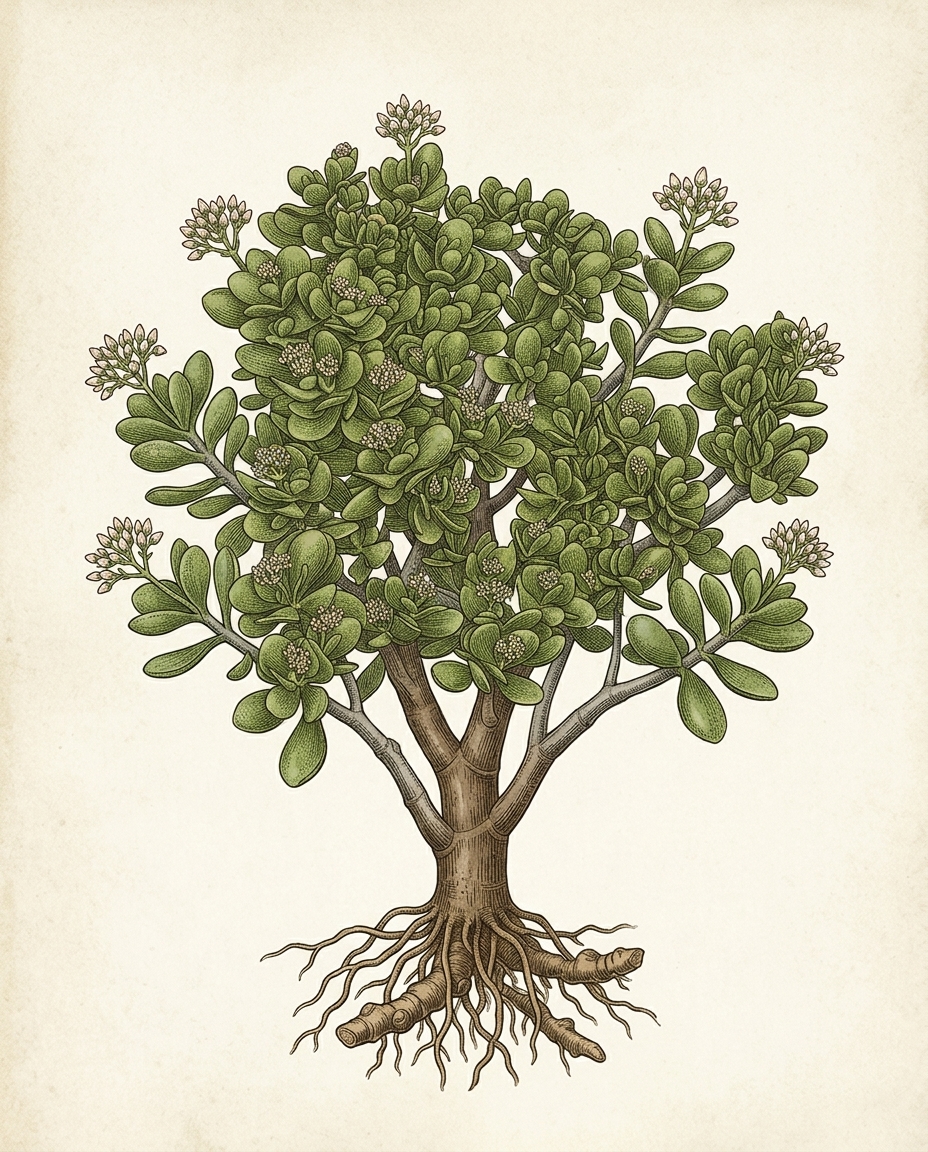
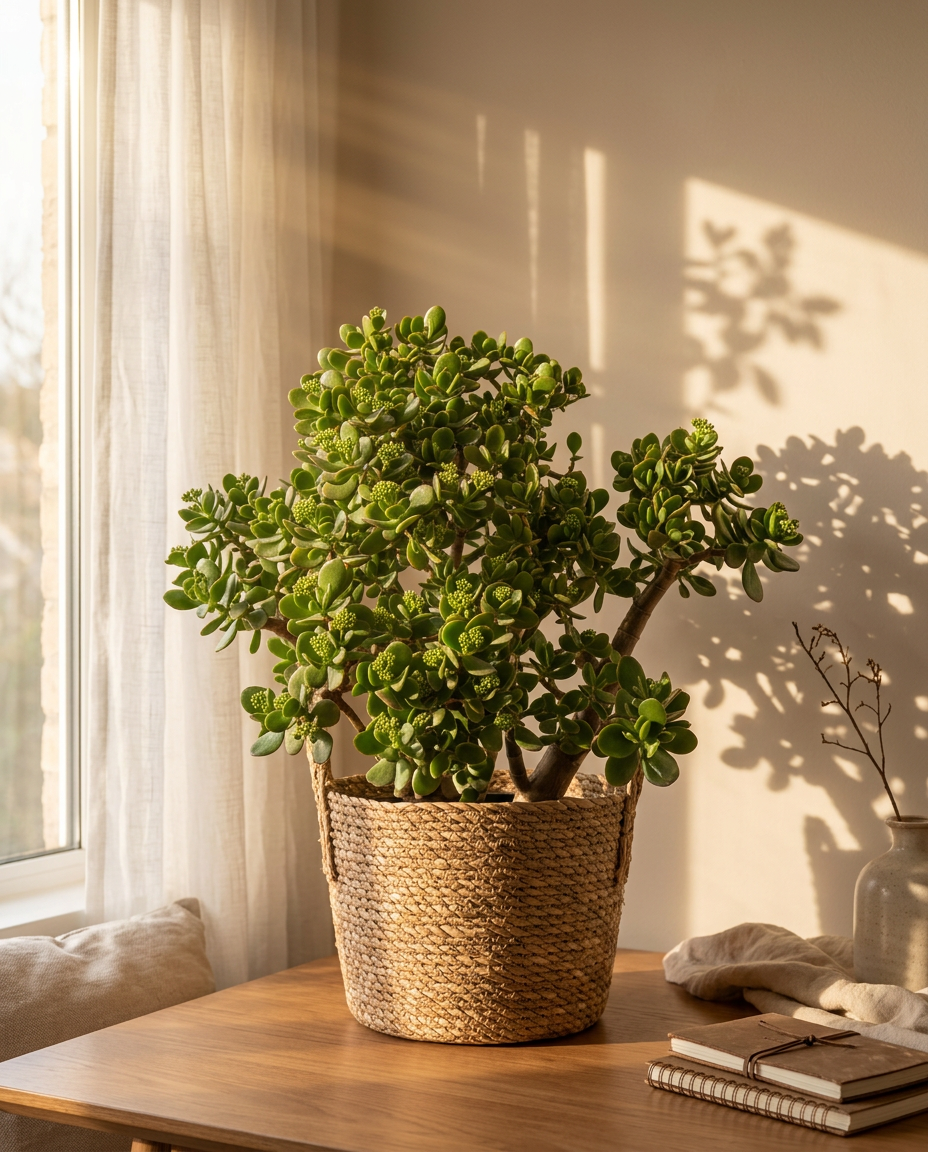
Plate ICrassula ovata — the jade plant or money tree. A popular succulent whose fleshy leaves are toxic to cats.
Three plants that look the part, without the risk.
Plump, sculptural succulents that are safe to share a sill with — all ASPCA non-toxic.
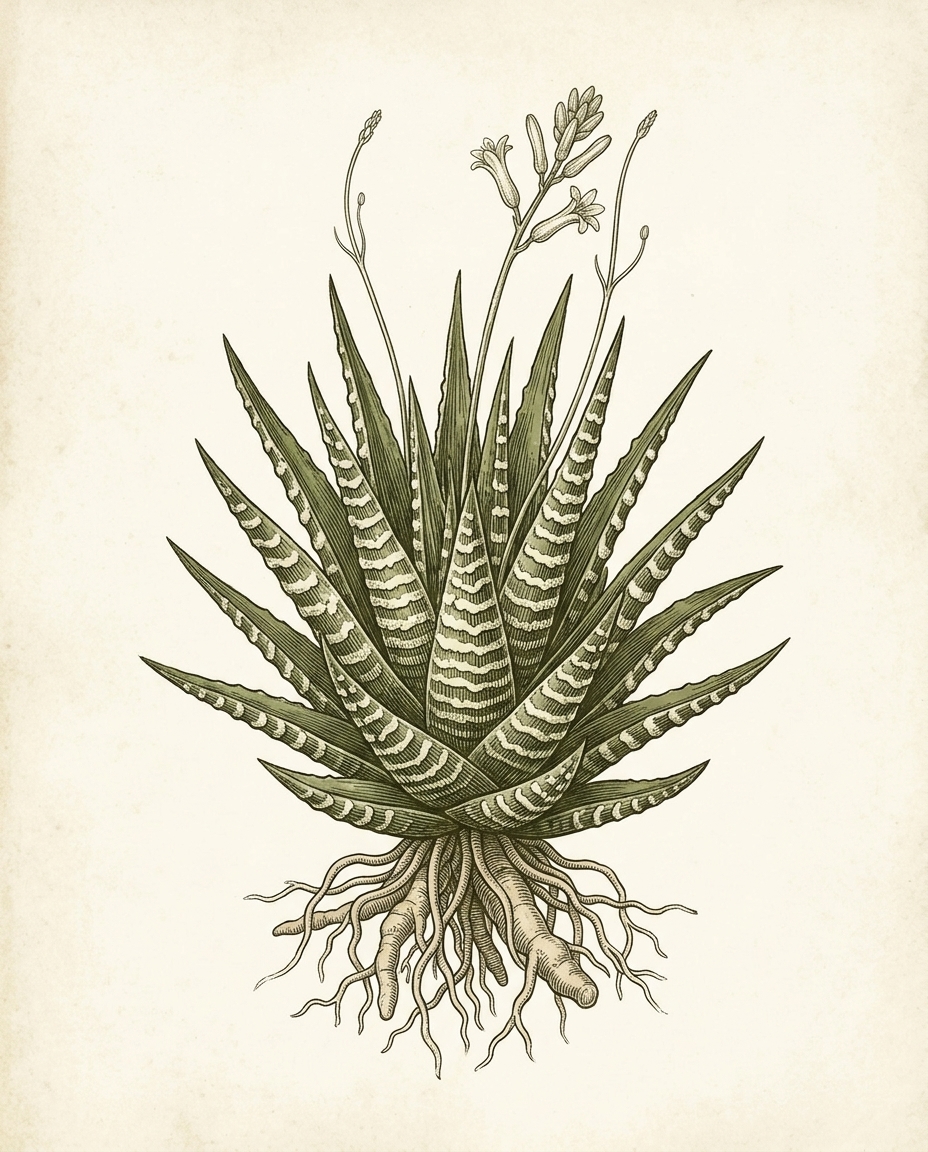
Haworthia
A small architectural succulent with the same low-care appeal and none of the toxin.
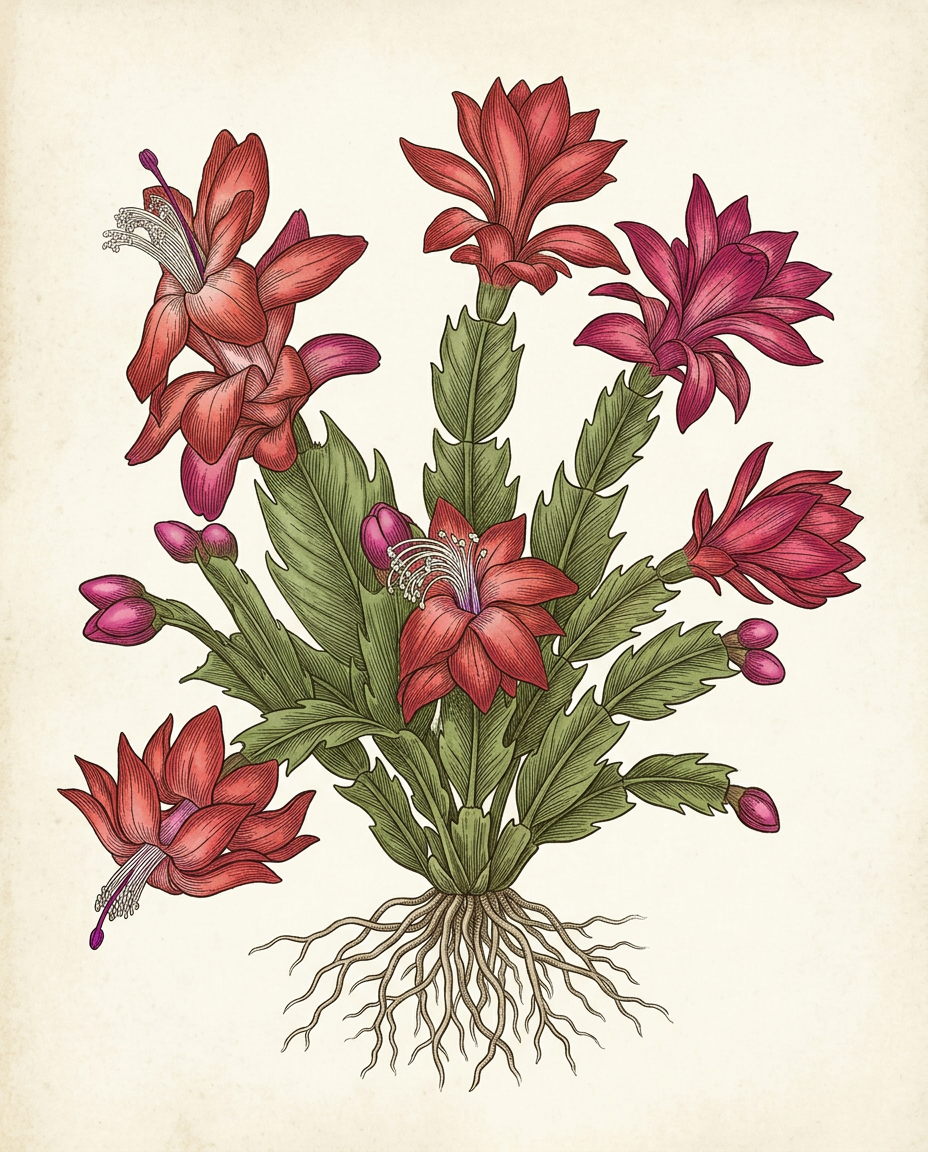
Christmas Cactus
A forgiving succulent-like plant with seasonal flowers. Safe for cats.
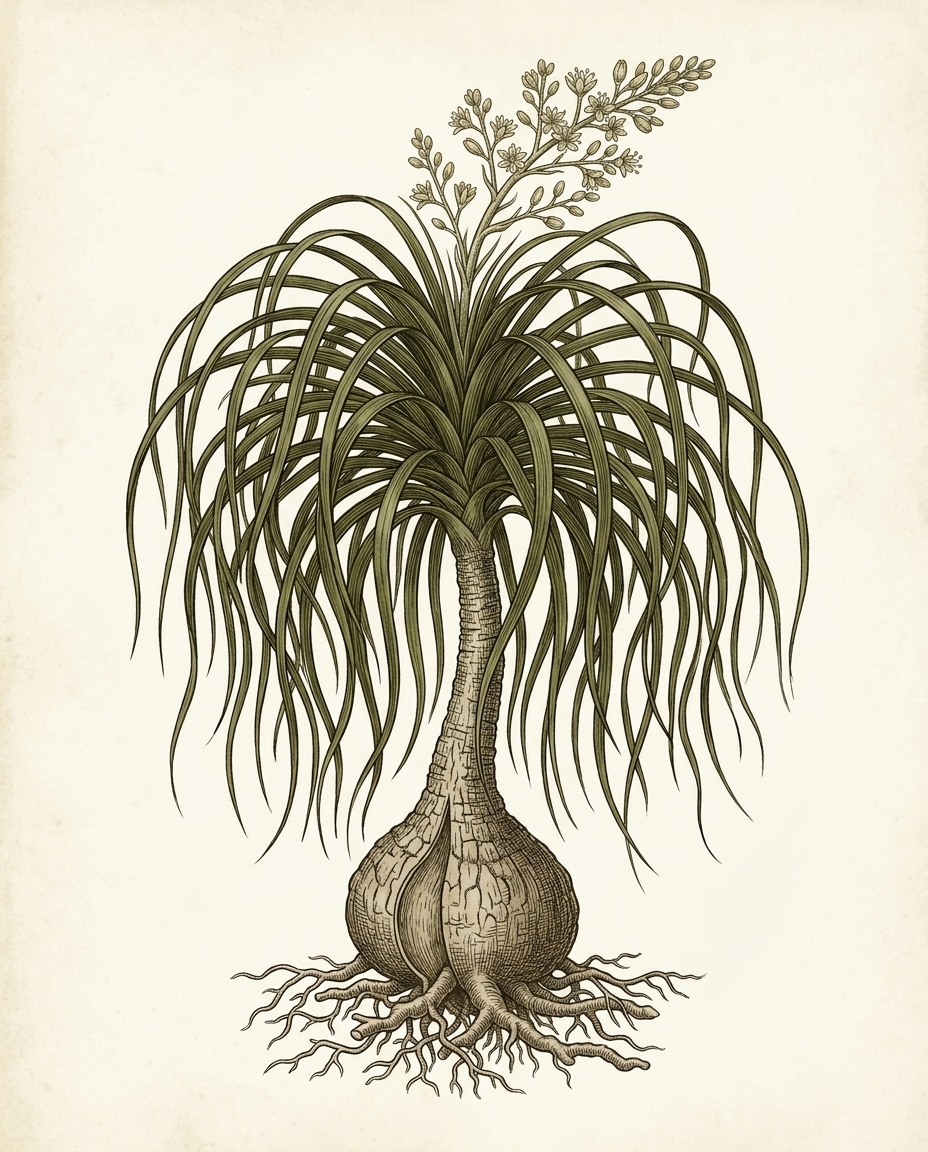
Ponytail Palm
A swollen-based, drought-tolerant statement plant that is ASPCA non-toxic.
What it does to a cat.
Yes — the jade plant is toxic to cats. The ASPCA lists Crassula ovata as toxic. The specific toxic compound has never been pinned down, but the clinical picture is consistent: vomiting, depression, and occasionally a wobbly, uncoordinated gait after a cat chews the fleshy leaves.
Jade is deceptively tempting. Its thick, juicy leaves snap off at a tap, which makes them irresistible to bat around and gnaw — especially for a bored indoor cat. Because the reaction is rarely dramatic, owners sometimes miss the connection between a quiet, off-colour cat and the nibbled succulent on the sill.
Not the only succulent to watch
Jade shares its family with kalanchoe, another toxic Crassulaceae succulent, and sits near aloe vera on the list of "looks harmless, isn't" houseplants. None of them belong within a cat's reach.
Safe swaps
For the same low-maintenance, sculptural look, haworthia is a near-perfect cat-safe stand-in, Christmas cactus adds seasonal flowers, and a ponytail palm covers the drought-tolerant statement-plant role — all ASPCA non-toxic.
What we have actually seen.
Vomiting
The most common sign after a cat chews the fleshy leaves. Usually self-limiting once the plant is removed.
Depression & lethargy
Cats may become quiet and dull after ingestion. Monitor closely and contact your vet if it persists.
Incoordination
Wobbliness or an unsteady gait has been reported with jade ingestion — a reason to call the vet.
Slow appeal
The thick, juicy leaves snap off easily and invite batting and chewing, especially by bored cats.
- ASPCA Animal Poison Control Center. Toxic and Non-Toxic Plants: Jade Plant.Accessed May 2026 · aspca.org
- Pet Poison Helpline. Jade Plant (Crassula).Reference list · 2024 ed.