Strelitzia (Bird of
Paradise).
Strelitzia reginae
Strelitzia (the houseplant Bird of Paradise) is toxic to cats per the ASPCA. The toxic principle is GI irritants; cats typically show mild nausea, vomiting, and drowsiness — fruit and seeds are the worst parts.
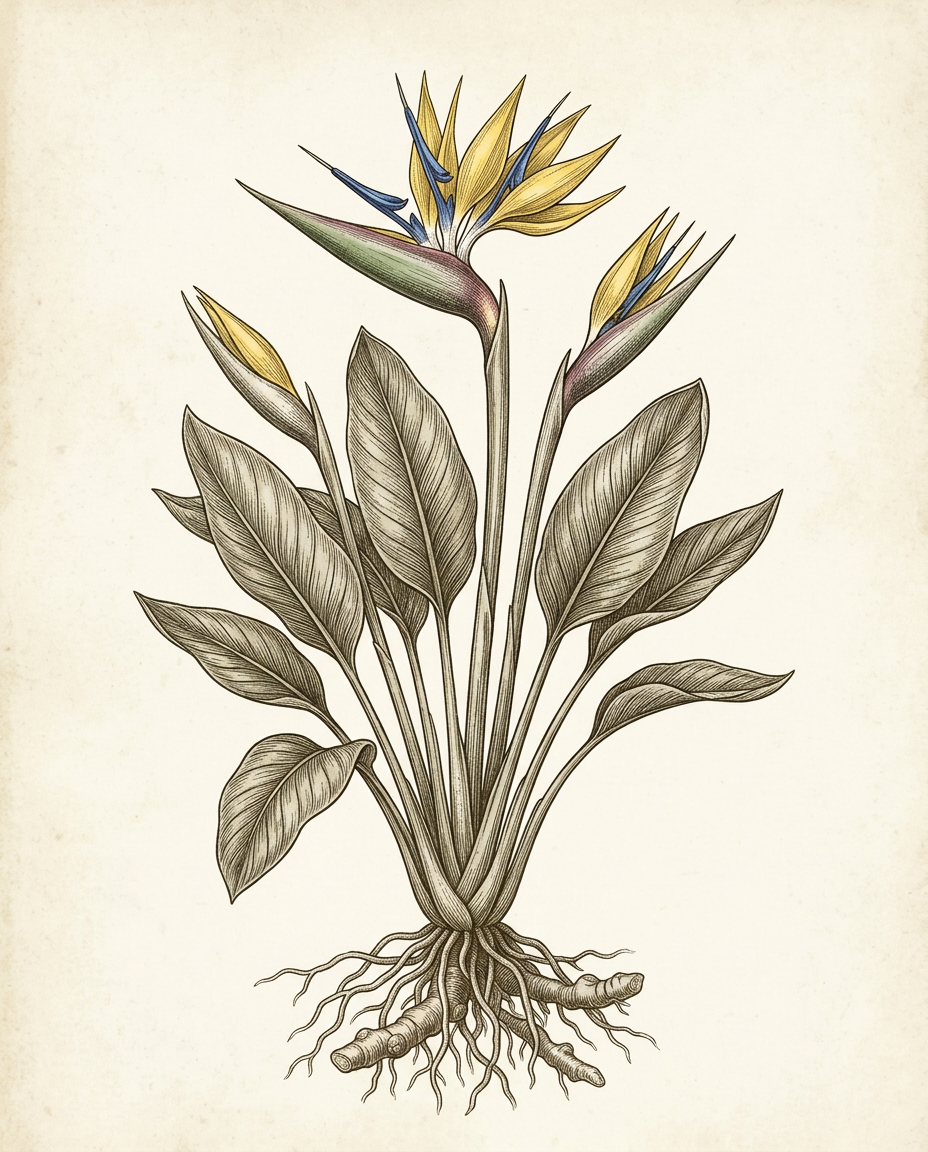
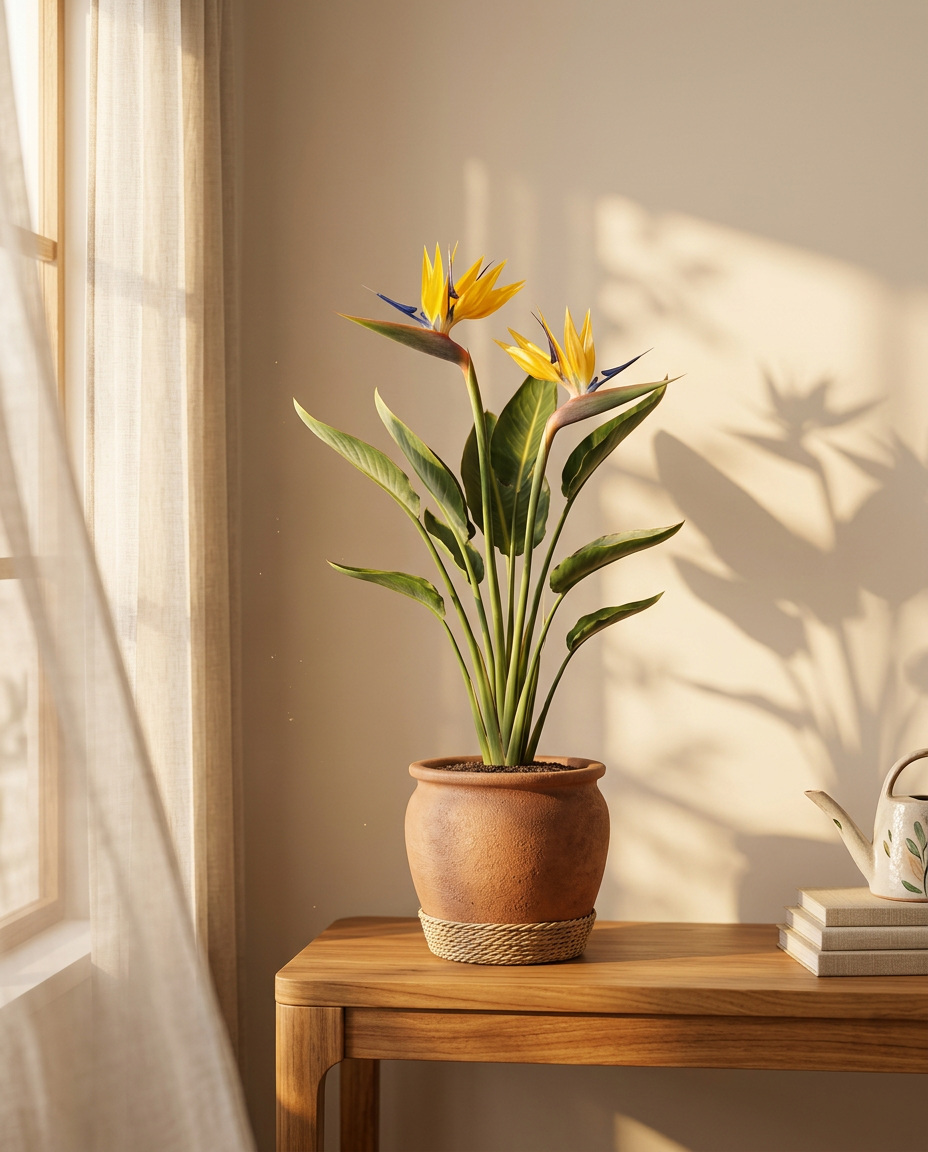
Plate IStrelitzia reginae — the crane-flowered floor plant of design catalogues. Toxic to cats per the ASPCA, though milder than the Caesalpinia "Bird of Paradise" sold as a desert shrub.
Three plants that look the part, without the risk.
Tall, paddle-leafed statement houseplants without the irritant fruit — these three are ASPCA non-toxic alternatives for the same big-leaf floor-pot moment.
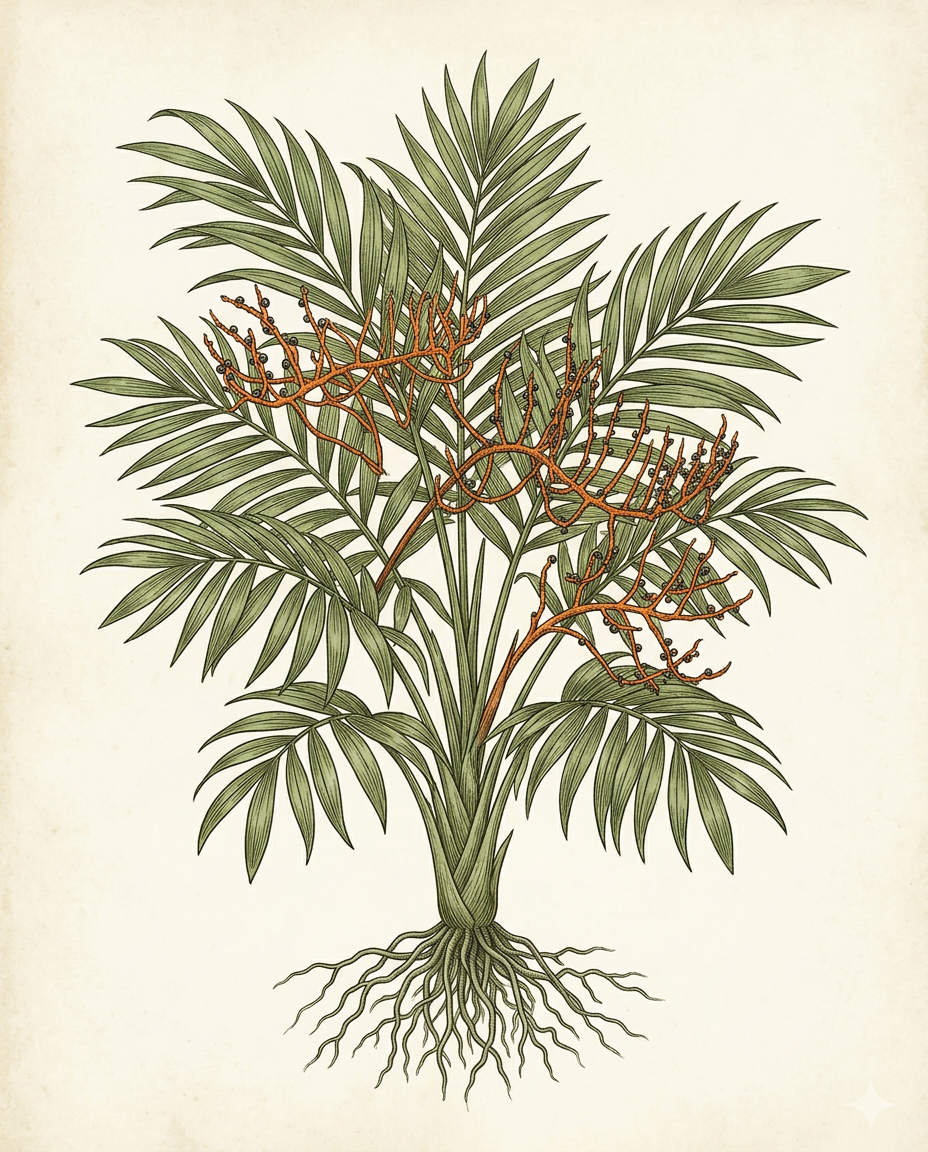
Parlor Palm
Tall arching fronds for the same floor-pot presence. ASPCA non-toxic.
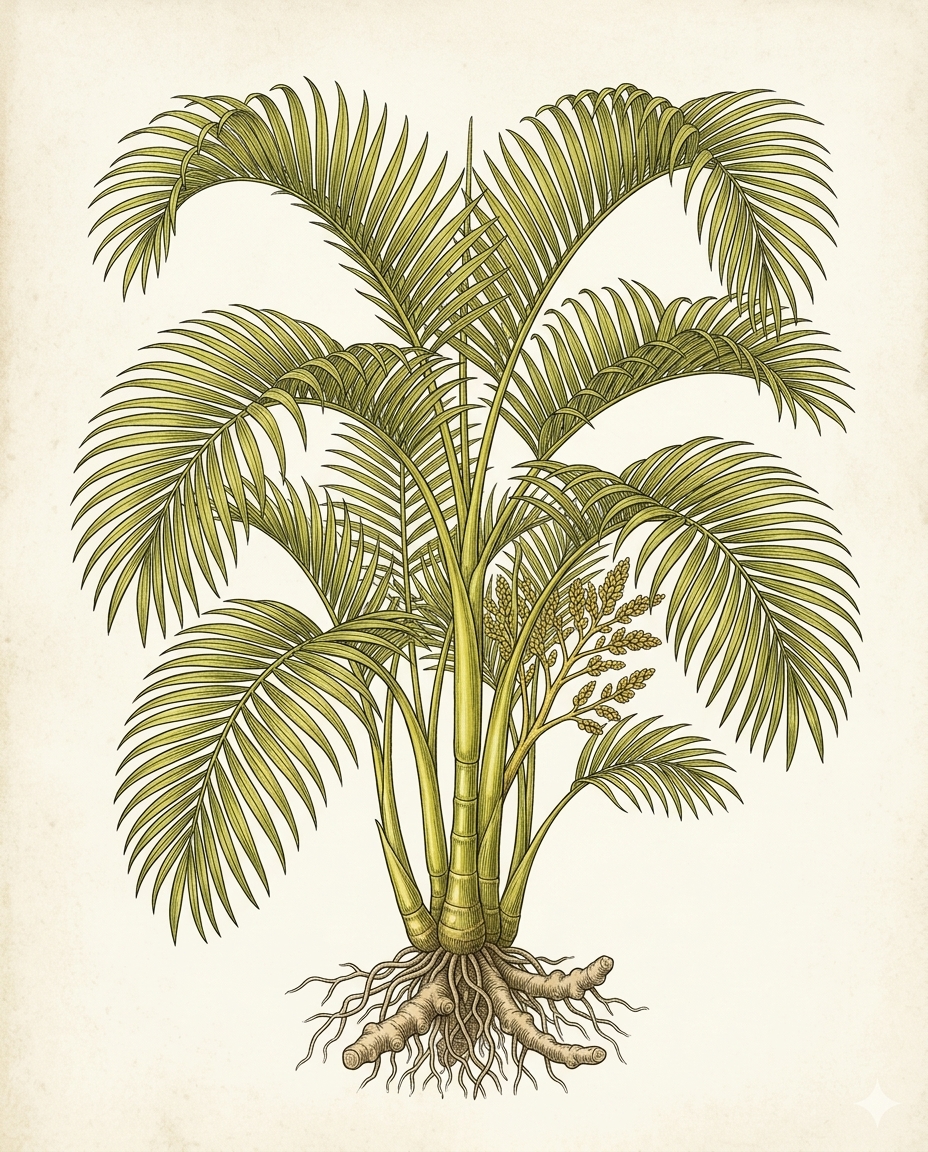
Areca Palm
A statement tropical with feathery height. ASPCA non-toxic to cats.
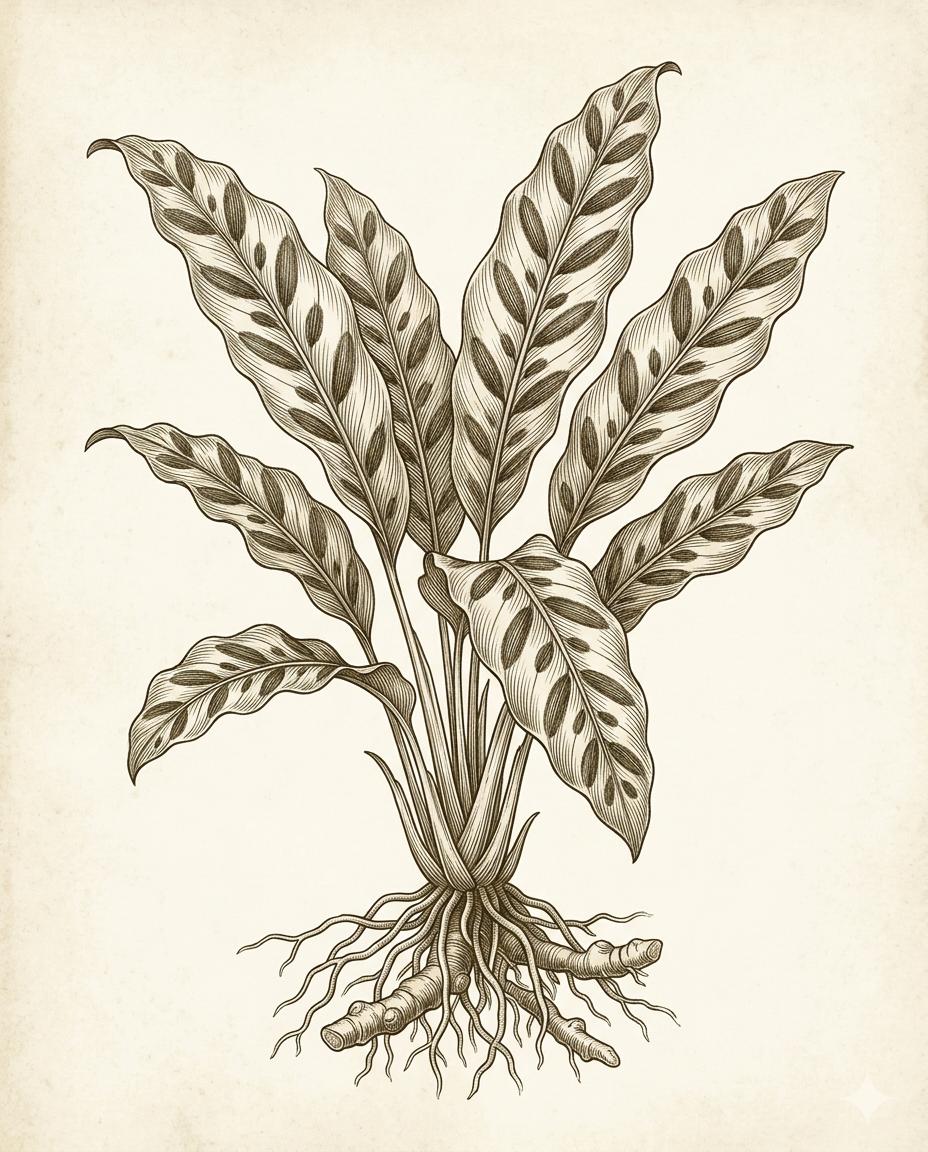
Calathea
Big, paddle-shaped patterned leaves — the closest visual match in a cat-safe plant.
What it does to a cat.
Yes — Strelitzia is toxic to cats, though on the milder end of the spectrum. The ASPCA lists Strelitzia reginae — also catalogued under the alternate common name Bird's Tongue Flower — as toxic to cats and dogs. The toxic principle is described as GI irritants; clinical signs are mild — nausea, vomiting, drowsiness — and most often associated with eating fruit or seeds.
Symptoms typically begin within 30 minutes to a few hours: drooling, one or two episodes of vomiting, and unusual drowsiness. Most cats recover within 12 to 24 hours with supportive care.
Houseplant Bird of Paradise vs. desert shrub Bird of Paradise
If you searched for "Bird of Paradise" and landed here, make sure this is the plant you have. Strelitzia reginae is the tall, paddle-leafed floor plant sold by garden centres and florists as a statement houseplant — sometimes growing to two metres indoors, with a crane-shaped orange-and-blue flower that rarely opens in a domestic setting. The desert shrub Bird of Paradise — small yellow-and-red flowers, fern-like foliage, dramatic seed pods — is a Caesalpinia and has a stronger toxic profile. See our Mexican Bird of Paradise page for that one.
Why the houseplant is on the milder end
The ASPCA specifically notes that the toxic effects are "caused mainly by fruit and seeds." Indoor Strelitzia almost never flowers — it needs a long warm growing season and excellent light to mature flowers, and almost never forms seed pods indoors. Most houseplant exposures involve a cat chewing a leaf or stem, which produces only mild GI upset.
Where cats meet Strelitzia
The big paddle-shaped leaves are inviting to chew, especially for young cats. Strelitzia sits in tall floor pots — exactly the cat-mouth-height design moment. Cats with a habit of grazing tall houseplants are the most common patients.
Safer big-leaf statement plants
For tall, paddle-leafed indoor statement plants without the GI irritants, calathea is the closest visual match in an ASPCA non-toxic plant. A parlor palm or areca palm brings the same architectural height and tropical vibe with no toxic risk. See our Mexican Bird of Paradise page if you have the outdoor shrub.
If exposure has happened
Call your vet or ASPCA Animal Poison Control at (888) 426-4435 for guidance. Most cases need only supportive care — withholding food for a few hours, then offering small bland meals. Escalate to the ER if vomiting persists beyond six hours, the cat seems abnormally drowsy or weak, or you suspect fruit or seeds were eaten.
What we have actually seen.
Mild nausea and vomiting
The most common sign. Usually one or two episodes of vomiting within a few hours of ingestion. Often self-resolving with no treatment.
Drowsiness
The ASPCA notes drowsiness specifically — affected cats may seem unusually sleepy or withdrawn for several hours after ingestion.
Drooling and reduced appetite
Mild oral irritation from the GI irritants can produce drooling and a temporary disinterest in food.
Fruit and seed exposure
The ASPCA specifically notes that fruit and seeds carry the highest dose. Indoor Strelitzia rarely fruits, so houseplant exposures are usually milder than outdoor ones.
- ASPCA Animal Poison Control Center. Toxic and Non-Toxic Plants: Bird of Paradise Flower (Strelitzia reginae).Accessed June 2026 · aspca.org
- Pet Poison Helpline. Strelitzia (Bird of Paradise) Toxicity in Cats and Dogs.Clinical brief · 2024 ed.