Schefflera
Schefflera spp.
Schefflera (umbrella plant, umbrella tree) is toxic to cats per the ASPCA. The calcium oxalate crystals in every leaf cause immediate oral burning, drooling, and difficulty swallowing.
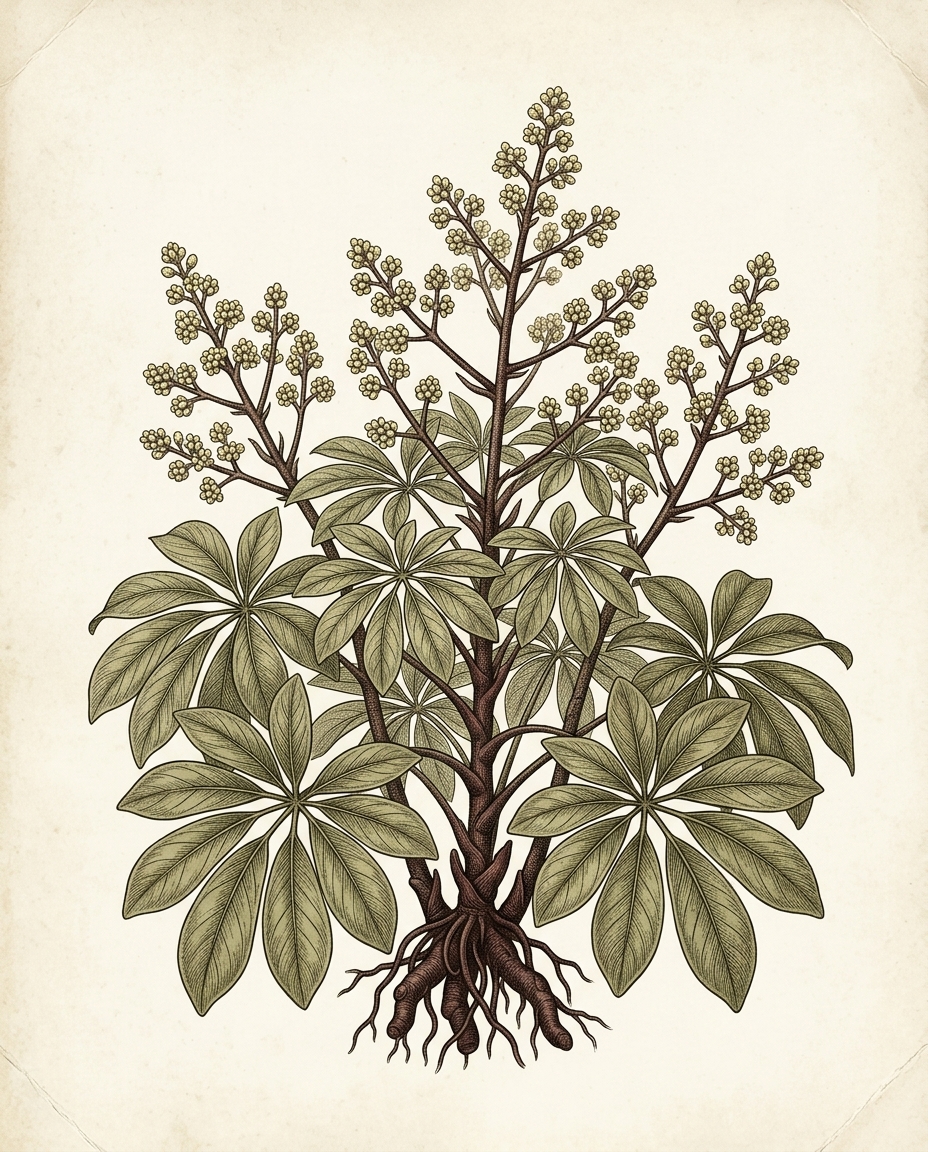
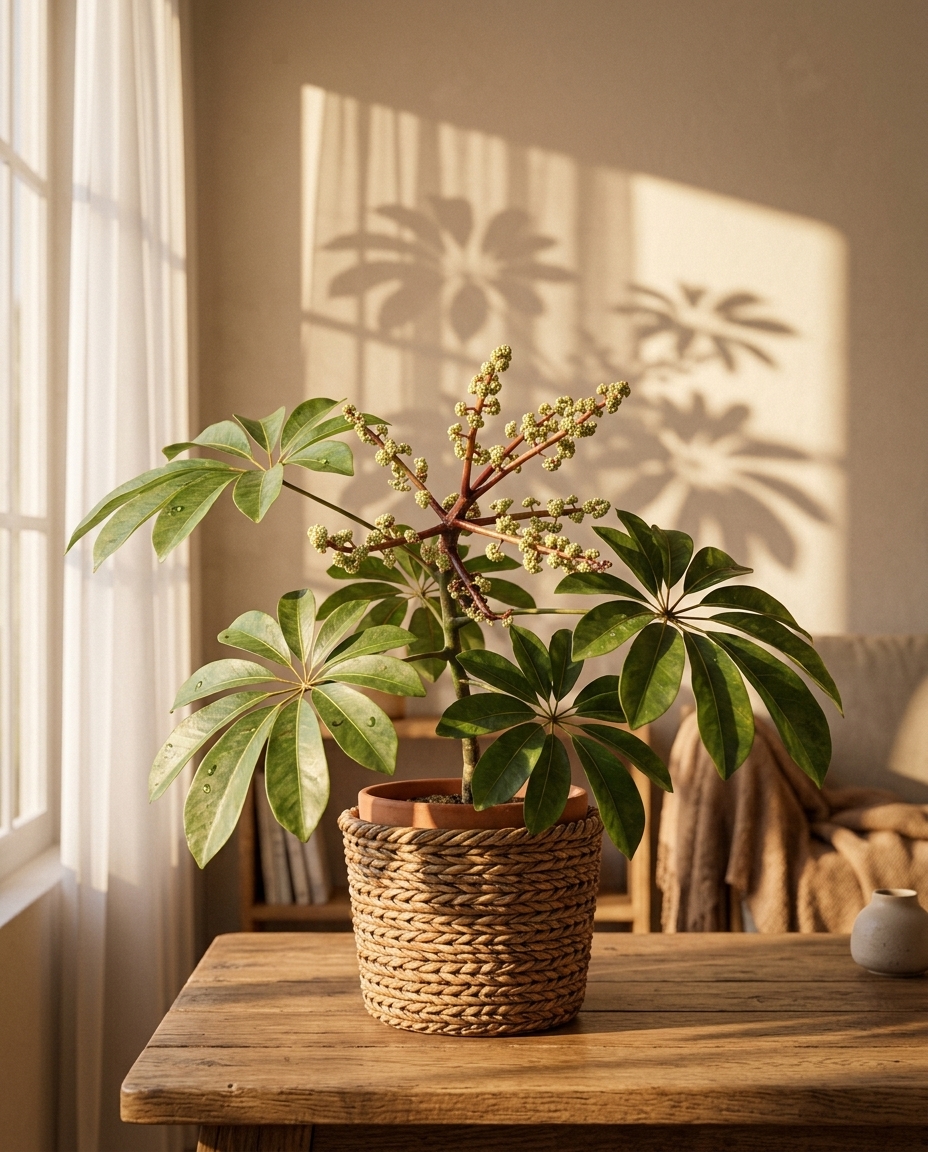
Plate ISchefflera species — the office-corner umbrella plant. Glossy palmate leaflets radiating in a circle from the petiole. Almost every leaf in the genus carries calcium oxalate raphides.
Three plants that look the part, without the risk.
Glossy palmate foliage without the oxalates — these three fill the same architectural-floor-plant role without the oral burn.
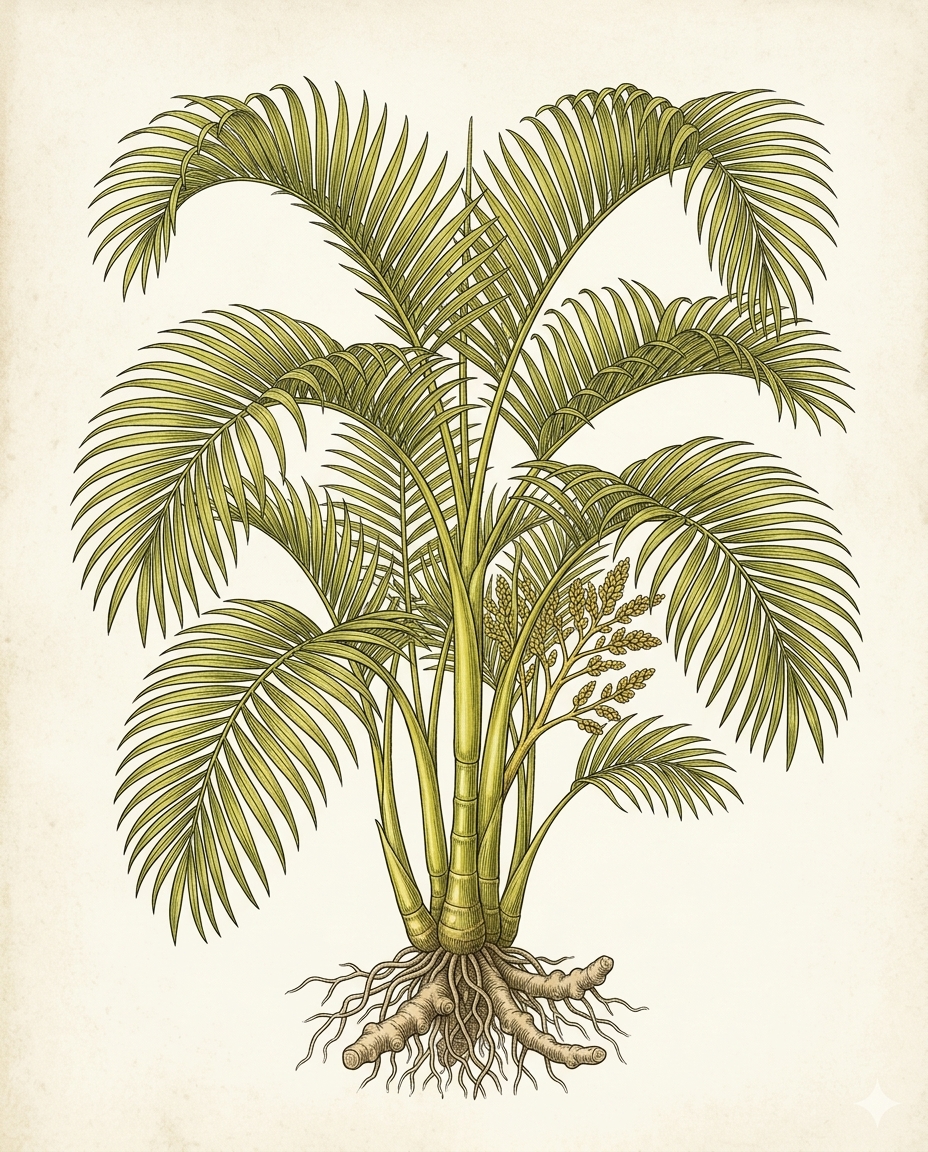
Areca Palm
Feathery palmate fronds — same indoor-tree presence. ASPCA non-toxic and tolerates the same light.
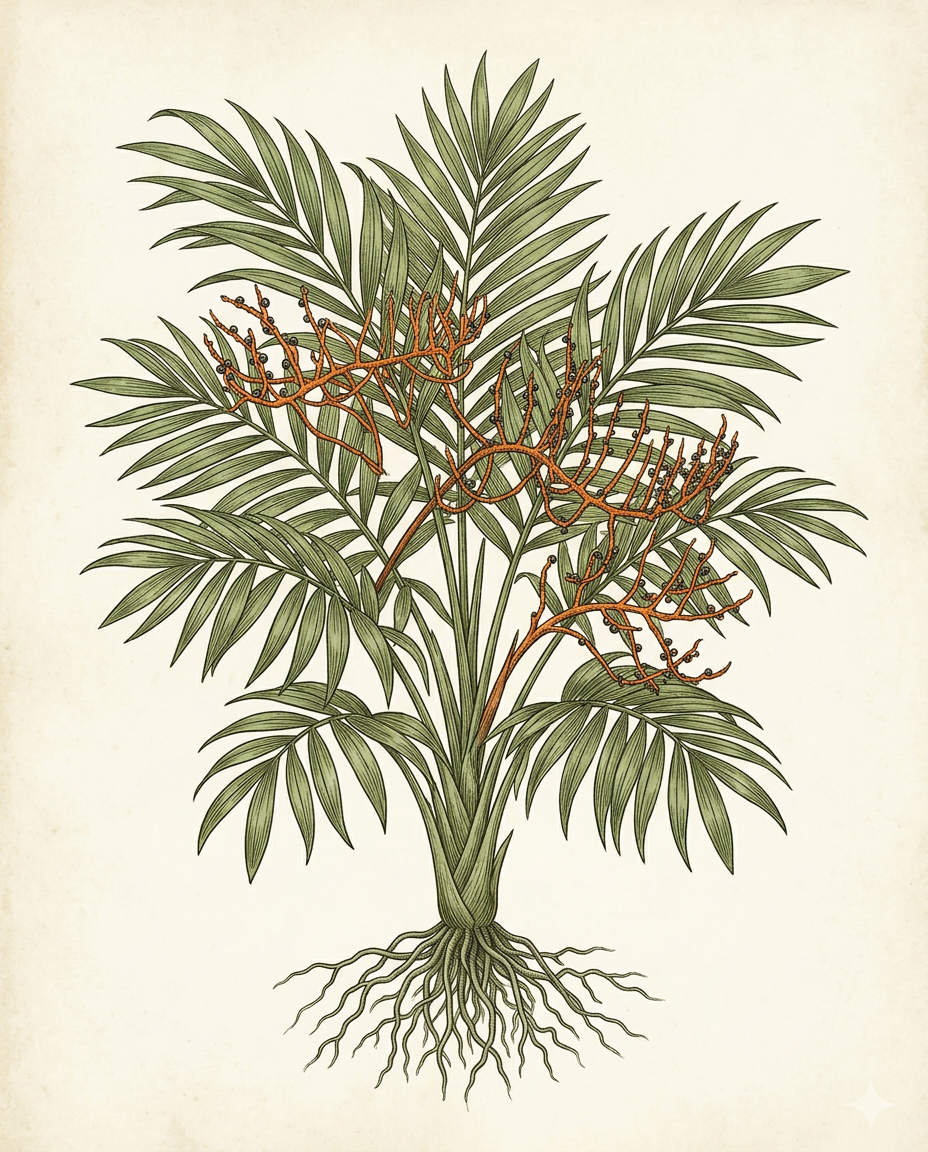
Parlor Palm
Compact, glossy fronds for the same room-corner role. ASPCA non-toxic.
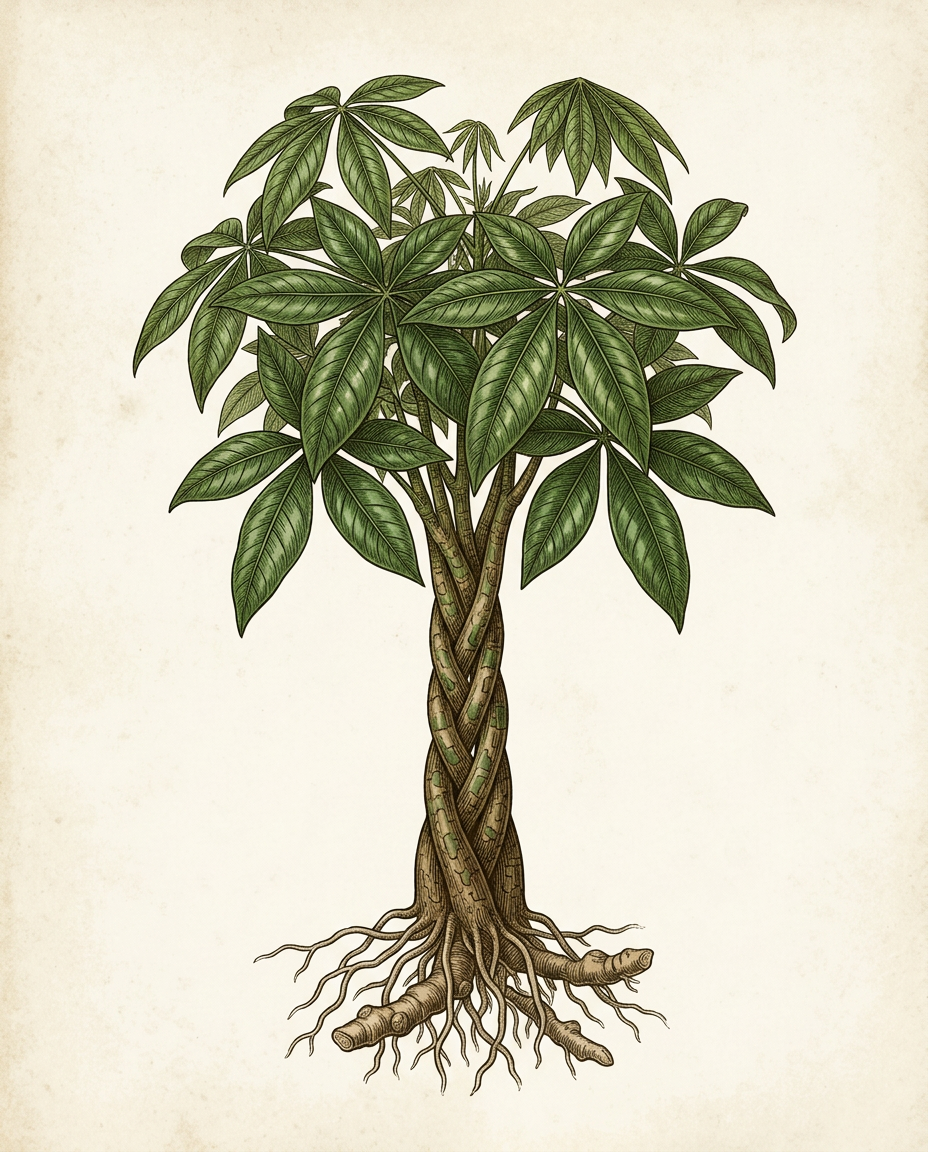
Money Tree
The closest match for sculptural palmate leaflets at floor scale. ASPCA non-toxic.
What it does to a cat.
Yes — schefflera is toxic to cats. The ASPCA lists Schefflera species — sold also as umbrella plant, umbrella tree, octopus tree, and starleaf — as toxic to cats and dogs. The toxic principle is insoluble calcium oxalate crystals: the same defensive chemistry that makes pothos, peace lily, philodendron, and dieffenbachia all toxic in the same way.
It is one of the most widely owned indoor "trees" in the world and a frequent veterinary call.
One plant, four common names
The two species sold as houseplants are Schefflera arboricola (dwarf schefflera, more common indoors) and Schefflera actinophylla (larger, originally Australian). The common names — umbrella plant, umbrella tree, octopus tree, starleaf — all describe the same characteristic palmate leaflet arrangement, radiating from a central petiole like the spokes of an umbrella. The ASPCA listing covers the genus, so the warning applies regardless of the specific name on the price tag.
What the crystals do
Insoluble calcium oxalate raphides are needle-shaped crystals embedded in the leaf tissue. When a cat chews, the crystals release and embed in the mouth lining instantly. The clinical picture is immediate and unmistakable: pawing at the mouth, foaming, drooling within minutes. Vomiting follows in some cats. Visible swelling of the mouth or tongue is less common but possible with sustained chewing. Severe airway swelling is rare in cats but reported in related aroids — it warrants emergency care if it appears.
The mercy of oxalate plants is that they hurt immediately. Most cats spit the leaf out after the first bite, which limits the dose.
What to do if your cat ate schefflera
Rinse the mouth with cool water if the cat tolerates it. Offer small amounts of food (milk-based or wet food can help carry crystals down). Most cases self-resolve within 24 hours. Call a vet if you see visible swelling of the mouth or throat, if vomiting persists, or if the cat refuses to eat for more than a day. ASPCA Animal Poison Control is available 24/7 at (888) 426-4435.
Cat-safe substitutes
For the same architectural floor-plant role, money tree (Pachira aquatica) is the closest substitute — also a palmate-leaflet sculptural specimen, ASPCA non-toxic. Areca palm and parlor palm fill the same shaded-corner role with feathery non-toxic foliage.
For the other oxalate-family plants we cover, see our pothos, peace lily, philodendron, and dieffenbachia pages — same toxin, same picture, different shapes.
What we have actually seen.
Immediate oral burning and pawing at the mouth
Calcium oxalate raphides embed in the mouth lining on contact. Most cats drop the leaf and salivate within minutes.
Excessive drooling
Intense salivation is the most commonly reported sign. Cats may foam at the mouth or rub their face on the floor.
Difficulty swallowing
Oral and pharyngeal irritation can make swallowing uncomfortable. Cats may refuse food and water briefly.
Vomiting
Crystals that reach the stomach irritate the lining. Vomiting typically follows within the first few hours.
- ASPCA Animal Poison Control Center. Toxic and Non-Toxic Plants: Schefflera.Accessed June 2026 · aspca.org · Schefflera spp · Toxic Principles calcium oxalate crystals
- Pet Poison Helpline. Insoluble calcium oxalates in companion animals.Clinical reference · 2024
- Merck Veterinary Manual. Calcium oxalate plant toxicosis.Standard small-animal toxicology reference