Dieffenbachia
Dieffenbachia spp.
Yes — dieffenbachia is toxic to cats. The ASPCA attributes it to insoluble calcium oxalates plus a proteolytic enzyme, causing intense oral pain, swelling, and drooling on chewing.
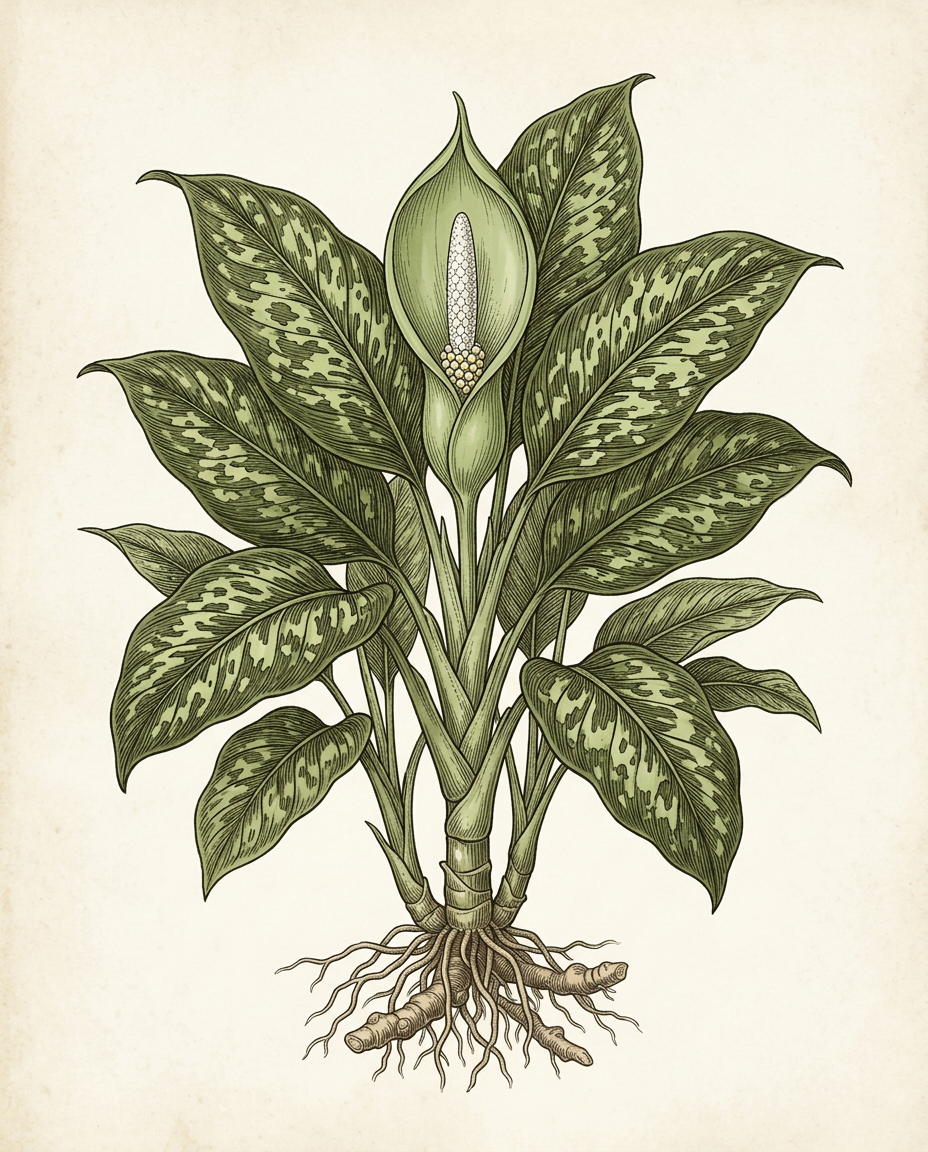

Plate IDieffenbachia spp. — dumb cane. Large variegated leaves on a cane-like stem, armed with oxalate crystals and an irritant enzyme.
Three plants that look the part, without the risk.
Big, bold foliage without the oxalate sting — all ASPCA non-toxic.
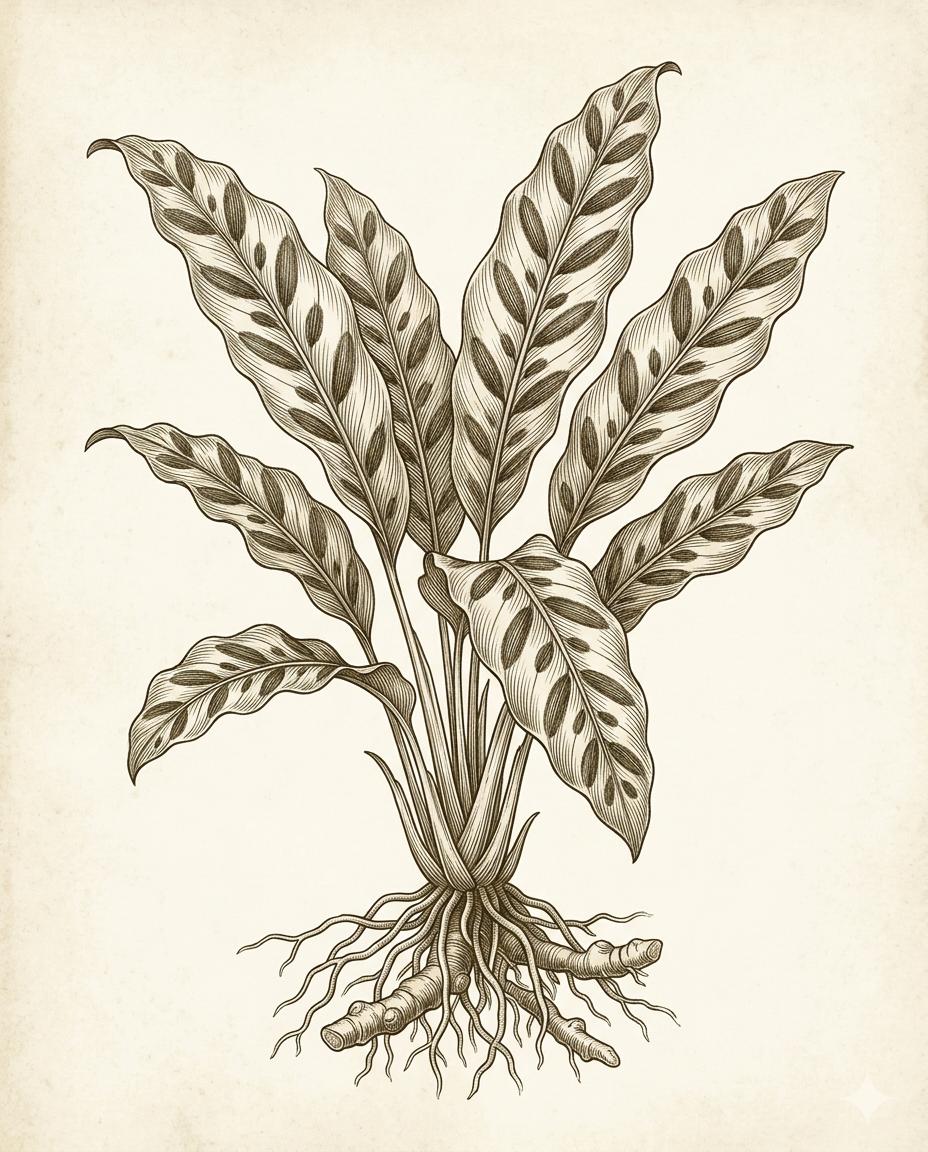
Calathea
Large patterned leaves with all the drama and none of the crystals. Cat-safe.
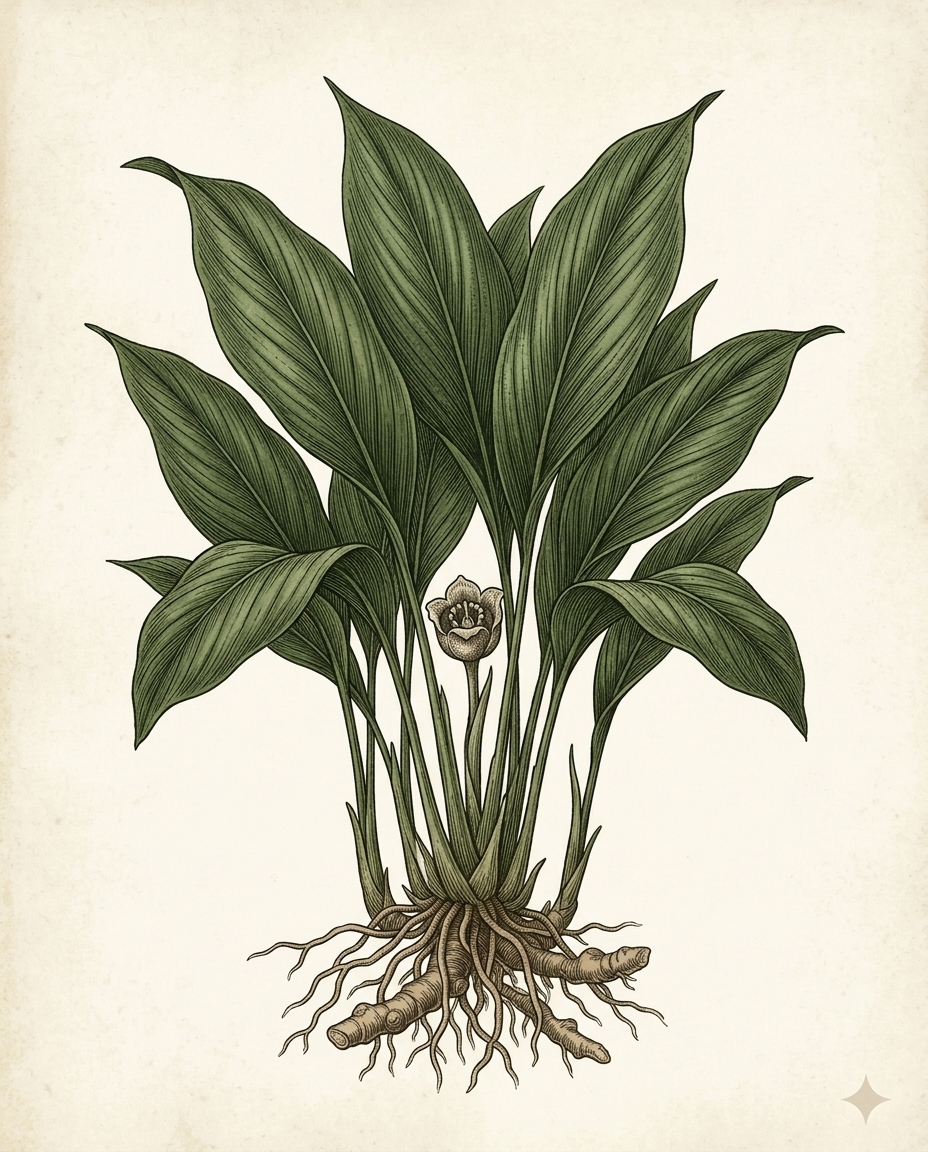
Cast-Iron Plant
Tall, glossy, near-indestructible foliage for a shady spot. ASPCA non-toxic.
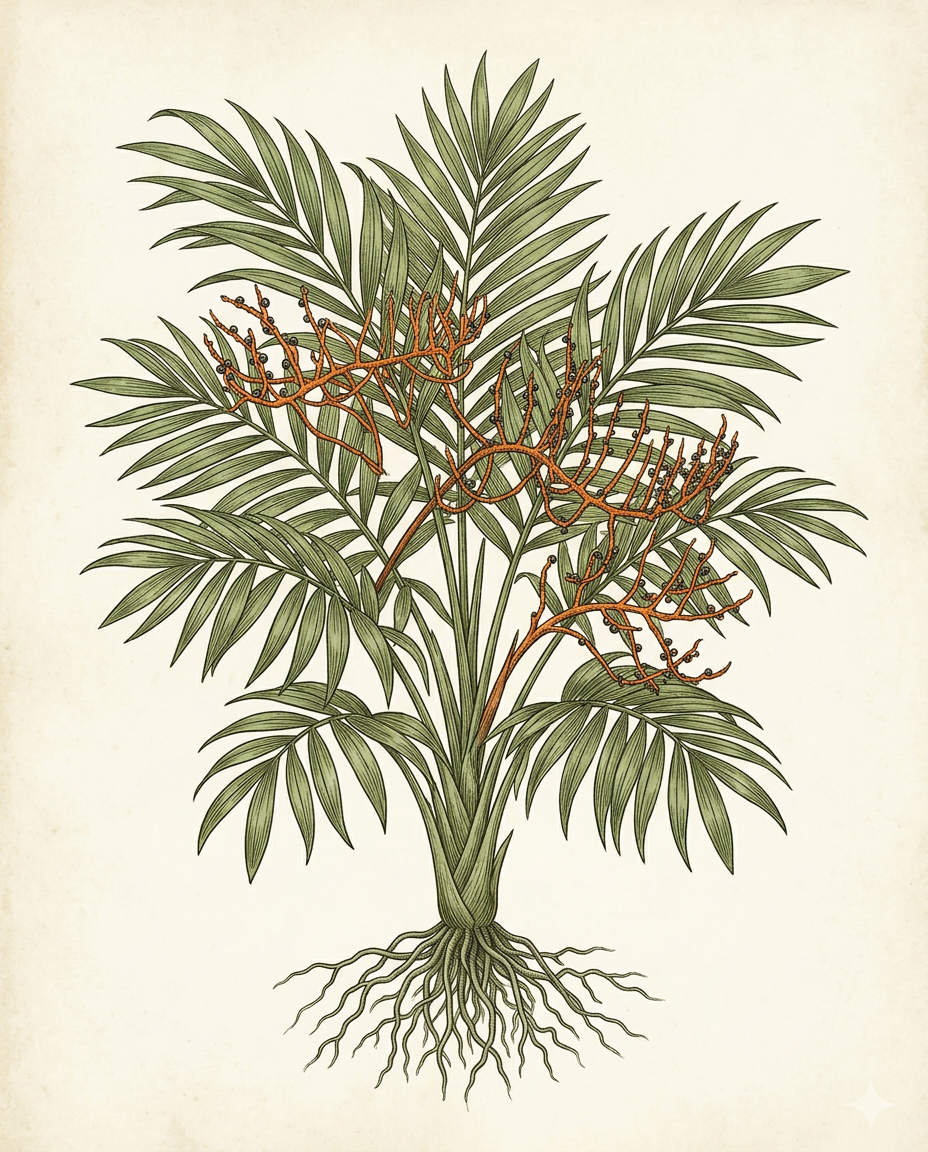
Parlor Palm
A soft, full floor plant for the same corner a dumb cane would fill. Safe for cats.
What it does to a cat.
Yes — dieffenbachia is toxic to cats. The ASPCA lists the dumb cane as toxic, and it is one of the harsher members of its family: alongside the usual insoluble calcium oxalate crystals it carries a proteolytic enzyme that amplifies the reaction. Chewing causes severe oral pain and pronounced swelling of the mouth, lips, and tongue, with heavy drooling and vomiting.
The common name "dumb cane" comes from that swelling, which can temporarily impair speech in people — and in cats produces frantic pawing at the face and a mouth too sore to use. Most cases stay confined to the mouth and gut, but the marked swelling makes airway compromise a more real (if still rare) concern than with milder aroids.
The arum family, at its sharpest
Dieffenbachia shares its toxin with pothos, aglaonema, and anthurium, but the added enzyme makes it the one to treat most seriously of the group. Watch breathing closely after any ingestion.
Safe swaps
For the same large, leafy presence, calathea brings patterned drama, a cast-iron plant is tough and glossy, and a parlor palm fills a floor corner softly — all ASPCA non-toxic.
What we have actually seen.
Severe oral pain & swelling
Raphides plus a proteolytic enzyme make dieffenbachia among the more painful aroids — marked swelling of the mouth, lips, and tongue.
Drooling & pawing
Heavy salivation and frantic pawing at the face within minutes of a bite.
Vomiting
Common after the initial irritation; usually self-limiting once the plant is removed.
Airway swelling
Rare but the most serious outcome — pronounced swelling can compromise breathing and needs emergency care.
- ASPCA Animal Poison Control Center. Toxic and Non-Toxic Plants: Dieffenbachia.Accessed May 2026 · aspca.org
- Pet Poison Helpline. Dieffenbachia / Insoluble Oxalates.Clinical brief · 2024 ed.