Caladium
Caladium hortulanum
Caladium is toxic to cats per the ASPCA. The painted, heart-shaped aroid leaves carry insoluble calcium oxalate crystals throughout — the same toxin family as peace lily and pothos.
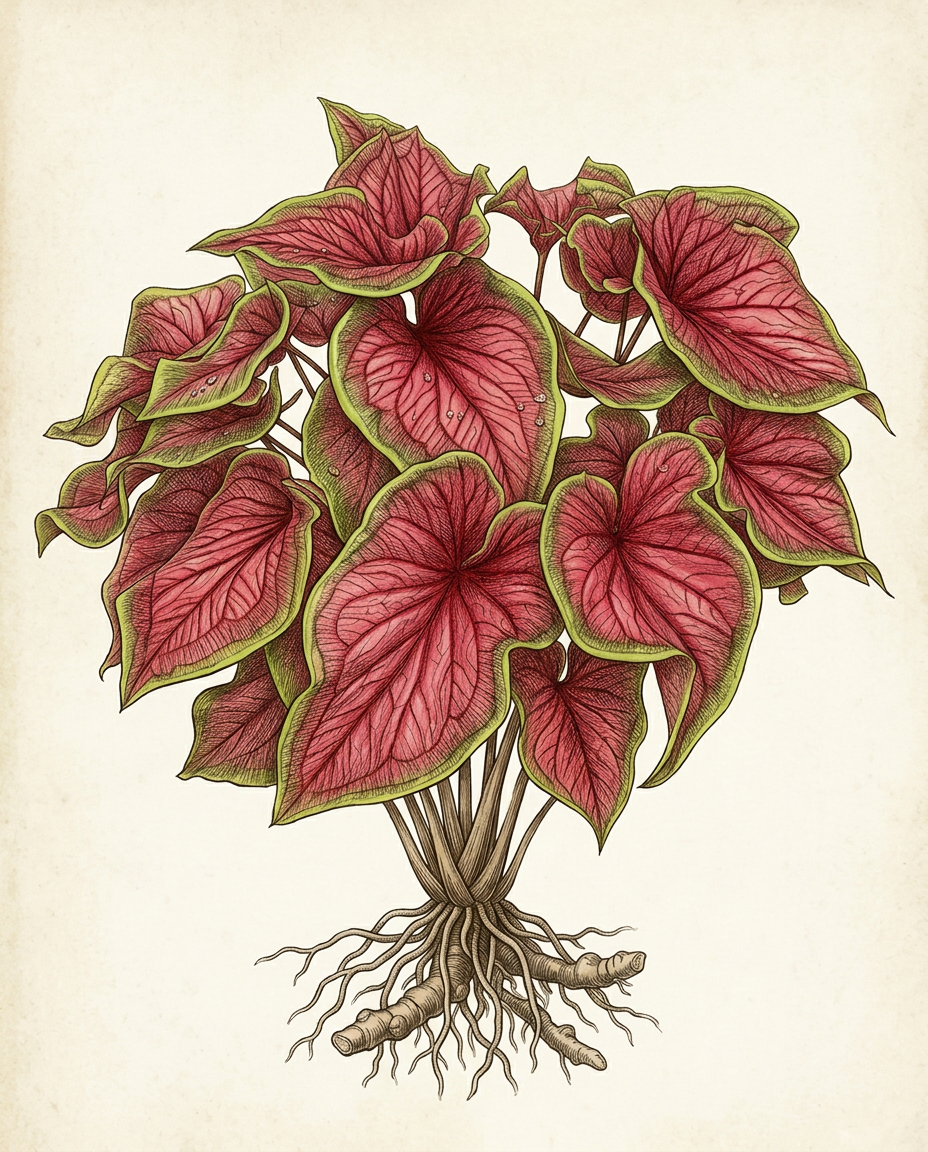

Plate ICaladium hortulanum — the painted-heart aroid. Tropical understory plant from South America; the leaves are pigmented in white, pink, or red veins on green grounds. Common names include Elephant's Ears, Angel-Wings, and Heart of Jesus.
Three plants that look the part, without the risk.
Painted, heart-shaped foliage without the oxalates — these three give the same statement-leaf look without the oral burn.
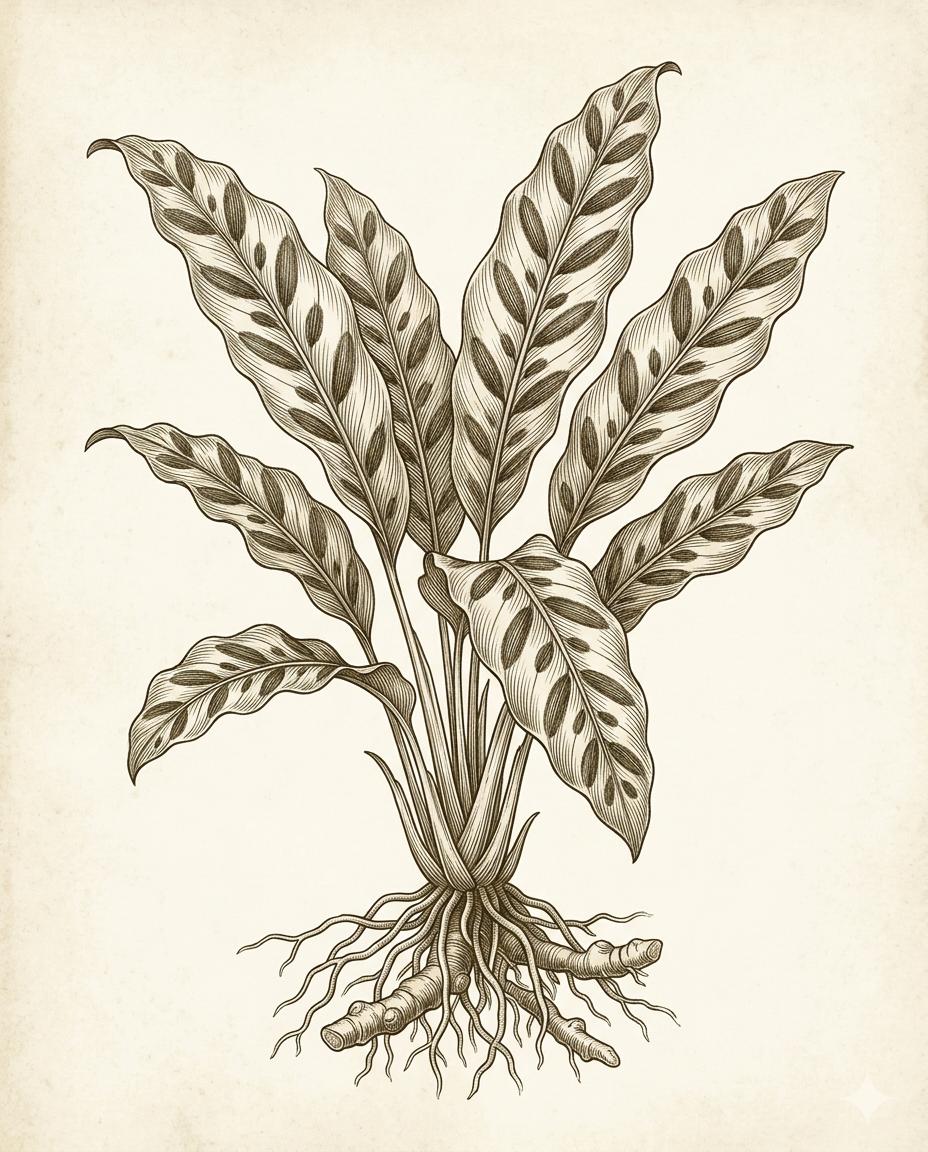
Calathea
The closest visual match — patterned, bold-veined leaves in pink-and-green. ASPCA non-toxic.
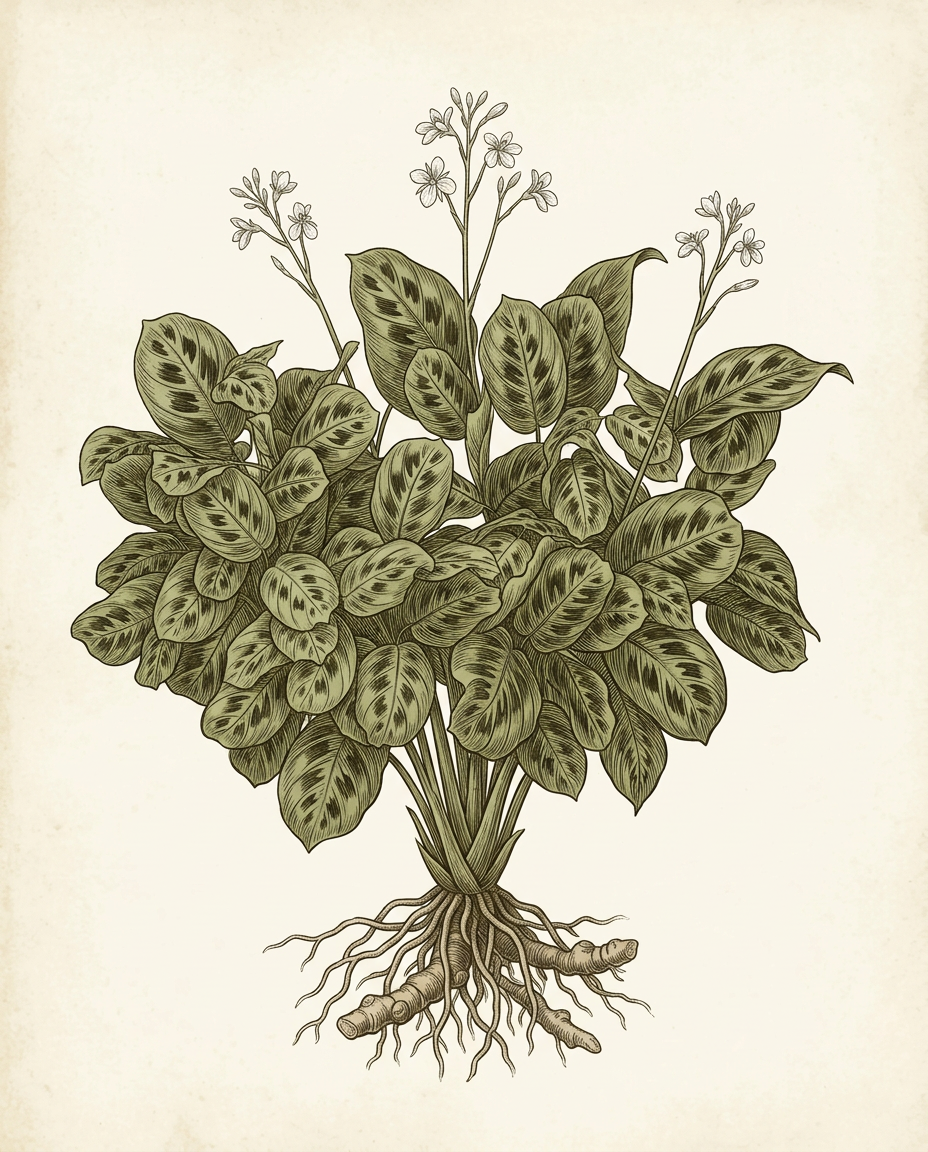
Prayer Plant
Vivid leaf patterns and the same understory-tropical feel. ASPCA non-toxic.
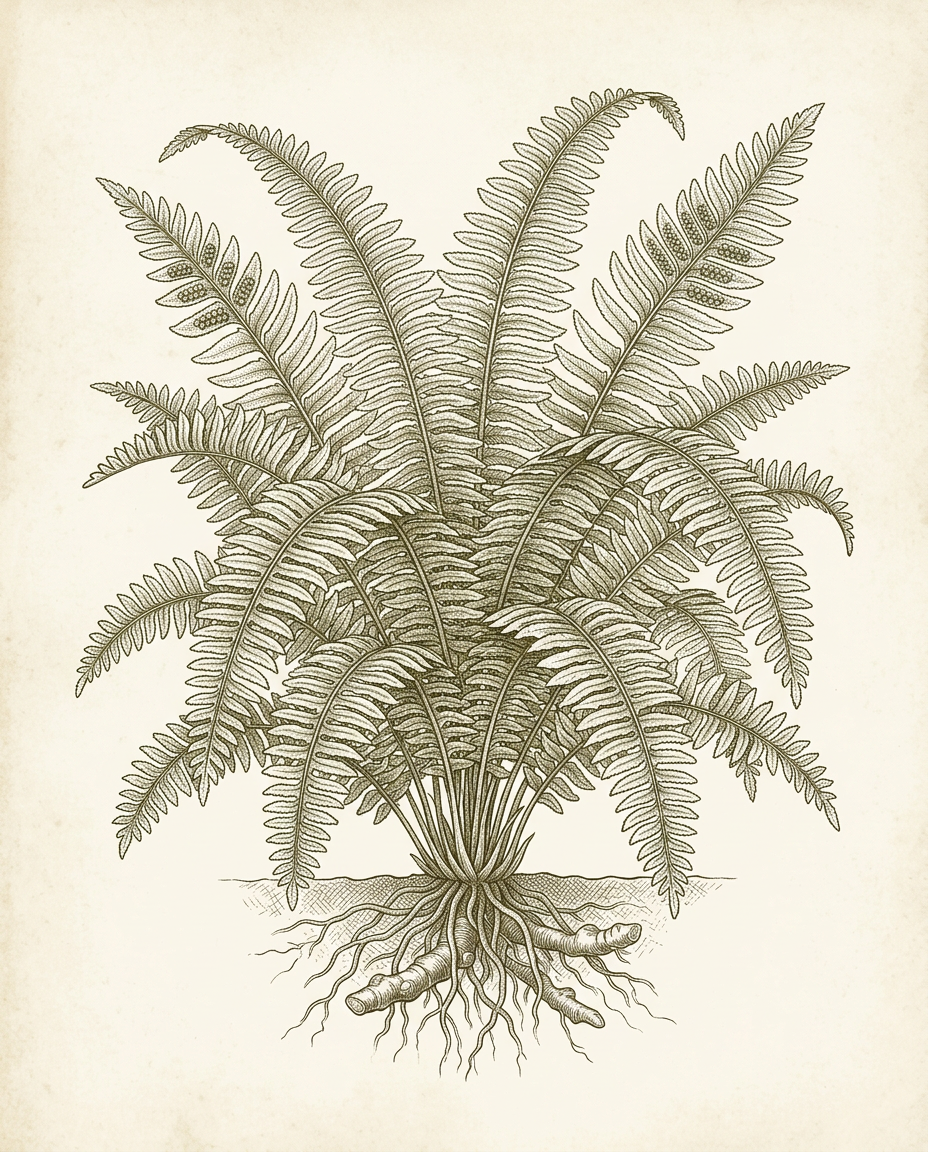
Boston Fern
Lush green foliage at the same scale and indirect light. ASPCA non-toxic.
What it does to a cat.
Yes — caladium is toxic to cats. The ASPCA lists Caladium hortulanum — also called Elephant's Ears, Angel-Wings, Heart of Jesus, and several cultivar names — as toxic to cats, dogs, and horses. The toxic principle is insoluble calcium oxalates, the same defensive chemistry that makes peace lily, pothos, philodendron, and dieffenbachia all toxic in exactly the same way.
Caladium is the painted-leaf member of the aroid family. The chemistry is identical to its plainer cousins; only the foliage pattern changes.
Why the whole aroid family is on this list
Insoluble calcium oxalate raphides are an evolutionary defence against herbivory. The Araceae family — peace lily, pothos, philodendron, monstera, dieffenbachia, anthurium, caladium — all use the same trick. Needle-shaped crystals embedded in the leaf tissue release when chewed and embed in soft tissue immediately. Cats experience oral burning within seconds, often visible drooling and pawing at the mouth within a minute or two.
Caladium is sold mainly as a houseplant for the painted foliage — white, pink, or red veins on a green ground. The leaves are heart-shaped and broad, exactly the kind of leaf a curious cat will investigate. The dose is usually self-limiting (the bitterness is intense and most cats spit), but pawing at a leaf and then licking a paw is enough to produce drooling and discomfort.
What to do if your cat ate caladium
Rinse the mouth with cool water if the cat tolerates it. Offer small amounts of food (milk-based or wet food helps carry crystals down). Most cases self-resolve within 24 hours. Call a vet if you see swelling of the mouth or throat, if vomiting persists, or if the cat refuses water for more than a few hours. ASPCA Animal Poison Control is available 24/7 at (888) 426-4435.
Cat-safe substitutes
For the same painterly, patterned foliage without the crystals, calathea is the closest visual match — bold-veined leaves in pink-and-green, ASPCA non-toxic. Prayer plant (Maranta leuconeura) covers the same understory-tropical role; Boston fern fills the same scale and indirect-light position.
For the other Araceae plants we cover, see peace lily, pothos, philodendron, and dieffenbachia. Same toxin, same picture, different leaves.
What we have actually seen.
Immediate oral burning and pawing at the mouth
Calcium oxalate raphides embed in the mouth lining on contact. Most cats drop the leaf and salivate within minutes.
Excessive drooling
Intense salivation is the most commonly reported sign. Cats may foam at the mouth or rub their face on the floor.
Difficulty swallowing
Oral and pharyngeal irritation can make swallowing uncomfortable. Cats may refuse food and water briefly.
Vomiting
Crystals that reach the stomach irritate the lining. Vomiting typically follows within the first few hours.
- ASPCA Animal Poison Control Center. Toxic and Non-Toxic Plants: Caladium.Accessed June 2026 · aspca.org · Caladium hortulanum · Toxic Principles insoluble calcium oxalates
- Pet Poison Helpline. Insoluble calcium oxalates in companion animals.Clinical reference · 2024
- Merck Veterinary Manual. Aroid family plant toxicosis.Standard small-animal toxicology reference