Aglaonema
Aglaonema modestum
Yes — aglaonema (Chinese evergreen) is toxic to cats. The ASPCA attributes it to insoluble calcium oxalate crystals, which cause immediate mouth pain and drooling on chewing.
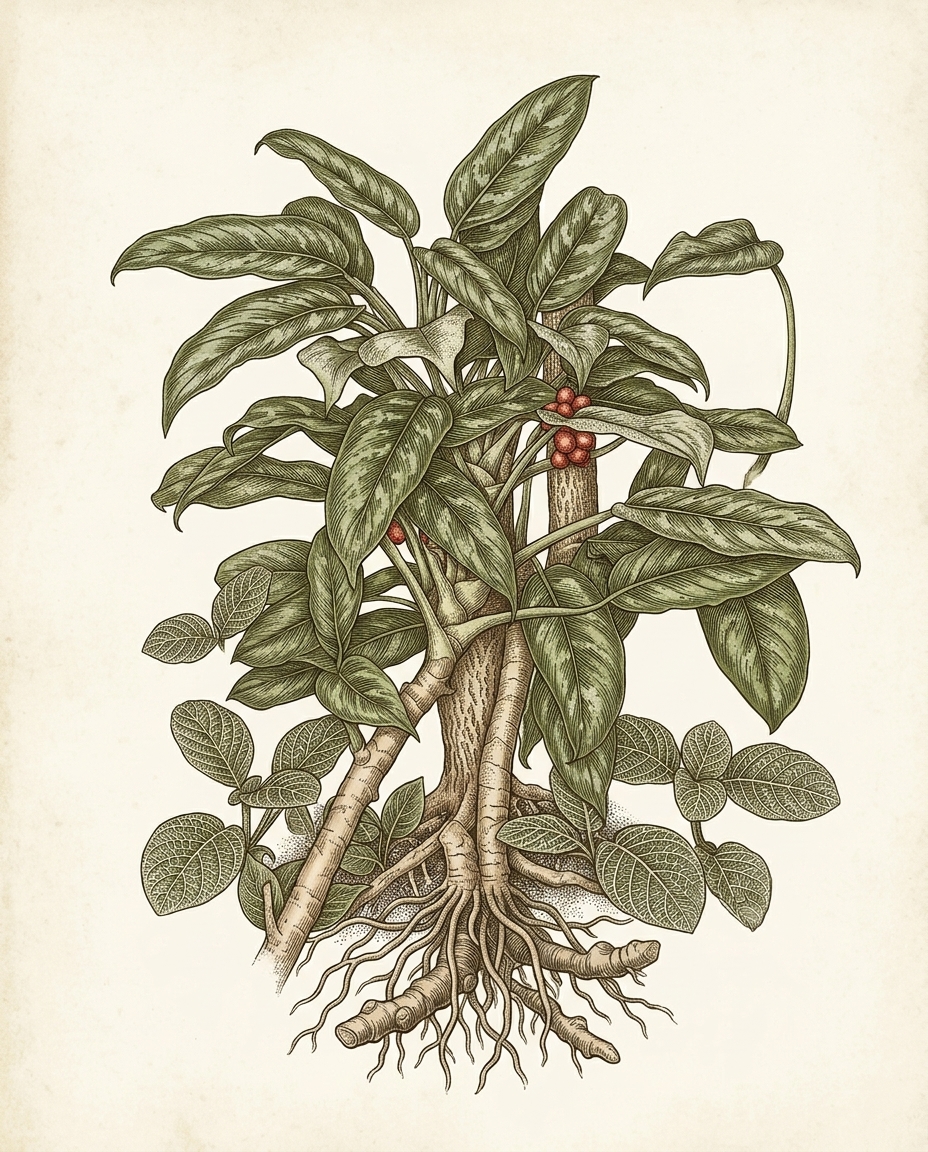
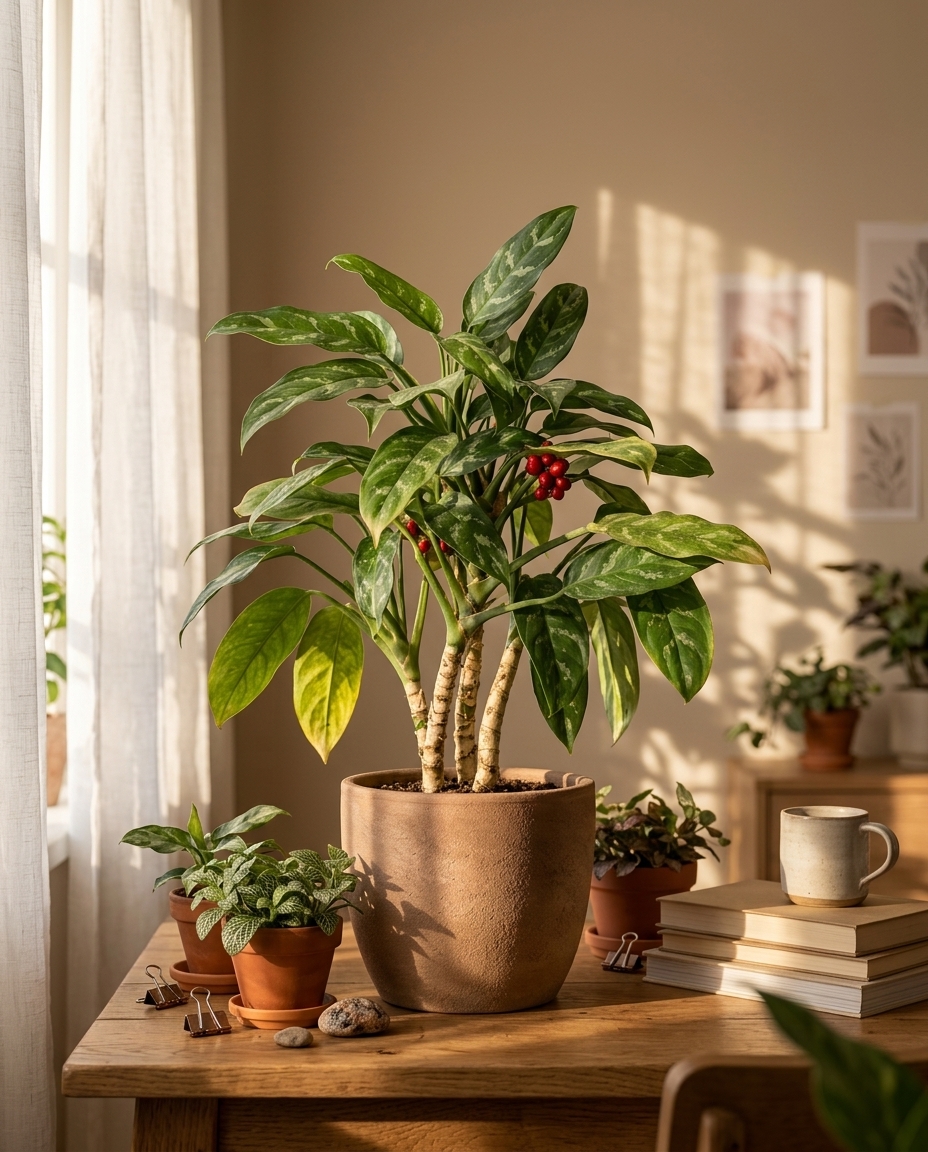
Plate IAglaonema modestum — Chinese evergreen. A patterned-leaf aroid carrying the same calcium oxalate crystals as pothos and dieffenbachia.
Three plants that look the part, without the risk.
Patterned, low-light foliage without the oxalates — all ASPCA non-toxic.
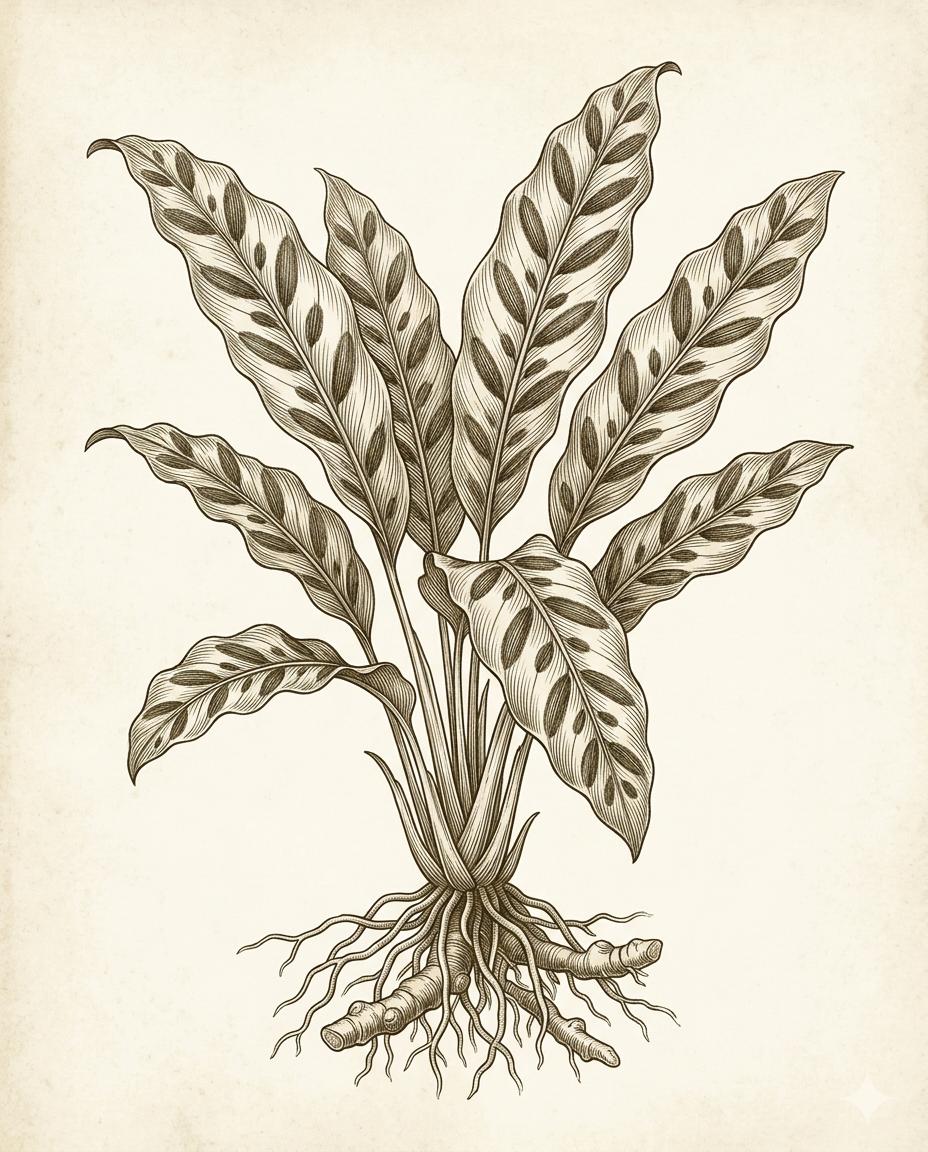
Calathea
Some of the most striking patterned leaves available, and completely cat-safe.
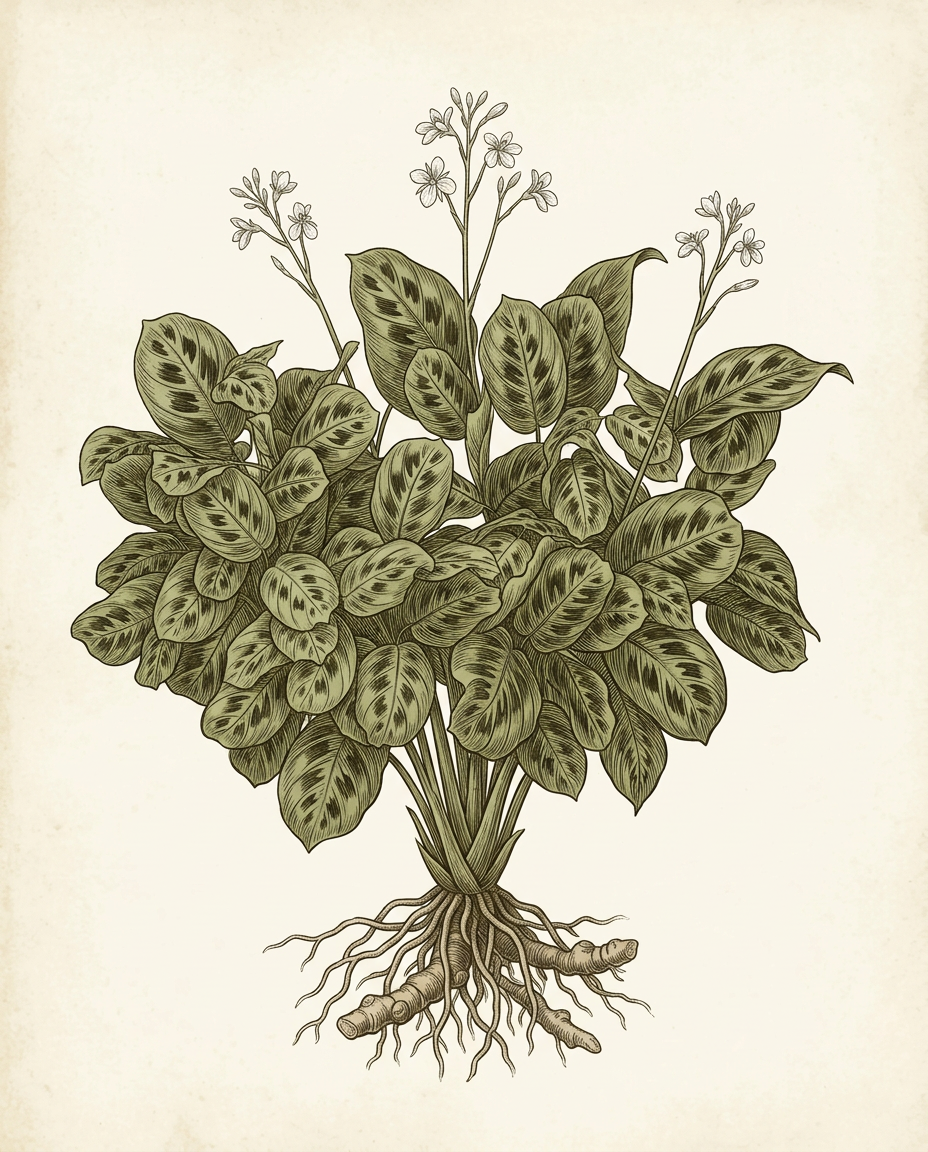
Prayer Plant
Bold veined foliage with the same dramatic markings. ASPCA non-toxic.
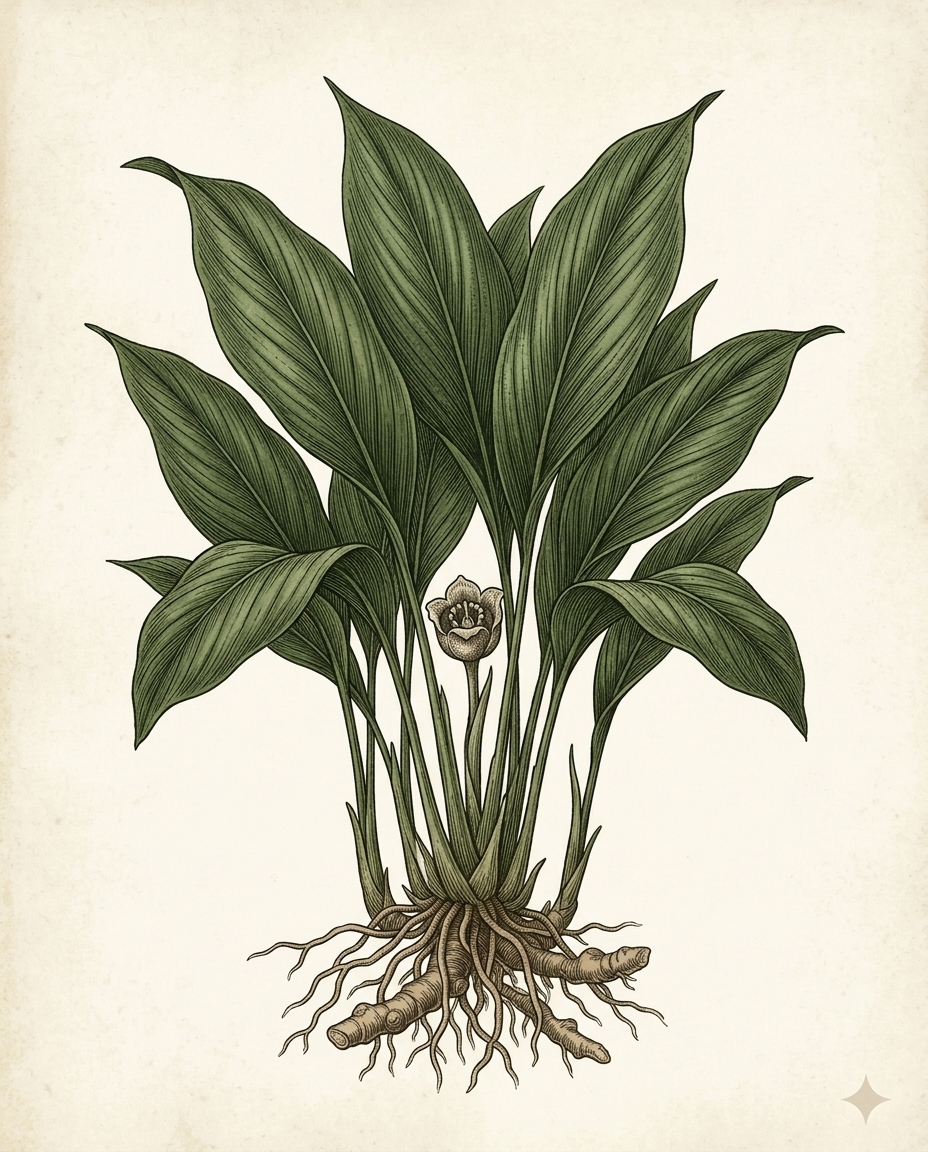
Cast-Iron Plant
Tough, glossy, low-light foliage that fills the same shady corner. Safe for cats.
What it does to a cat.
Yes — aglaonema is toxic to cats. The ASPCA lists the Chinese evergreen as toxic, the cause being insoluble calcium oxalate crystals throughout the plant. On chewing, these needle-like raphides embed in the mouth and throat, producing immediate burning, drooling, and often vomiting.
Aglaonema has surged in popularity for its silver, green, red, and pink patterned leaves and its tolerance of low light — the same qualities that put it in living rooms where cats roam. The reaction is painful but usually confined to the mouth and gut; serious airway swelling is rare but warrants emergency care.
The same toxin as pothos and dieffenbachia
Chinese evergreen is another member of the arum family (Araceae), sharing its mechanism with pothos, dieffenbachia, and peace lily. If you have learned to spot one, you can recognise the whole group: glossy aroid foliage, oxalate raphides, sore mouths.
Safe swaps
For the same dramatic patterned leaves without the crystals, calathea and prayer plant are the standout cat-safe choices, and a cast-iron plant handles the same dim corner — all ASPCA non-toxic.
What we have actually seen.
Oral pain & drooling
Raphide crystals fire into the mouth on chewing — heavy salivation and pawing at the face within minutes.
Vomiting
Common after oral irritation; usually self-limiting once the plant is removed.
Swelling & swallowing difficulty
Rare but serious — a swollen tongue or airway needs emergency care.
Loss of appetite
A sore mouth can put a cat off food for a day. Offer soft food and monitor.
- ASPCA Animal Poison Control Center. Toxic and Non-Toxic Plants: Chinese Evergreen.Accessed May 2026 · aspca.org
- Pet Poison Helpline. Insoluble Calcium Oxalate Plants.Reference list · 2024 ed.