Snake
Plant.
Sansevieria trifasciata
Snake plants are toxic to cats per the ASPCA. The saponins inside cause vomiting, diarrhea, and drooling — uncomfortable but rarely life-threatening. Still, the most popular houseplant on the market is not a cat-safe one.
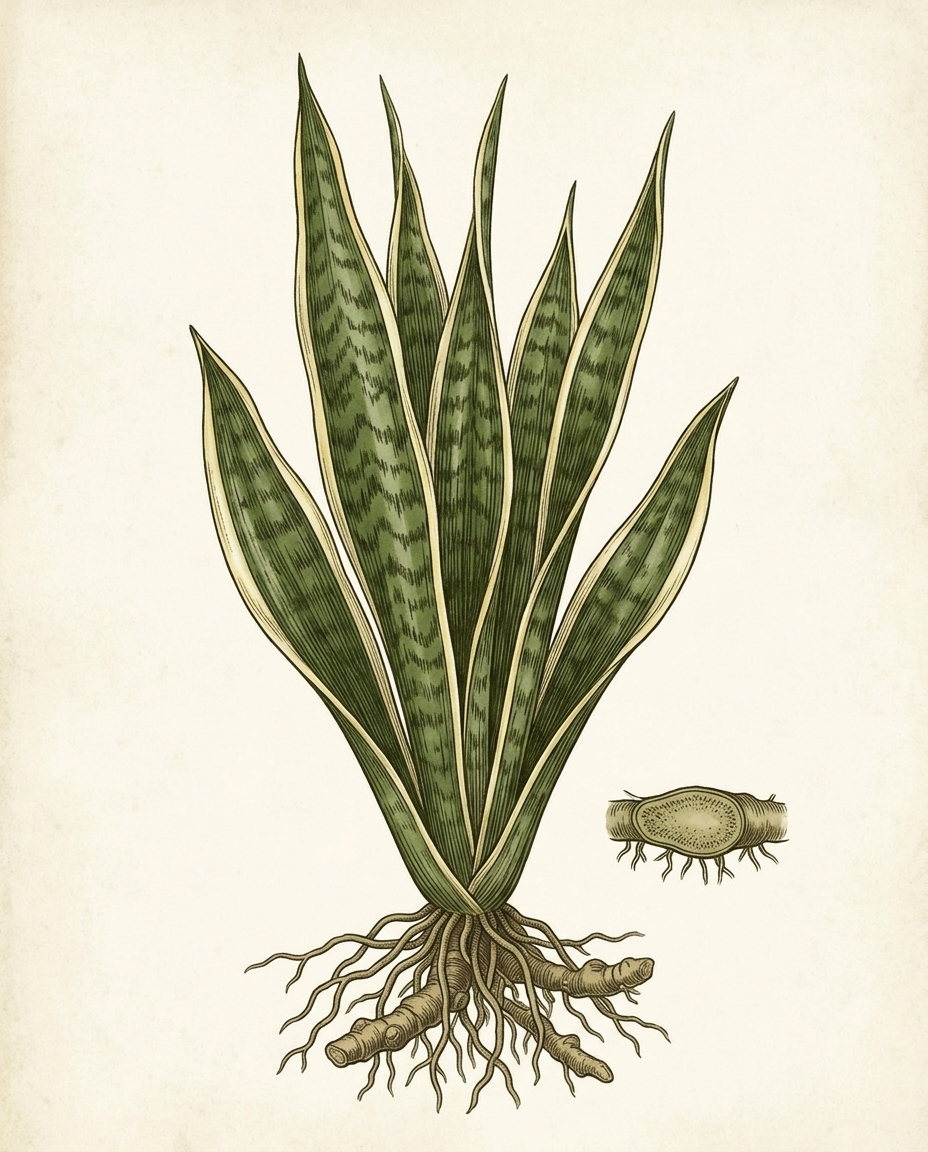
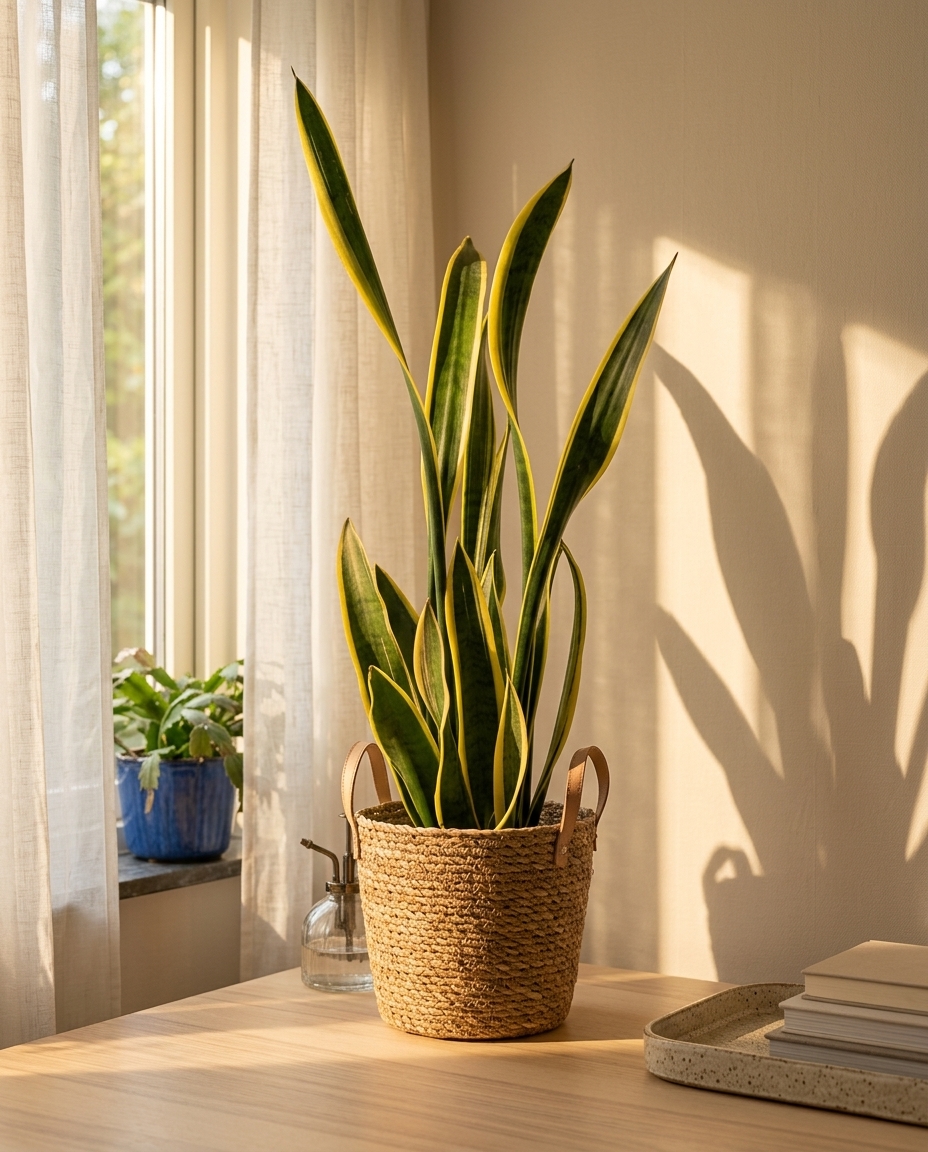
Plate ISansevieria trifasciata — recently reclassified as Dracaena trifasciata. Upright, architectural foliage; saponin content makes every leaf mildly toxic to cats.
Three plants that look the part, without the risk.
Upright, architectural foliage without the saponins — these three are ASPCA non-toxic and deliver the same modern, low-maintenance look.
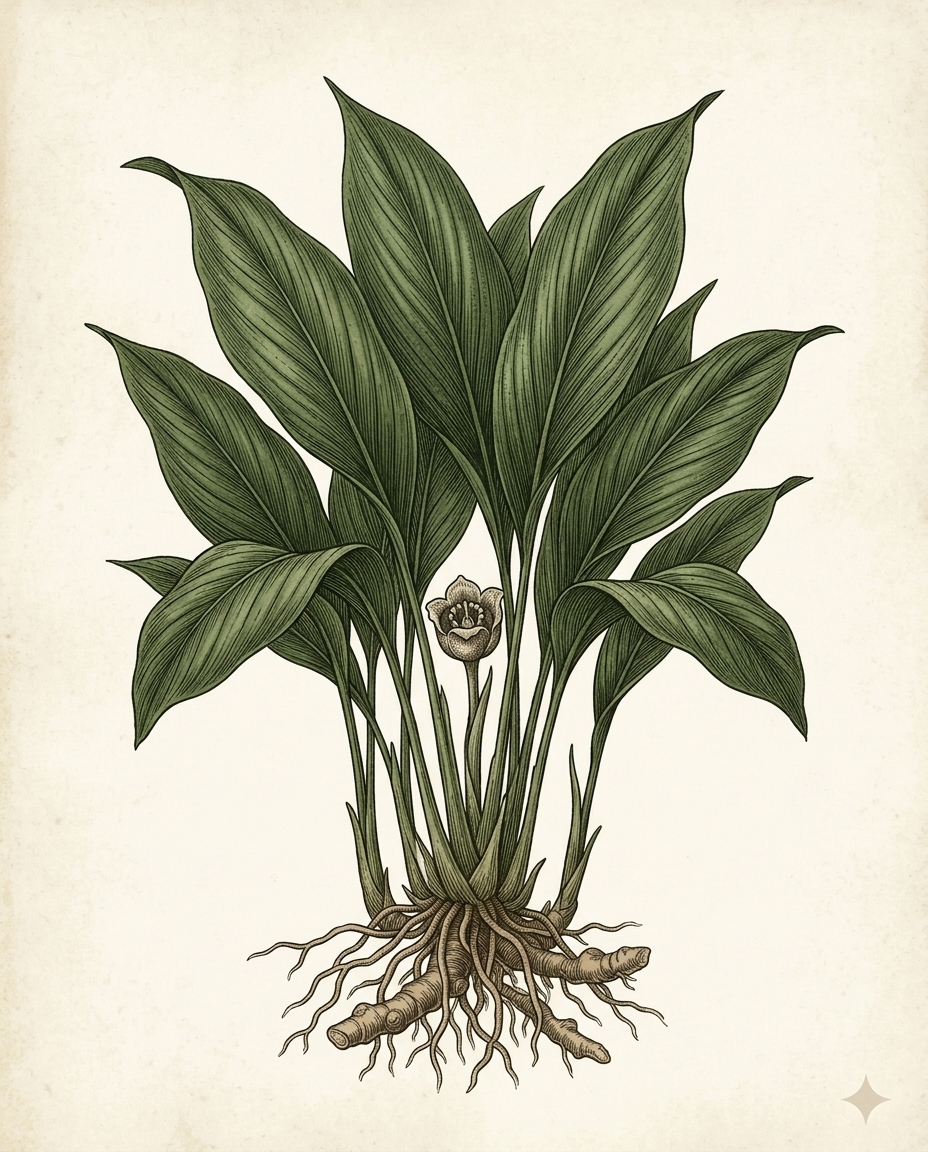
Cast-Iron Plant
The closest cat-safe substitute. Strappy, upright leaves, almost impossible to kill, ASPCA non-toxic.
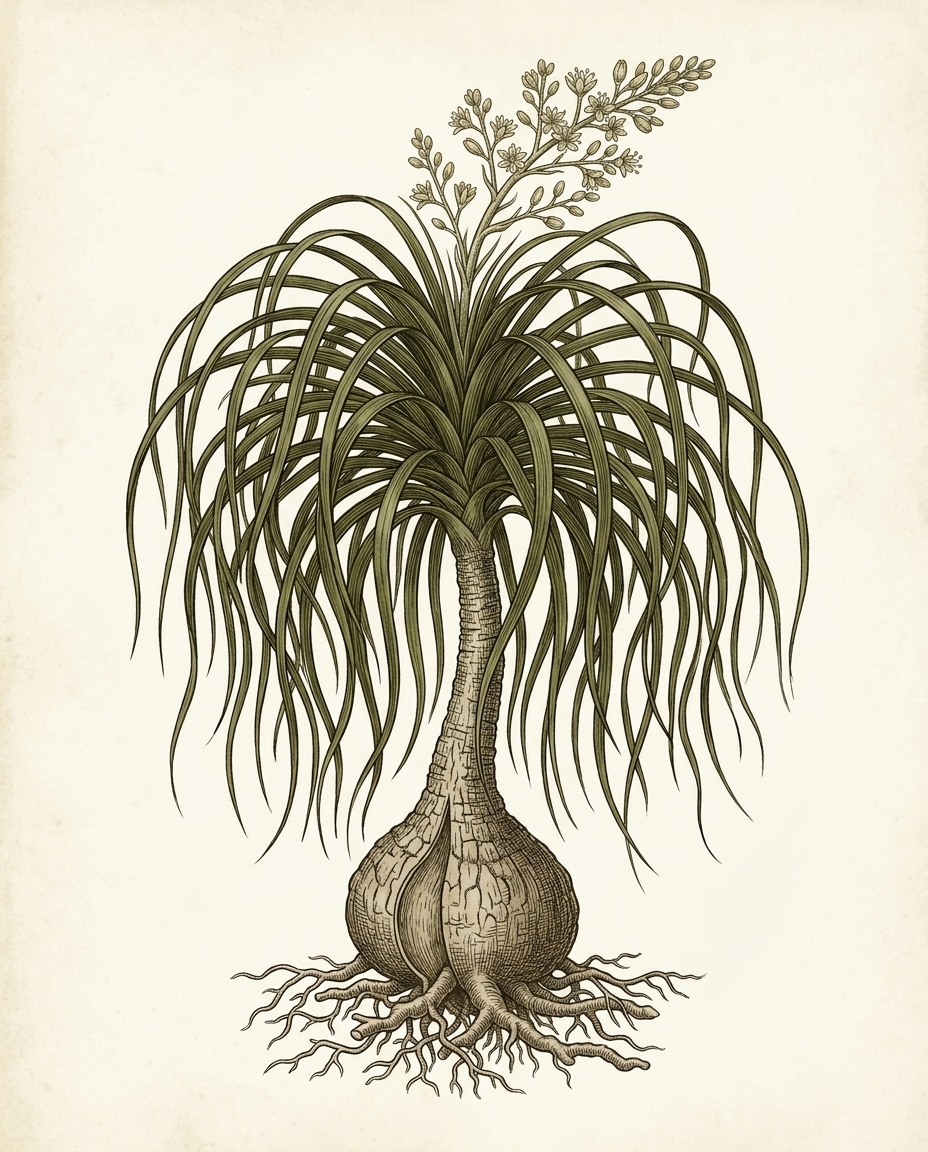
Ponytail Palm
Sculptural trunk and arching foliage. ASPCA non-toxic and tolerates the same neglect that suits snake plants.
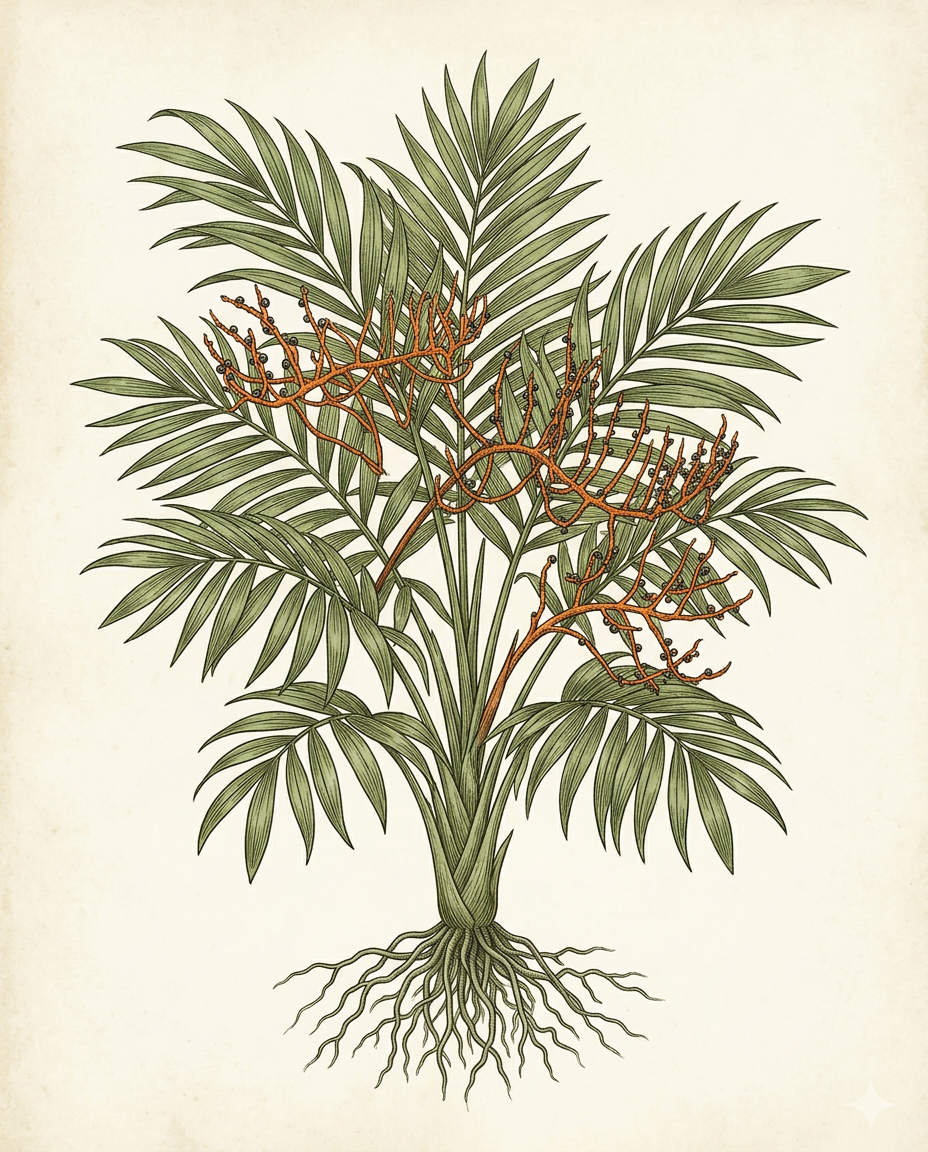
Parlor Palm
Soft, upright fronds for the same vertical effect. ASPCA non-toxic and shade-tolerant.
What it does to a cat.
No — snake plant is not safe for cats. The ASPCA lists Sansevieria trifasciata (recently reclassified as Dracaena trifasciata) as toxic to cats and dogs. The toxic principle is saponins — bitter glycosides that irritate the stomach lining. The result is vomiting, drooling, and diarrhea.
Snake plant is rarely fatal. Most cats recover within a day or two without treatment. But it is one of the most popular houseplants in the world, and it lives in millions of cat households where people assume "easy-care" means "safe." It doesn't.
Why most cats won't eat much
Saponins are intensely bitter. Many cats take a single chew, spit the leaf out, and salivate heavily — an aversive reaction that limits the dose. This is the small mercy of snake plant toxicity: a determined cat would have to keep at it to do real damage, and most won't.
That doesn't make it safe. Kittens and bored older cats can ignore the bitterness. The first bite still produces drooling and often vomiting. And the carpet pays for it.
Cat-safe substitutes
If you keep snake plant for its upright, architectural silhouette and bulletproof care, cast-iron plant (Aspidistra elatior) is the closest cat-safe match — same strappy leaves, same indestructibility, ASPCA non-toxic. Ponytail palm and parlor palm work for the same modern, sculptural role.
What to do if your cat ate snake plant
Most cases self-resolve within 24 to 48 hours. Withhold food for an hour or two, then offer small amounts of water. If vomiting persists beyond a few episodes, if diarrhea continues past a day, or if your cat refuses to eat for more than 24 hours, call your vet. ASPCA Animal Poison Control is available 24/7 at (888) 426-4435.
For more on the milder GI-irritant houseplants, see our pothos and dracaena pages — both share the same general toxicity profile.
What we have actually seen.
Vomiting and nausea
Saponins irritate the stomach lining. Most cats vomit within a few hours of ingesting any meaningful amount of leaf.
Excessive drooling
Saponins are intensely bitter. Many cats spit the leaf out and salivate heavily before swallowing — a useful aversion signal.
Diarrhea
GI irritation can extend further down the tract. Watery or soft stools may follow vomiting within 12 to 24 hours.
Lethargy and reduced appetite
Brief — most cats return to baseline within 24 to 48 hours. Persistent lethargy or refusal to eat warrants a vet call.
- ASPCA Animal Poison Control Center. Toxic and Non-Toxic Plants: Snake Plant.Accessed May 2026 · aspca.org
- Pet Poison Helpline. Saponin-containing plants in companion animals.Clinical reference · 2024
- Kew Plants of the World Online. Dracaena trifasciata.Reclassification reference