Rhubarb
Rheum rhabarbarium
Yes — rhubarb is toxic to cats. The ASPCA lists Rheum rhabarbarium as toxic to cats, dogs, and horses. The leaves contain soluble oxalates that cause kidney damage. The entire plant is toxic — stalks included per the ASPCA listing.
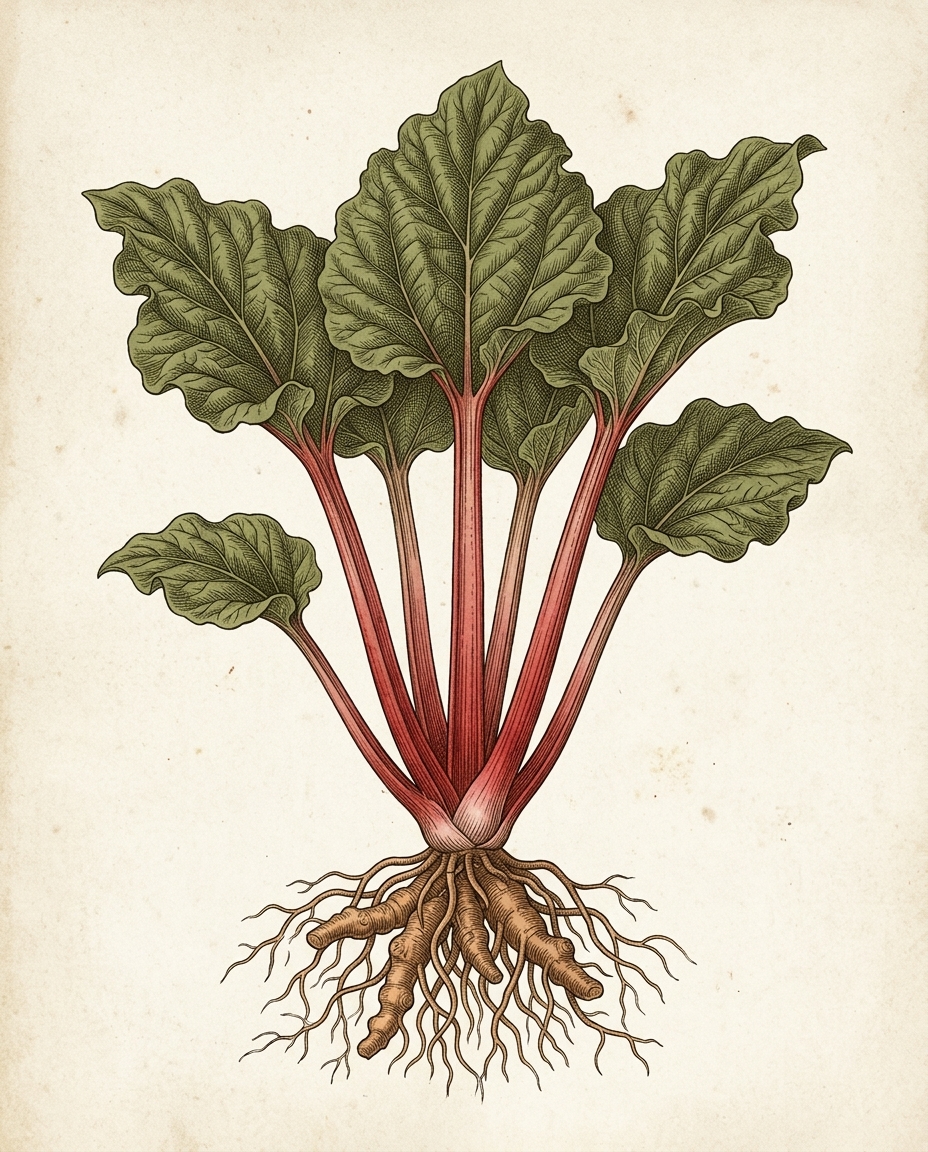
Plate IRheum rhabarbarium — Rhubarb. Large ruffled leaves and thick red-green stalks. Polygonaceae. ASPCA toxic to cats: soluble oxalates.
Three plants that look the part, without the risk.
If you want a cat-safe plant for a sunny garden spot, these ASPCA non-toxic plants are good alternatives to rhubarb.
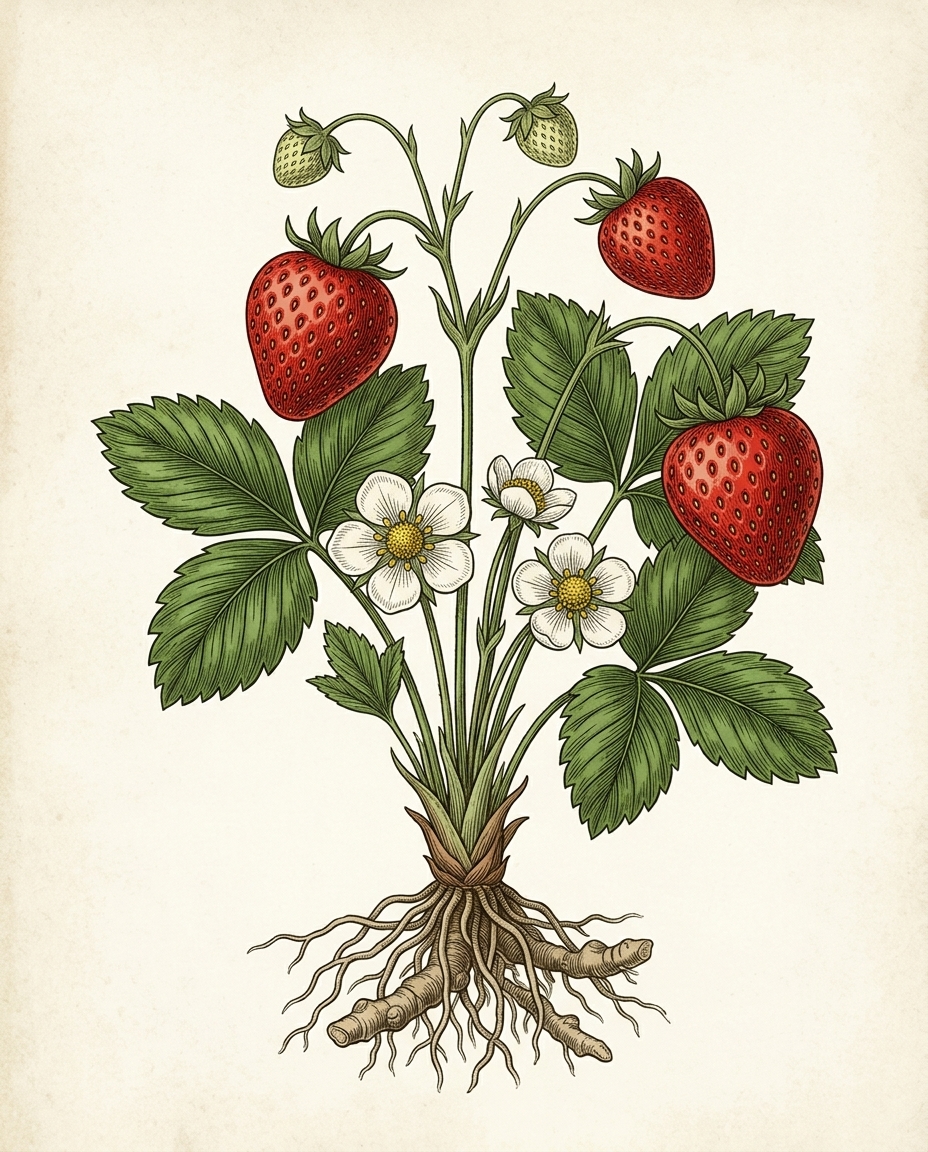
Strawberry
A non-toxic fruiting plant that cats can safely be around. The fruit, leaves, and stems are all ASPCA-listed non-toxic — a garden edible without the oxalate risk of rhubarb leaves.
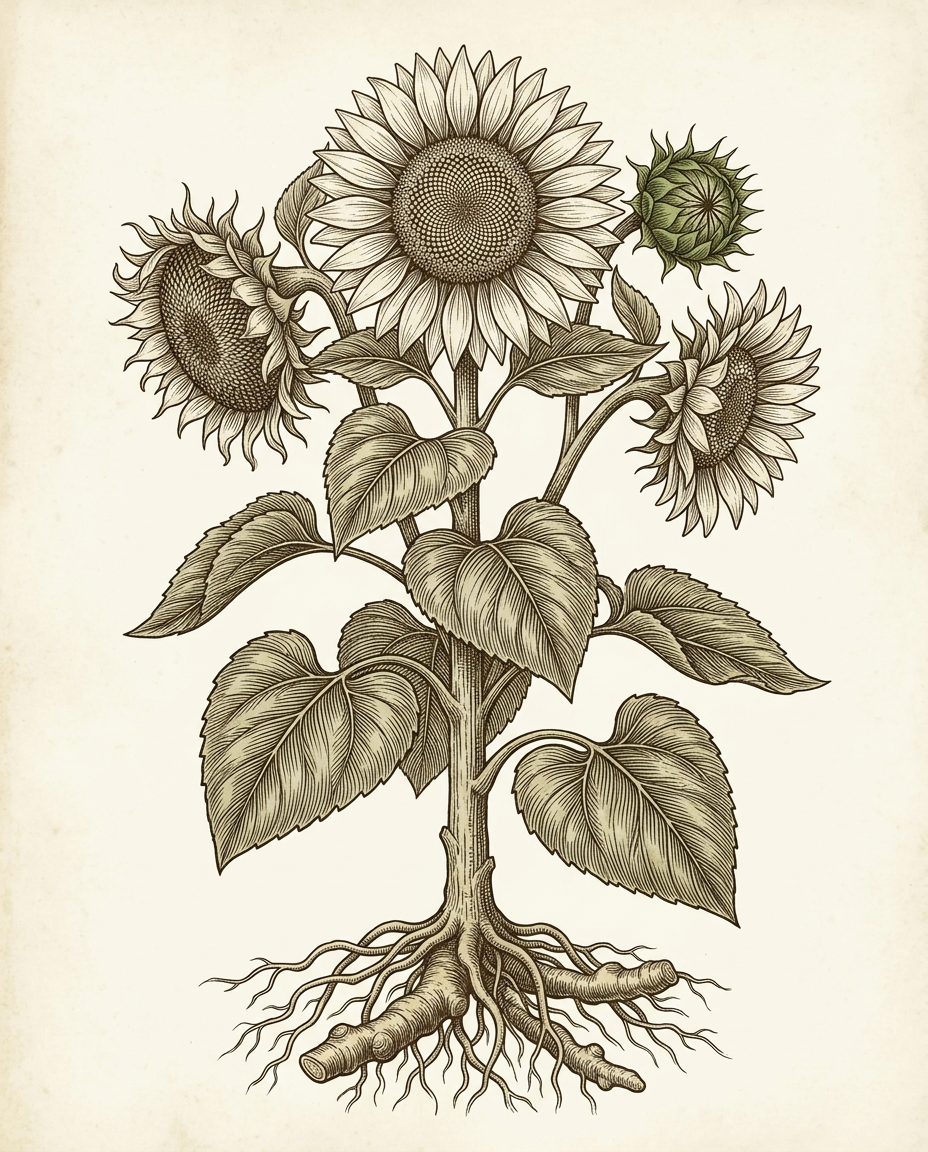
Sunflower
A non-toxic garden flower that is safe around cats. Tall and cheerful, with no toxic parts — a bright substitute for the dramatic foliage of rhubarb.
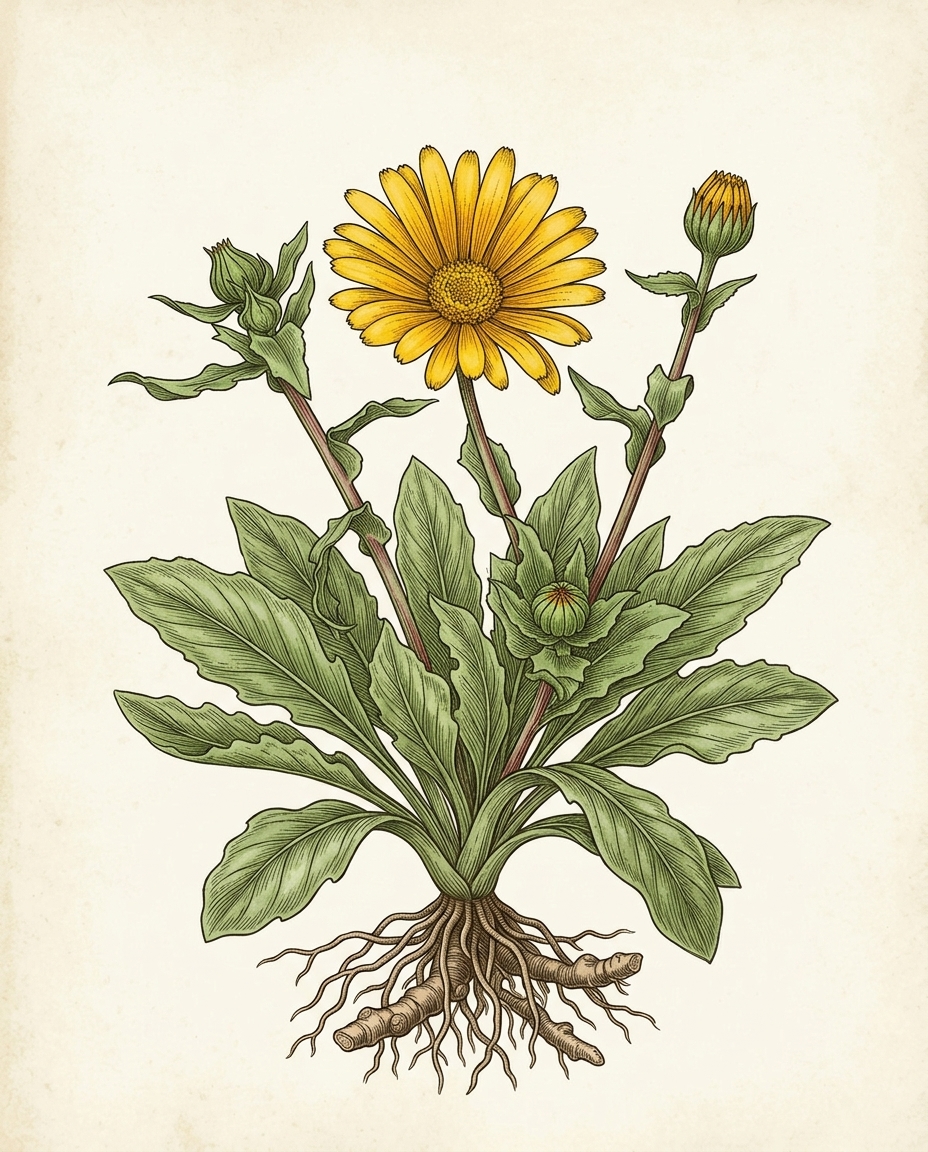
Calendula
A non-toxic flowering herb that is safe for cats. The edible petals are ASPCA-listed non-toxic and the plant is easy to grow in the same garden spot as rhubarb.
What rhubarb does to a cat.
Yes — rhubarb is toxic to cats. The ASPCA lists Rheum rhabarbarium as Toxic to Dogs, Toxic to Cats, Toxic to Horses. The plant contains soluble calcium oxalates — crystals that cause oral irritation, drooling, vomiting, and potential kidney damage. The leaves are the most dangerous part, but the ASPCA listing covers the entire plant.
Rhubarb (Rheum rhabarbarium, family Polygonaceae) is a garden perennial grown for its tart stalks. The ASPCA also lists "Pie Plant" as an additional common name. While the stalks are the edible part for humans (cooked into pies and jams), the entire plant is toxic to cats per the ASPCA listing.
ASPCA Data
According to the ASPCA, rhubarb is listed under plants toxic to cats:
Toxic to Dogs, Toxic to Cats, Toxic to Horses.
The toxic principle is soluble calcium oxalates. The leaves are the most concentrated source, but the ASPCA listing covers the whole plant — stalks included.
Why the leaves are the most dangerous part
Rhubarb leaves have long been known to be toxic to humans as well as animals. They contain far higher concentrations of soluble calcium oxalates than the stalks. These crystals embed in the mouth, tongue, and throat when chewed, causing intense irritation, drooling, and vomiting.
Soluble oxalates can also cause kidney damage. Unlike the insoluble oxalates found in some other plants (which cause only localised mouth irritation), soluble oxalates are absorbed into the bloodstream and can precipitate calcium in the renal tubules — a more serious systemic effect.
The stalks are also toxic
While the stalks are the edible part for humans, they contain lower — but still present — concentrations of soluble oxalates. The ASPCA listing covers the entire plant, so the safe approach for cats is to treat the whole plant as toxic. A cat that chews a rhubarb stalk is exposed to the same toxic principle, just at a lower dose.
Risk for outdoor cats
An outdoor cat with access to a vegetable garden may encounter rhubarb. The large, textured leaves can attract attention, and the plant is at its most lush in spring and early summer — exactly when cats spend more time outdoors. A cat that chews rhubarb leaves ingests soluble oxalates directly.
If you grow rhubarb and have an outdoor cat, the safest approach is to fence the rhubarb patch or grow it in a raised bed the cat cannot reach. Remove fallen leaves promptly after harvest.
What to do if your cat eats rhubarb
Soluble oxalate poisoning is a medical emergency:
- Call your vet or ASPCA Animal Poison Control at (888) 426-4435 immediately. Soluble oxalates can cause kidney damage — do not wait for symptoms.
- Remove any plant material from your cat's mouth if you can do so safely.
- Tell the vet exactly what part of the rhubarb was eaten (leaves are more dangerous than stalks) and how much.
The garden toxic cluster
If you grow rhubarb, you may also grow apple trees and chives — both ASPCA-listed toxic to cats. Apple stems, leaves, and seeds contain cyanogenic glycosides. Chives contain N-propyl disulfide, the same compound as in onion and garlic. The kitchen garden can concentrate several different toxins in a small space.
Safe garden alternatives
If you want a cat-safe plant for a sunny garden spot, strawberry, sunflower, and calendula are all ASPCA-listed non-toxic to cats — and they grow well in the same garden conditions as rhubarb.
The bottom line
Rhubarb is toxic to cats — the entire plant contains soluble calcium oxalates that cause oral irritation, vomiting, and potential kidney damage. The leaves are the most dangerous part, but the ASPCA listing covers the whole plant. If you grow rhubarb and have an outdoor cat, fence the patch. Call your vet immediately if ingestion occurs.
What we have actually seen.
Soluble oxalates in leaves and stalks
Rhubarb contains soluble calcium oxalates — crystals that embed in tissue and cause intense oral irritation, drooling, and vomiting. The leaves are the most concentrated source, but the ASPCA listing covers the entire plant. Soluble oxalates can also cause kidney damage by precipitating calcium in the renal tubules.
The leaves are the most dangerous part
Rhubarb leaves have long been known to be toxic to humans as well as animals — they contain far higher concentrations of soluble oxalates than the stalks. While the stalks are the edible part for humans, the ASPCA listing covers the whole plant, so the safe approach for cats is to treat the entire plant as toxic.
Risk for outdoor cats in gardens
An outdoor cat with access to a vegetable garden may encounter rhubarb. The large, textured leaves can attract attention. A cat that chews rhubarb leaves ingests soluble oxalates directly. The risk is seasonal — rhubarb is harvested in spring and early summer when cats spend more time outdoors.
- ASPCA Animal Poison Control Center. Toxic and Non-Toxic Plants: Rhubarb.Accessed June 2026 · aspca.org · Rheum rhabarbarium · Toxic to Dogs, Toxic to Cats, Toxic to Horses · Family Polygonaceae · Additional Common Names: Pie Plant